

Close Menu
NCIJ Network NCIJ Network
    What's Hot

    Lawsuit says Oura sleep tracking has ‘a coin flip’s chance of being correct’

    August 27, 2026

    Enterprise AI’s real risk isn’t autonomous agents. It’s the complexity between them.

    August 27, 2026

    CISO Conversations: Chris Wheeler – Trust Is the Job, From the Navy to the C-Suite

    August 27, 2026
    Facebook X (Twitter) Instagram
    Trending
    • Lawsuit says Oura sleep tracking has ‘a coin flip’s chance of being correct’
    • Enterprise AI’s real risk isn’t autonomous agents. It’s the complexity between them.
    • CISO Conversations: Chris Wheeler – Trust Is the Job, From the Navy to the C-Suite
    • Japanese Bitcoin Industry Unveils ‘Aurora’
    • Landslides pose the largest risks to those who can least afford them
    • Clean-up of illegal Kidlington waste supersite costs £6m
    • Is China’s Pragmatic AI Strategy Winning?
    • Trump signs order to rename Lake Ontario to ‘Lake America’ as Carney pushes back
    • About
      • Our Team
      • Editorial Policy
      • Editorial Independence
      • International Support
    • Trust & Standards
      • AI Usage Policy
      • Conflict of Interest Policy
      • Corrections Policy
      • Ethics Policy
      • Fact-Checking Policy
      • Source Protection
    • Get Involved
      • Guide for Sources
      • Support Independent Journalism
    • Legal
      • Cookie Policy
      • Privacy Policy
      • Terms of Use
    Facebook X (Twitter) Instagram
    NCIJ Network NCIJ Network
    Thursday, August 27
    • Home
    • World
    • Ai
    • Business
    • Politics
    • Health
    • Crypto
    • Science
    • Technology
    • Cybersecurity
    • Defense & Security
    • Economy
    • Energy
    • Europe
    • More
      • Fact Check
      • Investigations
      • Opinion & Analysis
      • Environment
    NCIJ Network NCIJ Network
    Home»Science

    Landslides pose the largest risks to those who can least afford them

    NCIJ NETWNCIJ NETWORKBy NCIJ NETWNCIJ NETWORKAugust 27, 2026 Science No Comments4 Mins Read
    Share
    Facebook Twitter LinkedIn Pinterest Email

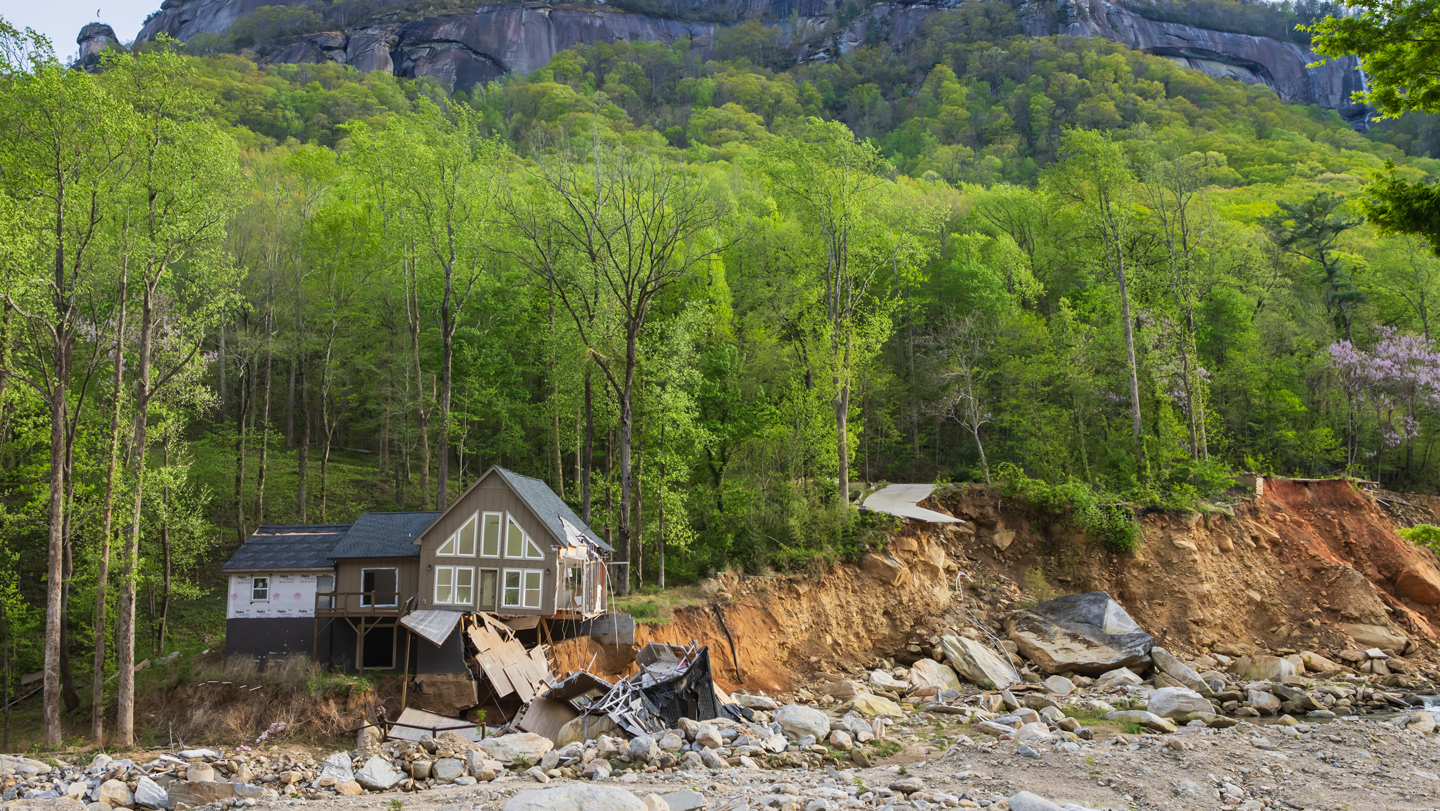
    Landslides in the United States cause billions of dollars of damage and can take dozens of lives each year. In Appalachia, a hotspot of landslides, that hazard is exacerbated by poverty, new research shows.

    A new study, published July 29 in Earth’s Future, is one of the first to break down the socioeconomics of who lives with landslides in the United States. The researchers found that people living where landslides are most likely to occur are those who are least able to afford to move or to mitigate that risk.

    Sign up for our newsletter

    We summarize the week’s scientific breakthroughs every Thursday.


    “It’s a really important advance,” said Ben Mirus, a geologist with the U.S. Geological Survey in Golden, Colo., who led the agency’s 2024 landslide mapping but was not involved in the new study. “Once you have a map of where landslides are, you want to look at why and where they matter.”

    Populations are exposed to landslide hazards in places where a landslide will likely occur (called susceptibility) and where it will hit infrastructure such as homes, workplaces and roads. The study looked at landslide susceptibility from high (very likely to occur) to low (less likely), overlaid that hazard with homes in those locations, and assessed the socioeconomic status of those locations.

    At least 6.5 million people in the United States live with high landslide risk, the study found, and that’s a conservative estimate. Including populations with medium landslide risk increases that count by millions, corroborating preliminary U.S.G.S. estimates of populations exposed to landslides.

    “There are many landslide stories across the U.S.,” says Joe Wartman, a geotechnical engineer at the University of Washington in Seattle. Wartman and colleagues found the highest risk in places with both dense populations and steep slopes.

    In Appalachia, the study tells a grim tale. At least 3.6 million people there — including a high density of lower-income people — live in landslide-prone areas, making up 55 percent of the national total of people exposed to landslides, the study found. The steeply walled valleys are lush thanks to heavy rains, and communities live either on those slopes or in the valley floors below, where the rocks, mud and debris from landslides end up.

    West Virginia stands out: 20 percent of its population lives in high-risk areas, compared to the 2 percent national average.

    In sharp contrast, residents of cities in high-risk zones are more often wealthy. Some homeowners in Los Angeles or Seattle, for example, are among at least 1.7 million living with high landslide risk in West Coast mountainous regions. They’re more likely to have access to engineering solutions to reduce landslide risk, or to move or rebuild after a disaster. 

    “It’s very difficult to mitigate and to manage landslide hazards across the vast terrain of the U.S.,” Wartman said. The new map “gives us the ability to really hyper-localize and focus, to an extraordinary degree, on those who are most in danger.”

    Despite the utility of landslide mapping, it’s not ubiquitously popular. Some property owners and industries push back against such efforts because of concerns that if landslide hazards are mapped, property values will drop. In 2011, lobbying halted North Carolina’s statewide landslide mapping effort. It was inactive for six years, and geologists there were working to make up for the lost time when Hurricane Helene hit in 2024, triggering more than 9,400 landslides, mostly in the state, per the U.S.G.S. 

    More recently, there has been pushback from homeowners to landslide mapping in both Juneau and Sitka, Alaska, although, there is little evidence supporting concerns of landslides impacting property values, Mirus said. Still, the work continues, and experts hope that continued landslide mapping will improve public safety for individuals and communities alike. The more information there is, Mirus says, “the better decisions people can make.”

    afford landslides largest Pose risks
    NCIJ NETWNCIJ NETWORK
    • Website

    Keep Reading

    Tiny tremors can’t always warn when fracking will trigger a bigger quake

    9 Things to Know About NASA’s Nancy Grace Roman Space Telescope

    Your dislike of eating bugs may be 9,000 years old

    Rare, Widespread Snow in the Atacama Desert

    NASA Astronaut Jonny Kim Departs Agency to Continue Military Service

    “I jumped from my chair” – Astronomers spot Betelgeuse’s hidden companion

    Add A Comment
    Leave A Reply Cancel Reply

    Editors Picks

    Lawsuit says Oura sleep tracking has ‘a coin flip’s chance of being correct’

    August 27, 2026

    Enterprise AI’s real risk isn’t autonomous agents. It’s the complexity between them.

    August 27, 2026

    CISO Conversations: Chris Wheeler – Trust Is the Job, From the Navy to the C-Suite

    August 27, 2026

    Japanese Bitcoin Industry Unveils ‘Aurora’

    August 27, 2026
    Latest Posts

    NASA’s Curiosity Discovers a Field of Martian Polygons

    July 29, 2026

    As crypto perpetual futures boom, Ethereum’s role is shifting

    July 29, 2026

    Critical Rails Flaw Could Let Unauthenticated Attackers Read Server Files via Image Uploads

    July 29, 2026

    Subscribe to News

    Get the latest sports news from NewsSite about world, sports and politics.

    NCIJ Network is an independent digital news platform delivering trusted investigative journalism, European and global news, in-depth analysis, and fact-based reporting with accuracy, transparency, and integrity.

    Facebook X (Twitter) Instagram Pinterest YouTube

    Lawsuit says Oura sleep tracking has ‘a coin flip’s chance of being correct’

    August 27, 2026

    Enterprise AI’s real risk isn’t autonomous agents. It’s the complexity between them.

    August 27, 2026

    CISO Conversations: Chris Wheeler – Trust Is the Job, From the Navy to the C-Suite

    August 27, 2026

    Subscribe to Updates

    Get the latest creative news from FooBar about art, design and business.

    Type above and press Enter to search. Press Esc to cancel.