


Two faces that appeared on my Instagram feed in recent months gave me pause. One belonged to John Travolta at Cannes. The other to Carla Bruni on a date night with her husband, former French President Nicolas Sarkozy. Both looked recognisably themselves, yet, they both also looked oddly unfamiliar. Their looks have provoked speculation about cosmetic enhancement, though never acknowledged by them. Bruni has previously denied having had work done.
In any case the feeling lasted only a second: a flicker of unease, as though I were looking at people who had become approximations of themselves.
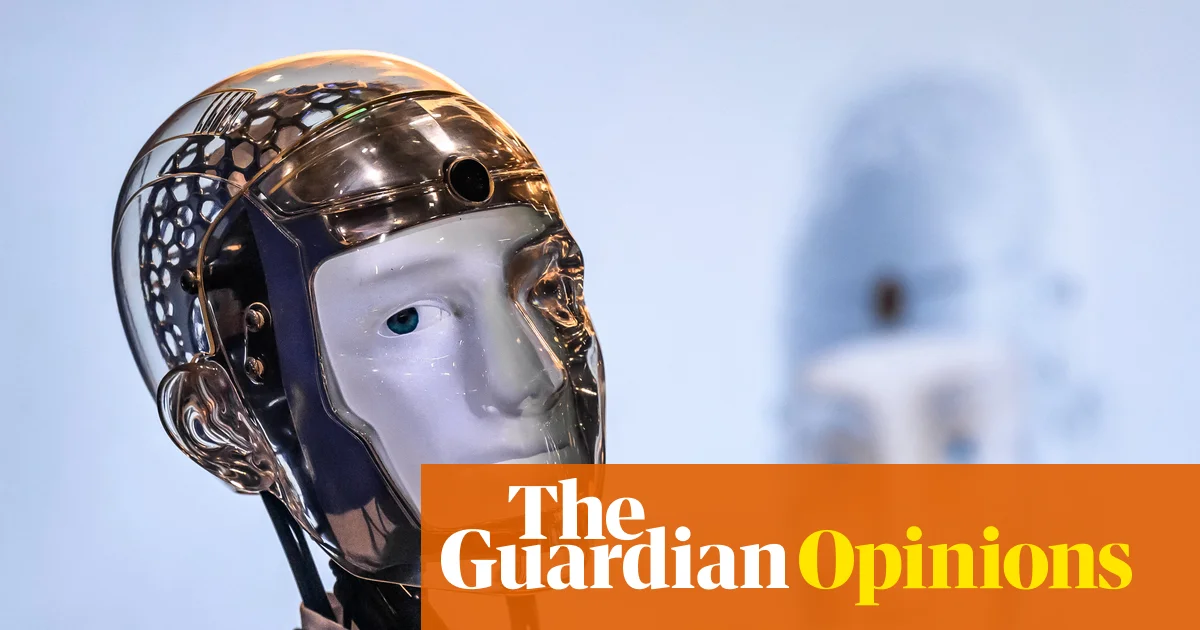
There is a name for that sensation. In a 1970 article, the Japanese robotics professor Masahiro Mori described what he called the “uncanny valley”. He found that robots that were designed to look as human as possible often provoked discomfort in people. That was a surprise, since the benefit of humanoid robots was supposed to be that we humans would trust them more.
What scares us about a robot that almost passes as human? One explanation may be that we sense danger when encountering something we cannot categorise easily as either human or not. Another is that the features that seem “off”, such as glossy skin or frozen expressions, resemble signs of disease or death.
For a humanoid robot, triggering the uncanny valley sensation means failure. But what does it signify when a human provokes it? In 1956, the German-Austrian philosopher Günther Anders published a collection of essays entitled The Obsolescence of the Human. Anders, Hannah Arendt’s first husband, argued that technological progress would push humans to develop a novel form of self-contempt. Faced with the perfection of mass-produced goods, humans would come to regret their “bodily clumsiness” and “corporeal imprecision”. They would grow ashamed of being merely the result of the “blind and uncalculated, highly archaic process of procreation” rather than of careful design.
Anders wrote:
Each day out of machines arise
ever more beautiful machines.
Only we remain malformed,
only we’re born obsolete.
But here comes the crux: Anders predicted that the intimidated humans would not find the strength to rebel against the objects they feel humiliated by. On the contrary, they would aspire to resemble them. They would want to become less like people, and more like a product: something standardised, optimised and yes, literally “put together”.
I am wondering whether we have come to live in Anders’ dystopia. With prices tumbling, there is a boom in surgical cosmetic procedures both across the globe and across demographics. And often the goal doesn’t seem to be to “correct” nature’s mistakes, or to look natural – just slightly better by adopting the logic of product design, such as symmetry or recognisability. This is what the contoured faces and Botox lips associated with Kim Kardashian, or the sharply angular chins sought by looksmaxxers, deliver.
But Anders matters today for a reason other than making sense of contemporary beauty ideals. The human’s inferiority complex towards profit-making products that he described may no longer be limited to our bodies. In the age of AI, it is spreading to the mind. I can surely feel the shame Anders described when comparing my small, moody and heat-sensitive brain to the relentless and always available computing power of AI. No wonder then that four years after the public launch of ChatGPT, the use of AI is ever expanding – just like cosmetic procedures.
It’s a vicious cycle: The better AI gets and the better it gets at imitating humans, just minus our flaws, the more we will perceive our minds as defective. And the more we will be tempted not only to use AI, but to talk, sing and behave like technology in a quest to resemble our unfailing inventions.
This is the self-reinforcing motor of human self-alienation in an age of technological excellence. A 2025 study from the renowned German Max Planck Institute for Human Development evaluating 360,000 YouTube videos and 772,000 podcasts found that after the release of ChatGPT, people started to use words preferred by the AI chatbot such as “delve”, “boast” and “meticulous” far more often – even in their spoken language.
after newsletter promotion
Thus, it is no longer just the face remade by cosmetic procedure. It is the text message from a date that sounds oddly staccato. The tender love ballad that you’ve been listening to for a week on repeat until you realise that it was created by a program that never experienced a bad breakup. Your former work colleague who used to answer emails in one-liners and now publishes three polished essays a week on Substack.
The uncanny valley sensation appears wherever we begin to doubt the humanity of what stands before us.
That doubt, that eeriness about whether what we see, read and hear is really human or not accompanies us everywhere now. That persistent suspicion is, perhaps, becoming the defining condition of our life entering the second quarter of the 21st century. Technology manages to imitate us ever more convincingly and we humans can’t resist approximating our glorious technological inventions. As both humans and technology are moving into the same hybrid grey space, the uncanny valley is now the space that we inhabit.
Yet we must not strive to eliminate that lingering feeling of unease. On the contrary, we need to learn to cultivate it. As long as something in us, perhaps the crooked timber of our humanity, recoils from that world, there is hope. Recognising our own self-alienation is to begin resisting it.
