


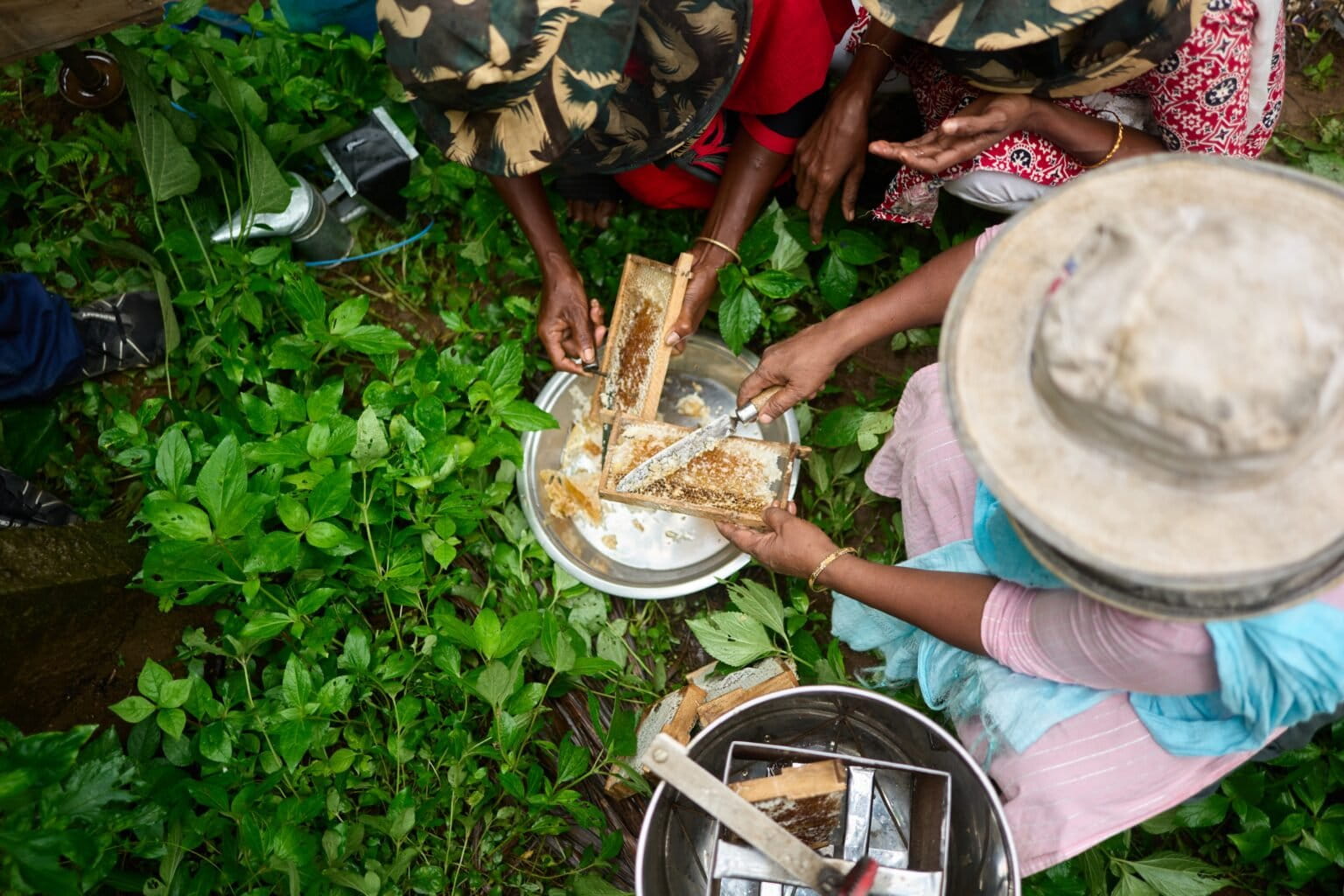
A beekeeping initiative is enabling women in India’s Western Ghats, a biodiversity hotspot that runs parallel to India’s west coast, to strengthen their livelihoods with more reliable honey harvests.
The 50 women are part of the Women for Bees project, launched in India in April 2025 by UNESCO in partnership with local nonprofit the Keystone Foundation. The project provides training and equipment to women from the Irula, Kurumba and Kattunayaka Indigenous communities across the southern states of Tamil Nadu and Kerala, reports Mongabay-India’s Arathi Menon.
Traditionally, many of these communities were skilled wild honey hunters, a practice that is often risky and increasingly restricted by forest protection laws. Managed beekeeping, using hive boxes, offers a safer, more predictable alternative.
The women are trained to rear the native Asian honey bee (Apis cerana indica), which is more resistant to local diseases and parasites than the commercially dominant European honey bee (Apis mellifera). A 2023 study comparing the two species suggests that, while the life cycles are generally similar, A. cerana colonies are better able to defend themselves against threats, diseases and disruptions.
The economic impact of the honey harvests from the hive boxes has been immediate, providing many participants with their first taste of financial independence. Neelavathi, an Irula woman from Tamil Nadu state, has used her earnings to support her family and purchase household goods. “Since I am the beekeeper at home, my family lets me keep the income for my own needs,” she told Mongabay-India.
Malavika Jayakrishnan, who leads the project at UNESCO, told Mongabay-India that the women have reported good honey yields with some women able to market their honey at premium prices.
The 2023 and a 2025 study has shown that pollination by Asian honey bees can improve yields of certain crops such as bitter gourd. While the ecological impacts of the Women for Bees project are yet to be assessed, some of the participants said they have observed improved flowering and higher yields in surrounding fruit farms.
Lakshmi Babu, a Kattunayaka woman from Kerala’s Nilambur Elephant Reserve, said that the project has helped bring neighbors together to share knowledge and support one another.
“Bees have brought a lot of joy into my life,” she said. “The bees work hard and take very good care of those who care for them.”
With a 100% retention rate among participants, UNESCO project organizers hope to expand this model to other biosphere reserves.
Read the full story by Arathi Menon here.
Banner image of beekeepers at work in Nilambur, Kerala. In April 2025, UNESCO’s Women for Bees project debuted in India at the Nilgiris Biosphere Reserve, engaging 50 Indigenous women from Sigur, Pillur, Kuzhiyoor, Wayanad and Nilambur to learn beekeeping as a livelihood. Image by Shawn J. Stephen/Keystone Foundation.
