

Close Menu
NCIJ Network |NCIJ Network |
    What's Hot

    ServiceNow bets $40 million on Indian banking software specialist to expand its financial services push

    July 23, 2026

    Anthropic Releases Claude Security Plugin for Claude Code in Beta: A Multi-Agent Vulnerability Scanner That Runs in Your Terminal

    July 23, 2026

    Adobe Acrobat Extension Flaw Let Malicious Sites Read WhatsApp Web Data

    July 23, 2026
    Facebook X (Twitter) Instagram
    Trending
    • ServiceNow bets $40 million on Indian banking software specialist to expand its financial services push
    • Anthropic Releases Claude Security Plugin for Claude Code in Beta: A Multi-Agent Vulnerability Scanner That Runs in Your Terminal
    • Adobe Acrobat Extension Flaw Let Malicious Sites Read WhatsApp Web Data
    • Swiss Bank BancaStato Launches Bitcoin Trading Through Sygnum And Avaloq
    • Drought announcement looms for parts of Wales over river levels
    • Oil has harmed the nature and people of the Niger Delta; human rights may save it
    • Hundreds protest after Madison police officer fatally shoots man
    • Chart of the Week: Independent expenditures flood open-seat Senate races • OpenSecrets
    • About
      • Our Team
      • Editorial Policy
      • Editorial Independence
      • International Support
    • Trust & Standards
      • AI Usage Policy
      • Conflict of Interest Policy
      • Corrections Policy
      • Ethics Policy
      • Fact-Checking Policy
      • Source Protection
    • Get Involved
      • Guide for Sources
      • Support Independent Journalism
    • Legal
      • Cookie Policy
      • Privacy Policy
      • Terms of Use
    Facebook X (Twitter) Instagram
    NCIJ Network |NCIJ Network |
    Thursday, July 23
    • Home
    • World
    • Ai
    • Business
    • Politics
    • Health
    • Crypto
    • Science
    • Technology
    • Cybersecurity
    • Defense & Security
    • Economy
    • Energy
    • Europe
    • More
      • Fact Check
      • Investigations
      • Opinion & Analysis
      • Environment
    NCIJ Network |NCIJ Network |
    Home»Science

    In painted caves, ancient human DNA clings to the walls

    NCIJ NETWNCIJ NETWORKBy NCIJ NETWNCIJ NETWORKJuly 23, 2026 Science No Comments4 Mins Read
    Share
    Facebook Twitter LinkedIn Pinterest Email

    For the first time, scientists have recovered ancient human DNA from cave walls. 

    The search took place at caves throughout Spain and Portugal known for prehistoric paintings, including Spain’s famed Cave of Altamira. The DNA recovered from cave paintings and nearby walls is at least 2,000 years old and probably much older, researchers report June 23 in Nature Communications.  

    The study cannot link the DNA to the artists behind the cave paintings. But the knowledge that human DNA can be preserved on cave walls for thousands of years may enable future work that probes the role of women in ancient art, traces the movement of artists and brings clarity to the debate over Neandertals’ artistic abilities, says Hipólito Collado Giraldo, an archaeologist with Spain’s regional government of Extremadura.  

    Sign up for our newsletter

    We summarize the week’s scientific breakthroughs every Thursday.


    “I believe that a new and fascinating stage is opening up for archaeological science in general, and for rock art studies in particular,” Collado Giraldo says. 

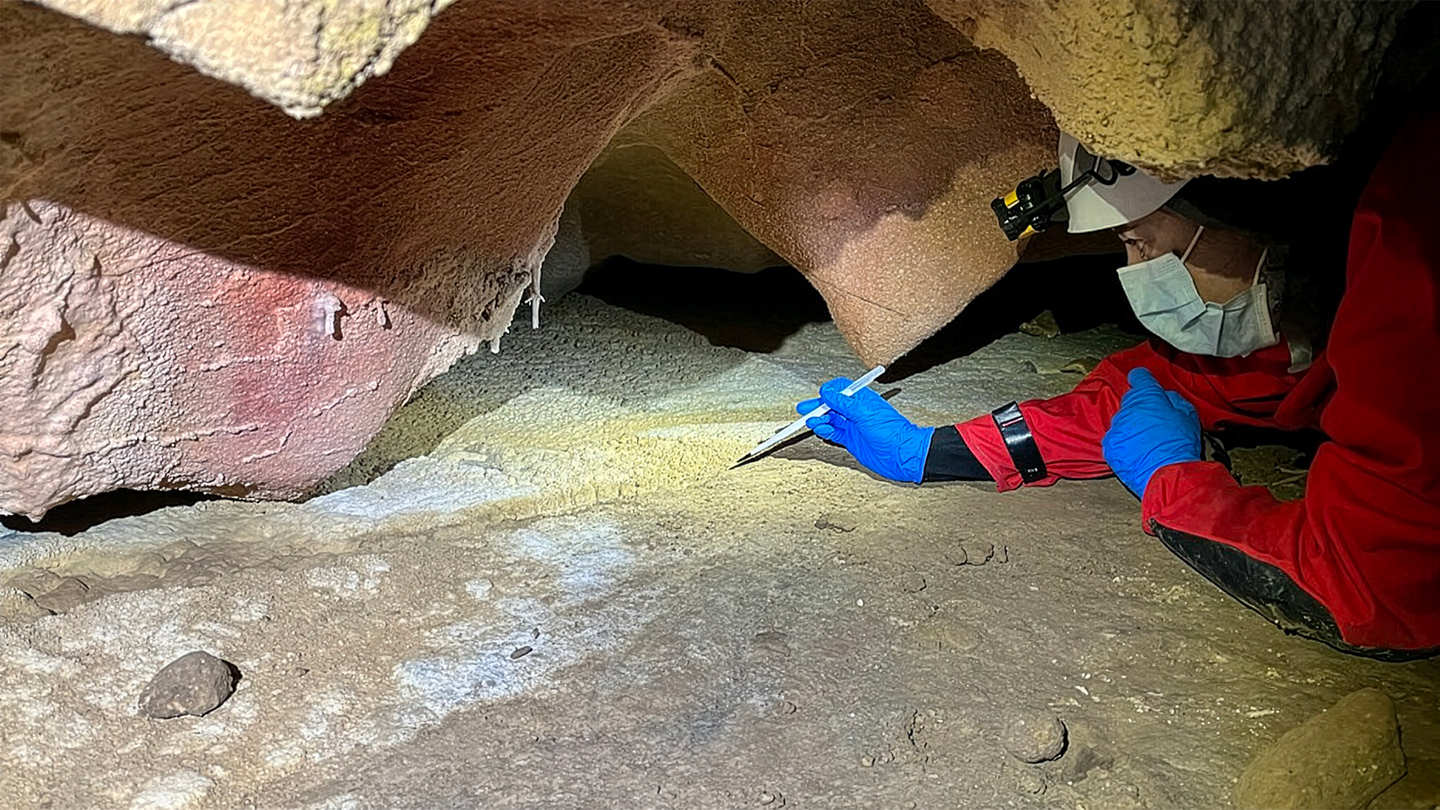
    Previous attempts to retrieve human DNA from prehistoric caves have been limited to bones, sediments and artifacts. As part of the First Art project, which seeks to understand artistry’s origins, Collado Giraldo and colleagues collected more than 100 samples from 11 caves, half from paintings and half from bare rock nearby. Five samples came back positive for ancient human DNA. Surprisingly, only one came from a painting — from Escoural Cave in Portugal. The four other samples came from blank walls in Escoural and Spain’s Covarón Cave.  

    “Our first positive sample was a pigmented one, and we were very excited,” says Alba Bossoms Mesa, an evolutionary geneticist at the Max Planck Institute for Evolutionary Anthropology in Leipzig, Germany. “So we took some control samples from unpigmented areas that were similar in texture and size, but those samples turned out to be better than the original.”  

    Scientists obtained over 100 samples from caves in Portugal and Spain. Five contained ancient human DNA. Government of Extremadura

    Because DNA naturally degrades over time, scientists estimated most of the samples’ ages at a minimum of 2,000 years based on how the molecules shorten and undergo chemical changes. But the samples are probably much older, Bossoms Mesa says. DNA features in the two best-preserved samples had similarities to those of hunter-gatherers who lived in Europe as early as 16,000 years ago.  

    In three of the samples, the human DNA was present alongside animal DNA, making it hard to say how the human traces got there. They could have been carried into the cave by water or an animal from somewhere else. But at Escoural, there was no animal DNA in two samples — the pigmented one from the painting and one from a plain wall — suggesting that an ancient person interacted directly with the cave. They touched, sneezed or urinated on the cave wall and left their DNA behind.  

    But direct interaction is not enough to link that DNA to the cave’s art.  

    “It was found on the surface in the environs of the rock art, but it might have been left by any person near that rock face, perhaps long after the rock art was made,” says Benjamin Smith, a rock art specialist at the University of Western Australia in Perth who was not involved in the research. 

    To tie the art to the artist, scientists would need to find DNA that is more concentrated in the painting than the blank walls or that could be dated to the same age as the painting. Finding ancient DNA within layers of the paintings’ pigment would be ideal, Smith says.  

    The DNA recovery methods the scientists used were developed for bones and sediments. If they can be further adapted, Bossoms Mesa says, other sites and types of art may yield more consistent DNA.  
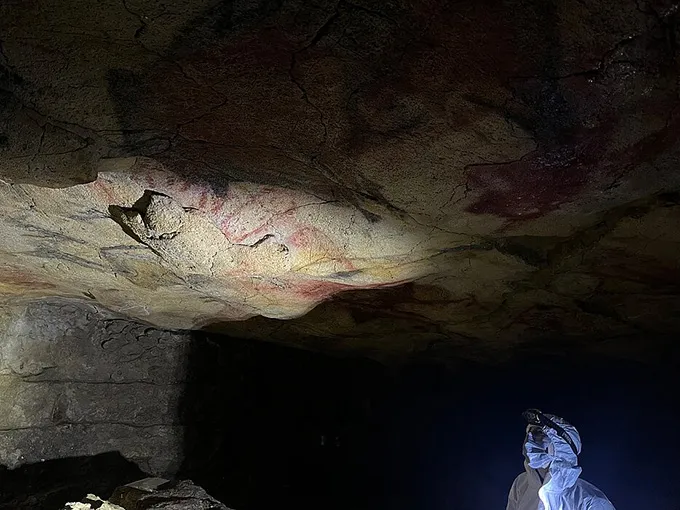
    A photo of a researcher in PPE looking up at prehistoric paintings on the cave's ceiling.
    Collection also took place at the lifelike wildlife paintings in Spain’s iconic Cave of Altamira. Matthias Meyer

    The Cave of Altamira didn’t yield human DNA, but it fulfilled a different dream for Bossoms Mesa. To protect its priceless prehistoric paintings, visitors can view only a nearby replica cave. On a childhood road trip, she admired astonishing faux paintings of bison and horses leaping across the ceiling, and wished she could see the real thing. 

    Twenty years later, when Bossoms Mesa returned to Altamira with the First Art project, she was one of two people allowed to enter. “Being grown up and able to visit the cave when so few people get that opportunity…. It was very emotional for me.” 

    Sponsor Message


    Ancient caves clings DNA human painted walls
    NCIJ NETWNCIJ NETWORK
    • Website

    Keep Reading

    Drought announcement looms for parts of Wales over river levels

    Oil has harmed the nature and people of the Niger Delta; human rights may save it

    Watch an orca ram into a sunfish so hard it explodes

    MIT’s new lidar chip could give self-driving cars a wider view

    An experimental oral vaccine may prevent invasive bacterial diarrhea

    A strange quantum effect dramatically boosts energy transfer

    Add A Comment
    Leave A Reply Cancel Reply

    Editors Picks

    ServiceNow bets $40 million on Indian banking software specialist to expand its financial services push

    July 23, 2026

    Anthropic Releases Claude Security Plugin for Claude Code in Beta: A Multi-Agent Vulnerability Scanner That Runs in Your Terminal

    July 23, 2026

    Adobe Acrobat Extension Flaw Let Malicious Sites Read WhatsApp Web Data

    July 23, 2026

    Swiss Bank BancaStato Launches Bitcoin Trading Through Sygnum And Avaloq

    July 23, 2026
    Latest Posts

    Trump slaps 50% tariffs on Canada and Carney vows to ‘intensify’ trade talks

    July 21, 2026

    How Two Brothers Dug for Dead Relatives: With a Shovel and a Kitchen Knife

    July 21, 2026

    Chile floods: Towns evacuated following heavy rain in Coquimbo

    July 21, 2026

    Subscribe to News

    Get the latest sports news from NewsSite about world, sports and politics.

    NCIJ Network is an independent digital news platform delivering trusted investigative journalism, European and global news, in-depth analysis, and fact-based reporting with accuracy, transparency, and integrity.

    Facebook X (Twitter) Instagram Pinterest YouTube

    ServiceNow bets $40 million on Indian banking software specialist to expand its financial services push

    July 23, 2026

    Anthropic Releases Claude Security Plugin for Claude Code in Beta: A Multi-Agent Vulnerability Scanner That Runs in Your Terminal

    July 23, 2026

    Adobe Acrobat Extension Flaw Let Malicious Sites Read WhatsApp Web Data

    July 23, 2026

    Subscribe to Updates

    Get the latest creative news from FooBar about art, design and business.

    Type above and press Enter to search. Press Esc to cancel.