


Reading Time: 7 minutes
Click here to read highlights from the story
- The New Friends program at the Wisconsin Alzheimer’s Institute has paired people with early-stage Alzheimer’s and dementia with UW-Madison students.
- The students will go into careers as nurses, doctors, therapists or social workers.
- Mentors, students and program leaders say the program is mutually beneficial: The semester-long program gives students firsthand experience being around someone who lives with mild cognitive issues, and the mentors get social connection during what can be a lonely time.
- New Friends also helps dispel myths about people in the early stages of Alzheimer’s and dementia, many of whom are able to live independently, hold jobs, socialize with friends and raise kids or grandkids.
The first sign seemed harmless.
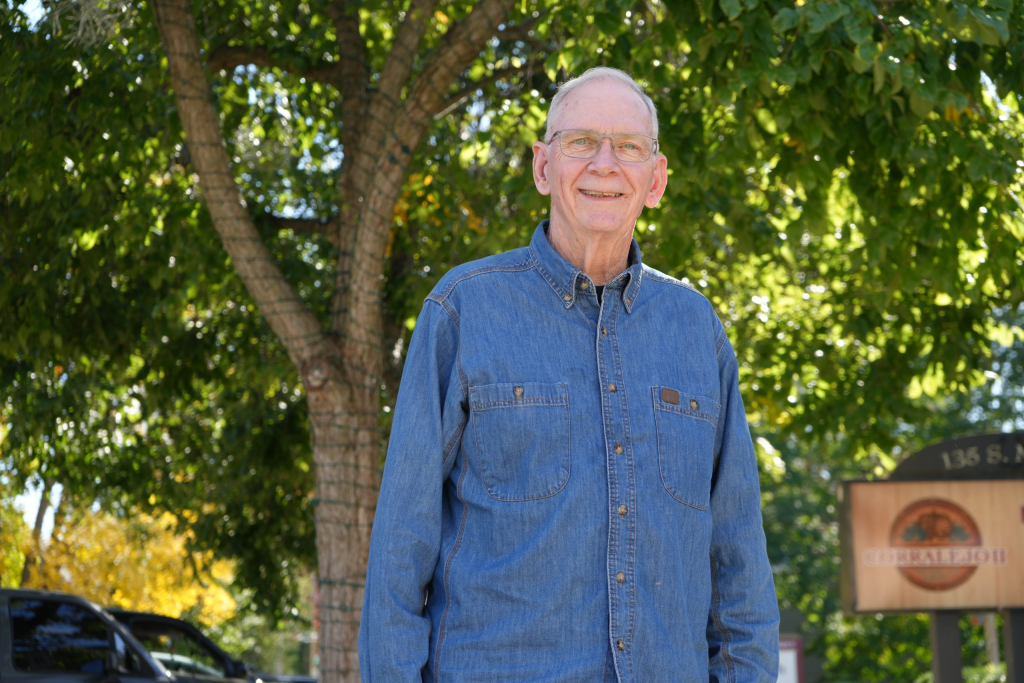
Bill Ducett drove his carload of friends in the opposite direction of the Chicago conference where they were headed. His wife Diana — a nurse — watched out the car window, concerned, as they passed unfamiliar streets. When she corrected Bill, embarrassment washed over him as he quickly turned the car around.
It was a small slipup, unless you know Bill: a 78-year-old with a razor-sharp internal compass and an Illinois native who knows the city like the back of his hand.
Diana convinced Bill to go to the doctor. After five hours of testing, he emerged with a diagnosis: mild cognitive impairment, and a prescription: car GPS.
Sign up for Northeast News, our free email newsletter focused on northeast Wisconsin.
Now, for three years, Bill has met with medical students from the University of Wisconsin-Madison to talk about what it’s like to live with an early-stage Alzheimer’s diagnosis.
The program, dubbed New Friends, has for 14 years connected people in the early stages of Alzheimer’s and dementia with future medical professionals to learn from one another.
The goal is to teach future health care workers lessons they can’t gain from coursework alone: firsthand experience with people living with cognitive changes outside of a classroom and textbook. Many of the participating students go on to be nurses, doctors, therapists or social workers. Together, they help challenge misconceptions about dementia and work toward better care for patients experiencing it.
“I thought I could be, with my own journey, helping to be productive for somebody else to do something about this. So the motivation was to give back. But in giving back, I’m getting so many benefits,” Bill said.
As Wisconsin’s population ages, elder care workers are in short supply, and even rarer are those with prior experience with Alzheimer’s and dementia. The arrangement is mutually beneficial: Students get experience connecting with people living with cognitive changes, and mentors get social connection during a particularly lonely time.
“Oftentimes medical students are really good at the medicine side of things, but their bedside manner or their understanding of people living with dementia wasn’t the best,” said Sheryl Spensley, education coordinator at UW-Madison’s Wisconsin Alzheimer’s Disease Research Center.
How it works
The program started small in 2012. Since then, it’s grown exponentially, and more than 300 students have participated. Usually, each mentor takes on two students.
Spensley plays matchmaker, pairing students and mentors who have the most in common.
The meetups look different for every pair. Some gather at the mentor’s home to sit and talk. Others go to parks, coffee shops, restaurants or museums. Some opt for more activity, watching sports, going bowling or playing board games. Bill and Diana’s “friends” have chosen to paint pottery together or attend plays put on by Bill’s son, a teacher at their local school in Oregon, Wisconsin.
There are logistics to navigate that students usually don’t consider in their everyday lives: How will the mentor get to the meeting? Is there suitable parking and seating? Is the meeting place too loud or overstimulating?
“That’s a good learning experience about how differently abled people have to navigate the world, capacity to get in and out of places, and how much time that takes for people,” Spensley said.

All mentors are squarely in the early stages of dementia. In the mid to late stages, communication becomes more challenging, people may live in an assisted living facility, and reflecting on what they’re experiencing can be difficult.
“For some it can be more emotionally distressing at that point,” said Molly Schroeder, outreach program manager at the Wisconsin Alzheimer’s Institute who helps coordinate New Friends.
Much of the conversation can tend to revolve around the mentor, as students ask about things like the logistics of their medical care or their everyday hurdles, but former mentee Meghana Ram said they also often just talked as friends. She found the meetups felt less like an interview and more like a social hangout.
Some of the mentors have caregivers who join and talk about their responsibilities and careers. Technically, Diana joins the meetings as Bill’s mentor.
“She’s a caregiver, but you know, she’s more of a commentator,” Bill joked.
Throughout the semester-long process, students keep a journal where they reflect on what their mentors teach them. They also take surveys before and after the program measuring their attitudes toward people with cognitive decline — questions like, “how comfortable would you be sitting one on one with someone with dementia?” By the end, students’ perceptions grow more positive.
Dispelling myths, challenging stigma
When Bill started telling his neighbors and friends about his diagnosis, he felt their sympathy. But he also noticed that they became uncomfortable and started “pulling back” from him.
“They don’t know what to say,” Diana said of people who learn about Bill’s diagnosis. “They’re afraid of how they’ll be interpreted … They feel sorry for both of us. They’re a little too afraid to get involved.”
Nowadays, the symptoms Bill experiences are small and often harmless: forgetting that he made a cup of coffee for Diana until the cup is cooled. Temporarily losing his keen sense of direction. But he still drives, still attends his son’s plays, still lives his life mostly as normal.

During dementia’s early stages, people often experience confusion or small memory lapses that don’t always impact their ability to live independently. Many with this early diagnosis still have jobs and social lives and are raising kids or grandkids, Schroeder said.
But many people don’t realize that, she said, “because unfortunately, a lot of what we see in the media is, we see people more at the later stages in a nursing home, sitting in a wheelchair in front of a TV. But there are years before that where it doesn’t look like that at all.”
Bill doesn’t feel that same judgment with the New Friends students. They meet him with pure curiosity. He’s mentored eight students over three years.
“I was a school teacher. I was a professor in education. I mentored students in their 20s,” Bill said. “So I meet with these future medical professionals because I can get back in teaching mode. For me, it’s all very comfortable.”
Students say the program dispels many of the myths about dementia they once held, mostly regarding what someone’s daily life must look like after diagnosis.
“Culturally, how we look at the elderly, it’s not good,” Spensley said. “This program shows students that even when you have early-stage dementia, you still have things to contribute to society and things you can learn. That’s why they’re called mentors.”
‘Different than just a textbook definition’
When Ram worked as a CNA at an assisted living facility throughout high school, she kept meeting dementia patients, and she didn’t feel she had the tools to fully connect with them.
After enrolling at UW-Madison, she joined the New Friends program to improve her communication with patients.
For a year, she set aside time to play at an arcade and go out to eat with her mentors. She asked questions like: “How did you react to the diagnosis? How did you tell your family? Has your social life changed?”
The answers showed her the importance of establishing a personal connection with patients.
“A lot of these patients don’t necessarily have someone to talk to or have someone to listen to them,” Ram said. “By doing that, you can learn so much of what each individual person needs … to make them feel better. Realizing that the experience of this illness looks so different from person to person, and that sometimes it needs a tailored approach, and that only comes with building that trust and having those conversations and listening.”
Ram loved the program so much that when she moved home to Green Bay, she started a mini version with local students.
The program ran for two years in partnership with Curative Connections, a support program for adults with dementia or other cognitive issues. It ended when Ram moved to Wausau to study to become a physician’s assistant. But she hopes to restart something similar someday.
“(I wanted to) go into those patient rooms with better communication methods, or remembering more of the experience, not only for me, but for the patient, too, and maybe for family members,” Ram said. “I think understanding the experience of a disease is so much more different than just a textbook definition of it. Getting to hear that from patients firsthand is really neat.”
Like Ram, not every student will go on to become a caregiver for Alzheimer’s and dementia patients. But they’ll be prepared when coming across people with cognitive changes, whether they be patients, family members or perfect strangers.
“Whether that’s at a restaurant, a bank, the grocery store,” Schroeder said, “it’s important to know how to communicate and support those individuals.”
But it isn’t just about preparing students for the people they’ll meet in the future.
Many of the New Friends pairs end up forming a bond and keep in touch after their time in the program ends. Ram said she and her mentors kept in touch for a while by texting each other photos and updates about their lives. Bill and Diana follow where their students go after graduation and look forward to meeting more, semester after semester.
“We feel that those young people have enriched our lives so much,” Diana said. “They keep us looking forward to the next set of friends.”
Miranda Dunlap reports on pathways to success in northeast Wisconsin, working in partnership with Open Campus. Find her on Instagram and Twitter, or send her an email at mdunlap@wisconsinwatch.org.

Wisconsin Watch is a nonprofit, nonpartisan newsroom. Subscribe to our newsletters for original stories and our Friday news roundup.
How Alzheimer’s and dementia patients teach Wisconsin’s next generation of health care workers is a post from Wisconsin Watch, a non-profit investigative news site covering Wisconsin since 2009. Please consider making a contribution to support our journalism.
