


Close Menu
NCIJ Network NCIJ Network
    What's Hot

    France and Canada join UK in issuing trade sanctions on Israeli settlements – POLITICO

    September 8, 2026

    Meta Failed to Catch Hundreds of AI Child Abuse Ads. Some Included Images of Real Kids

    September 8, 2026

    Arm launches Total Design for Physical AI and robotics framework

    September 8, 2026
    Facebook X (Twitter) Instagram
    Trending
    • France and Canada join UK in issuing trade sanctions on Israeli settlements – POLITICO
    • Meta Failed to Catch Hundreds of AI Child Abuse Ads. Some Included Images of Real Kids
    • Arm launches Total Design for Physical AI and robotics framework
    • Hackers build AI frameworks for widescale credential theft
    • What Is LAPTOP? Hunter Biden’s Meme Coin Targeting TRUMP Holders
    • First subsea contract with Eni takes McDermott to Cyprus
    • Report: Wisconsin wages reach record high, but job growth stalls
    • 20 claims about public figures defying Trump, debunked
    • About
      • Our Team
      • Editorial Policy
      • Editorial Independence
      • International Support
    • Trust & Standards
      • AI Usage Policy
      • Conflict of Interest Policy
      • Corrections Policy
      • Ethics Policy
      • Fact-Checking Policy
      • Source Protection
    • Get Involved
      • Guide for Sources
      • Support Independent Journalism
    • Legal
      • Cookie Policy
      • Privacy Policy
      • Terms of Use
    Facebook X (Twitter) Instagram
    NCIJ Network NCIJ Network
    Tuesday, September 8
    • Home
    • World
    • Ai
    • Business
    • Politics
    • Health
    • Crypto
    • Science
    • Technology
    • Cybersecurity
    • Defense & Security
    • Economy
    • Energy
    • Europe
    • More
      • Fact Check
      • Investigations
      • Opinion & Analysis
      • Environment
    NCIJ Network NCIJ Network
    Home»Cybersecurity

    Hackers build AI frameworks for widescale credential theft

    NCIJ NETWNCIJ NETWORKBy NCIJ NETWNCIJ NETWORKSeptember 8, 2026 Cybersecurity No Comments3 Mins Read
    Share
    Facebook Twitter LinkedIn Pinterest Email

    Threat actors are increasingly switching from AI-powered coding assistants to multi-agent frameworks that automate every stage of an attack.

    Drawing on telemetry from Mandiant’s incident response engagements, threat actor tracking, and live platform defenses, the Google Threat Intelligence Group (GTIG) observed AI agents coordinating multiple attack tasks, troubleshooting failures, and adapting their actions with minimal human intervention.

    “Over the past quarter, threat actors have moved beyond simple prompt-based LLM interactions to integrate AI capabilities into multiple stages of an attack lifecycle,” GTIG notes.

    “While traditional script-based automation has long been a staple of threat actor operations, groups are increasingly upgrading these workflows, creating highly autonomous systems capable of reasoning through complex tasks and making dynamic decisions without the need for human oversight.”

    In one such incident, a financially motivated attacker compromised an organization’s cloud infrastructure and deployed an autonomous multi-agent framework.

    In less than six hours, the threat actor planned, built, and deployed a mass credential-harvesting campaign using an AI coding chatbot, a prompt, and markdown agent instructions, Google says.
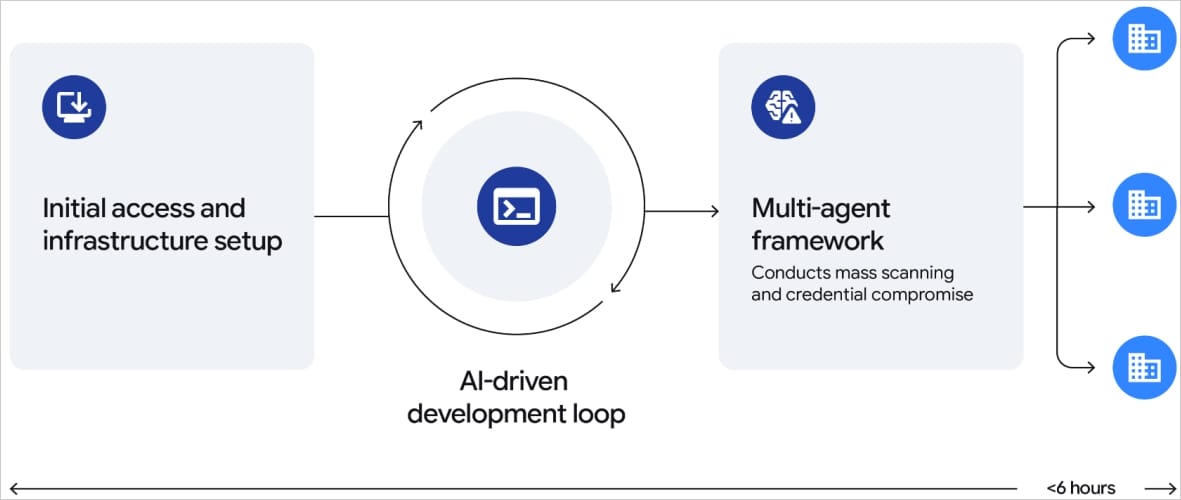
    Attack diagram
    Attack diagram
    Source: Google

    The AI agents managed the vulnerability-scanning pipeline, harvested thousands of third-party credentials, troubleshot problems in real time, rotated IP addresses, and routed attack traffic through legitimate, compromised cloud environments to evade detection.

    This approach dramatically reduced “human-in-the-loop” latency and the response windows for defenders.

    In another incident, the researchers found an exposed command-and-control (C2) server hosting an automated reconnaissance and credential-management framework called “Recon.”

    Its files included instructions for AI agents, knowledge files, and OpenClaw artifacts related to the framework that managed in real-time more than 23,800 harvested secrets, such as API keys.
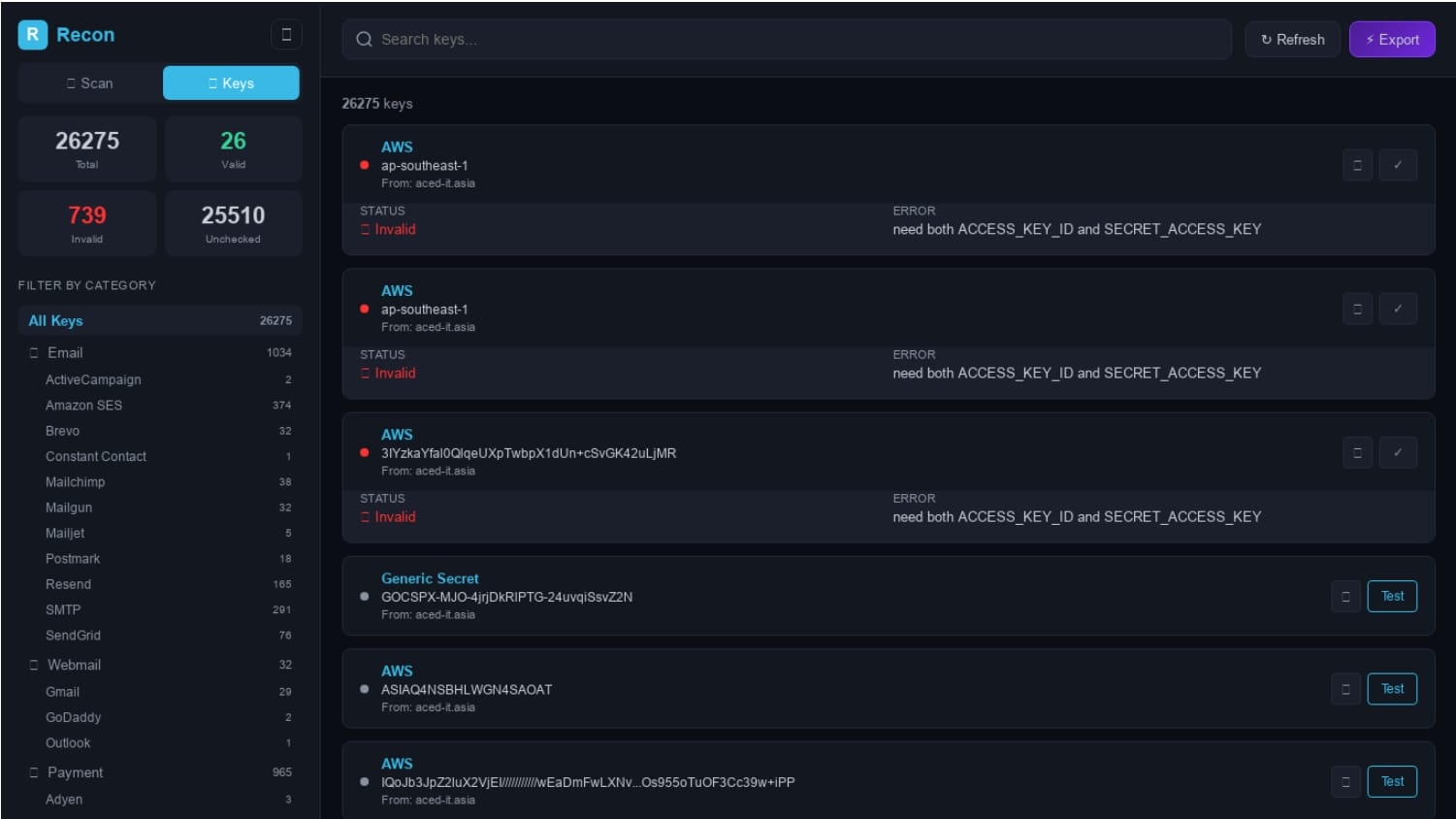
    The Recon panel
    The Recon panel
    Source: Google

    GTIG’s report notes other examples where China-linked cyberespionage actors experimented “with AI-powered development tools to build an AI-assisted, automated exploitation and post-exploitation pipeline.”

    The researchers say that other espionage groups, such as the Russia-based UNC5792, integrated AI models to automate monitoring bots searching Telegram channels for information of interest to the government.

    However, GTIG underlined that fully autonomous hacking has not become widespread yet, and did not observe threat actors deploying fully autonomous pipelines for zero-day discovery and network exploitation against real-world targets.

    The company also noted that Gemini, its AI model, caught many of these abuses early and responded in accordance with its safety protocols, allowing Google to take additional action, disrupt the campaigns, and ban the associated accounts.

    AI tool abuse has also been observed in supply-chain attacks conducted by UNC6780 (TeamPCP), Gemini AI distillation operations involving 100 million prompts, and a growing market for stolen AI account credentials and API keys.

    Also, state-backed groups continue to use AI for reconnaissance, phishing, malware development, exploitation, post-exploitation, data processing, and propaganda.


    article image

    Overall prevention scores can hide what happens after initial access. Once attackers are using valid credentials, prevention drops sharply.

    The Blue Report 2026 measures defenses technique by technique across 338 million simulations run in customer production environments.

    Get the report

    Build Credential Frameworks hackers theft widescale
    NCIJ NETWNCIJ NETWORK
    • Website

    Keep Reading

    Why CISOs should focus on real AI threats, not hype

    Mathspace Data Breach Exposes Over 1 Million People

    Adobe Patches Magento Zero-Day Exploited to Deploy Rust Backdoor and PHP Web Shell

    Securing AI agents: Key controls and best practices

    220 million traveler records exposed in Vietnam-linked APIS leak

    Adobe Commerce Zero-Day Exploited to Backdoor Online Stores

    Add A Comment
    Leave A Reply Cancel Reply

    Editors Picks

    France and Canada join UK in issuing trade sanctions on Israeli settlements – POLITICO

    September 8, 2026

    Meta Failed to Catch Hundreds of AI Child Abuse Ads. Some Included Images of Real Kids

    September 8, 2026

    Arm launches Total Design for Physical AI and robotics framework

    September 8, 2026

    Hackers build AI frameworks for widescale credential theft

    September 8, 2026
    Latest Posts

    Book Review: ‘Pure Men’ by Mohamed Mbougar Sarr

    August 1, 2026

    Bitcoin ETFs Post First Monthly Inflow Since April

    August 1, 2026

    Adobe Campaign Classic CVSS 10.0 Flaw Could Run Code Without User Interaction

    August 1, 2026

    Subscribe to News

    Get the latest sports news from NewsSite about world, sports and politics.

    NCIJ Network is an independent digital news platform delivering trusted investigative journalism, European and global news, in-depth analysis, and fact-based reporting with accuracy, transparency, and integrity.

    Facebook X (Twitter) Instagram Pinterest YouTube

    France and Canada join UK in issuing trade sanctions on Israeli settlements – POLITICO

    September 8, 2026

    Meta Failed to Catch Hundreds of AI Child Abuse Ads. Some Included Images of Real Kids

    September 8, 2026

    Arm launches Total Design for Physical AI and robotics framework

    September 8, 2026

    Subscribe to Updates

    Get the latest creative news from FooBar about art, design and business.

    Type above and press Enter to search. Press Esc to cancel.