


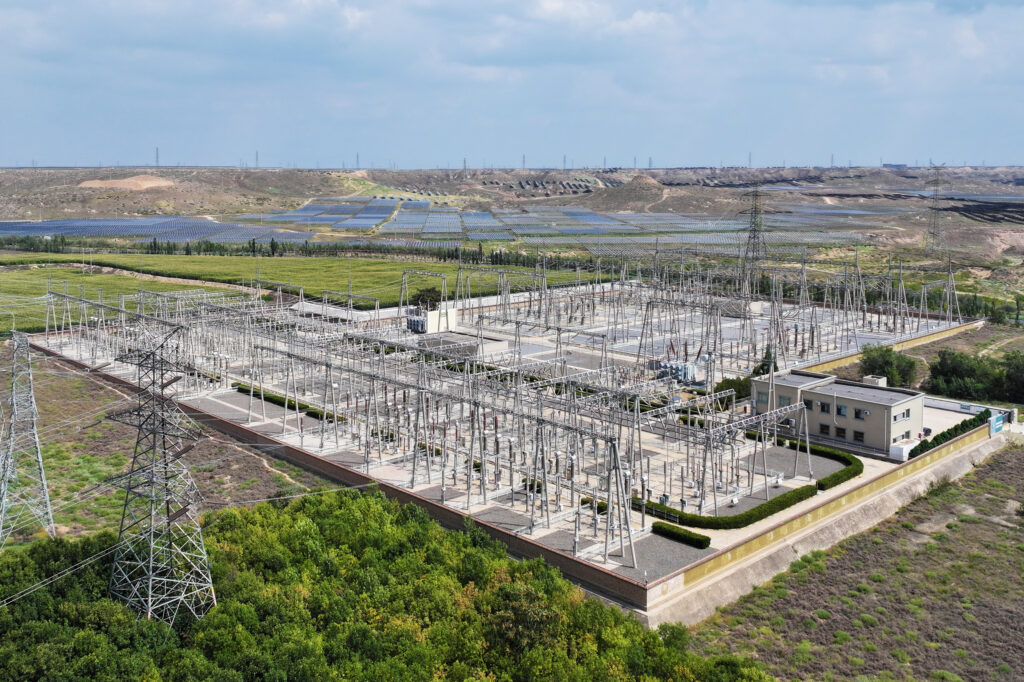
The German government has launched an international initiative to curb emissions of sulfur hexafluoride, an exceptionally potent greenhouse gas that it says has long been overlooked in efforts to address climate change.
Announced this week at a United Nations Environment Program meeting in Kigali, Rwanda, the “Global SF6 Pledge” urges countries to commit to monitoring, reporting and reducing emissions of the synthetic gas from the electric power sector, where it is used as an insulator in high-voltage equipment.
Pound for pound, SF6 is 24,300 times more effective at warming Earth’s atmosphere than carbon dioxide and remains in the atmosphere for 1,000 years. Although the United Nations identified it as one of six key greenhouse gases in the 1990s, it has received relatively little attention from policymakers.
“It’s a gap,” said Philippe Lempp of Germany’s international development agency, which is implementing the pledge. “We need to take care of this one because it’s something that we cannot rely on countries to do themselves.”
More than half of all sulfur hexafluoride emitted globally comes from China, a country that is rapidly expanding its electric grid. The country’s state-owned electric power companies recycle only about 30 percent of the gas they discard each year, with the remainder likely released into the atmosphere, a recent Inside Climate News analysis concluded.
“The pledge finally turns the spotlight on SF6, but until the world’s largest grid builder matches that ambition, we’re only treating half the leak,” said Richard Ferris, senior counsel at the Institute for Governance and Sustainable Development, a Washington, D.C.-based environmental research and advocacy organization.
China’s central government released its National Climate Change Response Plan in July, which called for an SF6 management plan to reduce emissions of the pollutant. The pledge and the attention it brings could hasten China’s efforts, Ferris said.
“China will continue to work with all countries to strengthen international cooperation on climate change, contributing to a green transition and the sustainable development of humanity,” Liu Chang, spokesperson for the Chinese Embassy in Washington, D.C., said in a written statement. Liu did not directly respond to a question about whether China intends to sign the pledge.
Countries that sign the SF6 Pledge commit to strengthening monitoring and reporting of SF6 emissions while supporting efforts to reduce releases of the pollutant. SF6 emissions can be cut by recycling rather than venting used gas, reducing leaks from high-voltage equipment and using alternative gases or technologies as electrical insulators.
The European Union and the United Kingdom are the first to endorse the pledge, which officially launches this month at the United Nations’ global climate conference in Antalya, Turkey. The U.S. State Department declined to comment.
The United States released 328 metric tons of sulfur hexafluoride in 2023, primarily from the electric power sector, the most recent year for which data are available, according to U.S. Environmental Protection Agency data. This equals the annual climate pollution of 1.9 million automobiles, based on the agency’s greenhouse gas equivalency calculator.
The EPA has repeatedly extended the deadline for large greenhouse gas emitters—including those that release SF6—to report their climate pollution, as the agency considers scrapping reporting requirements entirely under an executive order by President Trump.
The pledge joins a growing list of voluntary initiatives, such as the Global Cooling Pledge and the Global Methane Pledge, that aim to reduce climate pollution. More than 150 countries have signed the methane pledge.
The SF6 pledge would provide a valuable platform for international cooperation, but “voluntary commitments must be backed by national regulations and accountability,” said Avipsa Mahapatra, climate campaign director for the Environmental Investigation Agency US, a Washington, D.C.-based nonprofit organization, in a written statement. “Success should not be measured by how many countries sign the pledge, but by how quickly countries stop installing new SF6-dependent equipment where alternatives are available, reduce emissions from existing equipment, and establish credible pathways toward eliminating SF6 emissions.”
Efforts should also target other industries that use and emit SF6, including semiconductor manufacturing, Mahapatra said.
The U.S. and Europe have significantly reduced emissions from their electric power sectors in recent decades through gas recycling, leak prevention and the adoption of alternative gases and technologies. The European Union took another step in that direction in January, when it began phasing out SF6 in new electrical equipment.
“It’s something that can be done,” Lempp said of global SF6 emissions reductions. “And with the right push, it will be done.”
About This Story
Perhaps you noticed: This story, like all the news we publish, is free to read. That’s because Inside Climate News is a 501c3 nonprofit organization. We do not charge a subscription fee, lock our news behind a paywall, or clutter our website with ads. We make our news on climate and the environment freely available to you and anyone who wants it.
That’s not all. We also share our news for free with scores of other media organizations around the country. Many of them can’t afford to do environmental journalism of their own. We’ve built bureaus from coast to coast to report local stories, collaborate with local newsrooms and co-publish articles so that this vital work is shared as widely as possible.
Two of us launched ICN in 2007. Six years later we earned a Pulitzer Prize for National Reporting, and now we run the oldest and largest dedicated climate newsroom in the nation. We tell the story in all its complexity. We hold polluters accountable. We expose environmental injustice. We debunk misinformation. We scrutinize solutions and inspire action.
Donations from readers like you fund every aspect of what we do. If you don’t already, will you support our ongoing work, our reporting on the biggest crisis facing our planet, and help us reach even more readers in more places?
Please take a moment to make a tax-deductible donation. Every one of them makes a difference.
Thank you,
