


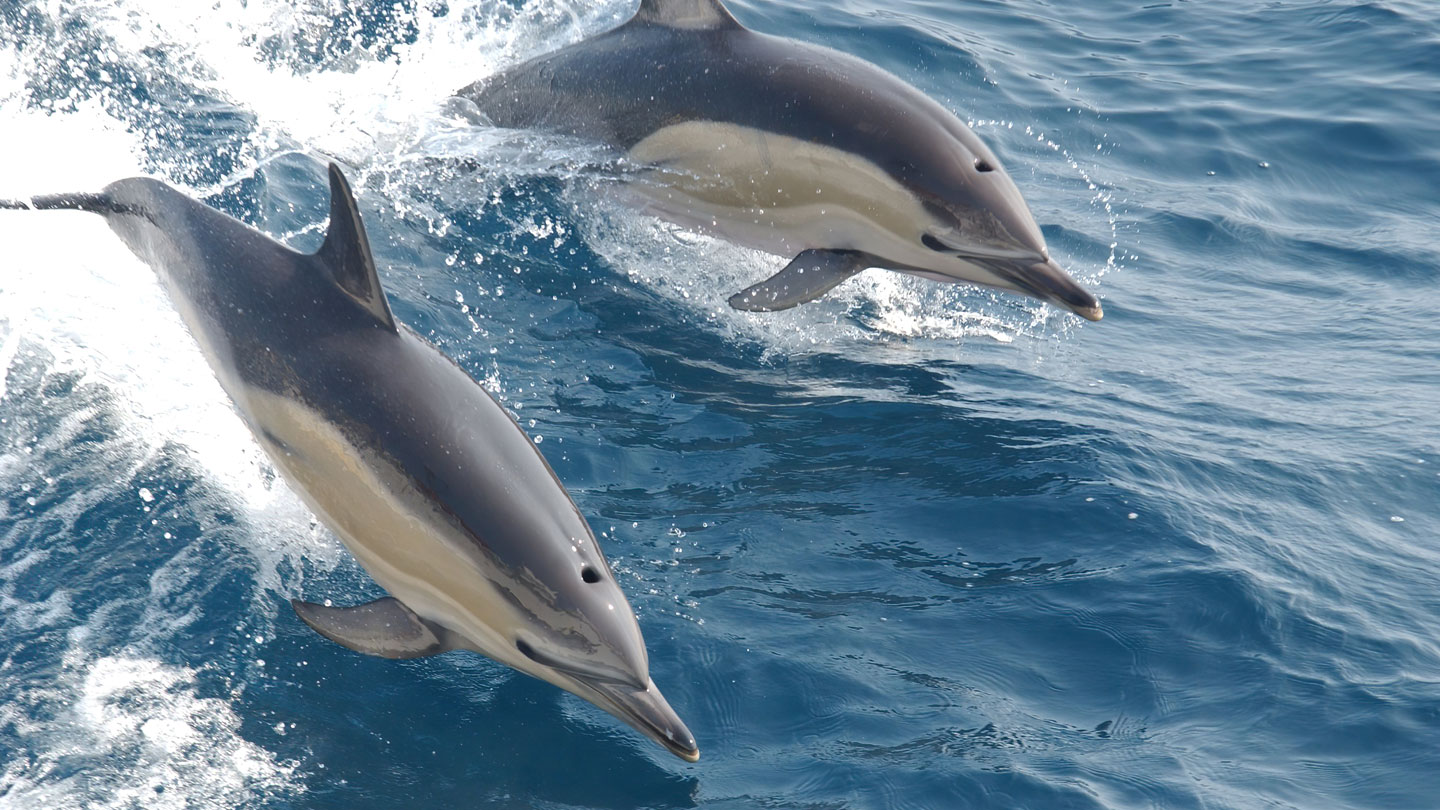
Exposure to trace metals and “forever chemicals” may be prematurely aging dolphins, raising concerns about both marine pollution and human health impacts.
Metals such as zinc and copper can wind up in the ocean from industrial waste and mining. So can per- and polyfluoroalkyl substances, or PFAS, which are often called forever chemicals because of how long they persist in the environment.
Scientists have previously documented harmful effects of metals and PFAS in wildlife, including dolphins. A 2013 study found that bottlenosed dolphins with high exposure to PFAS showed signs that the compounds disrupted their livers, kidneys and immune systems. And earlier this year, researchers showed that dolphin mothers can transfer PFAS compounds to their offspring through milk, contributing to exposure early in life.
Now, it seems common dolphins (Delphinus delphis) exposed to these toxic substances are aging faster than they should be, researchers report June 26 in a paper posted to bioRxiv.org. The work has not yet been peer-reviewed.
Dolphins are often used as a surrogate for human health because they are similarly long-lived, breathe the same air and eat the same seafood we do. How these animals respond to accumulating toxins can help predict harmful effects in people. The new study is the first to explore the association between these substances and accelerated aging in a marine mammal.
There are two ways to talk about aging, says marine biologist Karen Stockin at Massey University in Auckland, New Zealand. Chronological age is your age in calendar years. Biological age is based on the state of your DNA, which naturally degrades over time at specific rates depending on the species.
That process can be sped up by external factors like stress or pollution. Accelerated biological age can lead to early onset cancer or chronic diseases — conditions typically associated with old age.
Stockin and colleagues collected liver and kidney samples from 75 dolphins that died in unrelated incidents from 2000 to 2023. The team compared the concentrations of trace metals and PFAS substances with the dolphins’ biological and chronological ages.
Stockin expected that the total amount of these toxins would contribute to accelerated aging. Instead, only certain subsets of metals and PFAS substances explained the difference between biological and chronological age.
“It’s not the total burden of PFAS you have,” Stockin says. “It’s which PFAS compounds you have.”
While often grouped together, PFAS includes tens of thousands of diverse chemicals. PFBA, a chemical used in nonstick pans and fire-fighting foams, was the primary compound associated with dolphins’ accelerated aging. Another associated compound, PFNA, has been linked to accelerated aging in humans, too.
For metals, the worst offender was selenium, a trace element essential for several physiological processes that can become toxic at higher doses. Other elements driving the relationship with accelerated aging included zinc, copper, aluminum and manganese.
Together, this subset of metals and PFAS substances explained more than half of the accelerated aging seen in the dolphins, the team found.
The study’s results reinforce concerns that contaminants can cause damage outside the tissues where they accumulate, says ecotoxicologist Baylin Bennett of the University of California, San Francisco, who was not involved in the research.
Understanding how multiple pollutants work in tandem to affect dolphin — and human — health is the next step.
Dolphins, like people, accumulate toxins over time, and they are rarely exposed in isolation. “It’s not like it’s just metals or just PFAS or just plastics or just phthalates,” Stockin says. “It’s a mixture of all of these things.”
