


Unlock the Editor’s Digest for free
Roula Khalaf, Editor of the FT, selects her favourite stories in this weekly newsletter.
Foot Locker owner Dick’s Sporting Goods cut its full-year sales and profit outlook and warned of a growing inventory backlog, as consumers struggling with affordability cut back spending on pricey footwear.
Shares in Dick’s Sporting Goods plunged 31 per cent on Tuesday and are down almost 50 per cent from a recent peak in June.
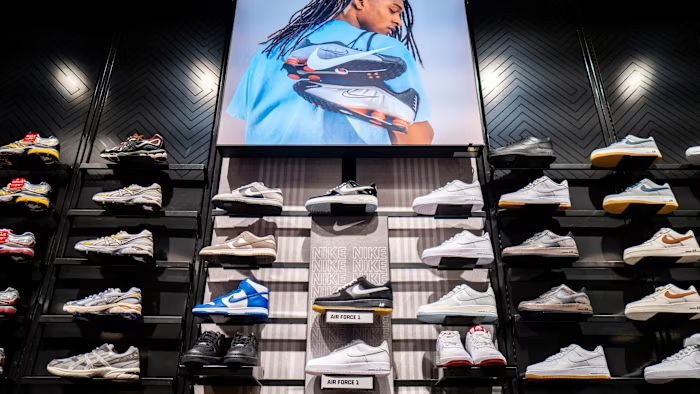
Executive chair Ed Stack told analysts on a second-quarter earnings call that the “industry is carrying too much inventory” while consumers have been “even more cautious than expected due to the geopolitical environment”.
Recent retail sales and consumer sentiment data have underlined the affordability crunch many Americans are grappling with as a result of US President Donald Trump’s tariffs and war in Iran. Discretionary spending has been particularly hard hit, with consumers pulling back on products they can live without. The S&P’s consumer discretionary index has fallen 5 per cent in the last month.
US consumer sentiment dropped dramatically in August, according to University of Michigan data released on Friday. Older and poorer Americans were particularly pinched by elevated fuel prices, which have gone up since the start of the Iran war.
The head of the Boston Federal Reserve told the FT earlier this month that poorer Americans were struggling to make “ends meet” as the war intensifies cost of living pressures.
July retail sales fell 0.6 per cent over the previous month, according to Census Bureau data, the biggest drop in more than a year. The reduction was due in part to Amazon moving its Prime Day back to June this year, leading to ecommerce sales cooling the next month.
Last week, Walmart shares suffered their worst session since 2022 after the retail behemoth reported its weakest US sales growth in more than six years. The company pledged to use a major tariff refund to cut prices for customers.
Dick’s lowered its projection for full-year net sales from $22.1bn-$22.4bn to $21.9bn-$22.2bn. Its operating income estimate for 2026 was reduced from $1.69bn-$1.81bn to $1.45bn-$1.55bn.
That build-up in inventory was because “certain legacy footwear silhouettes and apparel franchises are simply not resonating the way they once did”, Stack said.
