


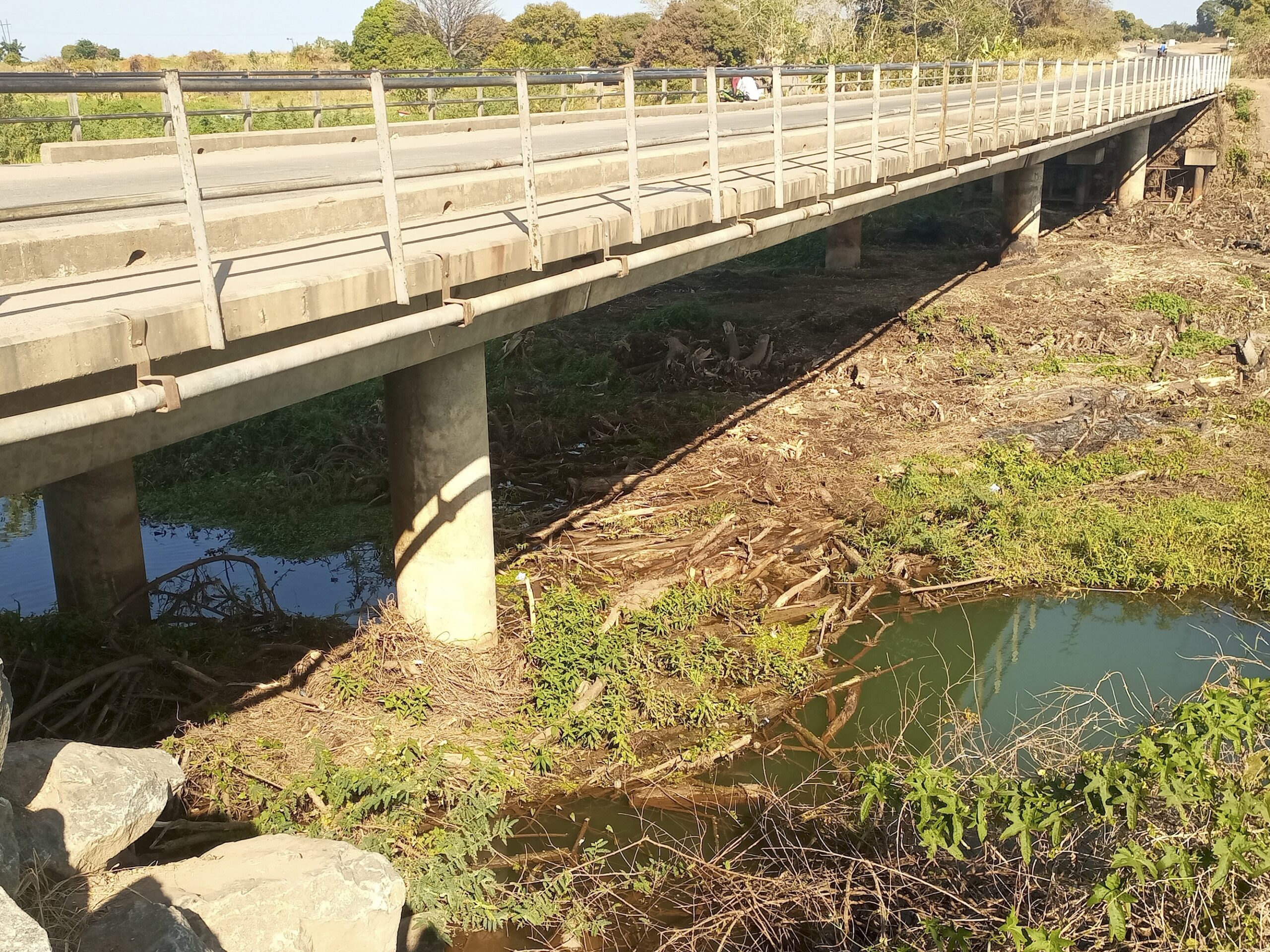
A mass of floating weeds at Chia Lagoon, Malawi’s largest, is choking out waterways and livelihoods as farmers and fishers struggle to access fields and fishing areas.
Seven months after the rainy season ended in Malawi, fields that once absorbed seasonal water at the lagoon are submerged, frustrating irrigated maize and rice production, according to farmers. Fishers also said it’s now hard to access fishing grounds as the weeds are blocking boat routes.
“We have never seen anything like this,” said Ali Maulidi, who leads an association of more than 1,000 fishers in Nkhotakota district in central Malawi where the lagoon is located. “Due to waterlogged soils, matured cassava has rotted in some fields,” Maulidi told Mongabay in a phone interview.
The lagoon, on the western shoreline of Lake Malawi, drains into the lake through a narrow channel. Communities said weeds and debris started collecting where the outlet begins in February, pushing the water back into the lagoon and flooding agricultural fields.
Chia Lagoon covers 1,700 hectares (4,200 acres) and directly supports more than 7,800 households through rice, cassava and maize farming as well as fishing and bird hunting. The larger river network supports more than 55,000 agriculturalists. In December 2025, the lagoon was recognized as a Key Biodiversity Area because of its abundant bird, fish, plant, reptile and amphibian species.
“We don’t understand what is happening here; but we’re worried because it’s greatly affecting us,” Maulidi said.
Scientists too don’t fully understand why the weeds are accumulating now, but they have also suffered its impact. Early in the year, a team of researchers, including Tiwonge Mzumara-Gawa, an ecologist at Malawi University of Science and Technology, struggled to access parts of the lagoon for their study on land use in the watershed.
The study hasn’t been published yet and it wasn’t focused on the weeds, but it could still help explain what’s going on. Mzumara-Gawa said the surrounding landscape is facing severe deforestation, farmland expansion and settlement growth. And farmers have encroached on the boundaries of the lagoon.
“It’s like this place should be wetland and nobody should be cultivating here. But people are cultivating there and … contributing to all of this silt that’s coming into the marsh. So that is my greater theory,” she told Mongabay in a phone interview.
Mzumara-Gawa said the catchment has been degraded enough that floodwater from two waves of flooding — in December 2025 and January 2026 — might have traveled faster through the area, uprooting plants in the lagoon as it went.
“So, maybe this rainwater coming from the high lands came in with a lot of force,” she said. “Because when I saw the size of it [the weeds], I was like, oh this is huge. How could this break away just like that?”
Banner image: Farmers have been opening fields beyond the boundaries of the lagoon, which may be adding to the accumulation of debris blocking it. Image courtesy of Innocent Chunga.
