


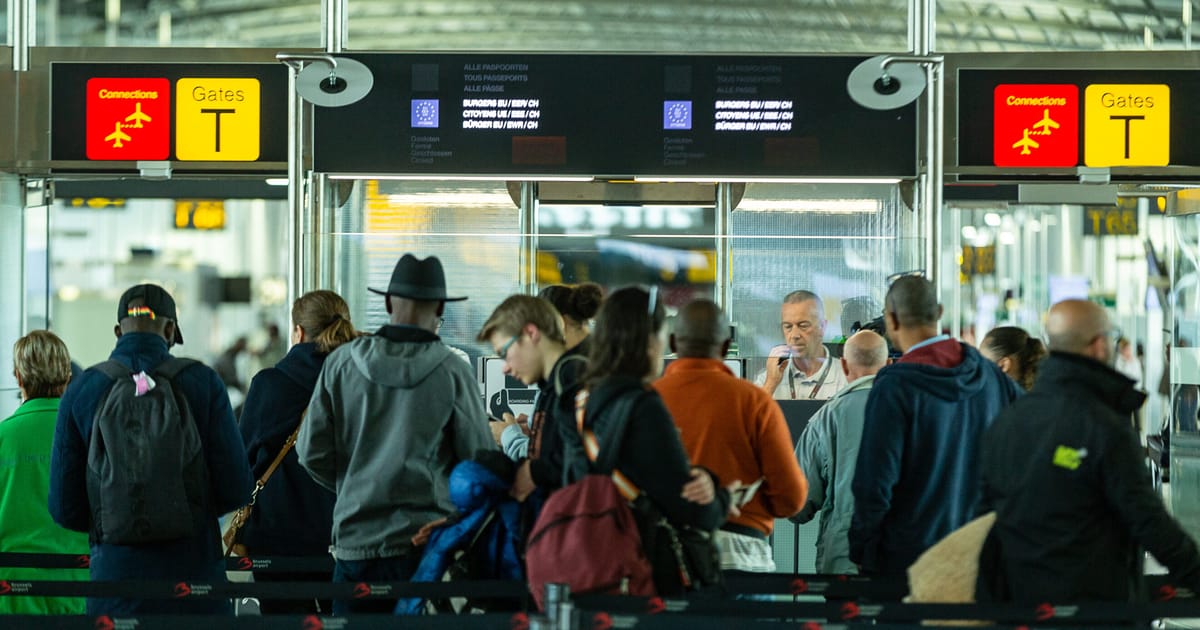
EU countries began rolling out the Entry/Exit System, which records the fingerprints and facial images of non-EU visitors to the Schengen area, a year ago. It has been fully operational at all external Schengen border crossings since April.
But it has led to long waits at many airports — particularly over the summer, when some countries switched it off during peak periods. Delays persist at some airports, including at Brussels Zaventem, where travelers were forced to wait in lines for up to five hours last month.
“Some member states are a bit behind,” Brunner acknowledged. “We have some challenges, like Zaventem for instance, in Belgium, but also in other member states. And they have to do their job. They agreed on the new system, and now it’s up to the member states to do their job.”
Brunner also said the Commission had offered support from border agency Frontex and funding to help countries implement the system, adding that he was “very confident” the problems would be ironed out before the next holiday rush.
Belgian Interior Minister Bernard Quintin pushed back at Brunner’s criticism, with a spokesperson saying his responsibility was to ensure there were enough police officers to staff the infrastructure provided by Brussels Airport Company.
The police have “been fully staffing the 12 positions at arrivals,” the spokesperson said, but the airport can process only 500 to 600 non-Schengen passengers an hour, compared with nearly 3,500 who may arrive between 6 a.m. and 10 a.m. on busy days. The airport’s infrastructure “cannot cope” with that demand, the spokesperson said, and the company must “make significant changes.”
