


Welcome back to World Brief, where we’re looking at violent clashes across Ethiopia, the Vatican courting France, and a seven-day proposal to end the Iran war.
Threats to Addis Ababa
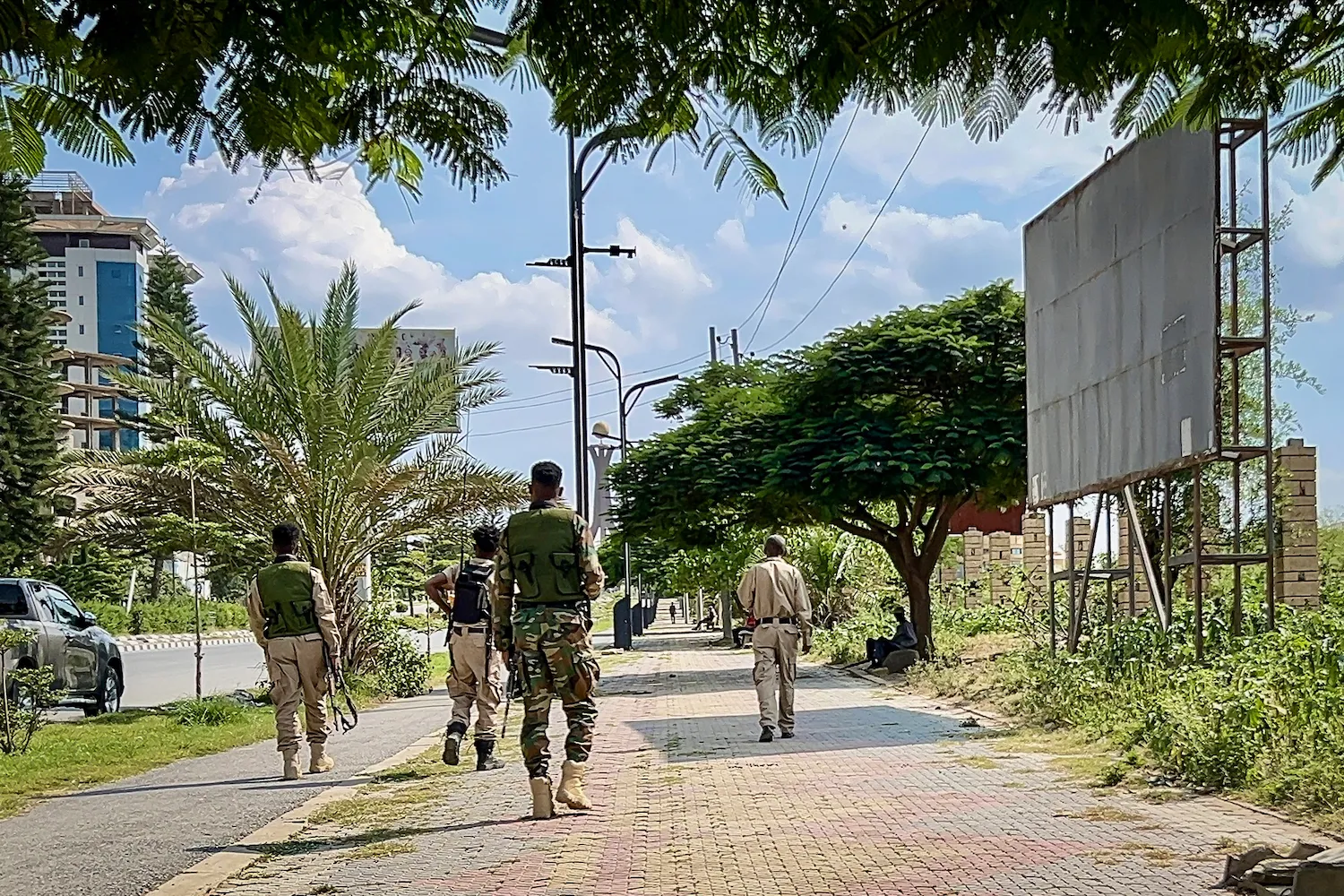
For nearly four years, Ethiopia has clung to a state of precarious peace, afraid to reignite a civil war that became one of the world’s deadliest conflicts in this century. But the country’s 2022 truce ultimately shattered this week, when the Tigray People’s Liberation Front (TPLF)—a powerful ethno-nationalist political and paramilitary organization that ruled Ethiopia for three decades until 2018—launched what its leaders called a “defensive” war to oust Prime Minister Abiy Ahmed.
Welcome back to World Brief, where we’re looking at violent clashes across Ethiopia, the Vatican courting France, and a seven-day proposal to end the Iran war.
Threats to Addis Ababa
For nearly four years, Ethiopia has clung to a state of precarious peace, afraid to reignite a civil war that became one of the world’s deadliest conflicts in this century. But the country’s 2022 truce ultimately shattered this week, when the Tigray People’s Liberation Front (TPLF)—a powerful ethno-nationalist political and paramilitary organization that ruled Ethiopia for three decades until 2018—launched what its leaders called a “defensive” war to oust Prime Minister Abiy Ahmed.
It is unclear what led to renewed fighting. On Wednesday, the TPLF accused government forces of firing on its troops, prompting retaliation. Addis Ababa tells a different story, arguing that armed rebels ordered an “all-out offensive” against federal positions in the Afar and Amhara regions as well as seized three airports in nearby Tigray. “The TPLF politico-military leadership has obviously taken irresponsibility to new heights,” Getachew Reda, an advisor to Abiy and a former TPLF official, wrote on social media.
Since then, violent clashes have only escalated. According to the Ethiopian National Defense Force (ENDF), its troops have already killed 272 “enemy troops” and captured 260 others. “Currently, the army is assessing the enemy’s situation and launching well-planned counterattacks from key military positions it holds,” the ENDF said. Internet access and phone service have also been disrupted in the north.
The last time that Ethiopia’s military took up arms against the TPLF, around 600,000 people were killed, and the Tigray region found itself on the brink of famine. This time, the TPLF has found new ways to exert pressure on Addis Ababa—namely, its recently formed coalition with six other armed groups. The alliance, announced on Sunday, includes major opposition parties that boycotted Ethiopia’s election in June. Abiy’s Prosperity Party won around 90 percent of available seats in the country’s lower house of parliament; voting did not take place at all in Tigray.
Ethiopia has also accused the rebels of seeking an alliance with neighboring Eritrea in an effort to destabilize Abiy’s administration. Eritrea, whose forces fought alongside Ethiopian federal forces in the previous Tigray war, denies involvement. However, as relations between Abiy and Eritrean President Isaias Afwerki have plummeted in recent years, currying support from Tigray has become an increasingly attractive option for Asmara. Eritrea has long feared that landlocked Ethiopia will invade its territory to gain access to the Red Sea.
Hoping to avoid another catastrophe or the outbreak of a wider regional war, foreign leaders have condemned the recent fighting and advocated for diplomacy. This week, the African Union Commission called for an immediate de-escalation of hostilities, East Africa’s bloc stressed the importance of “maximum restraint,” and the U.S. ambassador to Ethiopia demanded “reasonable political dialogue.”
Yet the conflict appears far from over. “Our army will continue its fight to ensure that the rights, security, sovereignty, and survival of our people are protected,” the Tigray regional government said in a statement on Wednesday.
Today’s Most Read
What We’re Following
The Vatican’s “eldest daughter.” Pope Leo XIV on Friday kicked off his fourth major international trip since beginning his still young papacy. This week’s visit centers on France, often considered the Catholic Church’s “eldest daughter” for being one of the first major European kingdoms to embrace Catholicism. But experts warn that Leo has a tough four days ahead of him. Although France has a strict separation of church and state enshrined in its constitution, it has long been a fervent Catholic nation. However, growing secularization has seen the church’s influence decline in recent years.
France has had a tumultuous relationship with the Vatican over the past decade. Leo’s predecessor, Pope Francis, had pointedly refused to make an official visit to Paris during his 12-year tenure, and he even skipped the 2024 inauguration of the rebuilt Notre Dame Cathedral, which was partially destroyed in a fire in 2019.
Leo, however, is hoping to usher in closer relations with Paris and even reembrace France as a bedrock of Christianity. That could start by his decision to lead evening prayers at Notre Dame on Friday. But a boost in public opinion isn’t the goal for just Leo; experts say French President Emmanuel Macron is also hoping that the pope’s visit will bolster his own lagging ratings before his two-term presidency ends next May.
Seven-day deal. Iran proposed a speedy arrangement on Thursday to reach a cease-fire deal with the United States before the latter holds its midterm elections in November. The seven-day arrangement, outlined by Iranian Foreign Minister Abbas Araghchi on the sidelines of the United Nations General Assembly, mirrors previous commitments laid out by the two countries in their June memorandum of understanding.
Under the deal, over the course of four to five days, all hostilities—including in Lebanon—would end, and Washington would release around $12 billion in frozen Iranian assets, waive sanctions on Iranian oil, and lift its naval blockade on the country. Only then would Iran, on the sixth day, reopen the Strait of Hormuz and, on the seventh day, begin comprehensive nuclear talks. Tehran maintains that it has no interest in developing a nuclear weapon.
Araghchi said on Thursday that Iran was ready to implement the deal as soon as the White House agreed to it; he will be in New York City until next Monday and has already held indirect talks with U.S. envoys Steve Witkoff and Jared Kushner. Meanwhile, Iranian President Masoud Pezeshkian hosted one of the war’s key mediators, Qatari Prime Minister Sheikh Mohammed bin Abdulrahman Al Thani, on Friday.
However, it is unclear if the United States is interested in accepting such a deal. On Tuesday, U.S. President Donald Trump threatened to “annihilate” the Islamic Republic, echoing previous threats that legal experts have argued could be considered war crimes. His speech received a fiery rebuke from Pezeshkian, who vowed to never surrender to the United States.
A plea to stay. Voters in São Tomé and Príncipe will head to the polls on Sunday for a closely watched parliamentary election. With seven parties competing for 55 seats, many are viewing the election as a litmus test of the current administration’s efforts to reduce surging emigration among young people. “The whole economy is suffering from this,” said former Prime Minister Gabriel Costa, citing labor shortages in critical sectors.
All seven parties, including the ruling Independent Democratic Action (ADI), agree that attracting foreign investment is essential to stopping brain drain. According to Foreign Minister Ilza Amado Vaz, expanding ecotourism and reducing the country’s dependence on overseas partners—including Portugal, where the majority of São Tomé and Príncipe’s young people are flocking to—is the best strategy.
Yet young people don’t appear convinced. Current polling anticipates low voter turnout in what is often considered one of Africa’s most stable political systems. That would align with previous disinterest in the country’s electoral processes; nearly 6 out of 10 voters chose not to participate in the Central African nation’s presidential vote in July.
Odds and Ends
South Africans eagerly awaited on Friday to hear whether they were able to break the Guinness World Record for largest cookout. The day before, thousands of people celebrated the country’s Heritage Day by firing up around 500 grilling stations at a sports stadium in Pretoria. Organizers estimated that roughly 3,000 people attended, which would eclipse the current record set by Japan in 2023 of 2,200 participants. But observers are still reviewing the evidence; to succeed, all attendees must have been barbecuing simultaneously for at least five minutes, and no one can have left the event until it officially concluded.
