


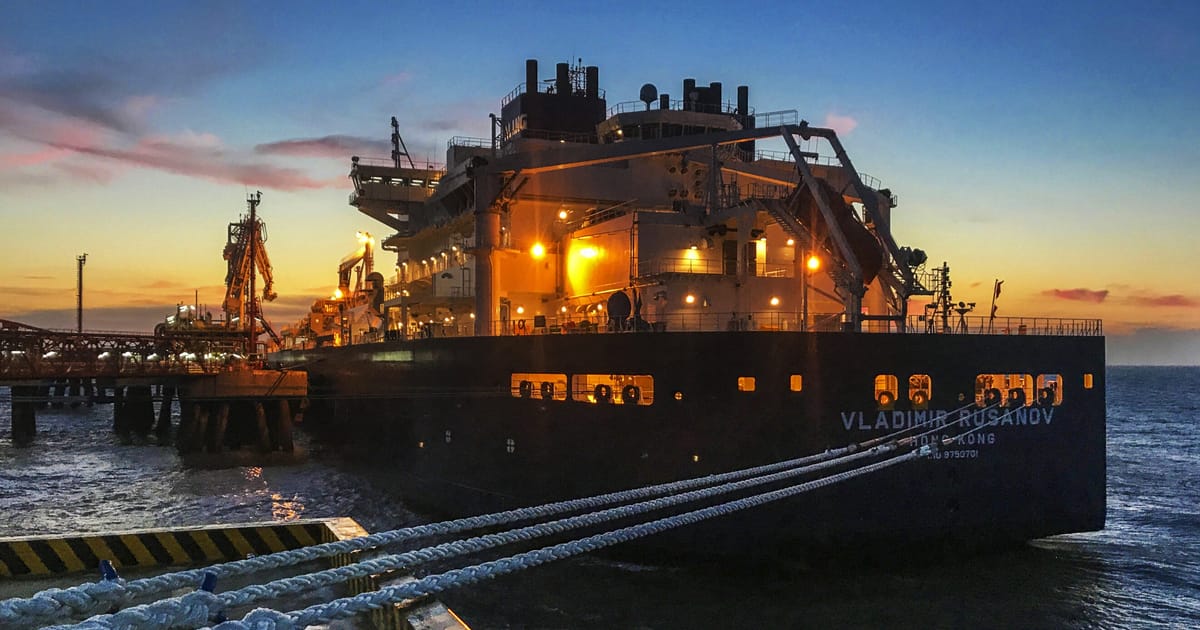
Repairs are another problem. Ships damaged in the ice can no longer be fixed in EU yards. Europe is currently the specialist in repairing icebreakers. China’s repair capacity is limited, Rötters said. The tanker Alexey Kosygin, for example, has spent an unusually long time in a Chinese shipyard after being damaged.
The other option is to sail west first. Because Russian ships cannot stop in Europe, they could transfer the gas near Murmansk from the specialized tankers to conventional carriers, which would then take it to Asia. Russia has bought an estimated 20 to 25 second-hand conventional ships for this purpose over the past year or two, Humpert said.
The shorter way to Asia would run through the Mediterranean and the Suez Canal, but Russian LNG carriers have largely avoided it since March, when the Arctic Metagaz, which was carrying gas from Russia’s sanctioned Arctic LNG 2 project, was attacked off Malta. No Russian gas has passed through the Mediterranean since, Rötters said. That leaves a route around Africa, which takes 35 to 40 days one way.
Ripple effects
That’s not to say Moscow is without options, thanks mainly to non-European companies, said Humpert, of the Arctic Institute. Novatek, the company behind Yamal, acquired two medium-ice-class vessels from a Japanese company a month ago. “I would never bet against Novatek,” he said, adding that Moscow could restore most of its Yamal LNG exports within a year or two.
Each winter voyage also gives Russia more experience navigating the frozen Arctic, Humpert said. These winter routes differ sharply from the summer routes Brussels is focused on, and Russia is currently the only country able to sail the former. What Moscow learns about ice, ships and logistics under the ban could benefit it in the future.
All this will unfold in a region the EU’s new Arctic Strategy casts as a vital part of its future trade, economic and security policy.
The effects of the ban extend well beyond Russia. At a time when the Iran war has already tightened supply, Europe will have to buy LNG elsewhere, “and most likely that LNG will be more expensive,” Humpert said. Urgewald says the benchmark price rose to €86.79 per megawatt-hour in October, up from €75.34 in September and €35 in January. Rötters said those higher prices help Moscow cover part of the cost of the longer routes.
European ports like Belgium’s Zeebrugge terminal, the largest EU destination for Yamal gas this year, will also feel the loss of that supply.
