


Conservative outsider Abelardo de la Espriella is about to be sworn in as Colombia’s new president. Gustavo Petro, the soon to be former leftist president, began his own term hoping to bring peace to the country by negotiating with a wide array of criminal and ideological armed groups under his “total peace” strategy. That approach failed. In contrast, de la Espriella has promised peace and security through a vigorous campaign of law and order, including constructing megaprisons similar to those in El Salvador.
Big swings in the approach to conflict are nothing new for Colombia, which faces multiple challenges from groups such as the Ejercito de Liberación Nacional, a longtime ideological guerrilla group that has never signed a peace accord, and the Clan del Golfo, a major cartel. The country has shown deep ambivalence between social justice and law and order approaches before. Following years of then-President Álvaro Uribe’s hard-line approach, the Colombian government painstakingly negotiated a Peace Accord with the Revolutionary Armed Forces of Colombia (FARC), then the country’s main Marxist-Leninist insurgent group, which was then initially rejected by voters by a small margin in 2016 before being approved by the Colombian Congress.
Conservative outsider Abelardo de la Espriella is about to be sworn in as Colombia’s new president. Gustavo Petro, the soon to be former leftist president, began his own term hoping to bring peace to the country by negotiating with a wide array of criminal and ideological armed groups under his “total peace” strategy. That approach failed. In contrast, de la Espriella has promised peace and security through a vigorous campaign of law and order, including constructing megaprisons similar to those in El Salvador.
Big swings in the approach to conflict are nothing new for Colombia, which faces multiple challenges from groups such as the Ejercito de Liberación Nacional, a longtime ideological guerrilla group that has never signed a peace accord, and the Clan del Golfo, a major cartel. The country has shown deep ambivalence between social justice and law and order approaches before. Following years of then-President Álvaro Uribe’s hard-line approach, the Colombian government painstakingly negotiated a Peace Accord with the Revolutionary Armed Forces of Colombia (FARC), then the country’s main Marxist-Leninist insurgent group, which was then initially rejected by voters by a small margin in 2016 before being approved by the Colombian Congress.
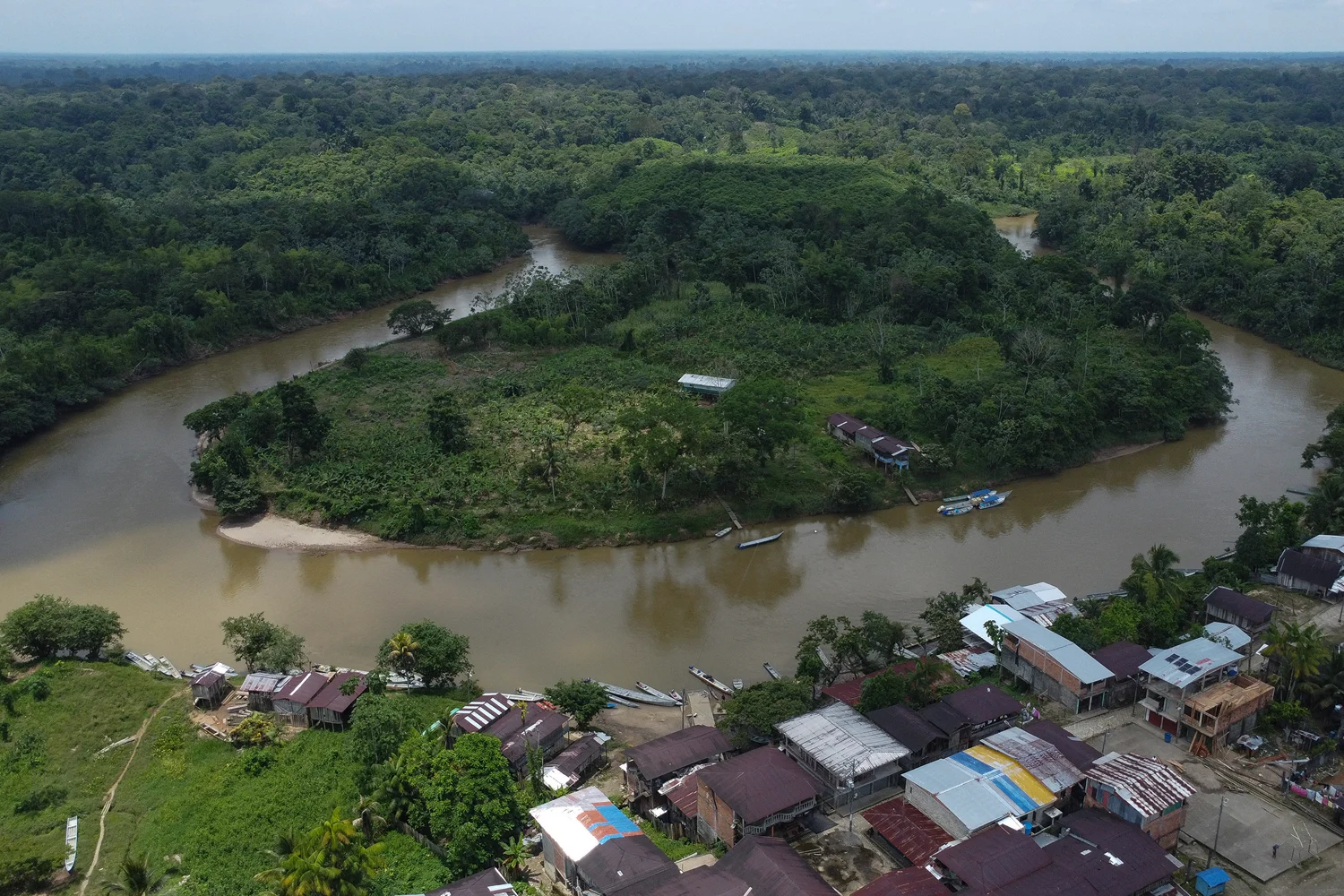
Left behind in the debate between these two extremes is what rural Colombians truly yearn for: large-scale rural development. This approach has never been tried before in earnest in Colombia, the hemisphere’s most unequal country. A truly large-scale rural development approach would be a game-changer for interrupting the coca-growing economy; bringing state presence, law, and order; and even increasing private investment into lawless areas and turning the tables on criminal groups.
Between 2021 and 2025, I was the deputy director of the large, now-closed U.S. Agency for International Development (USAID) mission in Bogotá, Colombia. I also served as the U.S. Embassy lead for assisting a groundbreaking Petro administration rural infrastructure program, called Rural Roads for Total Peace. While Colombia’s leaders have generally ignored the importance of rural development, this promising Petro administration program was an exception. It contained several key lessons that, if adopted by the new administration, could rapidly scale up rural development. Doing so could be the key to reining in criminality and bringing peace to Colombia.
The evidence that rural development has consistently been left behind is compelling. The University of Notre Dame’s Kroc Institute is the official observer of Colombia’s 2016 Peace Accord, carefully measuring implementation progress and providing periodic assessments. While certain areas of the accord, such as transitional justice and greater political participation, have progressed well, the chapter dealing with rural development has not.
According to the Kroc Institute’s latest assessment, released in May 2026, the rural development chapter has achieved just 9 percent of completion, the least of any of the six chapters. Yet according to the Colombian government, the rural development chapter is by far the most expensive to implement, requiring 85 percent of the accord’s total cost. Rural development is the first chapter of the Peace Accord, speaking to its visibility and importance to millions of people in rural areas, where the FARC made its home. Its lack of implementation is why one rural woman commented to me in 2022, “The accord stayed on paper.”
Why has rural development been ignored? As a foreigner with deep experience in the region, I believe it has to do with a very Colombian way of seeing themselves. Urban Colombians will commonly speak about “the territories” to refer to rural places outside of the big cities. This phrasing is uniquely Colombian, seeming both archaic, calling back to colonial times, and binary, implying that there is the normal world and the “other.” The idea that the countryside is poor, backward, and unimprovable seems normalized for many urban Colombians.
Attitudes of urban Colombians toward their rural counterparts are a complex mix of pride; romanticism; and, at times, condescension. For instance, the classic Colombian rural hat (el sombrero vueltiao) was worn by thousands of Colombian fans attending their team’s recent men’s World Cup matches. Colombians have tremendous pride in rural culture and the beautiful countryside, often romanticizing rural life in rural-themed restaurants, filled on Sunday afternoons. Yet at the same time, perceptions of ingrained rural corruption and lack of sophistication are common as well.
My experience working with the Colombian roads authority on the rural infrastructure program encapsulated the challenge and potential for Colombia to take on rural development in a big way. In my more than 25 years working overseas in development, I had never encountered a more talented, goal-focused, and hardworking set of professionals. Yet they were surprisingly unfamiliar with rural development and working with rural people.
Despite the lack of experience, they made key program decisions in line with good rural development practices. First, the program was bottom-up, putting rural communities at the center of decision-making and implementation. Doing so ensured that the section of road chosen for improvement was the right one, leveraging local knowledge and priorities. It ensured that communities own the results. It also tended to overcome centuries of paternalism between rural citizens and the all-powerful state in Bogotá.
Second, the program leveraged well known, legally constituted entities such as Community Action Boards (Juntas de Acción Comunal, in Spanish) to implement the program, rather than something new. To the surprise of many outsiders, Colombia is a very legalistic country, so using tried-and-true methods reduced risk. The program was implemented through village committees with elected, volunteer representatives. They were legally capable of signing contracts with Colombia’s central government, providing a strong legal basis.
Third, the program managers recognized where they lacked experience. Entities such as USAID and nongovernmental organizations commonly work on community-built infrastructure, using volunteer labor and community-led decision-making. However, this methodology was totally new for the roads authority. It quickly learned how to adapt the methodology so that it could be scaled up. Key tweaks were needed—for instance, changing from informal, volunteer labor to formal labor contracts for legal liability reasons and hiring community organizers to help the engineers work with communities.
The program wasn’t perfect. It fell victim to the fiscal crunch in the Petro administration’s second two years. Many communities were accepted by the program, but due to lack of funding, never built their roads. Recent reporting alleges that the program fell apart in its second year of operations, with too many projects started, little funding, and too little supervision, and that it was victim of vote-buying schemes led by the Ministry of Finance.
But the program debunked a commonly held belief that I often heard among urban professionals that country people would “steal all the money”—in fact, none of very detailed audits found that. Actually, community-led implementation was cheaper per kilometer than traditional contracting, as community members sought to make the most of the central government funding.
Even program critics acknowledged that of 1035 projects started in 2023, the program’s first year, 856 were completed, an astonishing 85 percent success rate for community-led infrastructure projects. And citizens in long-forgotten corners of the country felt, often for the first time, that the central government cared.
President-elect de la Espriella has a clear mandate to bring law and order to the country. Bringing a program of large-scale rural development to all of the rural places (that tended to vote for his opponent) is a tried-and-true way to knit the country together into one peaceful Colombia.
