


Welcome to Foreign Policy’s China Brief.
The highlights this week: The death of a Chinese child in a gene-editing trial sparks outrage, COVID-19 cases surge across China, and South Korea’s stock market plummets in response to Chinese chipmaking advances.
Fatal Gene-Editing Trial Sparks Outrage
A joint investigation by Science and Retraction Watch into the death of a Chinese child during a gene-editing trial—and the subsequent cover-up—has sparked outrage online.
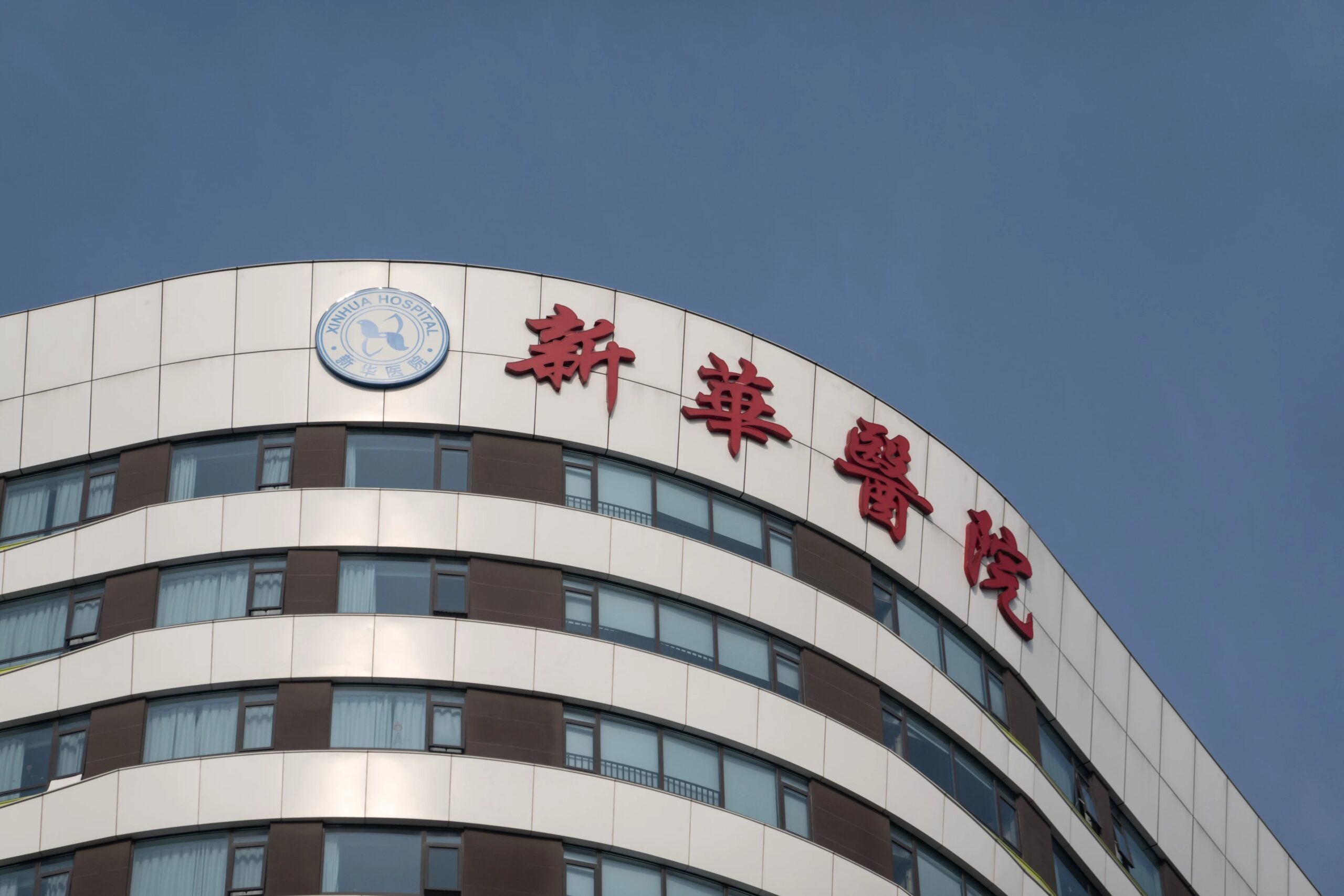
Six-year-old Mei, a pseudonym, had a genetic defect that caused moderate learning difficulties. Her parents, a well-off professional couple, enrolled her in a gene-editing trial led by prominent neuroscientist Zilong Qiu at Xinhua Hospital in Shanghai, which is affiliated with the elite Shanghai Jiao Tong University.
Mei died during the trial from a severe immune reaction after researchers ignored warning signs that had emerged in animal trials. Those involved in the trial concealed Mei’s death, omitting her data when they submitted a paper on the trial to Nature. After being stonewalled by the university and the hospital, Mei’s parents turned to Western media.
The story has received extensive coverage in Chinese media in the last few days, though it has not yet appeared in the most official outlets such as Xinhua or People’s Daily, suggesting that authorities are still deciding what the official response should be.
China is a rising leader in the field of biotechnology, though not yet the dominant power many expected a decade ago. At that time, Western firms and researchers were eager to partner with Chinese scientists, attracted by both generous state funding and what they perceived as a more permissive regulatory environment with fewer bioethical constraints.
That perception changed dramatically in 2018 with the He Jiankui scandal. A well-known scientist, He became the first to edit the genomes of human embryos, altering them in an attempt to generate resistance to HIV infection. He said he received ethics approval, but the institutions involved later denied authorizing the work.
He’s approach reflected a strategy that has often succeeded in China: make a bold, attention-grabbing breakthrough first, then hope the authorities decide to take credit for it after the fact. But that backfired for He—perhaps in part because he made the mistake of breaking the story with The Associated Press, rather than a Chinese outlet.
He was condemned for his actions, including forging documents, sentenced to three years in prison, and fined $429,000. Qiu, the leader of the Shanghai trial, was among more than 100 Chinese scientists who signed an open letter condemning He, writing that he “completely ignored the principles of biomedical ethics, conducting experiments on humans without proving it’s safe.”
Unlike He’s case, Qiu’s experiment received approval from the hospital’s ethics board, which also seems to have been involved in concealing Mei’s death. The cover-up is, unfortunately, unsurprising.
Across China’s bureaucracy, the instinct is to suppress bad news—even when those involved bear little responsibility—out of fear of becoming a scapegoat. In medical contexts, such concealment is particularly dangerous and can have calamitous consequences, as was the case in the early days of the COVID-19 pandemic.
Failure to publish negative or null results is a long-standing problem across the scientific field, but China has a particularly bad reputation for covering up negative trial data and, in some cases, fabricating results. Chinese researchers account for a disproportionate share of retracted academic papers.
The Shanghai trial also bears the hallmarks of China’s pervasive medical corruption. Mei’s parents were asked to pay for the experimental treatment, which is not unusual in cutting-edge clinical research. More troublingly, they were also asked to send money to individual researchers, including more than $130,000 to a single team member, and routinely offered the team expensive gifts.
Altogether, the family spent more than $860,000. (The researcher who received the largest payment returned the money after Mei’s death.)
These practices—though usually involving much smaller sums—are routine in China’s healthcare system, where informal payments are often viewed as necessary to receive quality treatment. The government attempted a crackdown between 2023 and 2024, but it failed without mechanisms for oversight or transparency. Public trust in doctors remains low; attacks on medical staff are an enduring problem.
The Shanghai case is likely to deepen that distrust, as well as persistent concerns about genetic modification. I would expect a severe reaction from Beijing: heavy fines, possible prison sentences for those directly involved, and a crackdown on further media investigations of the case.
Mei’s parents possessed the wealth and know-how needed to bring their story to Western media, but many other trials—including He’s—have been conducted on ordinary families without those resources. My biggest outstanding (and likely unanswerable) question is this: How many similar tragedies have occurred and never been revealed?
What We’re Following
COVID-19 surge. A rise in COVID-19 cases across China is unsettling a public still scarred by lockdowns and the outbreak that followed the abrupt end to Beijing’s zero-COVID policy in late 2022. As elsewhere, COVID-19 has become a persistent respiratory disease in China, alongside other coronaviruses.
Vaccinations and prior infection offer some protection against severe illness, but COVID remains potentially deadly for the elderly and those with underlying health conditions. Assessing the disease’s true impact in China is difficult; Beijing has obscured the virus’s death toll following the end of the zero-COVID policy, which some estimates put at more than 2 million.
Taiwan’s weapons reserves. As the United States burns through its munitions stockpiles in its on-again, off-again war with Iran, Taiwan’s own reserves have become more important than ever in deterring China.
Taipei is accelerating weapons production and practicing ways to keep factories open under attack. But political infighting is slowing these efforts, while persistent corruption in the armed forces may mean that depleted stockpiles go unreported.
FP’s Most Read This Week
Tech and Business
South Korean stock market plummets. South Korea’s benchmark KOSPI stock index fell by 11 percent on Tuesday, extending its losses this month to 29 percent. South Korea’s stock market is notoriously volatile, but what is striking is that much of the sell-off appears driven by developments in China.
News of advances in Chinese chipmaking technology have made South Korea’s big bet on the sector—which accounts for nearly half of KOSPI—look considerably riskier.
China’s reported progress in developing domestic lithography equipment is significant, but what matters most in chip production is the failure rate, which remains persistently high for cutting-edge chips in China compared to the industry leader, Taiwan Semiconductor Manufacturing Company.
Open-weight AI panic. Chinese success with open-weight artificial intelligence models—systems whose underlying architecture is publicly released for others to study, modify, and build on—is fueling anxiety across the West’s AI industry. The Trump administration is reportedly considering banning their use, prompting tech companies to urge the White House to reconsider.
These companies are trying to balance the risk of having their own research constrained with the need to stay in the Trump administration’s good graces. This has produced some revealing statements, including one from Anthropic’s CEO that attempts to weaponize distrust of China to argue against banning open-weight models.
Western tech firms were once eager to cooperate with Chinese counterparts, despite Beijing’s human rights record. But as access to the Chinese market failed to materialize—and Chinese companies became credible global competitors—many pivoted toward using anti-Chinese sentiment to argue against regulatory constraints in Washington.
