

Close Menu
NCIJ Network NCIJ Network
    What's Hot

    CONNECT Recap: Hayes on Money Printing, Stablecoins and Onchain Finance

    October 4, 2026

    Even one strength training session a week could make a difference

    October 4, 2026

    Trust warns of ‘tangible’ climate threat to North Yorkshire heritage sites

    October 4, 2026
    Facebook X (Twitter) Instagram
    Trending
    • CONNECT Recap: Hayes on Money Printing, Stablecoins and Onchain Finance
    • Even one strength training session a week could make a difference
    • Trust warns of ‘tangible’ climate threat to North Yorkshire heritage sites
    • West Indies beat India in record chase as Hope hits 162 in third ODI | Cricket
    • Germany’s Merz visits Kyiv amid fears of ‘hardest’ winter in war – POLITICO
    • Ministers explore how to stop regional leaders misusing planned new spending powers | Devolution
    • Party conference will be more upbeat than last year, Tories say – but that’s not the whole story | Conservatives
    • Best Smart Cat Trackers of 2026: Fi Mini vs. Tractive
    • About
      • Our Team
      • Editorial Policy
      • Editorial Independence
      • International Support
    • Trust & Standards
      • AI Usage Policy
      • Conflict of Interest Policy
      • Corrections Policy
      • Ethics Policy
      • Fact-Checking Policy
      • Source Protection
    • Get Involved
      • Guide for Sources
      • Support Independent Journalism
    • Legal
      • Cookie Policy
      • Privacy Policy
      • Terms of Use
    Facebook X (Twitter) Instagram
    NCIJ Network NCIJ Network
    Sunday, October 4
    • Home
    • World
    • Ai
    • Business
    • Politics
    • Health
    • Crypto
    • Science
    • Technology
    • Cybersecurity
    • Defense & Security
    • Economy
    • Energy
    • Europe
    • More
      • Fact Check
      • Investigations
      • Opinion & Analysis
      • Environment
    NCIJ Network NCIJ Network
    Home»Science

    Cancer stem cells have an “energy addiction” scientists may be able to exploit

    NCIJ NETWNCIJ NETWORKBy NCIJ NETWNCIJ NETWORKOctober 4, 2026 Science No Comments4 Mins Read
    Share
    Facebook Twitter LinkedIn Pinterest Email

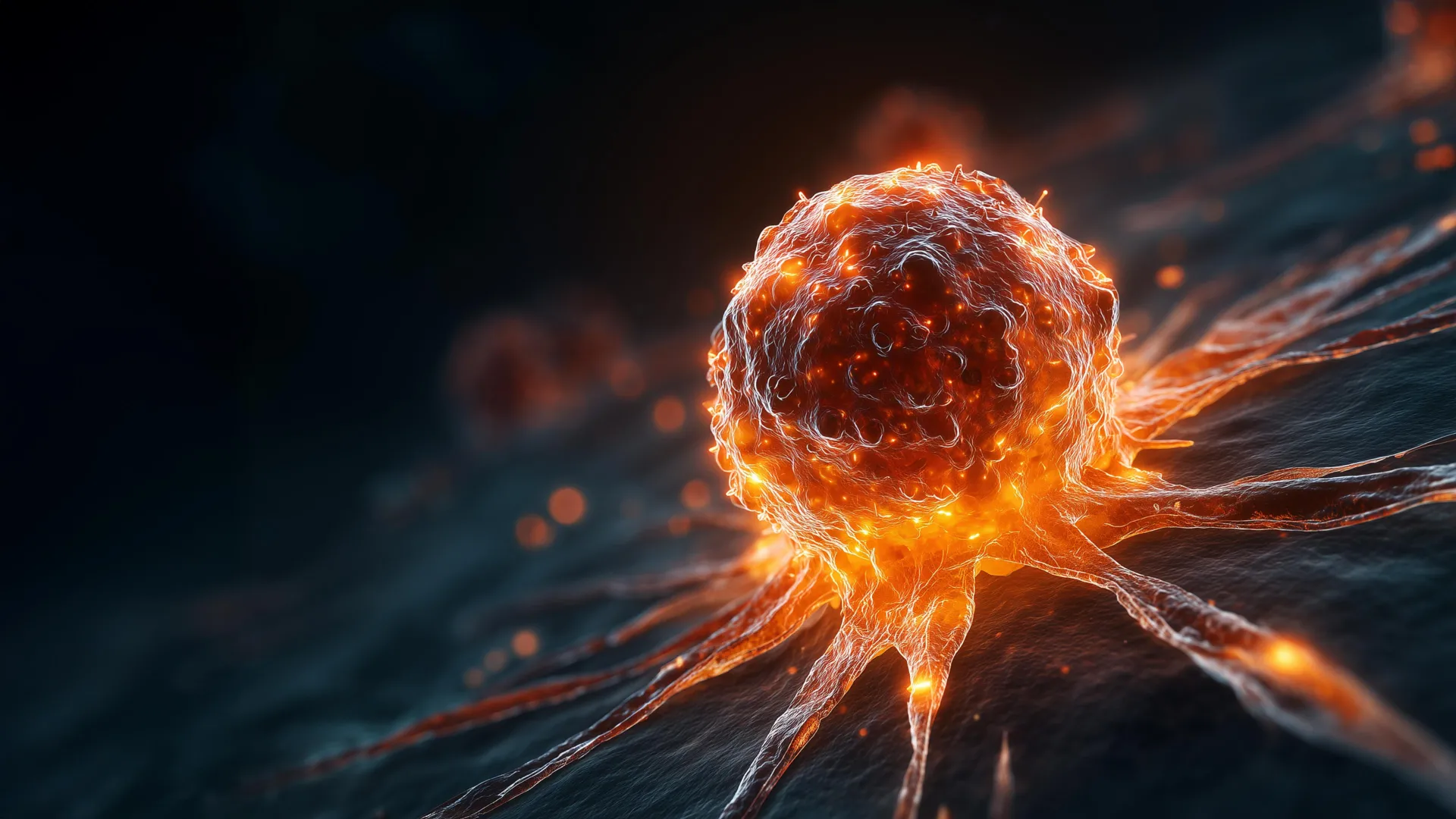
    Researchers at the University of Colorado Anschutz Cancer Center have uncovered a previously unknown metabolic vulnerability in the stem cells responsible for high risk myelodysplastic syndromes (MDS). The finding could eventually help scientists develop treatments that more precisely target the cells driving this aggressive blood cancer.

    The study, published in Blood Cancer Discovery, found that high risk MDS stem cells depend unusually heavily on nicotinamide adenine dinucleotide (NAD), a molecule that plays an essential role in how cells produce energy. When researchers disrupted the pathway responsible for maintaining NAD, they were able to selectively weaken the disease driving stem cells. Healthy blood forming stem cells, by comparison, were better able to adjust.

    “What we found is that these cells actually use energy in different ways than normal stem cells do,” said Eric M. Pietras, PhD, associate professor in the Division of Hematology at the University of Colorado Anschutz, and co lead author of the study. “They were relying on a specific set of proteins and processes that created a vulnerability we could potentially target.”

    Understanding High Risk MDS

    Myelodysplastic syndromes are blood cancers that interfere with the bone marrow’s ability to make healthy blood cells. People with the disease can develop severe anemia, experience frequent infections, and need repeated blood transfusions. High risk MDS can also advance to acute myeloid leukemia (AML), an aggressive form of leukemia that remains difficult to treat.

    MDS occurs mainly in older adults. An estimated 10,000 to 20,000 people are diagnosed with the disease in the United States each year.

    A Metabolic Weakness in Cancer Stem Cells

    Stem cells are central to both normal blood production and blood cancers. In high risk MDS, genetically mutated stem cells lose the ability to produce the healthy blood cells required to carry oxygen, form clots, and fight infections. Instead, they generate abnormal blood cells that cannot perform these essential jobs.

    The researchers set out to identify biological differences between these cancer stem cells and their healthy counterparts.

    Their experiments showed that MDS stem cells depend strongly on the NAD salvage pathway, a recycling process that helps cells maintain their supply of NAD. One enzyme in this pathway, nicotinamide phosphoribosyltransferase (NAMPT), stood out as a possible treatment target.

    “These cells had developed a much greater need for this resource,” Pietras said. “They appear to use NAD at a much higher rate than normal cells, which creates a vulnerability that we can exploit with new types of drugs.”

    An “Energy Addiction” Scientists May Be Able to Target

    The researchers describe this unusual dependence as an “energy addiction.” Healthy blood forming stem cells can shift toward other ways of producing and managing energy when conditions change. MDS stem cells, however, appear to have much less flexibility.

    When the researchers blocked NAMPT, NAD levels fell and the cancer stem cells entered an energy crisis. This selectively weakened the cells responsible for driving the disease while normal blood forming stem cells were better able to compensate.

    Moving Toward New MDS Treatments

    Experiments using patient derived MDS cells and animal models showed that interfering with NAD metabolism reduced the number of disease driving stem cells. Researchers now plan to investigate drugs that target NAMPT in clinical studies involving people with MDS and related blood cancers.

    “Our goal is to identify approaches that make these complex diseases more treatable by finding the differences between cancer cells and normal cells,” Pietras said. “If we can understand those differences, we can begin to develop therapies that are more precise and more effective for patients.”

    Dr. Pietras and Dr. Craig T. Jordan are both co-lead authors of the study. The laboratory research was led by Sweta B. Patel, PhD, and involved collaborations with University of Colorado Anschutz researchers, including Angelo D’Alessadro, PhD and Julie Reisz Haines, PhD, along with additional collaborators from several institutions.

    The research received support from the National Institutes of Health, the Edward P. Evans Foundation, Blood Cancer United, and other partners focused on advancing blood cancer research.

    addiction cancer cells energy exploit Scientists stem
    NCIJ NETWNCIJ NETWORK
    • Website

    Keep Reading

    Even one strength training session a week could make a difference

    Scientists just pushed superconductors beyond their usual current limit

    The early universe wasn’t nearly as pristine as scientists thought

    97-million-year-old fossils reveal the earliest known animal “GPS”

    Nearly 6 in 10 people with high blood pressure don’t know they have it

    NASA’s Roman telescope just opened its planet-hunting eye

    Add A Comment
    Leave A Reply Cancel Reply

    Editors Picks

    CONNECT Recap: Hayes on Money Printing, Stablecoins and Onchain Finance

    October 4, 2026

    Even one strength training session a week could make a difference

    October 4, 2026

    Trust warns of ‘tangible’ climate threat to North Yorkshire heritage sites

    October 4, 2026

    West Indies beat India in record chase as Hope hits 162 in third ODI | Cricket

    October 4, 2026
    Latest Posts

    Google’s top hacker hunter explains why hacking groups get codenames

    August 8, 2026

    Nicola Sturgeon ‘has not spoken to’ estranged husband, Peter Murrell, since he was jailed | Nicola Sturgeon

    August 8, 2026

    Amid Abuse Claims Against Max Miller, This Democrat Thinks He Can Win His Seat

    August 8, 2026

    Subscribe to News

    Get the latest sports news from NewsSite about world, sports and politics.

    NCIJ Network is an independent digital news platform delivering trusted investigative journalism, European and global news, in-depth analysis, and fact-based reporting with accuracy, transparency, and integrity.

    Facebook X (Twitter) Instagram Pinterest YouTube

    CONNECT Recap: Hayes on Money Printing, Stablecoins and Onchain Finance

    October 4, 2026

    Even one strength training session a week could make a difference

    October 4, 2026

    Trust warns of ‘tangible’ climate threat to North Yorkshire heritage sites

    October 4, 2026

    Subscribe to Updates

    Get the latest creative news from FooBar about art, design and business.

    Type above and press Enter to search. Press Esc to cancel.