


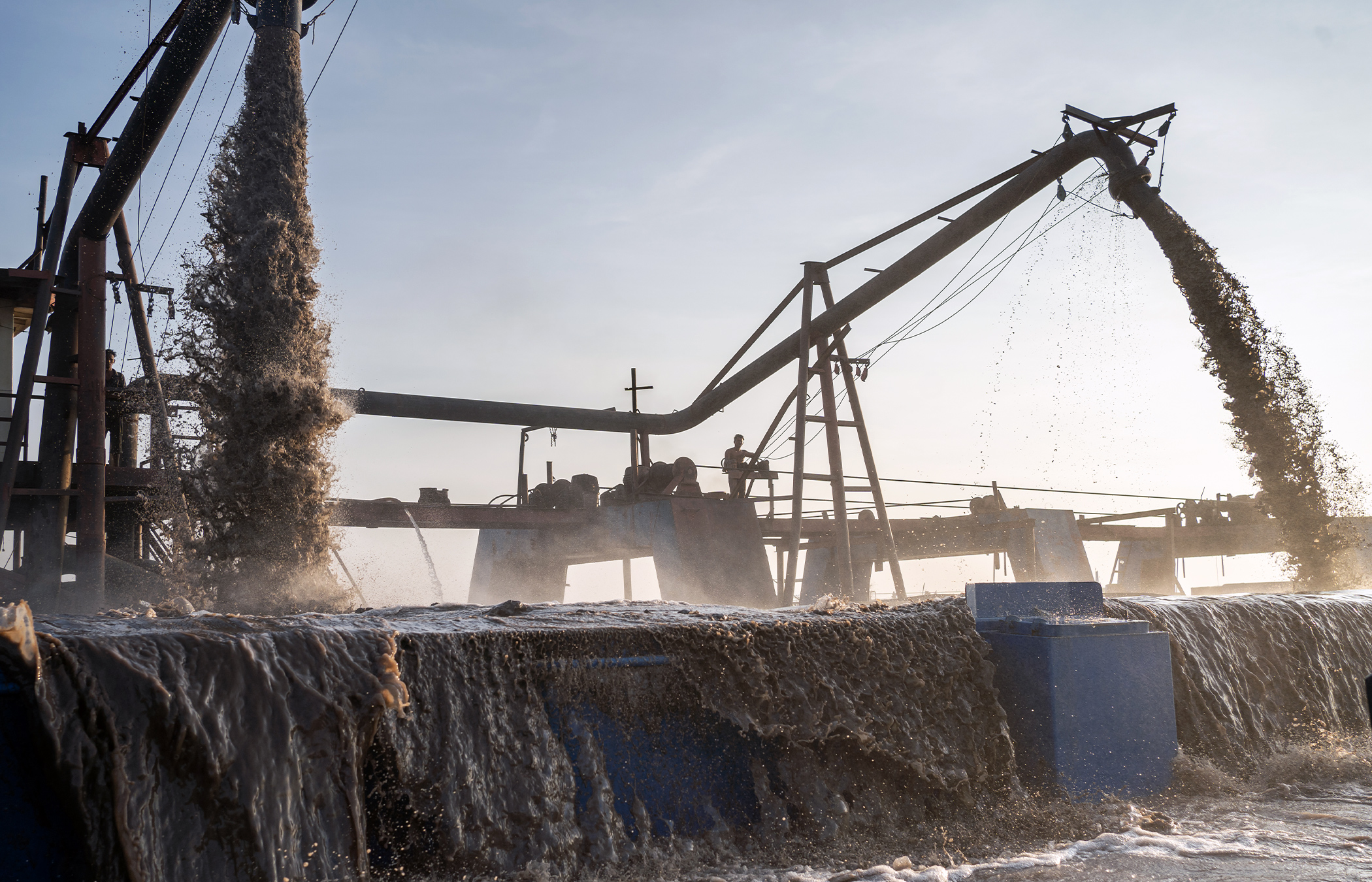
- Cambodia appears to have resumed exporting sand to Singapore, despite a 2017 national ban, with Koh Kong provincial authorities saying a new dredging operation has been licensed.
- Mongabay traced at least four bulk carriers from Koh Kong to Singapore’s Tuas Port, where the site of a massive land reclamation project.
- The dredging is taking place within protected area boundaries and could affect riverbanks, fisheries and wildlife, as well as a major downstream mangrove forest.
- Environmental activists say they hope to draw attention to the renewed sand trade, but Cambodia’s shrinking civic space and restrictions on civil society groups have made standing up to environmental violations increasingly difficult.
Authorities in Cambodia’s Koh Kong province say they’ve approved a sand mining operation exporting to Singapore, despite an export ban imposed by national authorities a decade ago after large-scale dredging was found to be damaging riverine and coastal ecosystems.
The dredging is occurring in an area of the Trapeang Rung River that falls within the boundaries of Tatai Wildlife Sanctuary and Botum Sakor National Park.
Khlem Yonviseth, director of the Koh Kong provincial mining department, told Mongabay that the 2017 sand export ban had been lifted, and that his office had given a permit to the dredging operation and approved the exports.
Yonviseth did not respond to a request to provide documentation of the ban being lifted. Mongabay was unable to locate any official announcement regarding the ban, and the relevant national agencies did not respond to requests for comment.
Yonsiveth’s comments come after activist group Mother Nature Cambodia exposed the dredging operation in a video published July 14. In a subsequent video, published Aug. 8, the group tracked multiple cargo ships heading from Koh Kong Krao, Cambodia’s largest island, to Singapore’s Tuas Port.
“How many more tons of Cambodian sand will be lost?” asks Lisa Mean, an activist with Mother Nature Cambodia, in the latest video.
Analysis by Mongabay confirms that four of the ships identified by the group traveled to the Tuas Port, where a state-backed land reclamation project is currently underway.
Mongabay has also found that the company Yonviseth said had been given a dredging license, Catalyst Marine and Resources, is linked to Starhigh Asia Pacific, a Singaporean company that is active in sand mining operations across the region.
The return of sand mining
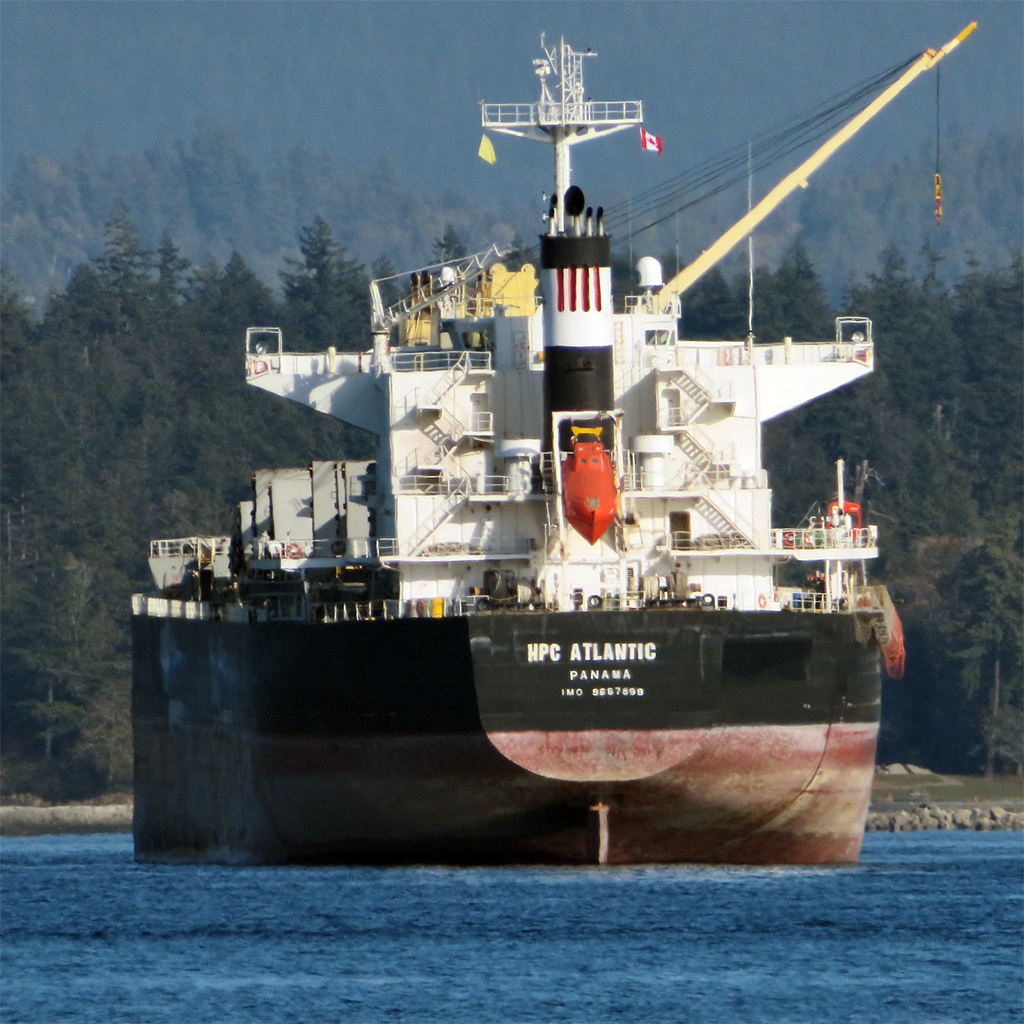
Using automatic identification system (AIS) data, a tracking system commonly used by large vessels to improve maritime safety, Mongabay identified the ship filmed by activists as the Maltese-flagged Densa Dolphin. It’s one of four ships that made the same journey from Cambodia to a reclamation site at the state-developed Tuas Port in Singapore between June 1 and July 26, 2026. The others are the Liberian-flagged Star Halifax, Panama-flagged HPC Atlantic, and Marshall Islands-flagged Krait.
All four ships are between 185 and 199 meters (607 and 653 feet) in length and classified as bulk carriers, a type of large merchant ship used to transport a variety of materials, including sand.
Mongabay was unable to confirm the source of the sand allegedly being delivered to the Densa Dolphin. However, photographs taken by Mother Nature Cambodia on July 2, 2026, and independently verified by Mongabay show sand mining barges operating along a stretch of the Trapeang Rung River approximately 25 kilometers (15 miles) from where the bulk carriers were anchored off Koh Kong Krao.
The activists’ photographs appear to show barges bearing the logo of Catalyst Marine and Resources, a company that’s been registered in Cambodia since December 2024.

Yonviseth, from the provincial mining department, told Mongabay that the government issued Catalyst a license to dredge on the Trapeang Rung in 2025.
Magdalena Smigaj, an Earth observation data scientist and co-author of a 2023 paper that used machine learning and satellite imagery to monitor vessel traffic on the Mekong River, conducted an independent analysis of radar imagery on the Trapeang Rung between January 2020 and July 2026. Smigaj’s analysis found vessels have been consistently active along the stretch of the river photographed by Mother Nature Cambodia since late April 2026, around the same time provincial officials attended a public event announcing the launch of Catalyst’s operations to export sand from Trapeang Rung commune to Singapore.
The stretch of the river being dredged falls within the boundaries of both Tatai Wildlife Sanctuary and Botum Sakor National Park, according to official government maps of those areas. Both are part of a network of protected areas spanning the Cardamom Mountains, one of Cambodia’s best-preserved forests and a biodiversity hotspot.

The Trapeang Rung River is home to the endangered hairy-nosed otter (Lutra sumatrana), one of the rarest and least-understood otter species in the world, and flows into one of the largest mangrove forests in mainland Southeast Asia.
Yonviseth told Mongabay that Catalyst’s dredging proposal was studied by the relevant ministries and received support from local authorities and communities.
Both the Ministry of Environment and the Ministry of Mines and Energy did not respond to multiple requests to comment.
Yonviseth told Mongabay that sand exports to Singapore were once again underway and had “brought many benefits to the state.”
This resumption will “further strengthen bilateral relations between the two governments,” Yonviseth said via the Telegram messaging application. “Sand extraction companies pay royalties, contribute to local community development funds, and pay customs duties and profit taxes.”
Singapore’s Ministry of National Development did not respond to requests to comment via its official email address.
Mongabay could not find publicly available contact information for the owner of the Densa Dolphin. The company listed on shipping forums as managing the ship did not respond to questions sent via email or through the contact form on its website.
Star Bulk Carriers Corp., a global shipping company incorporated in the Marshall Islands that owns the Star Halifax, told Mongabay that the ship was under lease at the time it made the journey, and that “[t]he owners were not involved in the sourcing, sale, purchase or export of the cargo” and could not “comment on matters outside their role.”
The separate entities publicly listing HPC Atlantic and Krait under their fleet did not respond to emails requesting comment sent by Mongabay.
Déjà vu
This is not the first time Mother Nature Cambodia has fought sand mining in Koh Kong. A decade ago, the group’s activists were just a few kilometers downstream from the site they’re now working to expose, campaigning against an operation that stripped millions of tons of Cambodian sand for export to Singapore.
The group revealed that Singapore had imported $752 million worth of Cambodian sand, despite the Cambodian government reporting just $5 million in sand exports to the island state across the same period.
Nearby communities blamed sand dredging operations at the time for causing riverbank collapses and damaging local fishing grounds, forcing some families to migrate in search of work, or take out high-interest loans to stay afloat.
Facing public pressure, the Ministry of Mines and Energy issued a decree in 2017 that “completely halted the export of all kinds of construction sand and mud sand from Koh Kong province to foreign countries.”
It’s unclear whether renewed sand exports to Singapore breach the ban imposed by the ministry, which has at times made contradictory statements.

In October 2022, Ung Dipola, the ministry’s director-general for mineral resources, told journalists that they had “announced … one-and-a-half years ago” that “any country that has demand for sand, they can buy it.” However, the following year, Dipola told journalists that the 2017 ban applied to all countries except Vietnam, despite the ministry’s 2017 regulation making no mention of such an exception.
When asked via Telegram whether the export ban was still in place, Dipola blocked a Mongabay reporter. He went on to block another reporter after they followed up with a request for a comment on the investigation’s findings.
In recent years, Cambodia’s highly lucrative sand mining industry has shifted to the Mekong River to meet a surge in demand for sand used in construction.
Communities there have blamed politically connected operations for exacerbating riverbank erosion and decimating local fisheries, arguments backed by a peer-reviewed study published in the journal Nature Sustainability that linked excessive sand mining on Cambodia’s section of the Mekong River to riverbank instability.
Yonviseth, by contrast, said that dredging shallow channels helps prevent flooding, facilitates the transportation of goods, and that deeper rivers allow fish, crabs, lobsters and shrimp to increase in numbers.

Sand shipments to Tuas Port
After traveling more than 1,000 km (620 mi) from Cambodia, the Densa Dolphin entered Singapore and dropped anchor at Tuas Port on July 10, 2026, AIS data show.
Over the next four days, two vessels, SL-T14 and SLT V, moved back and forth between the Densa Dolphin and the port, according to AIS data. A notice issued by the Maritime and Port Authority of Singapore on April 1, 2026, states both the SL-T14 and SLT V are hopper barges — specialized vessels used to transport dry bulk materials such as sand. The notice also states both barges are permitted to transport and discharge sand to a reclamation site at the port they visited repeatedly over the four days, between trips to the Densa Dolphin.
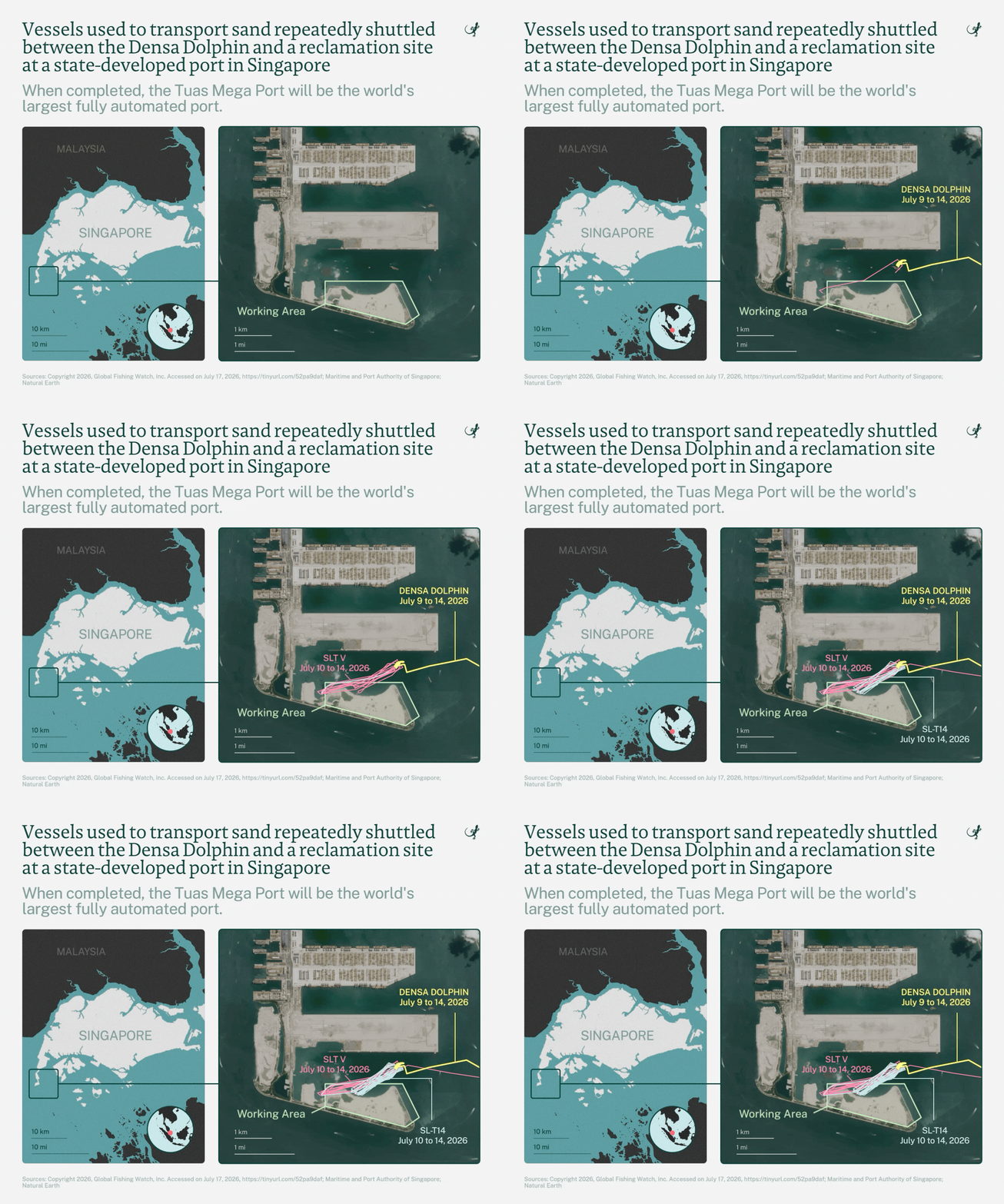
When completed, Tuas Port is expected to be the world’s largest fully automated port, covering an area of 1,337 hectares (3,304 acres). Although the colossal project has so far used recyclable materials in the reclamation, it still requires sand.
The Maritime and Port Authority of Singapore, which oversees the reclamation and development of Tuas Port, did not respond to a request for comment sent to its official listed email for media inquiries.
For decades, land-scarce Singapore has imported sand from other countries in the region for land reclamation, extra space it sees as necessary for economic development and a rapidly growing population.
“Most countries don’t grow 10 km or 20 km [6-12 mi] every single decade, but Singapore does,” said William Jamieson, a postdoctoral research associate at Royal Holloway, University of London, who works on the global sand crisis.
Between 1965 and 2025, the country’s total land area increased by 28%.
“That’s kind of become ingrained in its economic model that they now rely on these parcels of land coming into existence every five to 10 years for their master plans,” Jamieson said.
In 2019, the U.N. Environment Programme reported that the island city-state was the world’s largest importer of sand, having imported 517 million metric tons over 20 years. But its appetite for sand has come at a high cost to the countries it sources from.
A resident living near the sand mining site expressed concern about the potential environmental impacts of recent dredging activity on the Trapeang Rung.
“When dredging deep, it will cause the riverbank to fall and will affect the fishermen’s yield,” the resident said, speaking on condition of anonymity due to the sensitivity of the issue.
“We [are] talking about resources, not about money,” said a Mother Nature Cambodia activist working on the campaign. “[It] is about the livelihood of people along the river, and for the next generation.”

Who’s behind Catalyst Marine Resources?
Catalyst Marine and Resources (Cambodia) lists four Singaporean nationals as company directors, documents show. The four are also listed as directors of a Singapore-registered company with the same name.
Si Thu Phyo, one of the four, is also the sole director and largest shareholder of Starhigh Asia Pacific, which holds a 37% stake in the Catalyst entity registered in Singapore.
Starhigh has also supplied Singapore with sand from other Southeast Asian countries. In 2020, its mining operations made headlines when communities living along the Salween River in southeastern Myanmar alleged the company’s dredging activities were causing riverbank erosion and landslides. Si Thu Phyo told reporters at the time that erosion was present before their operations began.
The phone number associated with Si Thu Phyo in records under Cambodia’s Ministry of Commerce could not be reached. Mongabay sent requests for comment via Telegram and WhatsApp to the same number, but did not receive a response.
The numbers associated with two other Catalyst directors blocked Mongabay reporters on Telegram after they were contacted.

‘Fragmented by design’
Mongabay showed our findings to researcher Jamieson, who said he wouldn’t be surprised if the ownership of the bulk carriers is unrelated to the companies operating at both ends of the supply chain.
“The sand trade is fragmented by design,” he said. “At every point everyone else could say, ‘I had no idea, or I didn’t really know, I was only told by the next person up the chain that this was legitimate.’”
In November 2021, Desmond Lee, at the time Singapore’s minister for national development, told parliament: “[Sand] importers are expected to abide by the laws and regulations of the source countries.”
But Jamieson questioned how this works in practice in Cambodia. “There’s not really a strong sense of rule of law in Cambodia, especially when it comes to natural resource industries,” he said. “So, I think it’s purposely quite vague so that they’re not really the ones at fault.”
Mother Nature Cambodia activists told Mongabay they hope their videos spark public discussion about the issue, but that it’s riskier than ever to carry out their work.
In recent years, the Cambodian government has continued to crack down on environmental defenders and journalists under a rapidly shrinking civil space.
On July 2, 2024, five activists from Mother Nature Cambodia were sentenced to between six and eight years in prison on charges of plotting against the government and insulting the king, with another five sentenced in absentia. More than 70 rights groups recently called for their unconditional release in an open letter.
“Yeah, one hundred percent we [are] scared about [the] mission, but we asked to ourselves if we don’t do the job, who [will] do the job?” a Mother Nature Cambodia activist said.
Banner image: Rokar Koang commune, Kandal Province, Cambodia, May 2022. Sand mining barges extract sand from the Mekong. Image by Andy Ball.
Additional reporting by Phoung Vantha.
Activists allege Cambodia has resumed sea sand exports to Singapore
19,000 Great Pyramids a year: Report flags unsustainable rate of sand mining
Citations:
Smigaj, M., Hackney, C. R., Diem, P. K., Tri, V. P., Ngoc, N. T., Bui, D. D., … Leyland, J. (2023). Monitoring riverine traffic from space: The untapped potential of remote sensing for measuring human footprint on inland waterways. Science of The Total Environment, 860, 160363. doi:10.1016/j.scitotenv.2022.160363
Hackney, C. R., Darby, S. E., Parsons, D. R., Leyland, J., Best, J. L., Aalto, R., … Houseago, R. C. (2020). River bank instability from unsustainable sand mining in the lower Mekong River. Nature Sustainability, 3(3), 217-225. doi:10.1038/s41893-019-0455-3

