


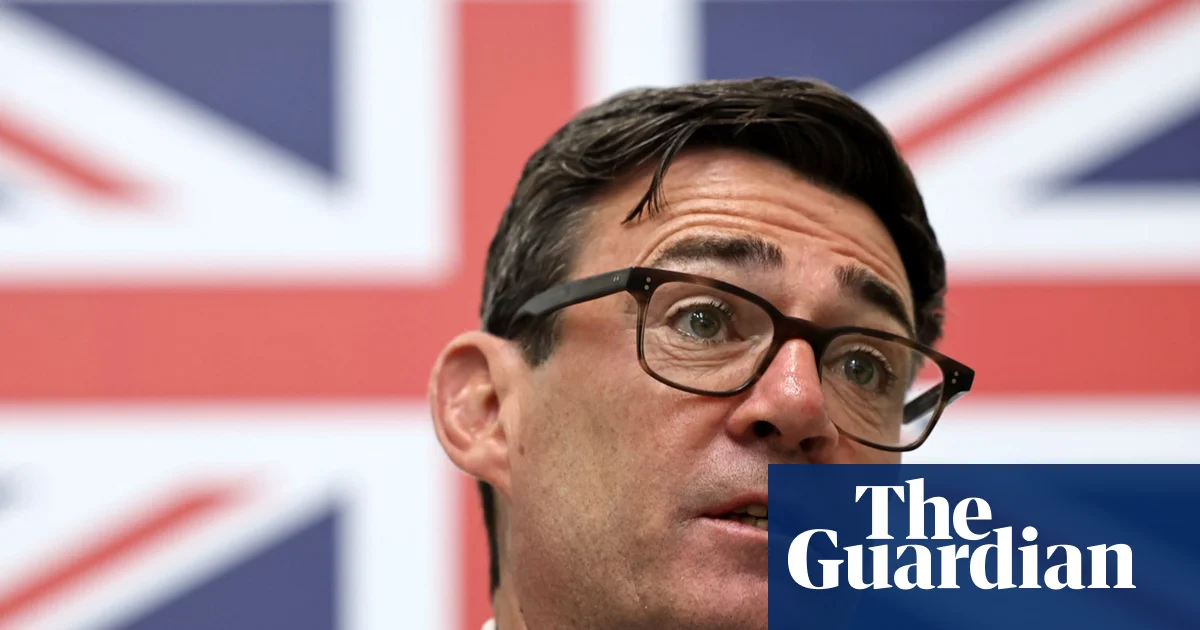
Andy Burnham has said “difficult decisions” will need to be taken in next month’s budget after a rise in energy prices triggered by the Iran war drove UK inflation above 3%.
In a fresh blow for living standards amid the worsening damage to the global economy from the Middle East conflict, official figures showed soaring fuel prices pushed inflation from 2.9% in July to 3.1% in August.
With the government under pressure as the fallout from the war rattles global financial markets, the prime minister signalled the 28 October budget would take into account investor fears over the hit to the public finances.
“We will take difficult decisions to make sure the economy remains on track,” he said.
“It is going to be challenging, because the picture around the world is challenging, particularly the situation in the Middle East, and we will look carefully at all those things.
“We won’t take risks with people’s living standards or with the economy as a whole, so we will take it all into account.”
The prime minister also downplayed criticism from Andy Haldane, who has urged him not to raise taxes. The former Bank of England chief economist, who advised Burnham before he entered Downing Street, told LBC on Tuesday: “The market now suspects that this is a traditional tax-and-spend socialist government with better TikTok videos.”
Burnham rejected that characterisation, saying: “We are not that already … It’s not the case that we aren’t going to take difficult decisions.”
In a critical week for the economy, the Bank of England is preparing for a decision on interest rates on Thursday against the backdrop of rising inflationary pressures from soaring oil and gas prices.
With headline inflation drifting further from its 2% target, financial markets predict a one-in-five chance of a quarter-point rise from the current level of 3.75% as Threadneedle Street comes under pressure to take action. The City expects at least four increases to 4.75% next year.
Economists said there were signs that underlying inflation remained in check amid a cooling UK jobs market. Inflation in the service sector of the economy, which is closely monitored by the Bank, remained unchanged at 3.4%. Core inflation – which excludes volatile items such as energy and food – also held steady at 2.6%.
Official figures on Tuesday showed a slowdown in wage growth and rise in unemployment. The Bank has previously said a cooling jobs market could help limit the risk of stubbornly high inflation becoming entrenched.
However, as the fallout from the Middle East war intensifies, economists said inflation in the UK could continue to climb closer to 4%, heaping pressure on the government and the Bank to take action.
Susannah Streeter, the chief investment strategist at Wealth Club, said: “Given this ramp-up in consumer prices, the pressure on the Bank of England to raise rates is mounting, although a hold at 3.75% is still expected tomorrow.
after newsletter promotion
“It feels like Groundhog Day, with consumers once again feeling the pinch due to geopolitical events far beyond their control.”
As fighting across the Middle East intensifies, the global oil price has soared to more than $106 a barrel.
According to the latest inflation snapshot, the Office for National Statistics said the increase in the headline rate in August was driven by a 23% increase in motor fuel prices. The average petrol price rose by 9.1p between July and August to 161.3p a litre, the highest level since November 2022. Diesel prices rose by 14.2p to 181.8p a litre.
Air fares also rose sharply, with an increase of 6.2% between July and August, particularly for long-haul routes. Rising crude oil and fuel prices also drove up the cost of raw material and the price of goods leaving factories.
The sharp rise in energy prices pushed the European Central Bank to raise interest rates last week, while financial markets predicted the US Federal Reserve would raise borrowing costs on Wednesday for the first time since 2023.
Bond markets have been thrown into a tailspin, with intense selling pressure pushing the yield – in effect the interest rate – on US government bonds above 5% for the first time since 2023 and driving long-term UK government borrowing costs to the highest levels in decades.
The renewed squeeze on the cost of living will intensify the calls on the chancellor, John Healey, to use the 28 October budget to give breathing space to British households reeling from years of soaring prices for energy, food and other everyday items.
Richard Carter, the head of fixed interest research at Quilter Cheviot, said: “Today’s figures are a kick in the teeth for an administration that wants to make easing the cost of living its central mission.
“The budget is quickly coming into focus and with borrowing costs continuing to climb for the UK, measures are going to be limited and thus growth will remain challenged.”
