


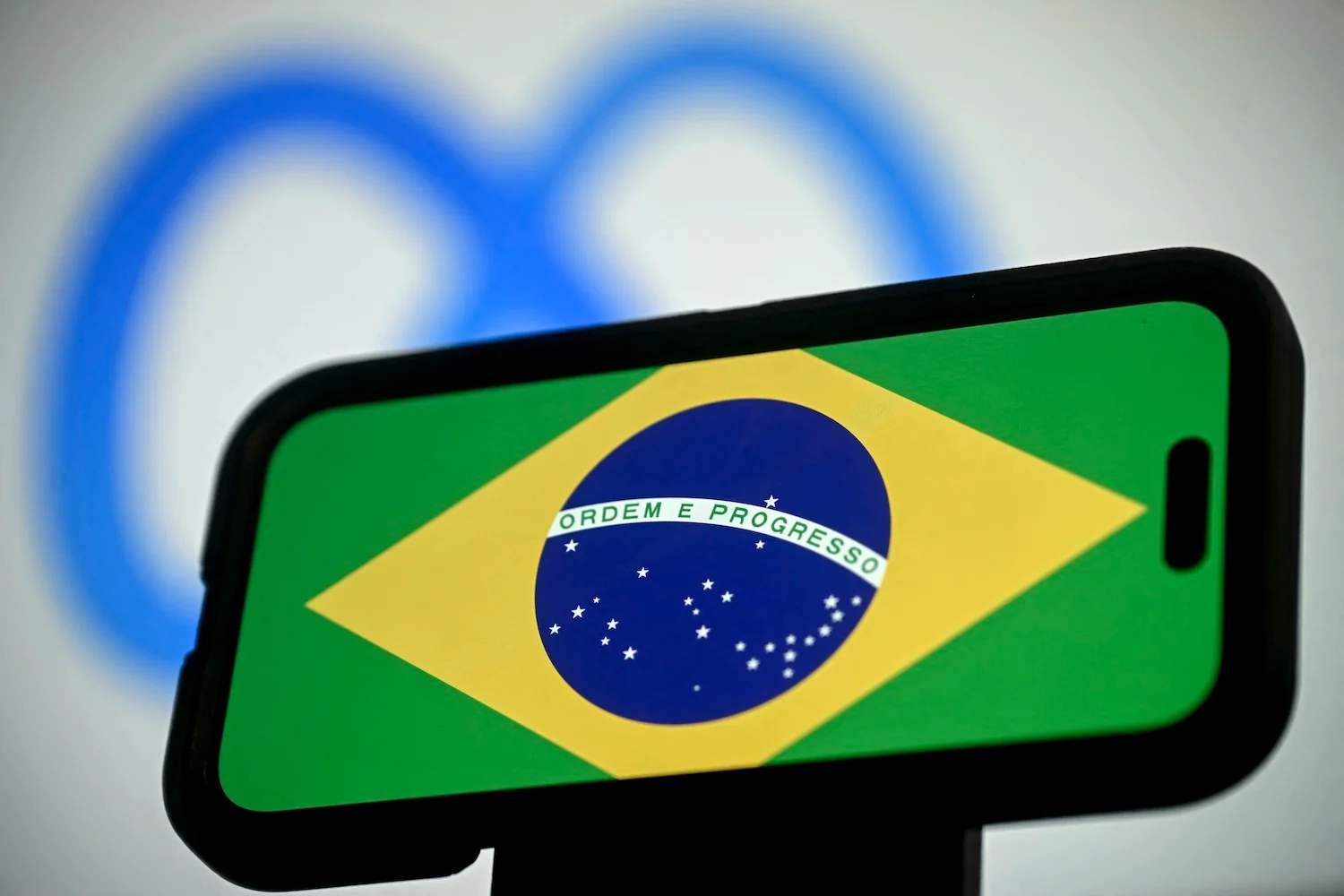
When Brazilian President Luiz Inácio Lula da Silva gave his victory speech in late October, he took one hand and held it aloft in tribute to “our general,” as his supporters cheered the “warrior of the Brazilian people.” The title was fittingly bestowed on André Janones, the 42-year-old congressman who vigorously mobilized almost 11 million voters as part of Lula’s “digital army,” marking the first time since Brazil’s return to democracy four decades ago that the runner-up surged ahead in the second round of a presidential election. It was a remarkable turnaround that will to be studied by election watchers for years to come.
In one of the most consequential elections in Brazilian history, some three-quarters of the population were getting their news from social media, and Meta—the owner of the most prominent platforms—was supportive of Sen. Flávio Bolsonaro, the son of the now-imprisoned former president. Lula’s campaign was allegedly thwarted online on Meta’s platforms. United Nations experts described as interruptions of “one side’s” social media accounts, curtailed audience engagement, and choked user feeds.
Users reported that Meta’s artificial intelligence tools refused to generate campaign posters for Lula, whose name would temporarily not appear in searches, while Bolsonaro’s profile was recommended. Leaked details revealed that Meta’s employees confirmed internal manipulations tilting the digital field in Bolsonaro’s favor, benefiting his conservative political movement. Noting its failures to stem disinformation in Brazil’s last elections, the company’s own oversight board issued its concern over “recurring enforcement failures in Meta’s election integrity efforts.”
What overcame the algorithm was Janones’s “Lula’s Army” WhatsApp channel, which swelled into the millions as the second round approached. Voters were mobilized as “soldiers,” enthusiastically showing their support through storms of emojis, and they were then dispatched on “missions” to mobilize more people. This effort helped mobilize more than 10 million supporters for Lula in the second round.
Unlike Meta’s other platforms such as Instagram and Facebook, WhatsApp is less susceptible to algorithmic control. Human beings, not algorithms, share what they want to share. Lula’s campaign recalled the original promise of technology as a force to connect, inform, and mobilize. As India’s Cockroach movement and Serbia’s student movement have recently demonstrated, digital tools can be powerfully used to help people reclaim their voices offline.
Brazil’s presidential election underscores not only the power of people to bring change, but also the danger that digital chokepoints, created by the power of a single tech company, can shape who gets heard and who doesn’t. Brazil’s is not a solitary case of Meta’s platforms influencing the result of a major election, or of voters mounting a countereffort. Asked for comment, Meta referred to a statement claiming that any impediments were not deliberate, but rather the result of technical glitches, and perhaps negligence. They also highlighted a Nov. 11 statement from Brazil’s electoral authority that it found no “deliberate action to skew the election.”
But these claims fail to reckon with the company’s own announcements that it is discarding fact-checkers and loosening controls on recommended political content. What’s more, at the same time that Brazil’s Supreme Court was regulating social media platforms, Meta CEO Mark Zuckerburg said he was working with the Trump administration to “push back” against “censorship,” disdainfully referring to Latin American “secret courts” that can order companies to take down content in the name of moderation and integrity.
Whether or not this interference was intentional, what matters is that it was possible. A single company can now stand between citizens and the representatives that they should freely elect, controlling who gets to be seen or who can be heard. The concentration of such power in the hands of so few becomes a chokepoint that can threaten democracy, even democracy itself as a political system.
In response, it will not be enough to add layers of regulation or ask Meta and other tech companies to do better. When these avenues have been pursued, they encounter hard limits. In India, Meta’s moderation of hate speech has been scrutinized; in Myanmar and Sri Lanka, rights groups accused Facebook of inflaming crimes against the Rohingya and other Muslim minorities; in Ethiopia, its algorithms amplified ethnic violence.
Two years ago, the European Commission opened still ongoing formal proceedings against Meta’s platforms under the Digital Services Act, and in the United States in recent months, it was subject to billion-dollar penalties for failing to address child safety and other problems around content moderation. In every case, enforcement has been slow, inadequate, ineffective, or too opaque to track or evaluate.
The infrastructure needed to regulate Big Tech is politically compromised. In the United States, Brazil, and other large markets, the industry runs a vast policy operation that runs deep into legislatures, think tanks, and lobbyists. There is also a regulation trap: The same politicians who we count on to regulate technology are the ones who depend on the tech companies to campaign, communicate, and fundraise.
Brazil now has some of the strongest regulation against electoral falsehoods after its election four years ago was marred by disinformation, culminating in an attempted coup carried out by those who argued—without evidence—that the electronic voting system was compromised. Regulation has since been taken up by the courts, with the Supreme Court finding tech companies’ immunity from liability for third-party content unconstitutional and the Superior Electoral Court demanding platform compliance plans.
The Lula administration also empowered public authorities to investigate platforms, enforce compliance, and ensure transparency, including in the form of specific decrees preventing digital violence against women. Today, Brazil is a rare case of a country in a position to act before the election; most others do not have strong enough institutions.
Tech companies are powerful political actors that exert potentially decisive political influence, which can be wielded for ideological or partisan ends, as in Brazil, where engagement-maximizing algorithms reward polarizing, inflammatory, and populist content. The answer must be to challenge that power, which can be done through three proposals for reform.
The first step is to reduce society’s dependence on one or a few companies that have the capability to dominate the political or digital landscape. Here, competition law can be enforced, so that a single actor cannot sweep up a whole range of apps and close them off to rivals. Brazil’s public payment system Pix, for example, broke the dominance of private card systems by charging lower merchant fees and zero cost to customers. Because the central bank required all other banks to integrate Pix into their existing mobile apps, it also expanded digital financial inclusion for hundreds of millions.
Second, our societies’ digital architecture needs to be overhauled and constructed anew around open protocols. These are publicly documented technical standards that allow different services, applications, and devices to communicate using shared rules rather than through proprietary systems. Lula’s digital army demonstrated that they can be used or designed at scale for the public interest, in line with democratic principles.
The third is to build public options. Unregulated markets cannot be expected to produce fair outcomes that benefit everyone. Just as governments use their power as investors in the realms of defense, energy, semiconductors, and other infrastructure, they can also procure open-source software and open standards for their own services. Industrial policy and public funding can unlock alternatives to Big Tech companies. They can also help build open-weight and public interest AI models, which will provide access to local developers.
Elections show how high the stakes can be, but they represent only the most visible part of a wider struggle for truth, voice, and the fundamentals of human dignity. At its core, dignity, in the digital age, depends on people’s ability to have access to reliable knowledge, remain free from manipulation, and challenge decisions that shape their families. It demands regulations ensuring that everyone is treated equally; that they are protected from digital violence; and that they are free to live without being watched, profiled, and manipulated. None of these essential elements of human dignity can be left to the goodwill of a single corporation.
Equally worrying is that we are beginning to normalize the intense, aggressive digital messaging that bombards voters as part of electoral races—for better or for worse. Digital campaigning has a place to strengthen democratic participation and promote free and fair elections, but we are also seeing that it can cross the line in distorting, suppressing, and damaging the will of the people.
What Lula honored in his victory speech was what the algorithm could not block—namely, the resolve of millions to have their voices heard and their votes to be counted. Yet by virtue of their concentrated power and platforms through which public discourse occurs, tech companies will continue to be a chokepoint on democratic governance, so countries must learn not simply to regulate but more importantly to build an open, democratic digital architecture that works for all. Otherwise, these decisions will be made by someone else.
