


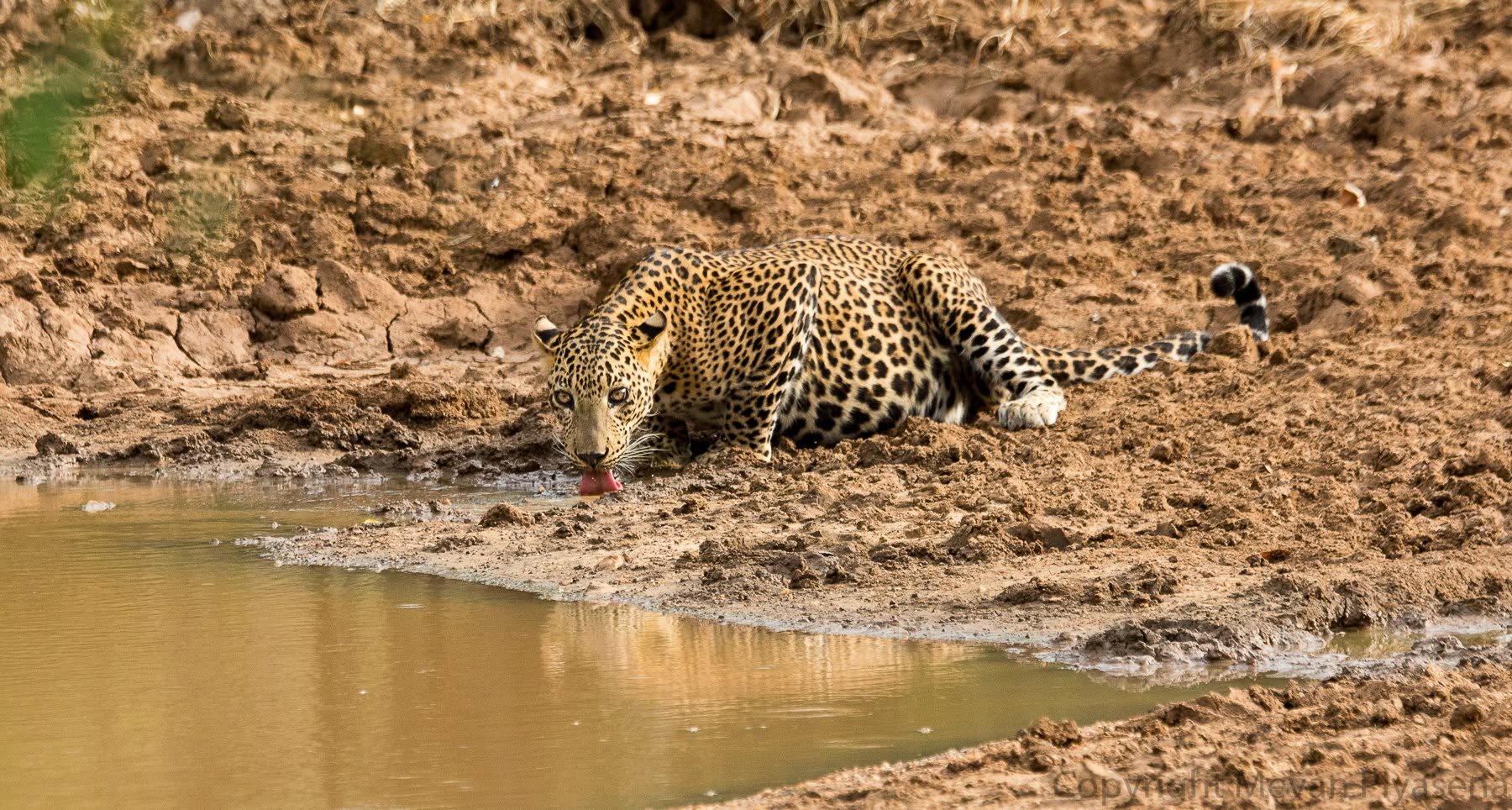
- Sri Lanka will keep the two most visited sections of Yala National Park closed from Sept. 14 to Oct. 15 as drought conditions and extreme heat intensify pressure on wildlife.
- Wildlife officers are supplying water to animals as natural water sources have largely dried up but concentrating thirsty wild animals around remaining water holes could spark new conservation risks.
- Poachers have previously poisoned water holes during droughts to kill deer and other animals for meat, with similar incidents reported in and around several protected areas across Sri Lanka.
- The crisis highlights how climate-driven water shortages expose wildlife to an array of fresh threats.
YALA, Sri Lanka – One early morning in July 2016, six wildlife officers waited in a patch of scrubland close to a small pond in southern Sri Lanka. They had received information that poachers had poisoned the water hole to kill wild animals for meat. A dead deer lay beside the poisoned pool as the officers waited for the poachers to return.
When two men approached the carcass, the officers moved in. One suspect fled, while a wildlife ranger tackled the other as he tried to escape. During the struggle, the ranger’s rifle discharged, fatally wounding him in the stomach. The officer was pronounced dead after being taken to a hospital.
The incident, in the Sinukkugala jungles about 16 kilometers (10 miles) from the town Hambantota in the South exposed the deadly chain behind a seemingly simple act: Putting poison into a water hole.
The poachers were not just killing a single animal; they were turning water — one of the most vital resources in Sri Lanka’s dry-zone landscape — into a trap. Nearly a decade later, wildlife officials continue to warn against the practice as poisoning incidents persist. In one such incident in July of this year, wildlife officers found 17 deer carcasses beside an empty agrochemical bag that may have been used to poison the animals.
During droughts, wildlife becomes concentrated around fewer water sources, potentially making animals more vulnerable to poaching. It is an inhumane method of killing them, says Ajith Gunathunga, a wildlife ranger with the Department of Wildlife Conservation (DWC). Instances of water hole poisoning are frequently reported in arid areas like Hambantota as water becomes scarce during the dry spell, though it is not a problem unique to the area, Gunathunga said. Water holes in scattered shrub jungles are often targeted by poachers, the ranger added.
Poisoning of water holes is also a serious wildlife crime as it could kill not only the intended animal but also other animals that gather to drink water, Ranjan Marasinghe, director general of DWC, told Mongabay. During periods of drought, when animals depend on fewer water sources, rangers remain particularly vigilant around these locations, he said.
“This year, the drought became intensified due to El Niño conditions, destroying many crops and leaving farmers struggling to make a living. Some have turned to poaching as a method of earning a living,” said Sameera Weerathunga, a researcher with the Udawalawe Elephant Research Project (UERP).

As climate change is predicted to increase the severity of droughts, addressing the livelihoods and economic vulnerabilities of communities living around wildlife-concentrated areas will be important to prevent people from turning into poachers, Weerathunga told Mongabay.
Similarly, the contaminated meat of wild animals killed by poisoning could be harmful to people, as consuming such meat could expose people to toxic chemicals, Weerathunga noted. He urged the public not to consume wild meat as the demand contributes to increased poaching, which results in inhumane killings.
Drought forces park closure
As drought conditions combine with the El Nino effects intensify, wildlife authorities have closed Block 1 and II, the two most popular sections of Yala National Park, to visitors from Sept. 14 to Oct. 15 as animals are experiencing heat stress. The closure comes as natural water sources inside the park shrink and animals increasingly depend on the remaining ponds and water holes, Marasinghe said.
For a park famous for its leopards, elephants, sloth bears and other wildlife, closure of the two sections serves as a reminder that water could become the most critical resource during Sri Lanka’s prolonged dry periods, which will become even more challenging as climate change increases the severity.
The DWC has begun supplying water to wildlife in several protected areas severely affected by the drought. “We provide water to at least 20 water holes in Block I of Yala National Park daily,” said Padmasiri Gamage, a wildlife ranger attached to Yala. He said the department has installed four solar-powered pumps that continuously draw and supply water to the park’s water holes. Previous years saw some private parties providing water in an adhoc manner, but providing water should be done in a systematic way, Gamage said.

While animals in Sri Lanka’s Deep South struggle with water scarcity, animals in the North face similar challenges. On Delft Island, a flat island in Northern Sri Lanka, around 400 free-roaming wild ponies are parched without enough drinking water. With no permanent rivers in the island, these animals depend largely on limited wells and other seasonal water sources, which can become depleted during prolonged dry periods. The Sri Lanka Navy has responded to the crisis by supplying water to help sustain the ponies, highlighting how drought is forcing authorities to provide emergency support to wildlife even in areas far from the island’s better-known national parks.
A new conservation challenge
Sri Lanka is experiencing one of its most severe dry spells in years, putting both communities and ecosystems under significant pressure.
The poisoned water hole incidents expose a disturbing paradox. As wildlife becomes increasingly dependent on fewer water sources, animal movements become more predictable, creating opportunities for poachers to exploit that vulnerability. As for wildlife officers, keeping animals alive during an intense drought means more than just providing water. It calls for ensuring that water is also safe to drink.

There are other unseen challenges as well. Yala’s gates closed on Sept. 14 due to a prevailing drought, but the skies immediately opened in many parts of Sri Lanka, including the Yala region. The rainfall had already begun replenishing some of the dried-up water holes, but closing a park and subsequently reversing that decision is not easy, said Marasinghe, as it involves a tedious approval process.
To this situation, climate change impacts add a fresh layer of concerns, including these management challenges by disrupting established seasonal patterns and increasing the frequency of extreme conditions. “We have to constantly reassess the situation and adapt our management,” Marasinghe told Mongabay.
Banner Image: As the drought intensifies, these remaining water holes can become a lifeline for wildlife. Image courtesy of Mevan Piyasena.

