


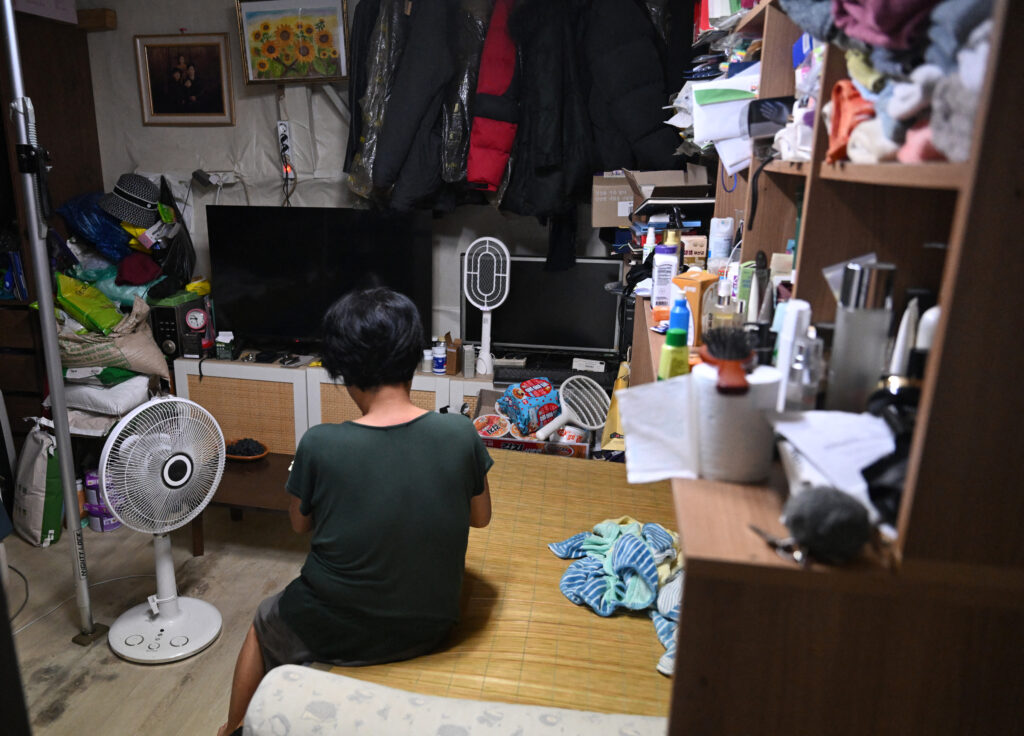
Amid heat waves, wildfire smoke warnings and sudden storms over the last few months, officials around the world have urged people to follow a fairly straightforward method for keeping safe: stay inside.
But this guidance comes with its own risks, including an often-underestimated public health threat.
A growing body of research finds that climate-fueled extreme weather can breed loneliness and isolation, which experts say hinders community connection, mental health and physical well-being. In some cases, this seclusion can be deadly. Data shows people living alone are more likely to die during heat waves, hurricanes and floods—removed from the social networks that could have helped them survive.
Developing or supporting in-person community hubs could help glue communities together before, during and after weather disasters, which can increase their overall climate resilience, experts say. But some groups—from older populations to rural residents—face a bigger battle to stave off isolation.
How Loneliness and Climate Change Are Linked
In 2023, the then U.S. surgeon general, Dr. Vivek Murthy, issued a report declaring the first-ever “loneliness epidemic.” While the COVID-19 pandemic demanded an unprecedented level of isolation that exacerbated feelings of loneliness, the report found, this public health problem has been decades in the making. Factors range from more frequent moves to the rise in technology and social media.
“Loneliness is far more than just a bad feeling—it harms both individual and societal health,” Murthy wrote in the report. “It is associated with a greater risk of cardiovascular disease, dementia, stroke, depression, anxiety, and premature death.”
Researchers are increasingly finding that global warming compounds the problem. It can drive mass migration, separating families from one another and from the lands and seas intertwined with their identities. That can intensify feelings of loneliness, according to a 2026 paper published in the journal Nature Health that called climate change “a profound psychological, behavioural and social crisis.”
The paper outlined ways that climate impacts can fuel isolation, from restricting access to community activities like group exercises to degrading shared green spaces such as parks that are “essential resources for socializing.” As I reported last week, wildfires are increasingly putting cultural sites across the U.S. at risk.
These impacts can extend far beyond the disaster itself. A 2025 study examined households in Australia affected by climate-related disasters such as bushfires and floods and found that these events were associated with an increase in loneliness and a decrease in social functioning for up to two years after. Even the specter of climate impacts is associated with increased feelings of isolation, particularly for young people, according to separate research investigating the link between climate anxiety and loneliness.
Isolation can also make people less resilient to climate impacts. As Grist reported in 2023, people in isolated areas without consistent social interaction are more likely to die during heat waves such as one that hit the Pacific Northwest in 2021, which was linked to hundreds of deaths and hospitalizations in the region.
“It’s hard to distinguish between ordinary heat and discomfort and truly dangerous conditions, like heat stress and hyperthermia,” Eric Klinenberg, a sociologist at New York University who studies climate disasters and loneliness, told the Guardian. “Being alone means there is no one watching you and telling you that you look like you need help. In too many cases, that help comes too late.”
The good news: Access to social connection during disasters can help prevent these types of situations, according to Fiona Doherty, an assistant professor of social work at the University of Tennessee, Knoxville.
“Friends or family members, maybe neighbors or even community organizations, become really critical for information exchange, for emotional support, and then really just practical assistance,” Doherty told me. “If there’s a power outage and there’s extreme temperatures, they can also help us share resources. … Those little touch points really go a long way.”
Climate-Resilient Community Hubs
The link between climate change and loneliness can be particularly pronounced in rural areas, where access to resources and community is uneven, Doherty said.
“When I think of rural communities, there are these really unique strengths, like these kind of deep traditions of neighbors helping neighbors, these deep attachments to place that I think can really enhance rural individuals’ awareness of weather changes and awareness of environmental assets,” Doherty said. “But then, in rural communities, I see these pretty robust structural barriers to maintaining connection, even before extreme weather hits, and then extreme weather just worsens them.”
For example, in a recent study, rural Ohio residents shared how extreme weather cuts people off from social systems by disrupting travel and severing internet and cell phone service, which can already be spotty in these areas. Doherty said these risks show the importance of developing community hubs to increase equitable access to resources during and after extreme weather events.
A self-proclaimed “public library champion,” she pointed to the potential of these reading spaces to act as climate refuges. Many areas across the U.S. already use libraries as cooling and heating centers.
Aside from physical spaces, formal social accountability networks can also help protect at-risk and isolated groups during extreme weather, experts say. For example, in cities such as Philadelphia and New York, programs developed in recent years connect volunteers with older neighbors to ensure someone is checking in on them during heat waves.
But tackling the climate crisis in the context of the loneliness epidemic is a behemoth task. At the same time, extreme weather events become more frequent and severe, data shows many Americans are spending more time alone than ever.
More Top Climate News
A federal judge last week ordered the Pentagon to restart reviewing onshore wind projects, which have been on pause amid the Trump administration’s attacks on wind power, Brad Plumer reports for The New York Times. Several renewable energy groups had requested a preliminary injunction against the administration, alleging it had unlawfully delayed wind development across the U.S. The Trump-appointed federal judge ruled in their favor, though President Donald Trump still has other methods of slowing down the push for wind: A German company announced last week that the administration is paying $1.22 billion for it to ditch plans for offshore wind farms in New York, California and Louisiana.
The Copernicus Climate Change Service said Western Europe just saw its hottest June and July on record, France 24 reports. The average temperature in that timeframe was around 71 degrees Fahrenheit, though parts of Spain and France saw thermometers pass 110 degrees. The finding comes amid a summer filled with extreme weather in Western Europe, as I’ve covered in recent weeks.
“This is a clear example of how climate change is intensifying heat extremes, with heat and drought increasingly reinforcing one another,” Samantha Burgess from the European Centre for Medium-Range Weather Forecasts, which operates Copernicus, told France 24. The contiguous U.S. saw its hottest month on record in July, according to the National Oceanic and Atmospheric Administration.
The Trump administration is ending its involvement in the Arctic Report Card—an international effort from scientists, researchers and other experts to assess how the region is faring in the face of climate change and other environmental issues, Andrew Freedman reports for CNN. For decades, NOAA has provided the effort with funding, logistical support and expertise. Without the agency’s involvement, experts fear the report—typically published through NOAA—will not reach as widespread an audience.
About This Story
Perhaps you noticed: This story, like all the news we publish, is free to read. That’s because Inside Climate News is a 501c3 nonprofit organization. We do not charge a subscription fee, lock our news behind a paywall, or clutter our website with ads. We make our news on climate and the environment freely available to you and anyone who wants it.
That’s not all. We also share our news for free with scores of other media organizations around the country. Many of them can’t afford to do environmental journalism of their own. We’ve built bureaus from coast to coast to report local stories, collaborate with local newsrooms and co-publish articles so that this vital work is shared as widely as possible.
Two of us launched ICN in 2007. Six years later we earned a Pulitzer Prize for National Reporting, and now we run the oldest and largest dedicated climate newsroom in the nation. We tell the story in all its complexity. We hold polluters accountable. We expose environmental injustice. We debunk misinformation. We scrutinize solutions and inspire action.
Donations from readers like you fund every aspect of what we do. If you don’t already, will you support our ongoing work, our reporting on the biggest crisis facing our planet, and help us reach even more readers in more places?
Please take a moment to make a tax-deductible donation. Every one of them makes a difference.
Thank you,

Reporter
Kiley Price is a reporter at Inside Climate News, with a particular interest in wildlife, ocean health, food systems and climate change. She writes ICN’s “Today’s Climate” newsletter, which covers the most pressing environmental news each week.
She earned her master’s degree in science journalism at New York University, and her bachelor’s degree in biology at Wake Forest University. Her work has appeared in National Geographic, Time, Scientific American and more. She is a former Pulitzer Reporting Fellow, during which she spent a month in Thailand covering the intersection between Buddhism and the country’s environmental movement.
