


- Research has shown the intense, impulsive underwater noise from marine seismic surveys can harm marine animals up and down the food chain. Yet marine scientists say major gaps remain in understanding how the effects of repeated exposure may accumulate across ecosystems over time.
- Even so, the technology is becoming embedded in Australia’s energy transition plans, as projects increasingly rely on seismic surveys not only to search for gas, but also to repeatedly monitor sites where carbon dioxide captured during gas production would be injected permanently into seabed rock formations.
- The process, known as carbon capture and storage, is relatively new, and while proponents say it is the only way to reach net zero goals, major economic and performance challenges remain.
- The expansion of carbon capture and storage could make seismic surveys a recurring feature of Australia’s net-zero ambitions.
It was spring, 20 years ago now, but he remembers it clearly. On the deck of the Geco Resolution, wind tearing spray from the waves, Robert McCauley stood gazing out onto an ocean blackened by night.
The ship had been firing seismic airguns all day, thunderous blasts punching through the water and into the seabed. Over time, the rhythmic boom reverberating through the hull had almost faded into the background.
But then night fell, and the sound revealed itself.
“Every time the airgun went off, the sea would light up,” McCauley told Mongabay. Each blast was triggering a burst of bioluminescence — dinoflagellates and other microscopic life igniting in unison. “A sheet of light would shoot out, like a wave traveling at the speed of sound. It went out for about a kilometer at least,” he said.
As Australia’s leading expert in marine bioacoustics, McCauley, a research scientist at the Centre for Marine Science and Technology at Curtin University, was there to study how whales responded to the noise. But watching the bioluminescent glow pulse outward and fade, then pulse again, he found himself wondering less about whales and more about the tiny organisms that sustain them.
“It made me think, what’s happening to all those little animals? How are they being stimulated? And what happens if they’re being stimulated every five or 10 seconds, repeatedly?” McCauley wondered.
For decades, marine seismic surveys have echoed through the world’s oceans, largely in search of oil and gas. Research has shown the intense, impulsive underwater noise can disrupt communication, impair hearing and trigger stress responses in marine mammals, fish and penguins. Yet, marine scientists say major gaps remain in understanding how the effects of repeated airgun exposure may accumulate across ecosystems over time.
Even so, the technology is becoming embedded in Australia’s energy transition plans. Off the state of Western Australia’s northwest coast, Australian petroleum production company Woodside Energy Ltd. is proposing vast new gas developments that would use seismic surveys not only to search for gas, but also to monitor offshore carbon storage sites.
Under the proposal, carbon dioxide captured during gas production would be injected into rock formations deep beneath the seabed in a process known as carbon capture and storage. If approved, the project could mark a shift in the role of seismic surveys from a tool of resource exploration to a recurring feature of Australia’s net-zero ambitions.

Widening circle of known effects
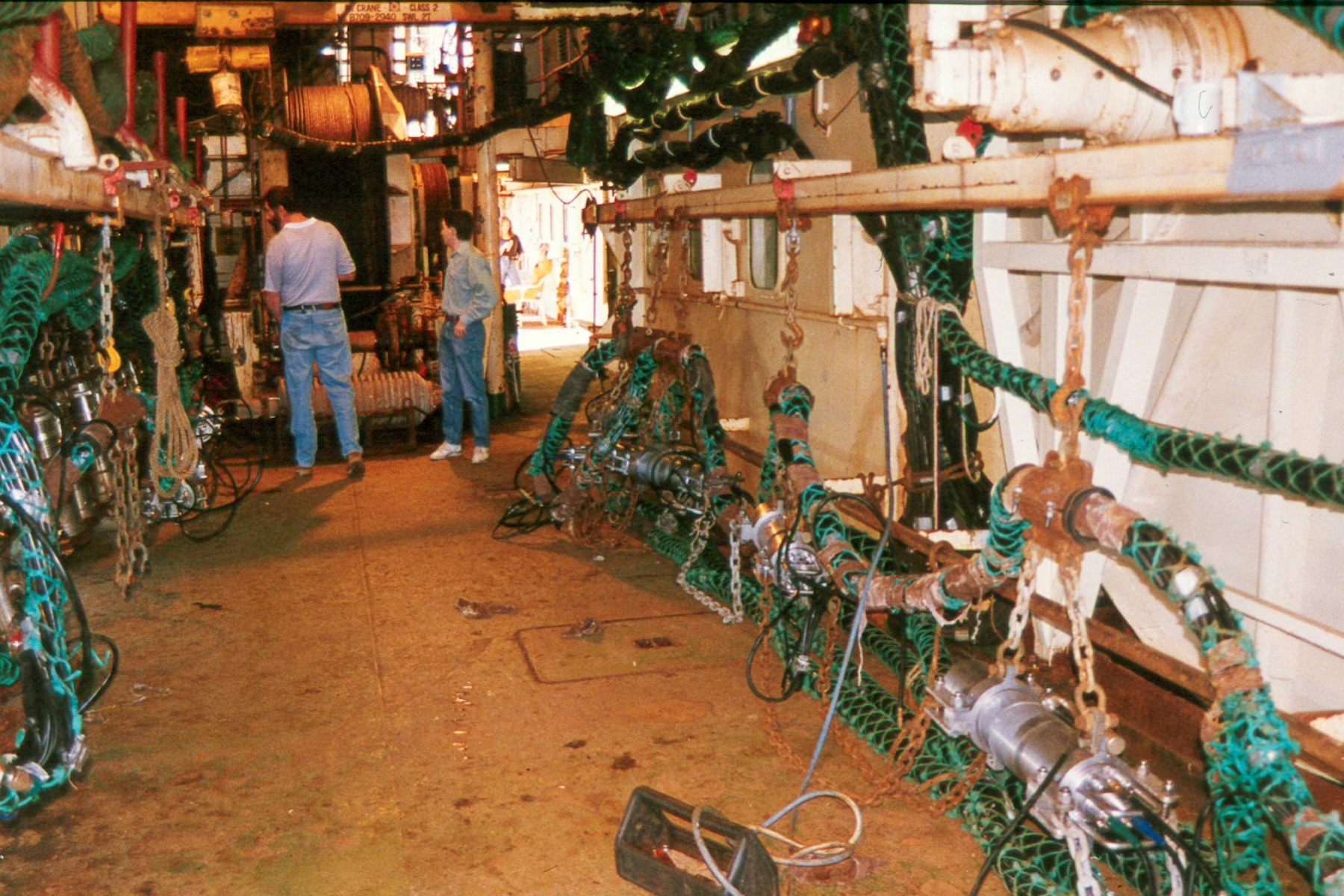
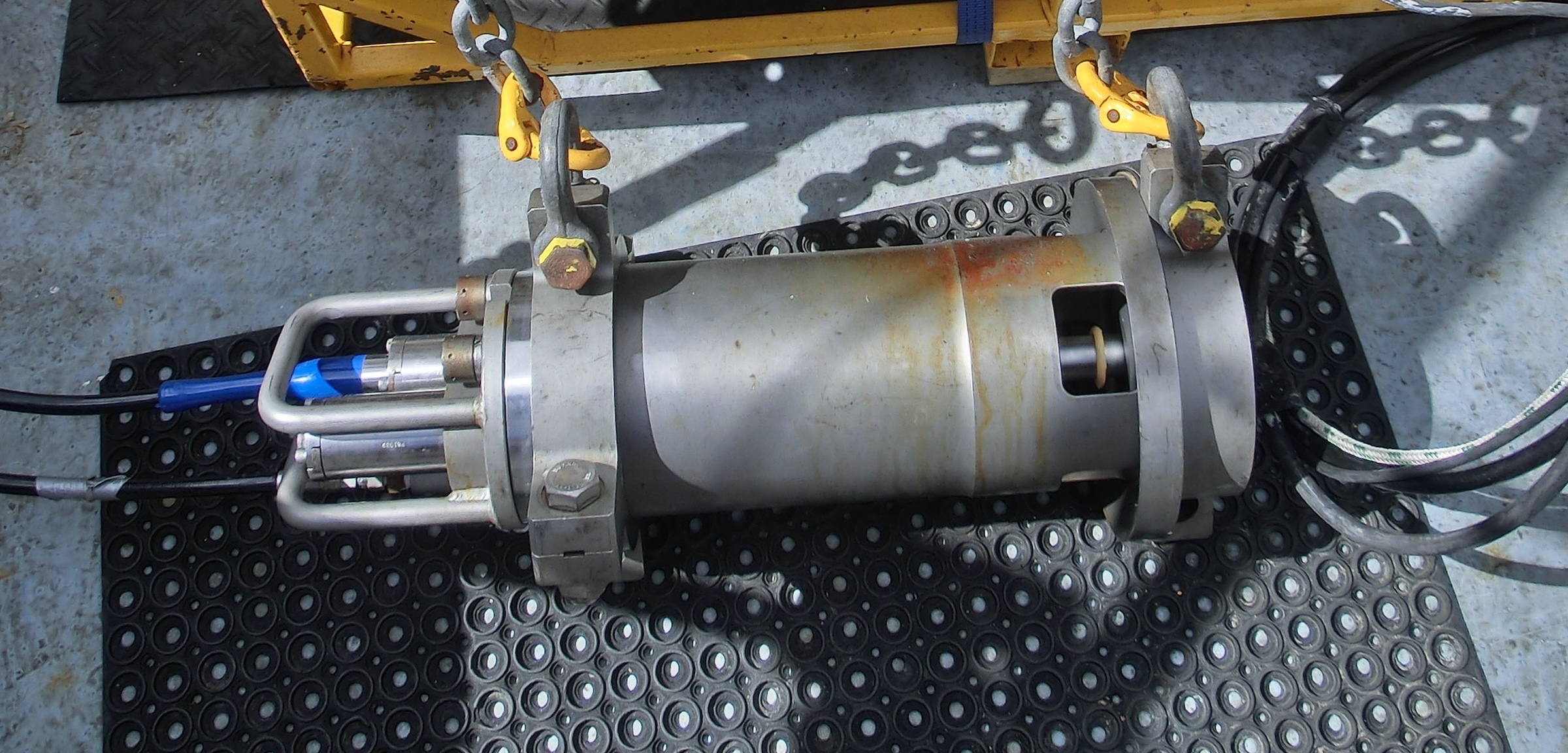
Marine seismic surveys are designed to make the invisible visible. Survey vessels tow long arrays of acoustic receivers while firing continuous blasts of compressed air into the ocean. The returning echoes are then used to build three-dimensional maps of the geology beneath the seafloor.
The sound blasts are intense, reaching 230-250 decibels — about as loud as some underwater volcanic eruptions — and can be detected in the open ocean thousands of kilometers away.
Traditionally, research into the ecological effects of seismic surveys in Australia focused largely on whales, because they are both legally protected and rely on sound to navigate.
But in 2010, that focus shifted after scallop fishers in Bass Strait between the states of Victoria and Tasmania began hauling up masses of dead and damaged shells following two seismic surveys conducted in the same waters months earlier. At the time, operators said there was no scientific evidence that seismic surveys harmed shellfish, but the scale of die-offs prompted urgent calls for investigation.
Two years later Ryan Day, a marine animal physiologist at the Institute for Marine and Antarctic Studies at the University of Tasmania, led research to test that assumption, exposing scallops (Pecten fumatus) and southern rock lobsters (Jasus edwardsii) to varying pulses from a single seismic airgun.
“It was the first big, well-done study [on invertebrates] that showed pretty substantial impacts following exposure,” he told Mongabay. Scallops presented severe physiological stress and elevated mortality. Lobsters exhibited weakened immune responses and damage to sensory systems that affected their balance and ability to right themselves if toppled.


The findings, published in 2017 and 2019, helped extend scientific attention beyond marine mammals.
In 2017, McCauley published research with Day as a coauthor, examining the effects of seismic blasts on zooplankton — minute animals such as fish larvae and krill that underpin marine ecosystems. Until then, industry assumptions had held that impacts would be confined to within 10 meters (33 feet) of an airgun. Instead, McCauley’s team recorded sharp declines in zooplankton abundance as far out as they sampled, up to 1.2 kilometers (0.75 miles) away. Mortality rates were two to three times higher in water samples exposed to an operating airgun than those not, and all krill larvae collected after exposure were dead.
The results challenged long-held assumptions about the scale and reach of seismic impacts, suggesting potentially significant disruption at the base of marine food webs and implications for cascading effects through entire ecosystems.
Within days, the top national oil and gas lobby group, currently named Australian Energy Producers, commissioned scientists to model McCauley’s results. The subsequent report projected substantial impacts within 15 km (9 mi) of a modeled survey area, but concluded these would not be detectable at the population level. Zooplankton, it suggested, would rebound quickly in the region, aided by rapid growth rates and ocean mixing.
“I get it. It’s pretty hard to conceptually accept that you could depopulate zooplankton in a big enough area of ocean for it to matter,” Day said. “But, you know, that’s what we thought about fisheries for hundreds of years and look where we are now.”
Increasing seismic surveys
Day pointed to a limitation in how the research is applied. Field experiments like the zooplankton study are typically based on a single survey line, but commercial surveys operate quite differently. They continue for weeks or months at a time, following grid or race-track patterns while airguns fire every few seconds. As vessels move between adjacent survey lines, the same marine life may be repeatedly exposed. “And that’s not something we’ve studied at all yet,” Day said.
For McCauley, these knowledge gaps about cumulative effects are becoming more pressing.
“You would think that, because oil and gas has become less in favour, the amount of seismic that they do would be going down,” he said. “But it’s actually the opposite.”
The reason lies partly in Australia’s Future Gas Strategy, a long-term plan that keeps gas in the energy mix through to the government’s 2050 net zero target and beyond, assuming that gas emissions can be either offset through purchasing carbon credits or abated through carbon capture and storage (CCS).
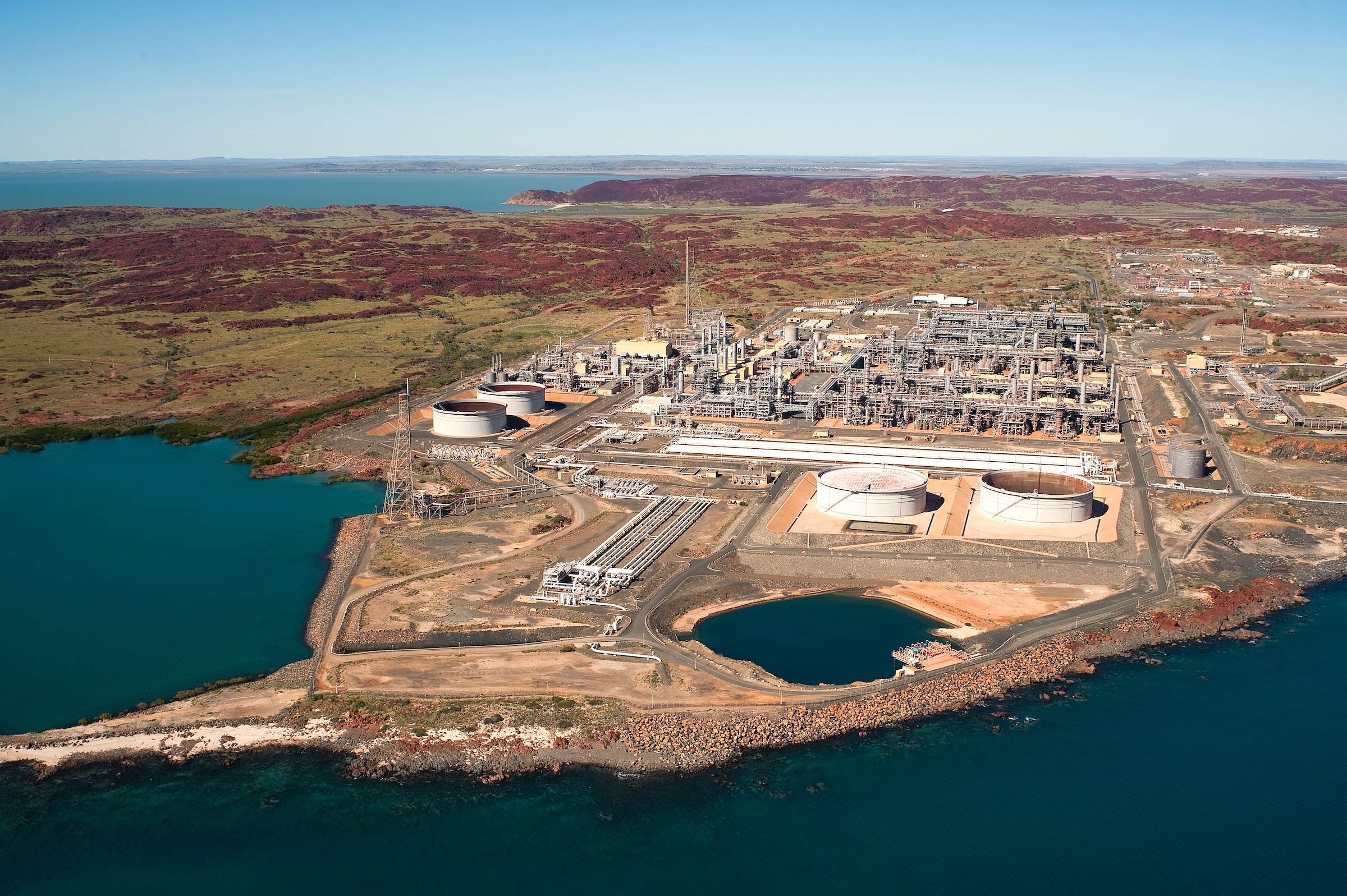
Last year, the federal government cleared a key hurdle for Woodside Energy’s proposed expansion of offshore gas fields into the Browse Basin by approving the extension of its North West Shelf Project to 2070. Gas from Browse would feed into the aging Karratha Gas Plant, one of Australia’s largest gas processing facilities, primarily for export.
To meet emissions requirements associated with new gas production, Woodside has committed to incorporating CCS into the design. Under its proposal, Woodside would capture at least 85% of the carbon dioxide (CO₂) separated from extracted gas and inject it beneath the seafloor for intended permanent storage, rather than releasing it into the atmosphere as a planet-warming greenhouse gas.
Seismic surveys will be central to that process, first to identify suitable rock formations for storing CO2 and then repeatedly after injection begins to monitor how the gas moves underground and ensure it remains contained.
Woodside’s CCS plan estimates that injecting around 4 million metric tons of CO₂ yearly could reduce the project’s direct emissions by about 47%. This does not address emissions released when the exported gas is burned by customers — emissions projected to exceed 80 million metric tons of CO₂-equivalent each year, about double Norway’s total annual CO2 emissions.
The project would drill up to seven injection wells near Scott Reef, a remote and biodiverse coral system supporting seasonal whale migrations and a range of marine species, some found nowhere else on Earth.
Expanding CCS
CCS technology itself is not new. Since the 1970s, captured CO2 has been injected into oil reservoirs to improve extraction rates, a practice known as enhanced oil recovery. Most CCS projects worldwide are still tied to oil production in this way. Only in more recent years have dedicated carbon storage projects begun to emerge, using the technology to reduce emissions rather than increase fossil fuel production.
Supporters of CCS argue it enables emissions reductions in sectors that are near-impossible to fully electrify. Geologist Peter Cook, an advisor at the Peter Cook Centre for CCS Research at the University of Melbourne and pioneer of CCS research in Australia, said it is indispensable.
“I don’t see any other way we can get to net zero without including CCS in the equation,” he told Mongabay.
But the economics and performance hurdles remain challenging, experts say.
The only CCS project currently operating at a scale comparable to Woodside’s proposal is also the world’s largest. The Chevron-owned Gorgon project in Australia has consistently fallen short of sequestration targets, storing just 25% of the CO₂ separated during gas processing last year — its lowest performance to date and well below its targeted 80%. The facility’s ongoing inefficiency has reportedly driven costs to nearly four times original estimates, according to the Institute for Energy Economics and Financial Analysis.
CCS also carries a growing offshore industrial footprint. In 2024, Australia’s Minister for Resources, Madeleine King, granted 10 new greenhouse gas storage assessment permits and committed AUD$3.4 billion ($2.36 billion) to “comprehensively map our natural resources and renewable energy potential, including the geological suitability for CCS,” she said in a speech.
Cook said monitoring technology is becoming more sophisticated, which could reduce the need for frequent seismic surveys in the future. Still, under Woodside’s proposal, seismic surveys would be conducted every five years or so to monitor storage sites.

The scale of that activity could expand further in coming decades if Australia moves ahead with ambitions to become a regional carbon storage hub. Under its Net Zero Plan, the federal government flagged the country’s potential to store captured CO₂ from overseas as part of emerging “transboundary CCS” partnerships across the Asia-Pacific region.
Cook said several companies are already exploring the idea, particularly in the North West Shelf and Timor Sea regions, where geological formations may be able to store large volumes of carbon. In theory, he said, liquified natural gas exported to countries such as Japan or South Korea could be paired with return shipments of CO₂ captured upon burning the gas, creating a circular carbon system.
“So, it’s a business opportunity, but it’s also an environmental opportunity,” Cook said.
Persisting unknowns
If this comes to fruition, seismic surveys may no longer be sporadic exploration tools, but a routine feature of offshore development, returning to the same marine systems every few years for decades to come, while the science on their impacts catches up.
Twenty years after watching airgun pulses ignite the sea, McCauley said many of the fundamental questions they raised remain unanswered.
“The impacts of seismic noise on marine fauna have been barely studied, despite what industry tells everyone,” he said. “We’re only just scratching the surface of understanding what’s going on.”
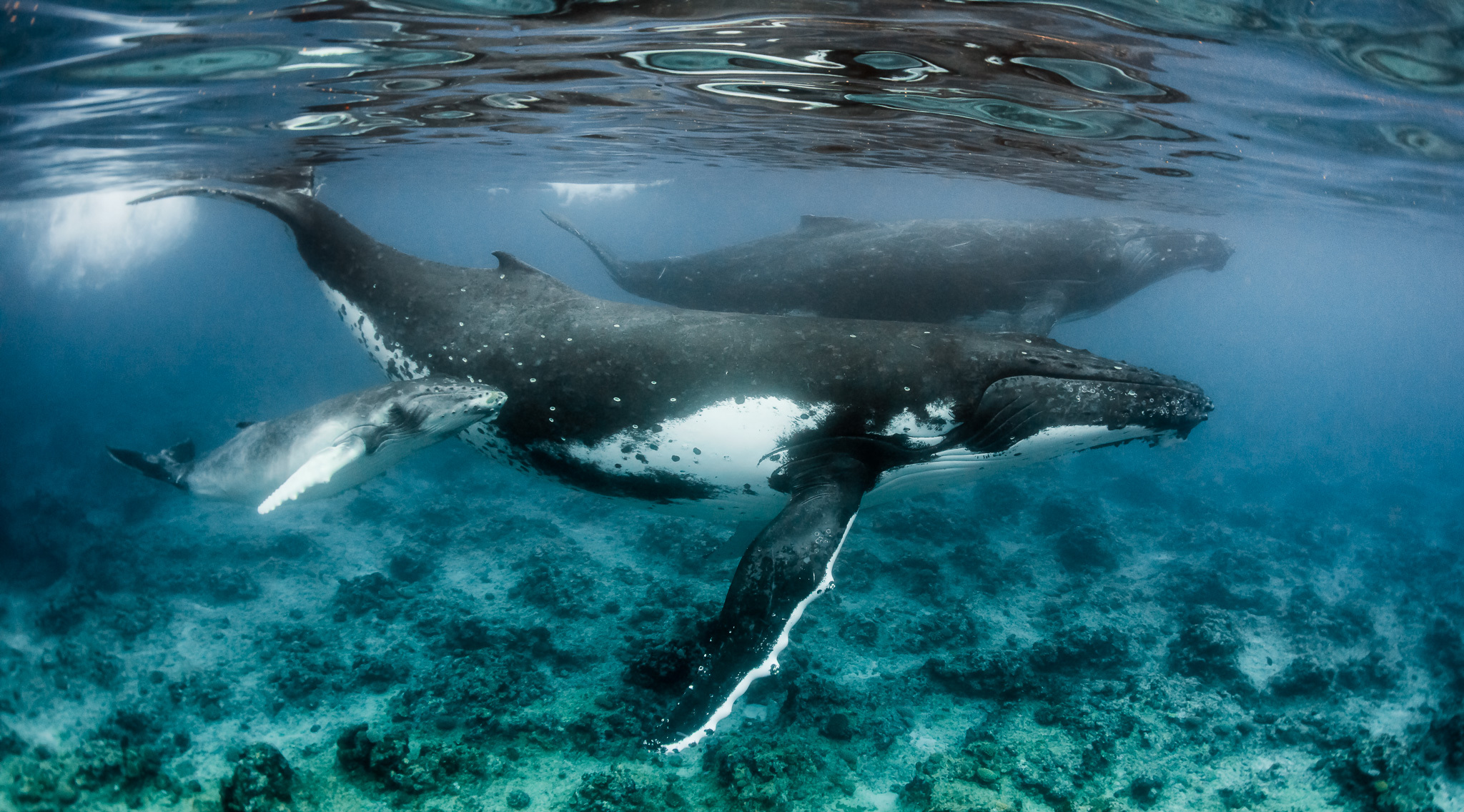
Banner image: Southern humpback whales, including a calf (Megaptera novaeangliae ssp. australis). The animals in the photo are in Tonga; the species also inhabits Australian waters. Image © Wayne and Pam Osborn via iNaturalist (CC BY-NC 4.0).
This reporting was supported by an early-career grant from the Science Journalists Association of Australia.
Seismic noise from oil companies threatens Amazon River Mouth marine life
Australia’s seagrass meadows under pressure as climate change turns up the heat
Citations:
Day, R. D., McCauley, R. D., Fitzgibbon, Q. P., Hartmann, K., & Semmens, J. M. (2017). Exposure to seismic air gun signals causes physiological harm and alters behavior in the scallop Pecten fumatus. Proceedings of the National Academy of Sciences, 114(40). doi:10.1073/pnas.1700564114
Day, R. D., McCauley, R. D., Fitzgibbon, Q. P., Hartmann, K., & Semmens, J. M. (2019). Seismic air guns damage rock lobster mechanosensory organs and impair righting reflex. Proceedings of the Royal Society B: Biological Sciences, 286(1907), 20191424. doi:10.1098/rspb.2019.1424
Maciel, I., Tardin, R., Moreira, S. C., Melo-Santos, G., Maricato, G., & Alves, M. A. S. (2026). Cetaceans Change Their Acoustic Behavior During the Airgun Noise of Seismic Surveys. Journal of Marine Science and Engineering, 14(2), 181. doi:10.3390/jmse14020181
McCauley, R. D., Day, R. D., Swadling, K. M., Fitzgibbon, Q. P., Watson, R. A., & Semmens, J. M. (2017). Widely used marine seismic survey air gun operations negatively impact zooplankton. Nature Ecology & Evolution, 1(7). doi:10.1038/s41559-017-0195
McCauley, R. D., Fewtrell, J., & Popper, A. N. (2003). High intensity anthropogenic sound damages fish ears. The Journal of the Acoustical Society of America, 113(1), 638-642. doi:10.1121/1.1527962
Pichegru, L., Nyengera, R., McInnes, A. M., & Pistorius, P. (2017). Avoidance of seismic survey activities by penguins. Scientific Reports, 7(1). doi:10.1038/s41598-017-16569-x
FEEDBACK: Use this form to send a message to the editor of this post. If you want to post a public comment, you can do that at the bottom of the page.
Cite this article
Theoné van der Merwe (2026). As Australia expands seismic testing, experts warn of profound effects on sealife. Mongabay Conservation news. DOI: https://doi.org/10.66709/news-324311

