


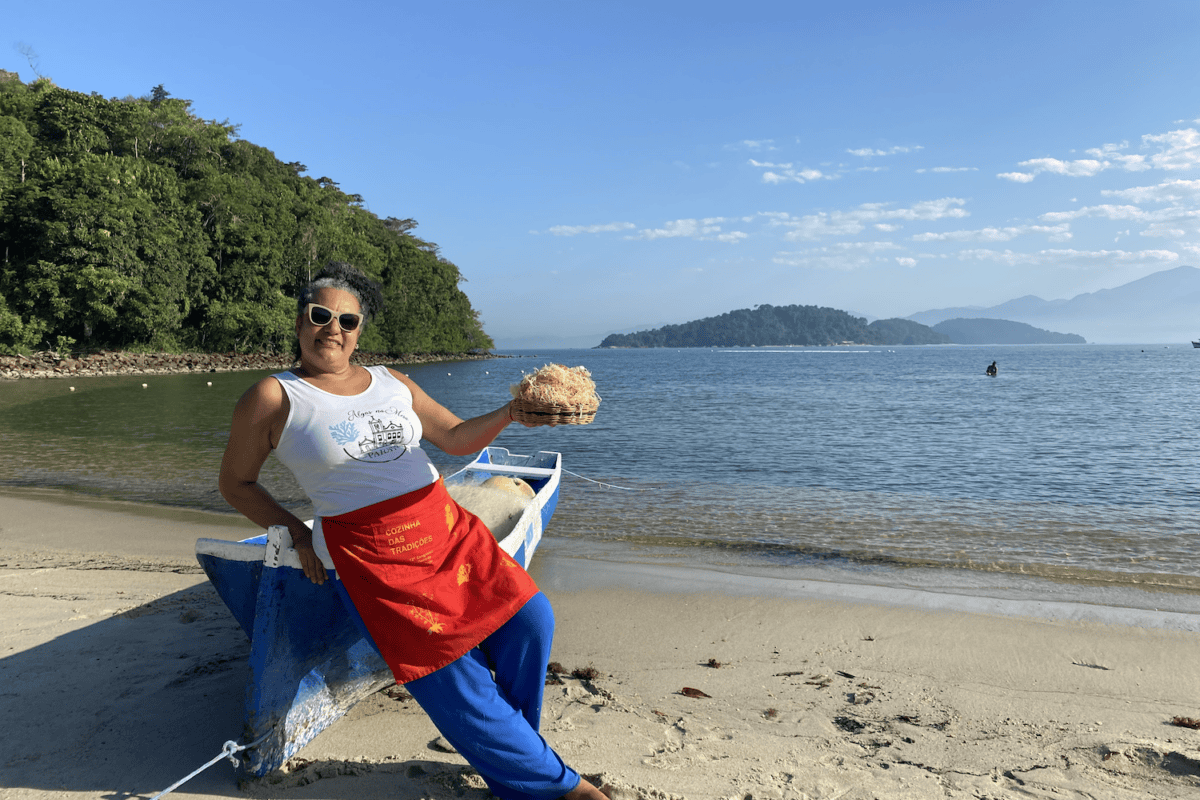
- In Paraty, Brazil, a Caiçara family has transformed seaweed cultivation into gastronomy, educational tourism and a source of income. The venture is driven by strong female participation and a deep connection to their territory.
- Originally introduced in Brazil to supply the carrageenan industry, the macroalgae Kappaphycus alvarezii is also being used as a biofertilizer and increasingly as a food item..
- Its farming also supports ecological balance. It produces oxygen, absorbs carbon and helps improve water quality by filtering out excess nutrients.
- Experts say the expansion of seaweed farming in Brazil faces bottlenecks in credit, marketing, technology and regulation. New research networks and public policies are attempting to organize the sector as part of the country’s growing bioeconomy.
Aparecida Rosa Ayres often says she has known seaweed since she was in her mother’s womb, thanks to the stories she used to tell her. As a child, her mother used seaweed as doll hair while playing on the beach. Today, the 47-year-old Caiçara woman has given it a new meaning: It is the star ingredient at Rancho Ayres, her restaurant on Paraty’s São Gonçalo Beach.
While the seaweed of her mother’s childhood was native to Ilha Grande Bay, the variety Aparecida uses for cooking is Kappaphycus alvarezii, a macroalgae of Philippine origin that she first found in 2013. Eight years later, she took a course offered by the Federal University of Rio de Janeiro (UFRJ) and the Paraty municipal government on the potential of seaweed farming for the regional bioeconomy.
That course inspired Algas na Mesa Paraty, an initiative that combines what Aparecida calls “seaweed gastronomy” with historical revival at the São Gonçalo and São Gonçalinho beaches.
“We are the daughters of the waters; we were born in the maritório [marine territory], so the use of seaweed comes as a form of resistance and permanence to preserve the territory,” Aparecida says.
She descends from one of the traditional Caiçara families (traditional population from south/southeast Brazil) displaced from their homes by the beach during the construction of the Rio-Santos federal road (BR-101) between 1969 and 1975.
However, the Caiçara continued to use the beaches for work and leisure. There, families built ranchos — facilities that support mariculture, community-based tourism and food services. As tourism grew into the region’s primary economic driver, the Ayres family decided to invest in gastronomy alongside the small-scale fishing already practiced by Aparecida’s husband.
“We saw an opportunity because there has been a very large drop in fish stocks,” says Ísis Ayres, Aparecida’s daughter who is now an anthropology student. “My stepfather had to go further and further to fish or supplement his income with other activities. So we took the course and saw seaweed’s potential to expand our activities.”
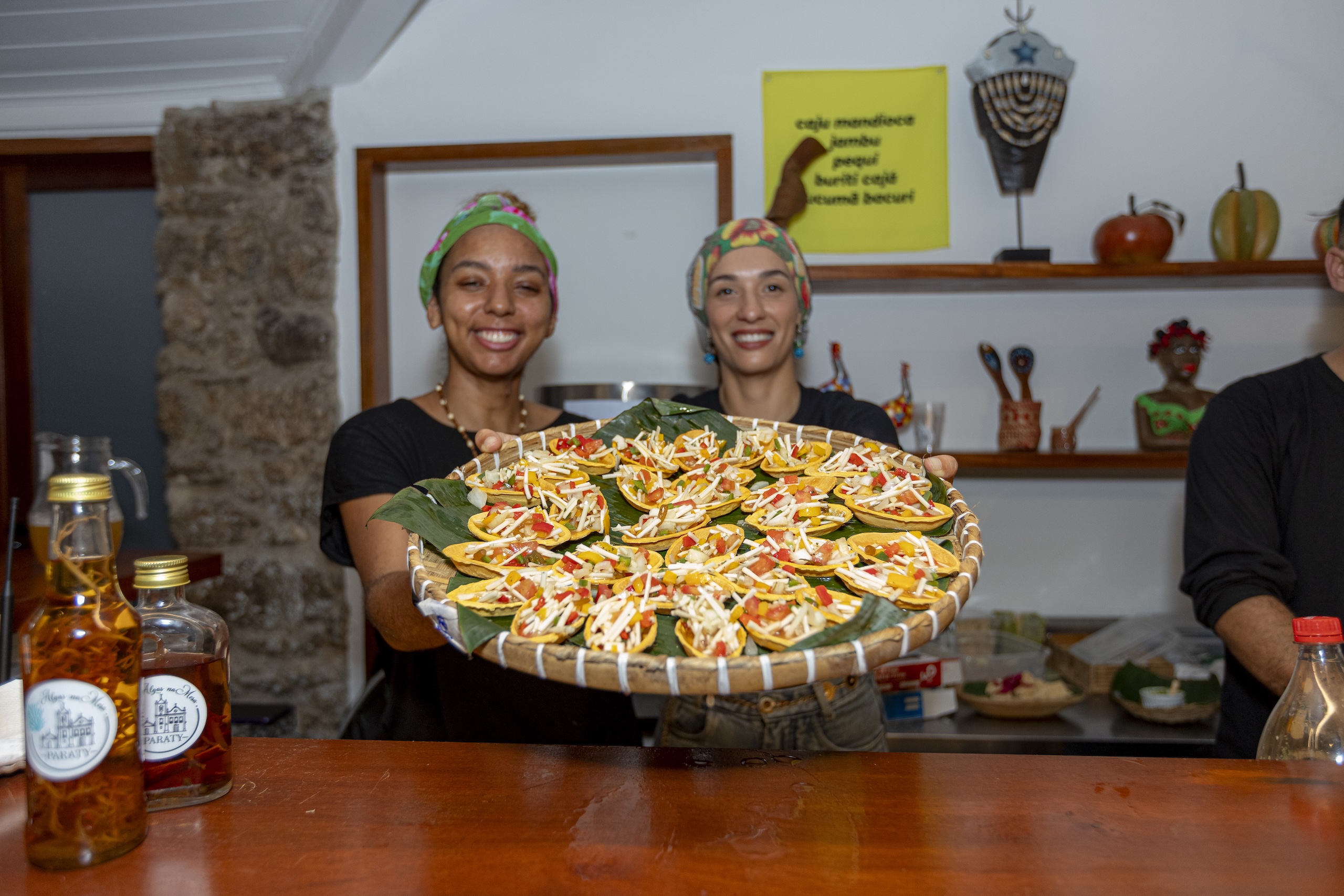
At Rancho Ayres and at catered events, Aparecida and her team prepare a variety of both sweet and salty dishes. A favorite is seaweed tempura, or tempuralgas, inspired by the Japanese dish common at Paraty’s religious festivals.
The restaurant also serves seaweed brownies, couscous, vinaigrette, vegan mayonnaise, coconut candy and drinks like Jorge Amado, named after a famous Brazilian writer — a cocktail made of passion fruit, lime, ice and a clove-and-cinnamon liqueur known as Gabriela.
Aparecida’s personal favorite is seaweed gel, which she considers her most important ingredient because it serves as the base for many recipes. Fresh seaweed and a flour version complete the foundation of her alga-based menu.
Beyond food services and cooking workshops, the family offers an educational tourism itinerary. They explain seaweed’s role in the ocean, its importance, potential uses and the impacts of improper management.
Early on, sea turtles frequently became trapped in raft nets. Then, the fishers decided to change the mesh size to protect marine life.
The family also offers thalassotherapy, a massage performed in a canoe using seaweed cosmetics. Marketing these products is one of the business’s next steps, along with growing native species.
Aparecida views the initiative as a tool for the future. “I hear people from all ethnic groups, ages and purchasing power who find out and learn more with Algas na Mesa Paraty than anywhere else they had been,” she says. “People are grateful for what we disseminate, and we can tell it comes from the heart.”
Both mother and daughter emphasize that the business is also a strategy to integrate women into mariculture, a sector still dominated by men. “Our return to the beach has a very feminine mark. Most of the people managing it are women, not only in my family but in others as well,” Ísis says. “Just look at food’s communication potential as a political tool for us to be in other spaces and reach people we might not otherwise meet.”

Macroalgae potential in Brazil
Kappaphycus alvarezii was commercially introduced in Brazil in 1998 to produce carrageenan, an additive used as an emulsifier, thickener and gelling agent in processed foods like plant-based milks, ice cream and yogurt. Today, national production stands at around 1,100 metric tons per year. The activity is concentrated in Santa Catarina, Rio de Janeiro and São Paulo — the only three states where it is permitted by Brazil’s environmental protection agency IBAMA, under its Directive 1/2020.
In Santa Catarina, the country’s top producer, macroalgae can also be found in people’s diets. Tatiana da Gama Cunha, a seaweed farmer and owner of Algama Marine Farm in the city of Florianópolis, produces both sweet and salty items for events, including breads, cookies and, even, chocolate mousse. Her recipes for seaweed-based pâtés and jellies are set to debut on the commercial market soon.
“Kappaphycus alvarezii has a very interesting nutritional value and is considered functional food, with antioxidant, antitumor and antifungal potential,” says Valéria Cress Gelli, a researcher at São Paulo’s Fisheries Institute. “This seaweed has vitamins B and C, 2% to 15% protein, and it’s also low-calorie. Studies show that it even helps with high blood pressure.”
However, only 1% of Cunha’s products are used for food. The main destination of Brazil’s production is biorefineries, where the seaweed is processed into an extract used as a biofertilizer or agricultural stimulant. Several studies have demonstrated increased crop yields after applying the extract as a foliar spray, with gains of 20.47% in okra, 57% in soy and 60.89% in tomatoes.
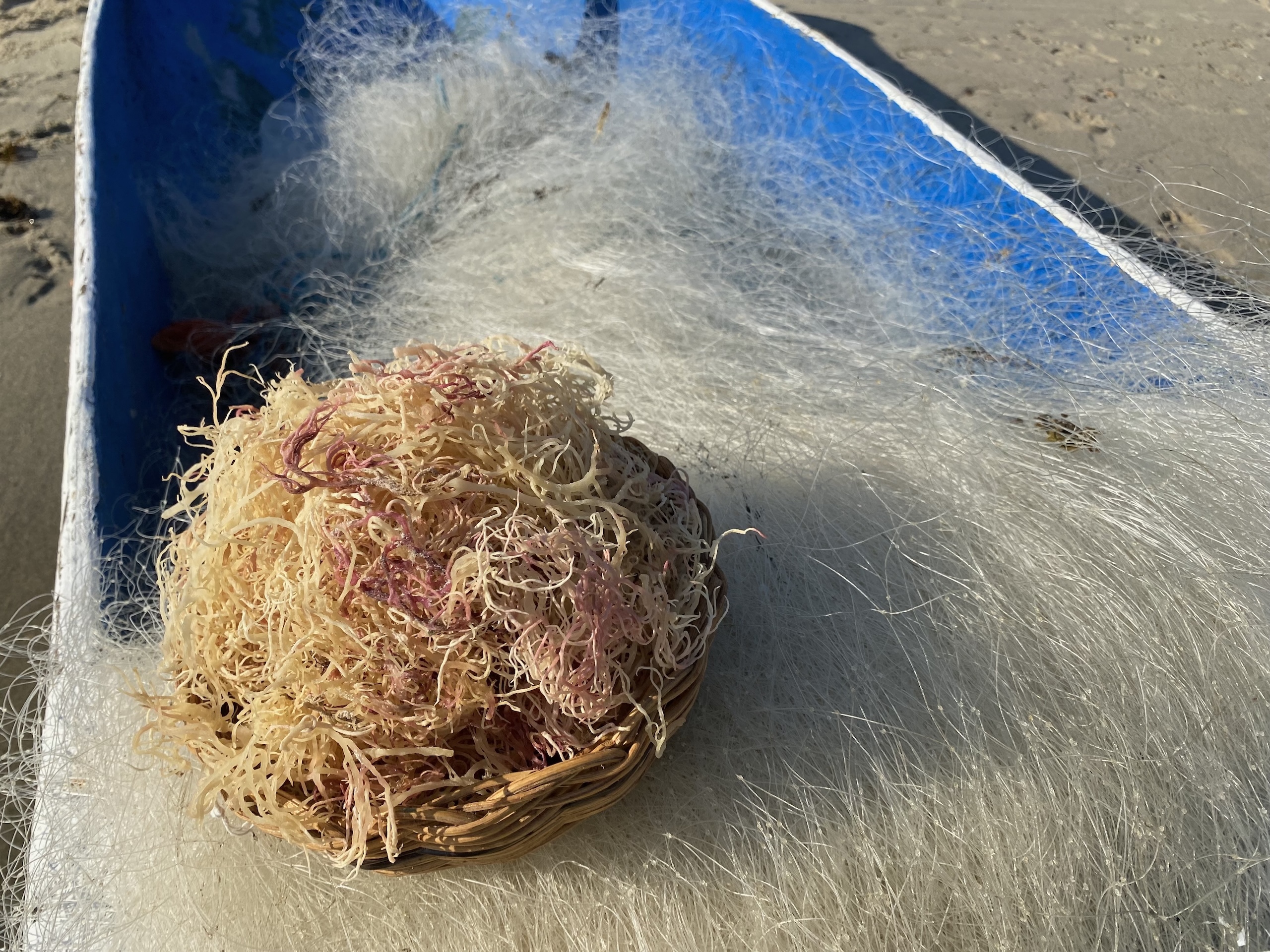
Other potential uses for Kappaphycus alvarezii that remain largely unexplored in Brazil include production of bricks, coatings, dyes, fabrics, plant fiber and animal feed.
Gelli says that while this seaweed provides numerous social and economic benefits, its primary value is environmental. In addition to producing oxygen and filtering out excess phosphorus and nitrogen to improve water quality, the macroalgae absorbs carbon dioxide as it grows, helping mitigate global warming.
It also tackles climate change through its potential use in biofuel production and by easing extractive pressure on other marine organisms such as oysters, whose cultivation may be affected by rising ocean temperatures.
According to Gelli, the seaweed supply chain has enormous room to grow in Brazil, but its expansion depends heavily on public policies. “Producers need to have more credit lines and incentives for commercialization, which is currently one of the major bottlenecks,” she says. “There is also a great need to revise legislation and encourage payment for environmental services, which will help producers a lot and facilitate the regularization process.”.
At the 2025 U.N. Climate Change Conference in Belém, Brazil’s Ministry of Fisheries and Aquaculture announced that the country will become part of the United Nations Global Seaweed Coalition. The coalition seeks to promote sustainable seaweed production and marketing, support small-scale producers and expand international cooperation in science, trade and innovation.
In addition, the government signed the National Plan for the Sustainable Development of Aquaculture (PNDSA) in June 2026, establishing strategic guidelines and targets for the industry over the next 10 years.
To strengthen the country’s seaweed supply chain, the Algicultura BR Network was established in early 2026. Coordinated by the Brazilian Agricultural Research Corporation (EMBRAPA), this technical-scientific alliance brings together institutions doing research, educational and rural outreach, alongside public agencies and organizations working to develop the macroalgae supply chain.
Renata Melon Barroso Bertolini, an analyst at Embrapa Fisheries and Aquaculture and head of the network, says that “coordinated initiatives like this are strategic to promote an alliance of different actors, accelerate studies and innovation, reduce technological and regulatory bottlenecks, and consolidate seaweed farming as a relevant component of Brazil’s bioeconomy and blue economy.”
The future of seaweed farming in Brazil, Melon says, “will depend on our ability to structure an integrated, competitive and market-oriented supply chain, turning the country’s natural and scientific potential into an economic activity of scale.”
This story was reported by Mongabay Brasil and first published here on our Portuguese site on Aug. 12, 2026.
Banner image: Aparecida Ayres with dehydrated seaweed in front of her cultivation area. Image by Ísis Ayres.
Citations:
Gelli, V. C. (2019). Desenvolvimento ordenado e potencial da produção da macroalga Kappaphycus alvarezii no estado de São Paulo para a produção do biofertilizante [Tese de doutorado, Universidade Estadual de Campinas]. Repositório da Produção Científica e Intelectual da Unicamp.
Mahadi, M., Azizul, M. S., Eshak, Z., Ibrahim, A. H., Md Akim, A. … Kamal, N. (2021). Kappaphycus alvarezii supplementation attenuates blood pressure, blood cholesterol, ACE and antioxidant activities in hypertensive and hypercholesteroleamic rats. Malaysian Journal of Medicine and Health Sciences, 17, 72.

