


Unlock the White House Watch newsletter for free
Your guide to what Trump’s second term means for Washington, business and the world
The US is poised to impose sweeping sanctions on buyers of Russian oil and gas after senators overwhelmingly endorsed a bill intended to increase pressure on Vladimir Putin to end his years-long war in Ukraine.
The Senate voted 86-12 late on Tuesday to advance a bill that imposes primary and secondary sanctions against Russia and individuals and businesses that buy that nation’s oil and gas.
The sanctions package is the latest sign the Trump administration is starting to warm to Ukrainian President Volodymyr Zelenskyy as his country’s fight against Russia gathers momentum.
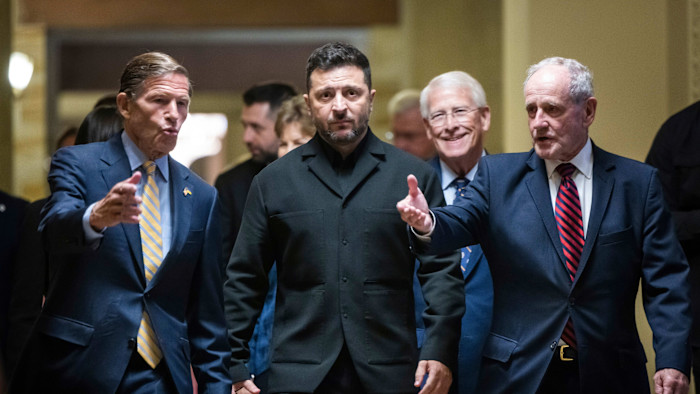
Minutes before Tuesday’s vote, Zelenskyy and Finland’s President Alexander Stubb addressed senators behind closed doors at the US Capitol to implore them to back the sanctions package.
Ukraine’s leader told the FT earlier this month that President Donald Trump liked to be associated with “success” and that he had told Zelenskyy that Kyiv was “doing very well” with its long-range drone campaign against the Kremlin’s energy sector that has dented its economy and military logistics.
The proposed measures would target Russian officials, oligarchs and their family members, as well as the nation’s banks and financial institutions among others. They would also allow Trump to impose tariffs on imported goods from countries that buy Moscow’s oil and gas.
Tuesday night’s vote was a procedural hurdle. The bill is expected to formally pass the Senate in the coming days and pass the House of Representatives with similar bipartisan support before being sent to Trump’s desk to be signed into law.
The sanctions package is officially called the Lindsey O Graham Sanctioning Russia and Iran Act of 2026, named after the late US senator who died suddenly earlier this month at the age of 71.
It was taken up by the Senate on Tuesday hours after the lawmaker’s funeral in Washington, which was attended by Zelenskyy, Stubb and other world leaders including Israeli Prime Minister Benjamin Netanyahu.
A longtime foreign policy hawk and vocal supporter of Ukraine, Graham had for more than a year pushed Trump to give the green light to legislation intended to dramatically increase the economic pressure on Russia and buyers of its energy.
Just days before his death, during his tenth visit to Ukraine since the war began, Graham announced that he and other lawmakers had reached a deal with the White House to advance the legislation.
A group of those senators — including Republican Senate foreign relations committee chair Jim Risch and Jeanne Shaheen, the top Democrat on the committee — said in a statement on Tuesday that there was “no greater way” to honour Graham’s legacy than to move forward with the legislation.
The bill also includes a provision to extend sanctions to restrict funding for Iran’s energy and weapons sectors.
Hours before Graham’s funeral on Tuesday, Zelenskyy met Trump at the White House. While the meeting was held behind closed doors, the Ukrainian president’s advisers signalled a growing confidence that Trump has become more supportive of Kyiv in recent months.
After the talks, Zelenskyy posted on social media: “A good meeting with President Trump @POTUS at the Oval Office. Thank you for everything we do together to protect the lives of Ukrainians and advance peace.”
But some analysts have questioned whether new measures would be effective and noted the Trump administration may be wary of using powers that could push up oil prices.
Recent changes to the bill’s text meant implementing the sanctions, tariffs and secondary tariffs on Russian energy now depended on Trump rather than solely on the legislation Congress passed.
The White House temporarily lifted specific sanctions on Russian and Iranian crude to tackle a surge in oil prices during the conflict in the Middle East.
“It is now an option, not an obligation, to impose the tariffs due to the very broad waiver authority the new text accords President Trump,” said Kevin Book at ClearView Energy Partners, a Washington-based consultancy.
“The tariffs on buyers of Russian crude would be at lower levels under the statute’s latest text and could be waived by the president submitting a report to Congress. So essentially a relatively low bar.”
