


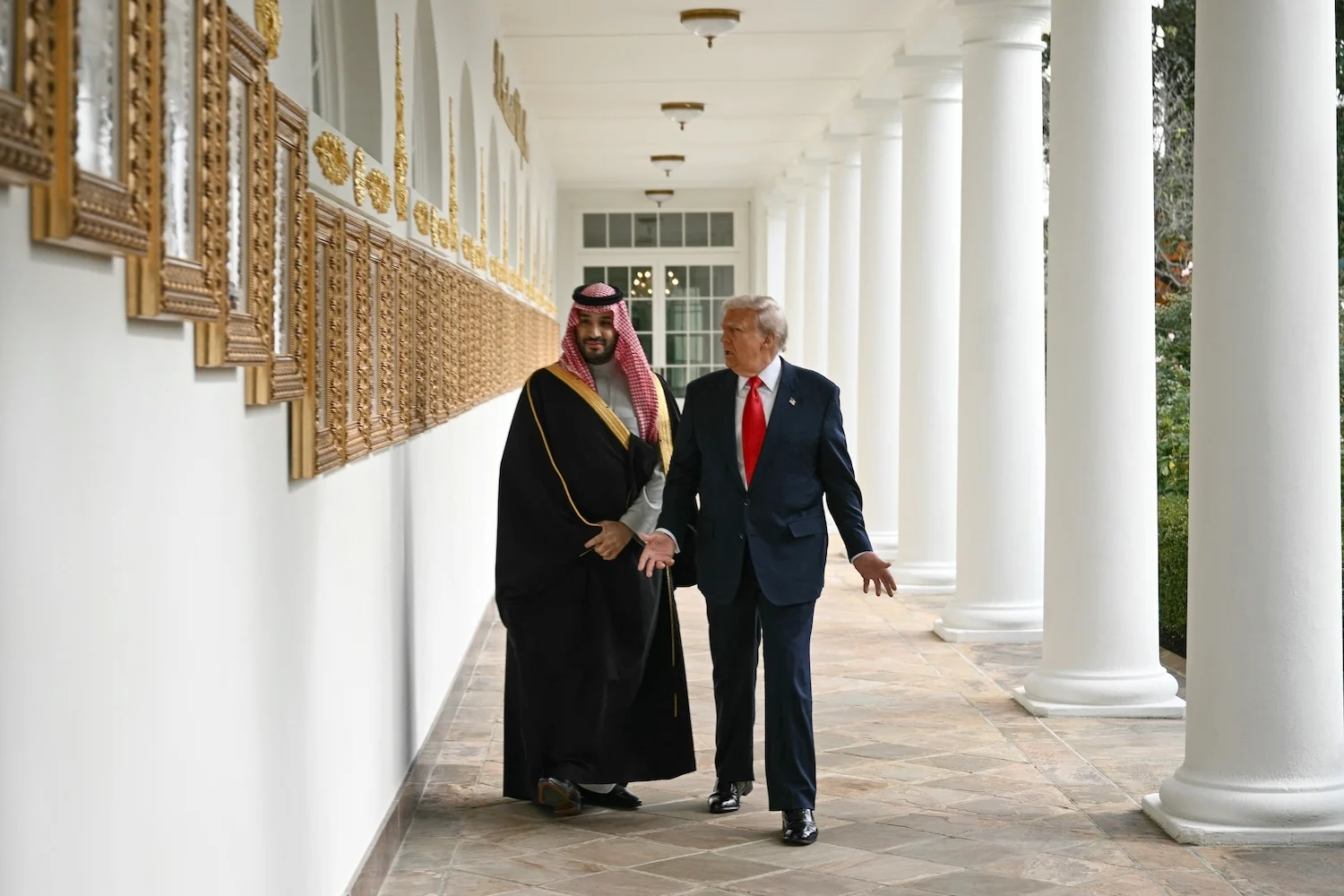
If they were handing out diplomas from the College of Strategic and Diplomatic Malpractice, the Trump administration would surely graduate with high honors. The latest episode in this sorry tale is the deal to provide Saudi Arabia with U.S. nuclear reactors and know-how, reportedly including the right to enrich uranium on Saudi soil in a black-boxed facility the United States would construct. Immediately after the signing of the deal on July 22, U.S. President Donald Trump added the condition of Saudi normalization with Israel, which, if he sticks to it, would invariably scotch the agreement. There is no compelling commercial, economic, or civil nuclear justification to allow Saudi Arabia to control its fuel cycle with or without U.S. supervision. In addition to undermining decades of U.S. nonproliferation policy, the deal and Trump’s walk back reflect the absence of adult supervision and sound decision-making in his administration, emblematic of its approach to diplomacy in general.
It was certainly no surprise that the administration engaged with Riyadh on these issues, since discussions have been taking place for a number of years, primarily in the context of expanding the Abraham Accords. The Saudis have long expressed interest in accessing U.S. nuclear technology and know-how for a civilian program. They have also asked for a bilateral defense treaty and access to the most advanced U.S. weapons systems. Trump’s eagerness to placate the Saudis while demanding little in return went beyond President Joe Biden’s efforts to figure out a way to satisfy the Saudi desire for a domestic enrichment capacity, and it bested the 2009 U.S.-Emirati nuclear accord, which denied Abu Dhabi that concession. Biden at least made the Saudi deal part of a package that would have included normalization with Israel, figuring that might have eased somewhat Israeli concerns on enrichment and provided cover to get the deal through Congress.
If they were handing out diplomas from the College of Strategic and Diplomatic Malpractice, the Trump administration would surely graduate with high honors. The latest episode in this sorry tale is the deal to provide Saudi Arabia with U.S. nuclear reactors and know-how, reportedly including the right to enrich uranium on Saudi soil in a black-boxed facility the United States would construct. Immediately after the signing of the deal on July 22, U.S. President Donald Trump added the condition of Saudi normalization with Israel, which, if he sticks to it, would invariably scotch the agreement. There is no compelling commercial, economic, or civil nuclear justification to allow Saudi Arabia to control its fuel cycle with or without U.S. supervision. In addition to undermining decades of U.S. nonproliferation policy, the deal and Trump’s walk back reflect the absence of adult supervision and sound decision-making in his administration, emblematic of its approach to diplomacy in general.
It was certainly no surprise that the administration engaged with Riyadh on these issues, since discussions have been taking place for a number of years, primarily in the context of expanding the Abraham Accords. The Saudis have long expressed interest in accessing U.S. nuclear technology and know-how for a civilian program. They have also asked for a bilateral defense treaty and access to the most advanced U.S. weapons systems. Trump’s eagerness to placate the Saudis while demanding little in return went beyond President Joe Biden’s efforts to figure out a way to satisfy the Saudi desire for a domestic enrichment capacity, and it bested the 2009 U.S.-Emirati nuclear accord, which denied Abu Dhabi that concession. Biden at least made the Saudi deal part of a package that would have included normalization with Israel, figuring that might have eased somewhat Israeli concerns on enrichment and provided cover to get the deal through Congress.
Even before Hamas’s Oct. 7, 2023, attack against Israel and the ensuing Israeli war in Gaza, the normalization aspect of the deal was complicated. The Saudis wanted to see some progress on the Palestinian issue, while the Netanyahu government in Israel pushed back, recognizing that something needed to be on offer but wanting to keep that to a bare minimum. After Oct. 7 and the devastating toll that Israel’s attacks took on the civilian population and infrastructure in Gaza, the Saudi requirements vis-à-vis the Palestinian issue increased significantly. The Biden administration floated the mantra of a “concrete, time-bound, irreversible path to a Palestinian state living side by side in peace and security with Israel.” But this did not satisfy the Saudi demands after Oct. 7, whose concerns related to the impact of normalization on their domestic stability.
Thus, while it was not all that surprising that the Trump administration would return to this issue by engaging with the Saudis, it was shocking that the agreement signed by U.S. Energy Secretary Christopher Wright and Saudi Energy Minister Abdulaziz bin Salman reportedly focused exclusively on the nuclear issue, with no mention of Israel or normalization. Even worse, details emerging point to a weak and potentially dangerous agreement that falls woefully short of the deal signed with the United Arab Emirates in 2009, a so-called “123 Agreement,” based on Section 123 of the 1954 Atomic Energy Act. The U.S.-Emirati agreement limited nuclear cooperation to peaceful civilian purposes, specifically excluded enrichment and reprocessing of uranium, and included compliance with International Atomic Energy Agency (IAEA) safeguards and other significant international nonproliferation obligations. At the time, U.S. officials called the agreement the model for other regional agreements on peaceful nuclear programs.
What happened next is not yet clear, but something drove Trump to add the condition of normalization to the Saudi agreement, after it was signed, which apparently had not been discussed with Riyadh. In a Truth Social post on July 23, Trump wrote: “The Civil Nuclear Deal (There will be no enrichment of material!) being made between the United States Department of Energy and Saudi Arabia, which pertains only to non-military use such as the ones that Iran and UAE (and others) already have, will be approved, but is totally subject to Saudi Arabia joining the very respected and successful Abraham Accords.” Not only was the reference to the Abraham Accords inconsistent with the agreement signed the previous day, but it included a demonstrably false statement that the Saudis could not enrich on their soil. The agreement reportedly had not specified that.
There are several possible explanations for this diplomatic fiasco. Consistent with the poor track record of almost every negotiation entered into by Trump’s envoys, it is possible those who negotiated this deal simply did not know or appreciate the significance of the normalization issue in the context of a nuclear deal with the Saudis—or simply assumed that normalization is light years away and just not feasible. Given the fact that the deal offered Trump a way to energize the U.S. nuclear industry with prospects of Saudi investment in the United States and/or Saudi investment in the business activities of those in or close to the administration simply made this deal too lucrative to pass up.
Whatever the reasons, this is a mess with significant ramifications. First, the agreement would undercut—indeed wipe out—decades of U.S. counterproliferation policy. Especially at a time when the United States is bombing Iran to stop its nuclear program—in particular, its enrichment activities—it borders on criminal to have opened this door to the Saudis. Indeed, the Saudis refused to accept the IAEA’s additional protocol which would have mandated intrusive inspections. Second, it is beyond comprehension how negotiators could have performed so poorly, without any apparent reference to history. Third, Trump seems to be oblivious to the impact on his own and U.S. credibility by his unilaterally adding conditions to an already signed agreement. And fourth, for the administration to pursue and sign this deal with no apparent consultations with Israel and with no consideration of the Palestinian issue is equivalent to walking away from policies that even this administration had followed until now. If Iran needed more grist for its propaganda machine that the United States couldn’t be trusted to keep its word, this flip-flop gave it to them.
Of all the diplomatic fiascos characteristic of the Trump administration, the most dangerous is this Saudi nuclear deal. The current leadership in Riyadh might be seen today as a reliable U.S. ally, but there is no guarantee of what the future might hold. Crown Prince Mohammed bin Salman, who could rule the kingdom for decades to come, is pursuing a 360-degree foreign policy, remaining close to Russia and China. Recall that it was the United States that offered Iran the “Atoms for Peace” program in 1957 that provided a nuclear research reactor and highly enriched uranium as well as education and training. When the Islamic Republic gained power in 1979, the U.S.-provided infrastructure of that nuclear program was in place, creating a regional and global security problem with which we are still wrestling 47 years later. By effectively killing the Saudi deal when he added the normalization component, Trump might unwittingly have done a huge favor for U.S. nonproliferation policy.
Unfortunately, and sadly, none of this is really surprising, for it follows a pattern of diplomatic and strategic incompetence that has become the hallmark of Trump’s foreign policy. Poorly prepared amateur negotiators have been dispatched to tackle the most complex issues on the international agenda. The results have been predictable. The Russia-Ukraine war continues, with Trump himself vacillating between support for Russia and anger at the Europeans for supposedly not doing more to help Ukraine.
Trump’s 20-point plan for Gaza is dead in the water. Hamas has no intention to disarm, and Israel has no intention to withdraw from Gaza. More than 1,000 Palestinians have been killed by Israel since the so-called cease-fire went into effect last October, and Hamas is still governing in Gaza, although in an increasingly small area. It seems clear now that Trump’s plan all along was to do a one and done—to get Gaza off his plate with a plan that required tough diplomacy through many stages but without the intention to do the heavy lifting.
The more recent memorandum of understanding with Iran is another example of short-term thinking that produced a seriously flawed document, among the worst in the annals of U.S. diplomacy. It was hastily negotiated, frontloaded in favor of Iran, and missing any reference to the goals about which this war was supposedly fought. The U.S. negotiators basically met all of Iran’s key requirements and achieved none of their own. Iran’s nuclear program was not constrained, nor was its missile program. And, perhaps most significant of all, Iran was anointed as determining the arrangements for shipping through the Strait of Hormuz, with no mention of U.S. opposition to Iran’s charging a toll or fees after 60 days.
It would be nice if someone would emerge to impose a degree of adult supervision on Trumpian diplomacy. Clearly Congress won’t step up, nor Secretary of State Marco Rubio. We both worked for half a dozen secretaries of state who would have at least made the effort to turn the president around if U.S. policy was drifting off the highway. We won’t hold our breath.
Indeed, U.S. national security is too important to continue to be left in the hands of self-serving amateurs, guided by a president with no strategic grounding and with little sense or experience in how to protect and advance U.S. national interests. Americans deserve better.
