


- A recent study found that extreme weather events like storms, heat waves and floods can interfere with the breeding success of marine predators like seals, shearwaters and albatross that raise their young along the coasts of the Australian state of Tasmania.
- While some colonies appeared unaffected by extreme weather, others saw offspring swept away by powerful waves and storm surges, hypothermia during unusually wet episodes, and deadly overheating during periods of high temperatures.
- The researchers noted that these extremes are among many challenges seals, seabirds and other marine predators face, including pollution, disease and declining food supplies, which can also be influenced by extreme weather events.
On the rocky shores of Tasmania, seals and seabirds can’t shelter indoors during a storm or turn on the AC during a hot spell. When extreme weather strikes, they’re exposed to the elements, especially when they’re tied to a clumsy pup or a nest of newly hatched chicks.
The effects can be deadly. A study published in Science Advances in June found that extreme weather events like storms, heat waves and floods can interfere with the breeding success of important marine predators like seals, shearwaters and albatross that raise their young along the coasts. As these events become both more frequent and increasingly intense due to climate change, the study authors stress the need to monitor predator populations to better protect them from the effects, especially during vulnerable times in the breeding season.
“Extreme weather events are becoming a new normal,” study lead author Milan Sojitra, a marine ecologist at the University of Tasmania, told Mongabay. “It is having an effect on ecosystems and species.”
Marine ecosystems around the world are under stress from the effects of human-caused climate change, including heatwaves and warming ocean temperatures that can cause coral bleaching and mass die-offs of marine species.
Tasmania, an island and Australian state 240 kilometers (149 miles) south of the mainland, is a climate change hotspot, with surface waters off its eastern coast warming three to four times faster than the global average, according to a 2018 study. The frequency and intensity of extreme rainfall and heat on the island are also increasing. Researchers set out to understand how and when extreme weather events are affecting individual species, which is key to developing effective conservation strategies as climate change worsens, Sojitra said.

Rain, heat and storm surge
In the study, researchers focused on three marine predator species: Australian fur seals (Arctocephalus pusillus doriferus), short-tailed shearwaters (Ardenna tenuirostris), and shy albatross (Thalassarche cauta). These animals spend time both on land and at sea, facing pressures in both environments, and can act as “sentinels” that indicate the health of the broader ecosystem.
Because these animals return to the same breeding sites each year, researchers were able to examine long-term monitoring data (in some cases spanning decades) from 14 different breeding colonies across Tasmania and smaller islands in the Bass Strait, and compare it to local weather data from the same period. They analyzed 19 different types of extreme weather to determine how and when they impacted the colonies’ breeding success.
The researchers found that while some fur seal colonies appeared to be unaffected by extreme weather, a low-lying group was vulnerable to storm surges during pupping season. The waves “can wash away pups and separate them from others or drown them, because they are really not efficient swimmers when they’re young,” Sojitra said.

The shearwaters, on the other hand, were susceptible to extreme rainfall that could flood or collapse their protective underground burrows, especially during incubation and when chicks are still young. As with the seals, however, this wasn’t the case at every colony, potentially because areas with different soil conditions and more native plants offered better drainage.
Each of the three shy albatross breeding colonies — the only three on Earth — was impacted by different types of extreme weather. High temperatures at one location raised the risk of chicks overheating when covered with thick down feathers. At a different site, unusually wet conditions may have caused hypothermia among the chicks, the researchers concluded. The third site, a barren rock at sea, saw chicks swept away by powerful waves during storms.
While there is a chance that some of these groups may abandon risky sites, Sojitra explained that understanding how and when colonies are harmed by extreme weather could allow for targeted interventions like misting chicks during heatwaves, providing sturdy artificial nests and replacing invasive plants with native ones. “We can actually do something on [the] ground to help mitigate some of the extreme weather-related mortalities,” he said.

Most importantly, he added, researchers need consistent and reliable data on breeding colonies.
“This work really highlights the importance of long-term data,” Elliott Hazen, a marine ecologist in the U.S. at the University of California, Santa Cruz who was not affiliated with the study, told Mongabay. “These long-term data sets allow us to see the patterns that we otherwise would miss.”
Hazen also said the study showed that even though these marine predators spend much of their lives at sea, they “can be at significant risk” from extreme weather and climate change without careful management and protection during these vulnerable breeding periods on land.

Converging threats
The study focused only on the direct impact of extreme weather events, but this is one of many challenges seals, seabirds and other marine predators are facing. Others include pollution, disease and declining food supplies, which can also be influenced by extreme weather events, Sojitra said.
Hazen likened the alignment of these risk factors to a rogue wave, where individual smaller waves intersect and combine forces to make a much more powerful and dangerous swell. But he said predicting these complex compounding events is difficult, so examining the role of extreme weather around the world is a good place to start.
Ultimately, Hazen said, “the number of chips getting stacked against some of these wild populations is definitely concerning going into the next century.”

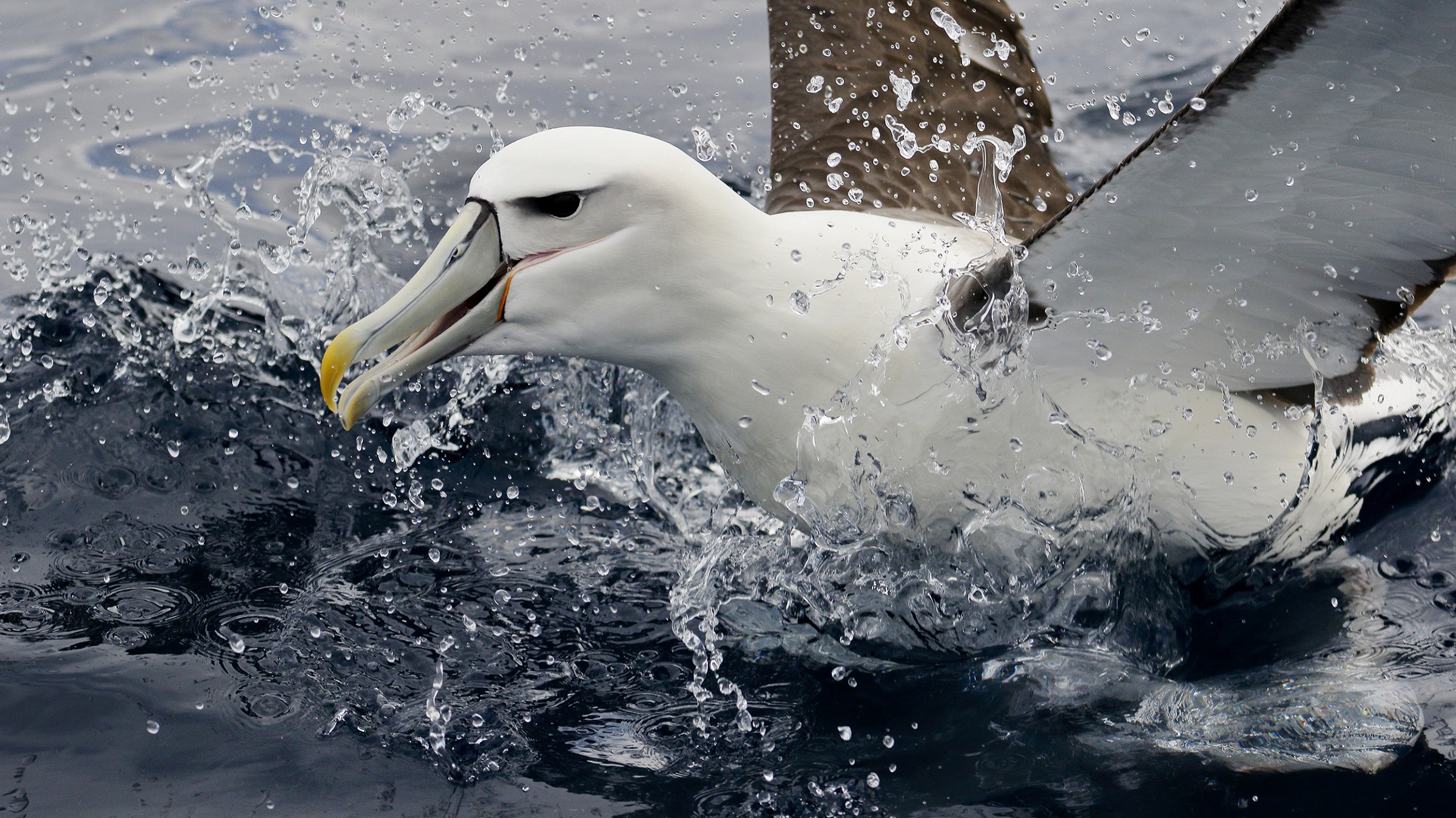
Banner image: Shy albatross (Thalassarche cauta). Image by Ed Dunens via Flickr (CC BY 2.0).
Citations:
Sojitra, M., Corney, S., Hemer, M., Bestley, S., Hamilton, S., Thalamann, S., & Lea, M. (2026). Extreme weather effects on marine predator breeding outcomes in a global climate change hotspot. Science Advances, 12(25). doi: 10.1126/sciadv.aea3220
Oliver, E. C., Lago, V., Hobday, A. J., Holbrook, N. J., Ling, S. D., Mundy, C. N. (2018). Marine heatwaves off eastern Tasmania: Trends, interannual variability, and predictability. Progress in oceanography, 161, 116-130. doi:10.1016/j.pocean.2018.02.007
FEEDBACK: Use this form to send a message to the editor of this post. If you want to post a public comment, you can do that at the bottom of the page.
Cite this article
Madeline Shaw (2026). Extreme weather dampens breeding success for marine predators in Tasmania: study. Mongabay Conservation news. DOI: https://doi.org/10.66709/news-324558

