


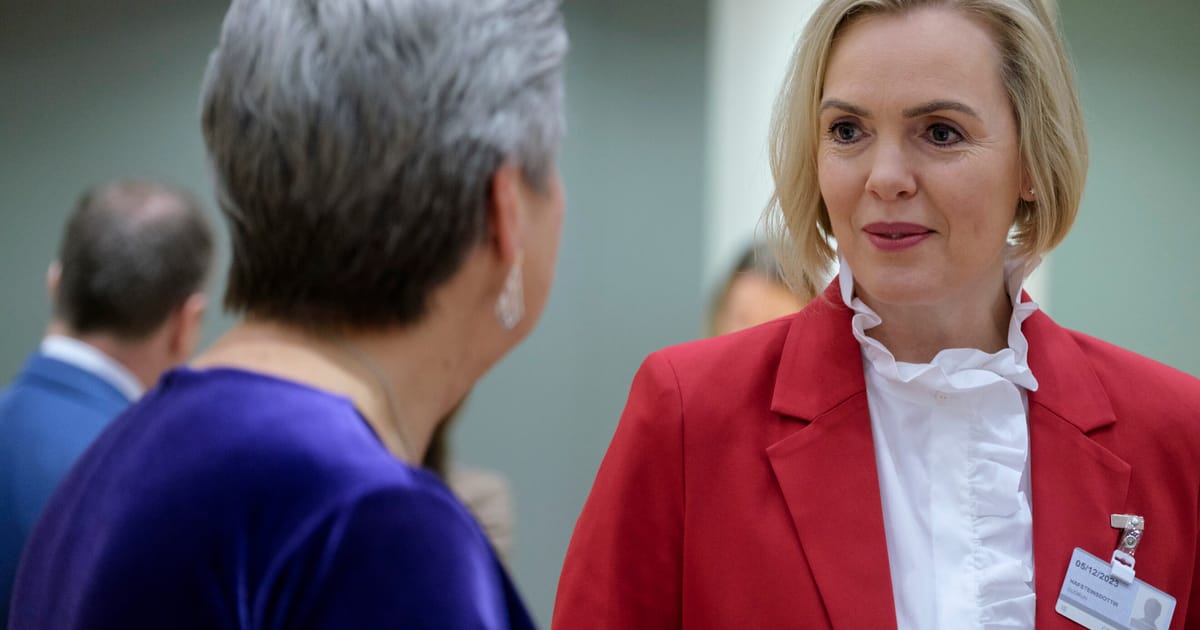
The Nordic country will vote on Aug. 29 on whether to resume accession talks with Brussels, with early voting beginning Monday. The referendum will not decide whether Iceland joins the EU — any eventual membership agreement would require a second public vote.
Polls suggest the question of reopening discussions is finely balanced, although a clearer majority remains opposed to membership itself. “We are divided into nearly equal groups for yes and no” on the former, Hafsteinsdóttir said in a phone interview from Vatnajökull, Iceland’s largest glacier. “The referendum will be very tight.”
The vote fulfills a pledge made by Prime Minister Kristrún Frostadóttir’s three-party coalition when it took office in late 2024. The alliance — dubbed the “Valkyrie government” because all three parties are led by women — includes a party that supports EU membership. Frostadóttir has said the referendum is intended to settle “a debate that has hung over the Icelandic nation.”
Several prominent European figures have sounded positive about the prospect of renewed talks. French MEP and Renew Europe leader Valérie Hayer traveled to Iceland in June and called for the EU to make accession easier. Enlargement Commissioner Marta Kos welcomed the vote and said the bloc “will be ready” if Iceland chooses to join, while French Foreign Minister Jean-Noël Barrot said Reykjavík had “nothing to lose” by restarting negotiations.
The warm tone comes as Brussels seeks to revive enlargement as a geopolitical project, drawing Ukraine, Moldova and the Western Balkans closer while showing the EU can still attract new members amid strained relations with Washington and growing competition with China.
Iceland’s case is different from those of most current candidates. The North Atlantic nation of around 400,000 people is already closely integrated with the bloc through the European Economic Area and the Schengen zone, and conducts most of its trade with the EU.
