


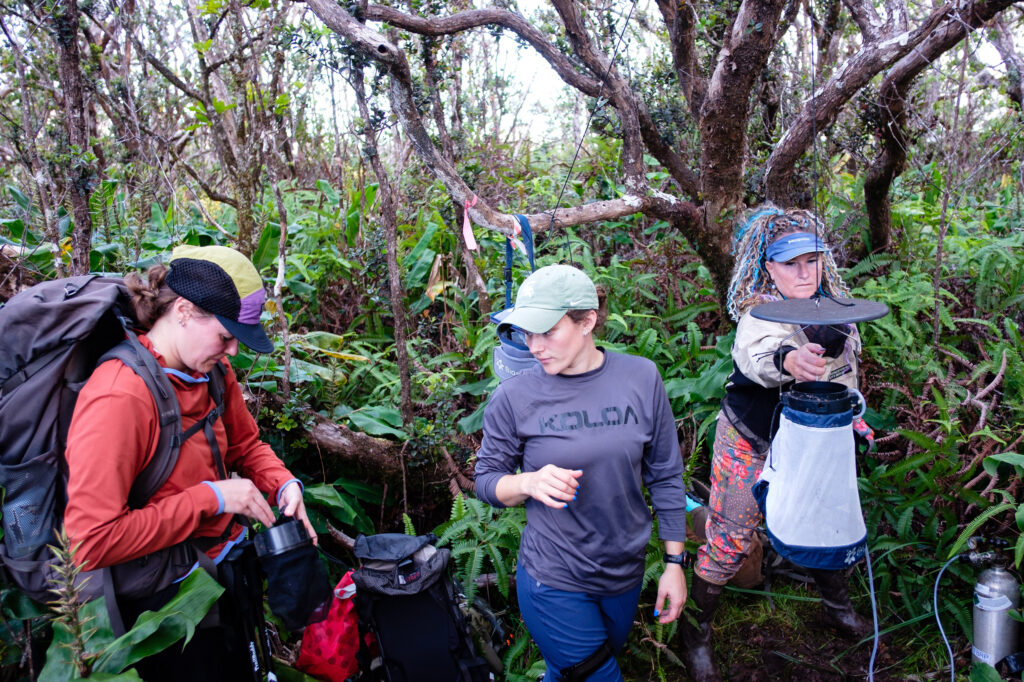
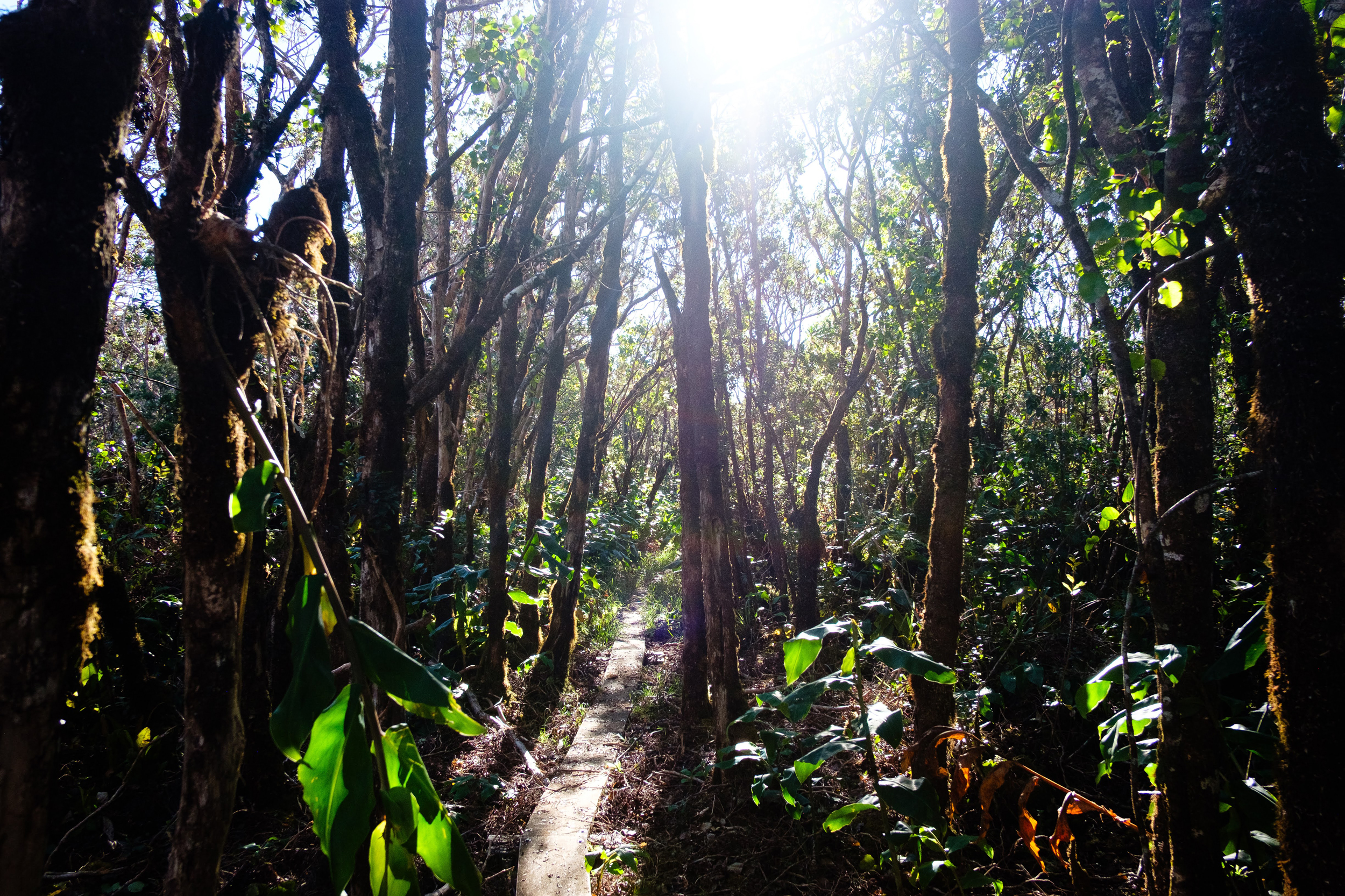
Deep in the Alaka‘i plateau, 4,000 feet high in the mountains of the remote Hawaiian island of Kaua‘i, the forest is quiet.
For conservationists at the Kaua‘i Forest Bird Recovery Project, this silence is both a somber reminder of species already lost, as well as an eerie omen of what’s to come. Last year, Kaua‘i lost its last wild ‘akikiki, a tiny gray forest bird found nowhere else on Earth. After having evolved over millions of years deep in the forests of Kaua‘i, now only a few dozen ʻakikiki exist in captive breeding centers on O‘ahu and Hawai‘i Island.
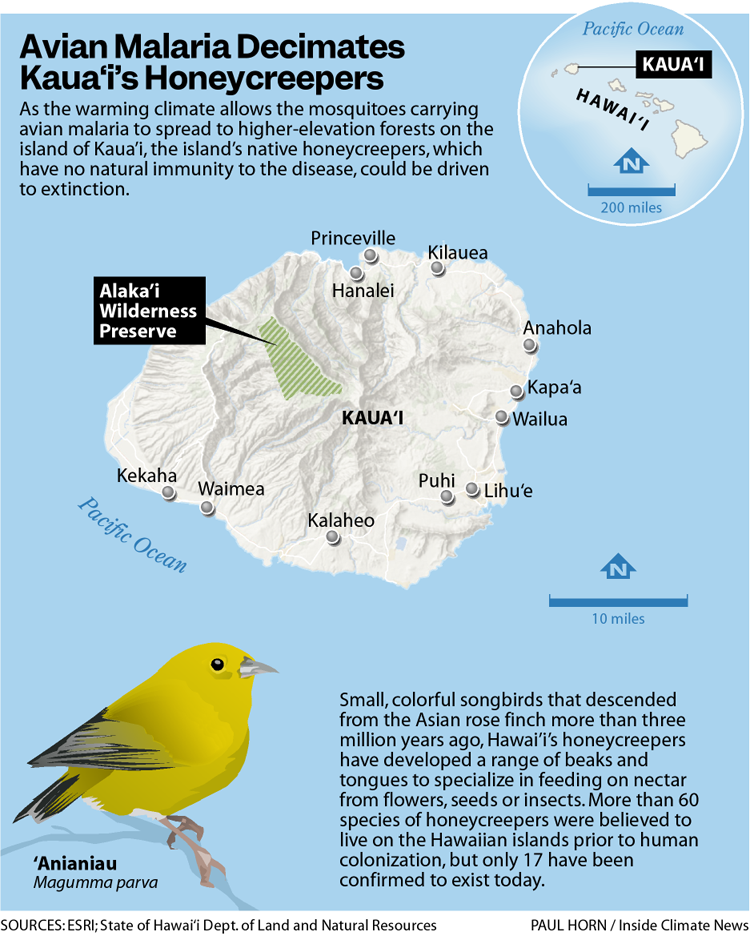
That same fate befell the small greenish-yellow ‘akekeke, whose wild population wildlife biologists estimate is down to a handful. Populations of the once-abundant olive-green Kaua‘i ‘amakihi have plummeted, from around 9,000 birds in 2023, when the last survey was conducted, to under 500 by conservationists’ estimates this year. Even the ‘anianiau, the lemon yellow, “mouse-like” honeycreeper last thought by wildlife biologists to have more than 3,000 individuals in the wild in 2023, is down to only a few hundred.
In June, researchers announced a stark estimate to a group of Kaua‘i’s local lawmakers: Every one of Kaua‘i’s endemic honeycreeper species could be lost as soon as Christmas.
“Numbers we’d previously estimated in the hundreds, we’re not seeing at all,” said Lisa “Cali” Crampton of the Kaua‘i Forest Bird Recovery Project.
An “Explosion” of Mosquitoes Drives Decline of Birds
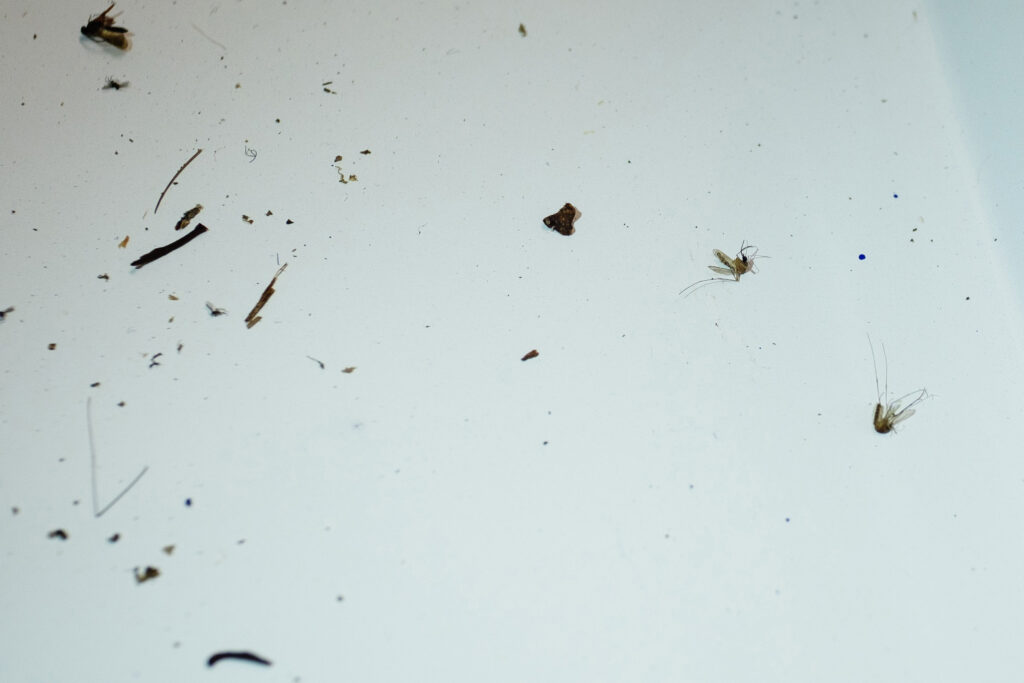
The sudden drop in native bird populations comes after an unprecedented mosquito swarm took hold in Kaua‘i’s higher-elevation forests, taking both scientists and conservationists by surprise, Crampton said. These southern house mosquitoes are responsible for spreading avian malaria, a disease that can prove fatal to honeycreepers after only one or two bites.
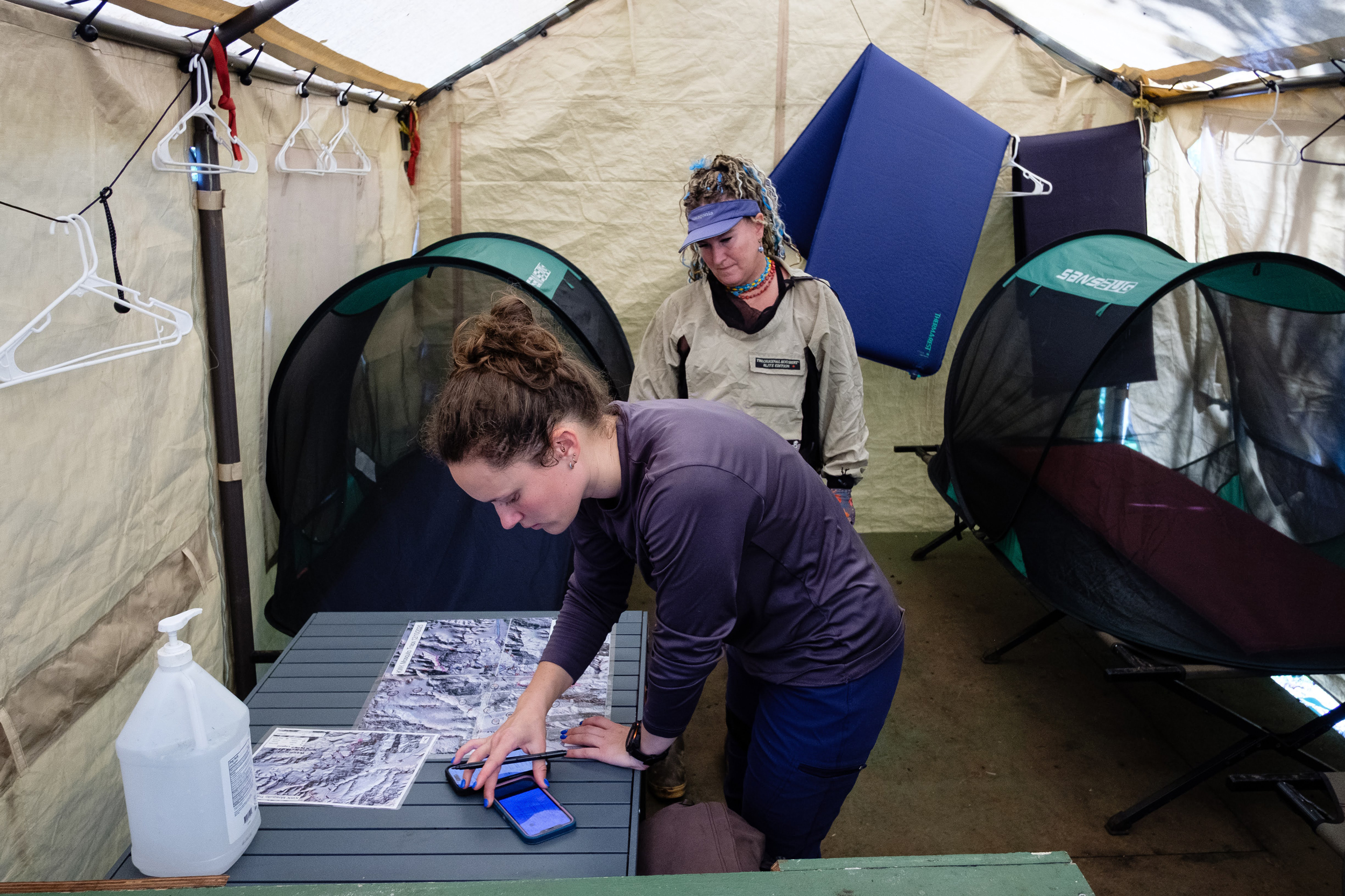
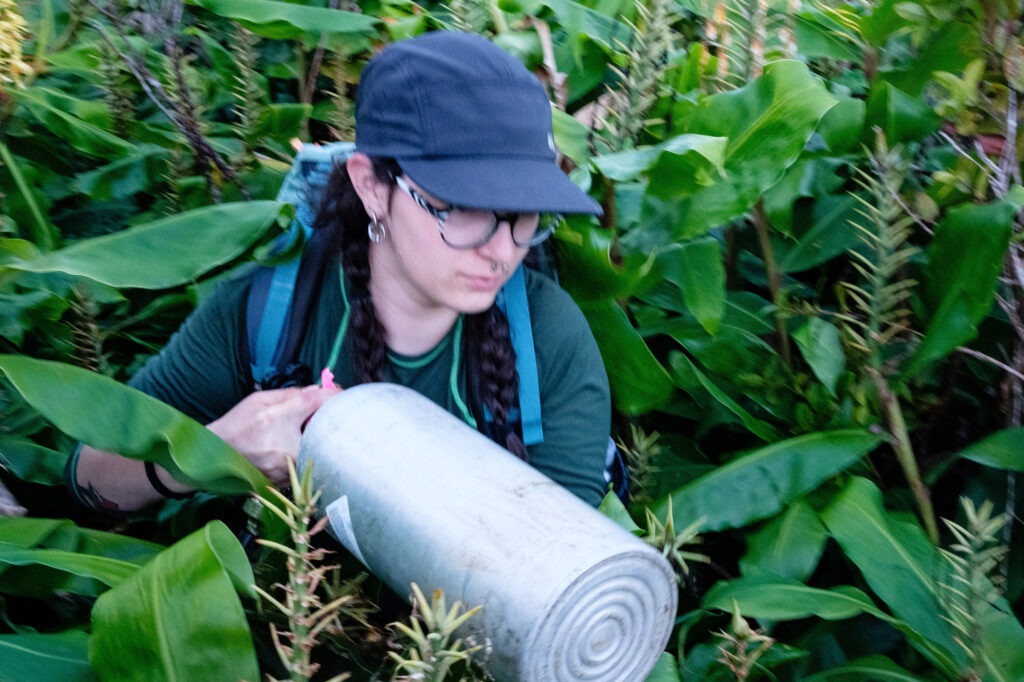
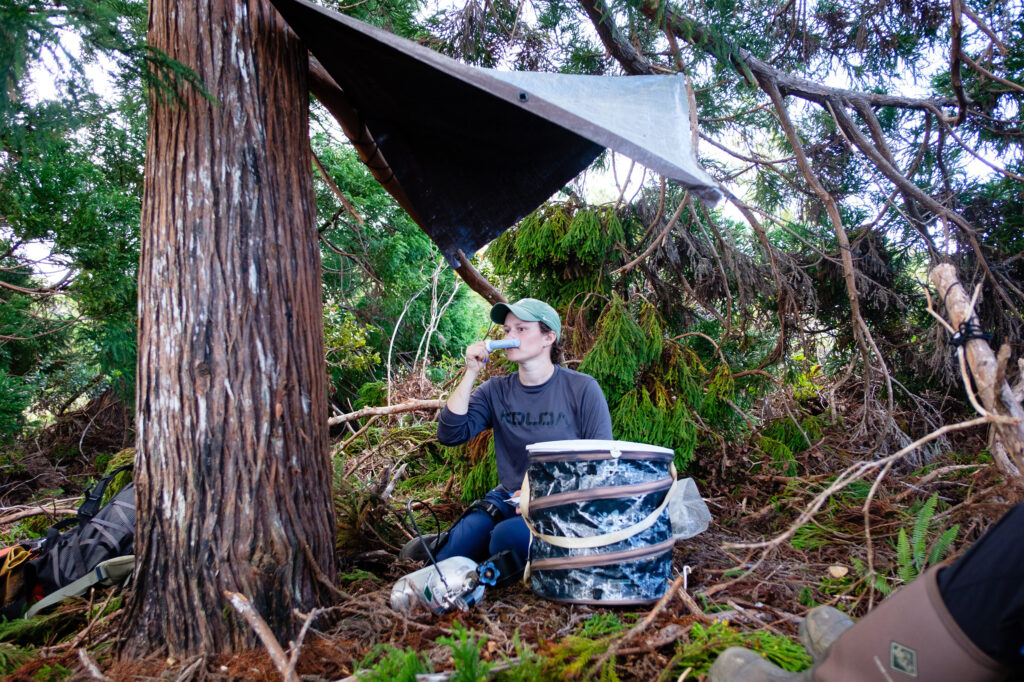
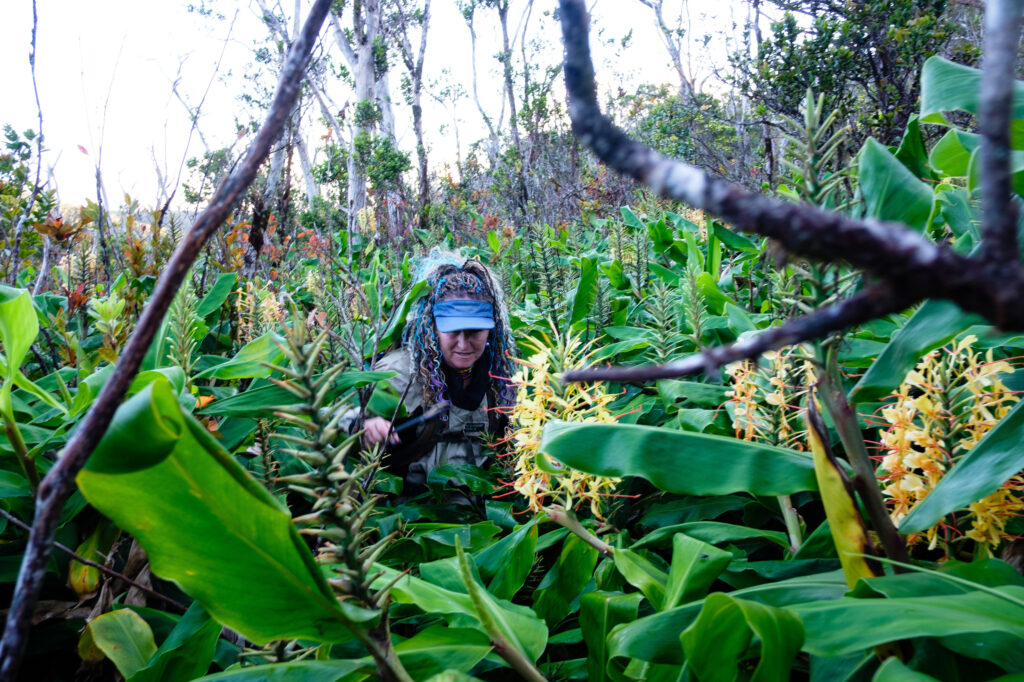
Narrowing down an exact number of honeycreepers left in the wild has been no easy task for Crampton and her team, who travel deep into the Alaka‘i swamp—a dense, wet forest located over 4,000 feet above sea level. The crew must traverse thick, remote woods and wetland bogs for days at a time to even glimpse the tiny birds.
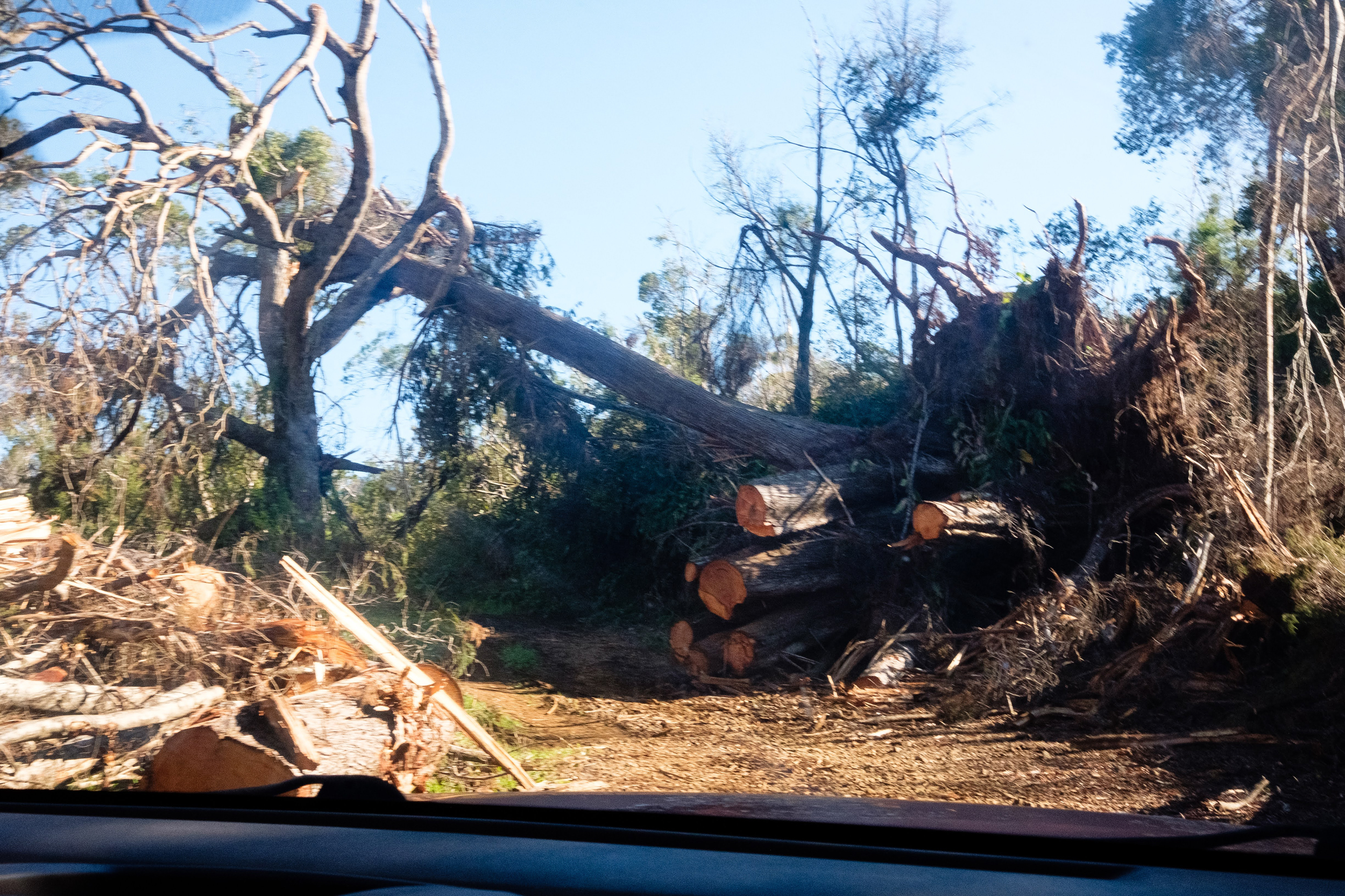
Considering how fast her team has witnessed the mosquitoes spreading, Crampton fears the researchers’ population estimates from their last official survey in 2023 are wildly out of date. Even amid the wrath of catastrophic hurricanes—most recently Hurricane Lowell, which struck Kaua‘i on September 7th—conservationists struggle to imagine a greater threat to the birds than the mosquito swarms.
“I was hugely worried about a giant hurricane just like Lowell coming and having a direct hit on the island and wiping out a bunch of our birds,” said Justin Hite, mosquito project coordinator for the Hawai‘i Division of Forestry and Wildlife. “However, in some ways I’m less worried now. Because the mosquito storm that hit us last winter, that was already way more devastating than a hurricane really could ever be.”
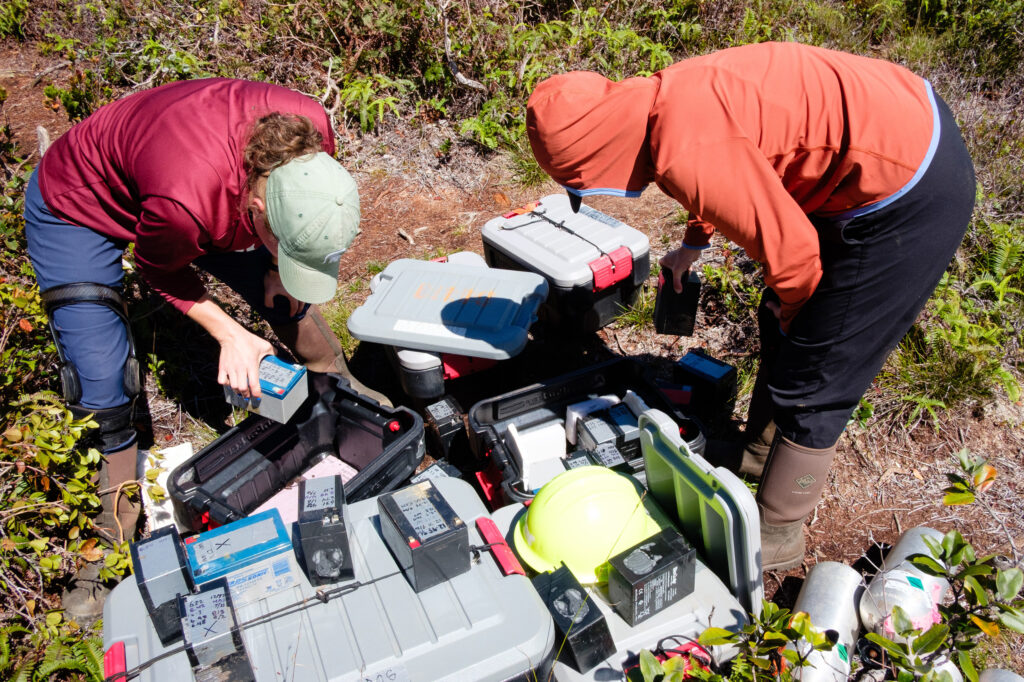
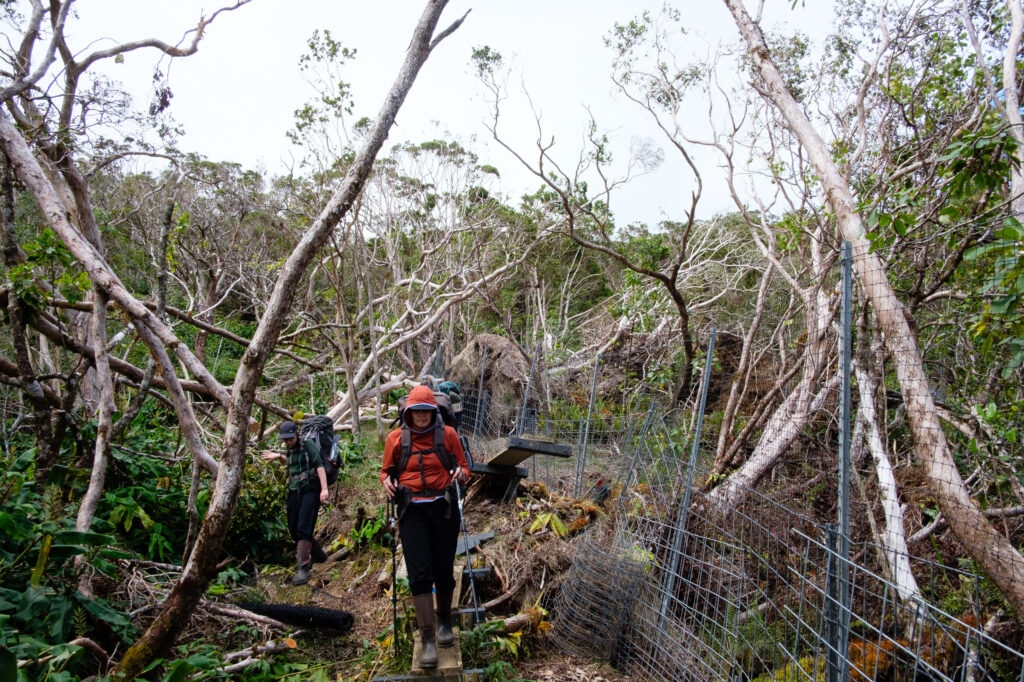
In fall 2025, field workers noticed that mosquitoes were deeper in the forest than ever before.
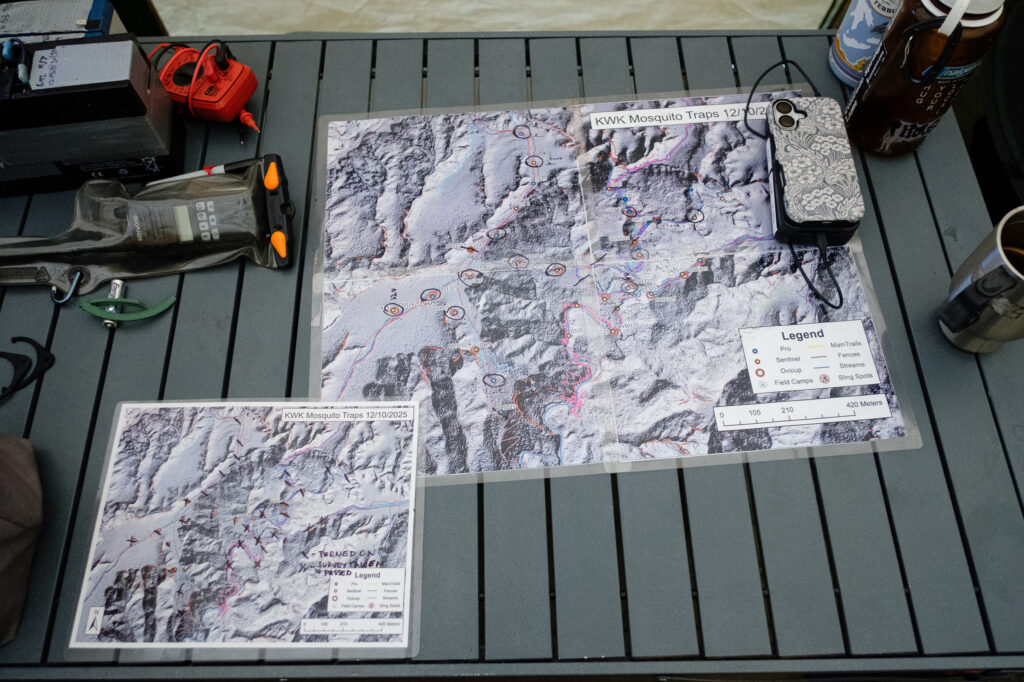
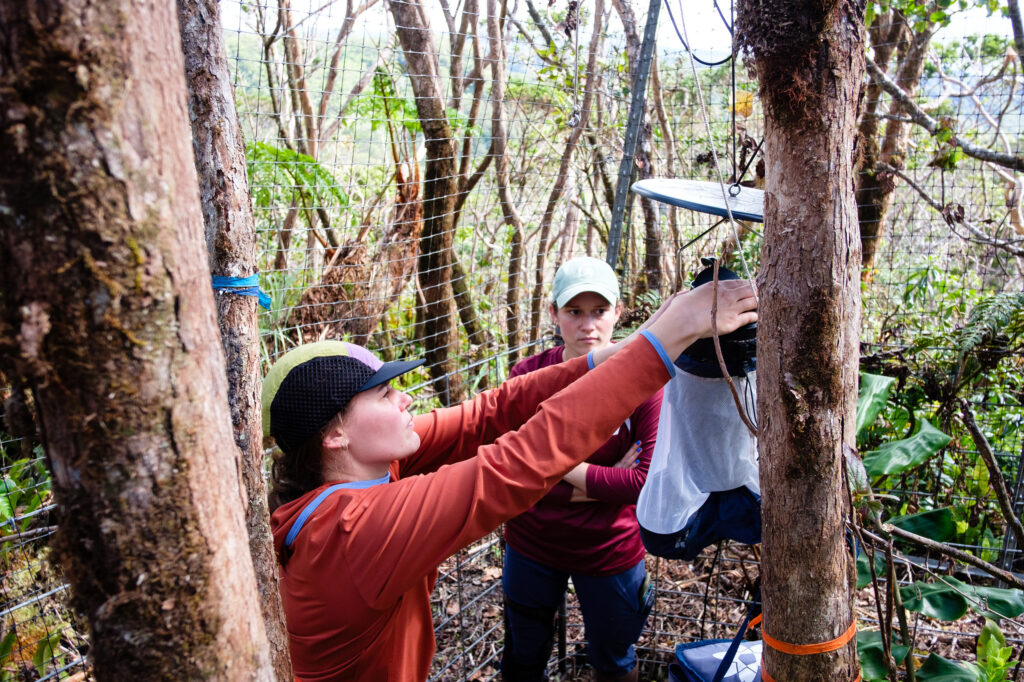
“We went from one mosquito per trap per night, maybe three or maybe four mosquitoes per trap per night on a bad night, to 300 mosquitoes per trap per night in the span of two months,” Crampton recalled.
The sudden “explosion” of mosquitoes left conservation workers scrambling for an explanation, and worried that their efforts to eradicate the insects with a combination of natural bacteria-based insecticides and the release of sterile male mosquitoes—what’s known as incompatible insect technique—might be futile in the face of such a dramatic bloodsucker boom.
Kaua‘i’s endemic honeycreepers also serve as the proverbial canary in a coal mine, Crampton explained, warning of what’s to come for other higher-elevation forests across the Hawaiian archipelago. For honeycreeper conservationists, it’s now a race against time to prepare the islands’ birds before the inevitable spread of the mosquitoes across all of Hawai‘i’s high-elevation forests.
More Than a Perfect Storm
There are several environmental factors that affect mosquito populations, from precipitation levels to wind patterns, said Jeff Foster, professor of biological sciences at Northern Arizona University in Flagstaff, Arizona. But ultimately, he said, they all boil down to one main cause: rising temperatures from global climate change.
Increasing temperatures across the Hawaiian Islands over the last several years have pushed mosquitoes farther up into higher elevations, Foster said. And a trick of topography left the birds of Kaua‘i, which only rises to about 5,000 feet and lacks the high-elevation forests of taller islands like Hawai‘i and Maui, without habitat high enough to escape the pests.
Surprisingly, drier conditions in Kaua‘i’s forests also provide better habitat for mosquitoes, Foster said. “We would typically assume that with more precipitation that we would get more mosquitoes,” Foster explained. “And in lots of places that’s true, but it’s not true with our experience in Hawai‘i.”
Additionally, as Kaua‘i’s mountains are shaped like plateaus rather than steadily inclining peaks, the island did not have many birds living in the steep “transition zone” between low-elevation and high-elevation forests. This meant that conservationists were not able to observe the steady decline in bird populations in this middle-elevation forest, Foster explained. The mosquito boom, he said, only seems sudden because scientists couldn’t accurately track the mosquito’s progression.
“We knew it was coming, but we thought we had more time,” said Foster. “And then suddenly we didn’t have any more time and it’s worse than we imagined.”
Avian malaria is incredibly common, Foster noted. Anywhere between 18 percent and 35 percent of birds globally carry the disease, but it rarely causes mass mortality events.
So why is it so deadly to Kaua‘i’s honeycreepers?
One explanation lies in their evolution. Like many other species on Kaua‘i, the honeycreepers developed over millions of years without the presence of mosquitoes, and have no natural immunity against mosquito-borne diseases.
According to a 2026 research paper published in the Journal of Ecology and Evolution, John Neddermeyer and his team of researchers found mosquitoes—and by extension avian malaria—only reached the Hawaiian Islands at the beginning of the 19th century after hitching rides on European whaling ships. The southern house mosquito quickly flourished in lower elevations where the air is warm, but did not make their way to higher, cooler mountain elevations. Recent warming, however, has drawn them farther up into honeycreeper habitat.
“Pulling Birds Out of a Burning House”
One thing is certain among honeycreeper conservationists: The birds cannot stay on Kaua‘i.
The mosquitoes have spread across the highest honeycreeper habitats on the island, Crampton said, and there just isn’t enough time for the coalition of organizations to eradicate the insect across the entire forest. The birds need to get out—and fast.
“The analogy I like to use is pulling birds out of a burning house,” said Crampton.
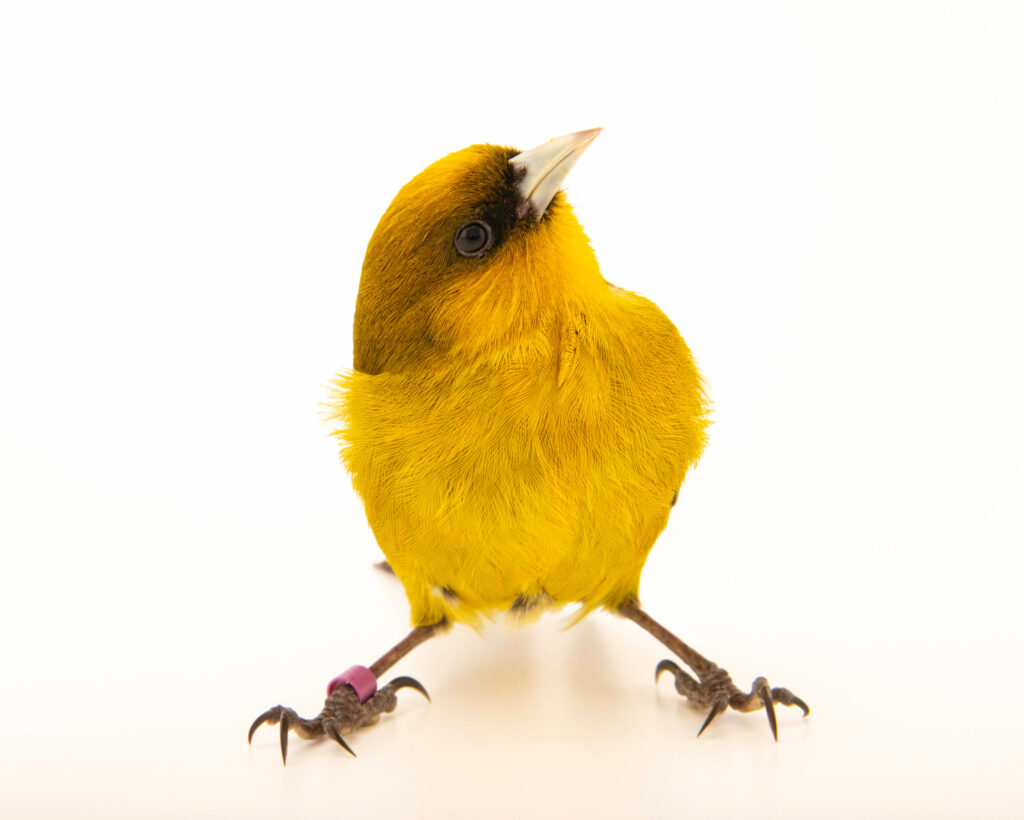
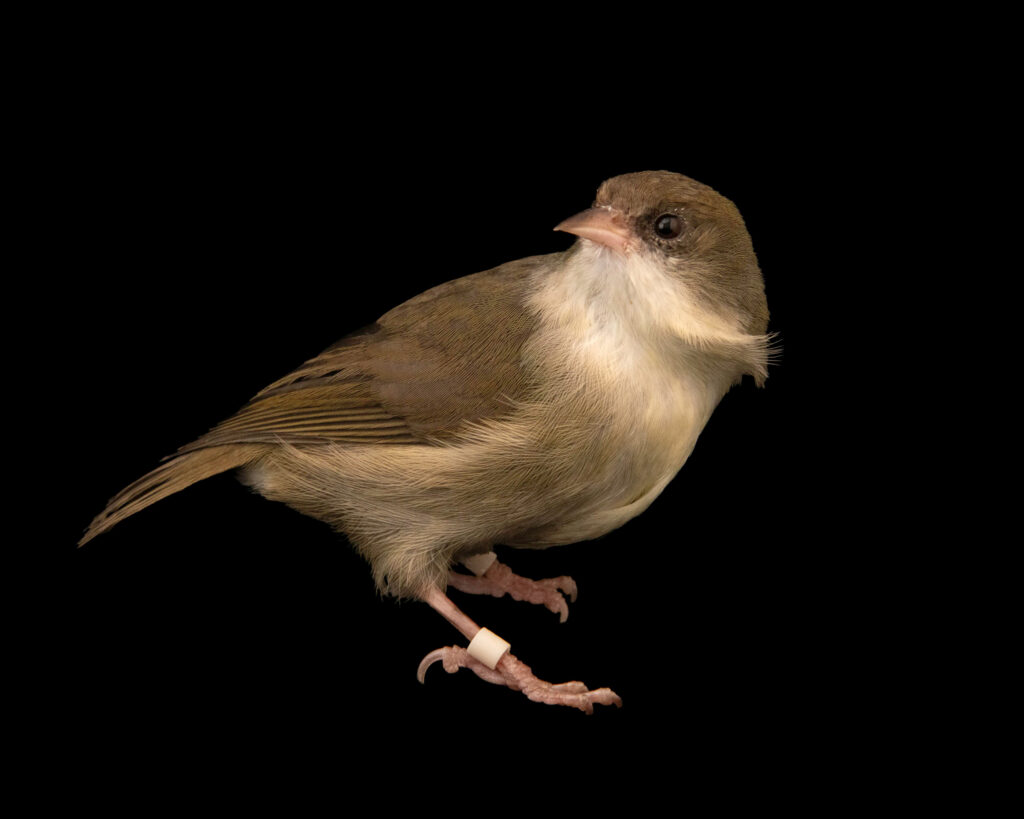
Her team has shifted its priority from eradicating mosquitoes to locating honeycreepers and helicopterting the birds and their nests from Kaua‘i to secure facilities operated by the Honolulu Zoo and San Diego Zoo Wildlife Alliance on the islands of O‘ahu and Hawai‘i. Currently, these conservation partners have three different honeycreeper species—19 ‘anianiau, 30 ‘akikiki and three ‘akekeke—in captivity, where they are protected from pathogens and integrated into breeding programs to rebuild their populations.
Genetic Resistance on Neighboring Islands
While Kaua‘i’s honeycreepers are unusually vulnerable to avian malaria, scientists have discovered that ‘amakihi species on both O‘ahu and Hawai‘i have developed a genetic resistance to the disease. Those birds are similar to Kaua‘i ‘amakihi and share a common ancestor and many similar physiological traits, but their different island homes led them to evolve separately into genetically distinct species.
Loren Sackett of the University of Louisiana recently led the discovery of a gene responsible for resistance to avian malaria in ‘amakihi species on the islands of O‘ahu and Hawai‘i. Her team found that each island’s ‘amakihi had a different genetic pathway to resistance. Isolating these genes could offer insights into how Kaua‘i’s ‘amakihi could potentially develop their own resistance to avian malaria, Sackett said.
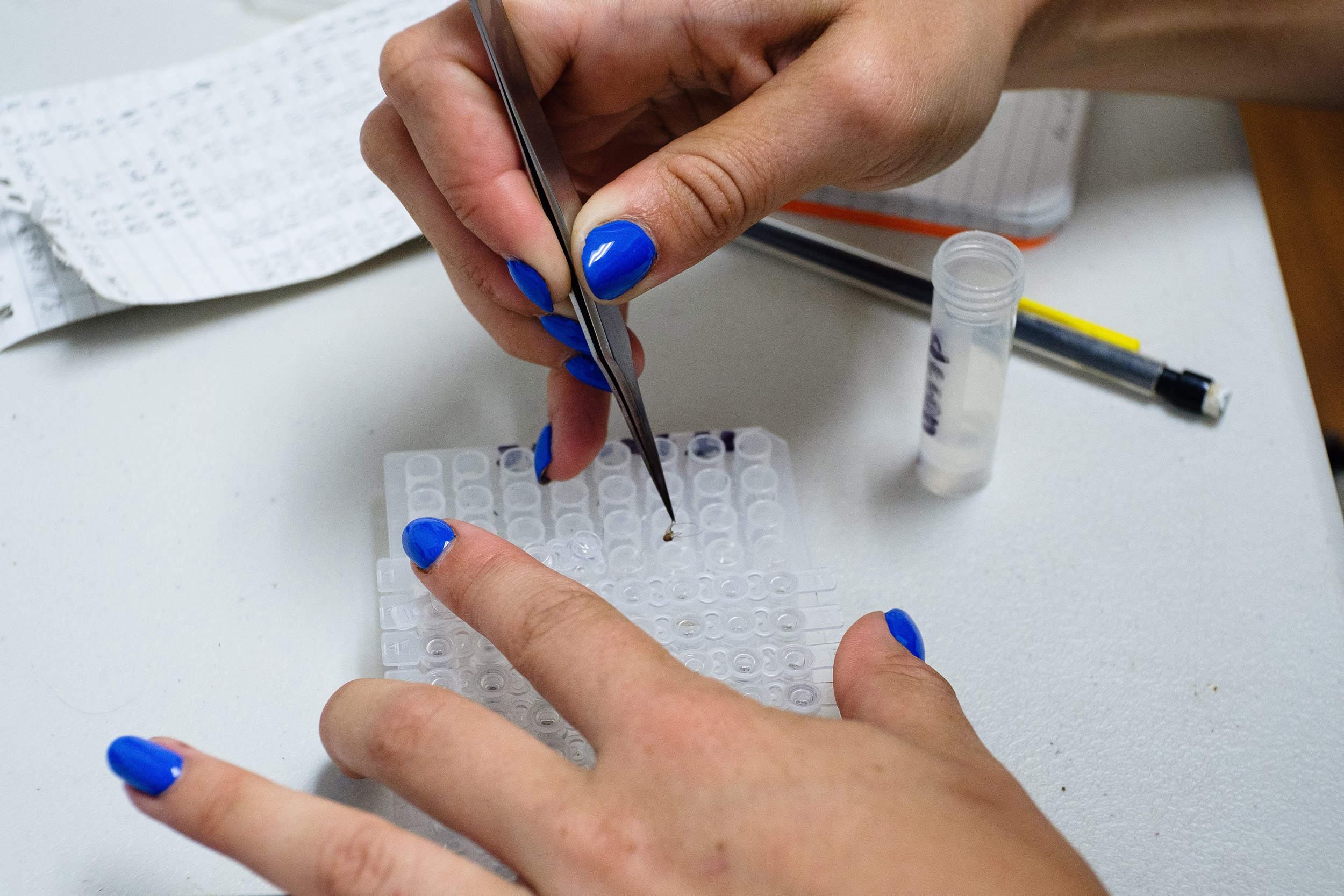
CRISPR gene-editing tools could potentially be used to introduce the genes responsible for malaria resistance into Kaua‘i’s honeycreepers, but both Foster and Sackett worry the technology is still too new to use on the birds.
“While it’s easy to CRISPR in the lab, it’s much harder in wild organisms,” Sackett said.
The discovery of the genetic differences between the different islands’ birds opens the possibility of hybridization efforts between Kaua‘i and O‘ahu ‘amakihi populations, though this also carries legal and ethical challenges under the Endangered Species Act, which has no overarching hybridization policy guidelines and instead handles these situations on a case-by-case basis.
“I think we are on the cusp of a lot of more accessible technologies,” she said.
Despite the potential presented by solutions like hybridization and genetic therapy, Justin Hite says his team does not have the time or the resources to even consider these options. The captive population of Kaua‘i ‘amakihi only consists of a handful of related females, and the potential of successfully cross-breeding them with other ‘amakihi species is incredibly low. So conservationists are charging ahead on one last-ditch solution—translocating Kaua‘i’s ‘anianiau to forests on the island of Hawai‘i, where Crampton says a much taller elevation has kept the mosquitoes away from the highest forests, for now.
The ‘anianiau were selected for translocation as they are one of the most abundant of Kaua‘i’s endemic honeycreepers and have the highest chance of thriving on Hawai‘i. Crampton’s team has already begun to locate and capture adult ‘anianiau, and hopes to begin the translocation process this fall.
While this form of “assisted migration” might be the only hope to save the ‘anianiau honeycreeper, it carries its own risks. Introducing a new species to an unfamiliar habitat is always a challenge. As the ‘anianiau has never existed on the island of Hawai‘i, there is no certainty that the bird will thrive in this new environment, and it could potentially cause problems for local species. Despite these risks, moving the birds to the new island may be the only way to save the ‘anianiau.
“More than three thousand ‘anianiau died in the last three years, and now there’s just a handful left,” Hite said. “So we know leaving them on Kaua‘i is just not possible.”
Still, translocation is only a temporary solution at best, both Hite and Crampton acknowledged. As temperatures continue to rise, mosquitoes are expected to creep up into high elevation forests all across the Hawaiian archipelago. It’s only a matter of time until the Big Island’s forests experience the same fate as Kaua‘i.
But Crampton hopes that translocation will buy conservationists enough time to eradicate the mosquitoes on Kaua‘i. Then, she said, conservationists hope to bring the ‘anianiau back home to Kaua‘i.
About This Story
Perhaps you noticed: This story, like all the news we publish, is free to read. That’s because Inside Climate News is a 501c3 nonprofit organization. We do not charge a subscription fee, lock our news behind a paywall, or clutter our website with ads. We make our news on climate and the environment freely available to you and anyone who wants it.
That’s not all. We also share our news for free with scores of other media organizations around the country. Many of them can’t afford to do environmental journalism of their own. We’ve built bureaus from coast to coast to report local stories, collaborate with local newsrooms and co-publish articles so that this vital work is shared as widely as possible.
Two of us launched ICN in 2007. Six years later we earned a Pulitzer Prize for National Reporting, and now we run the oldest and largest dedicated climate newsroom in the nation. We tell the story in all its complexity. We hold polluters accountable. We expose environmental injustice. We debunk misinformation. We scrutinize solutions and inspire action.
Donations from readers like you fund every aspect of what we do. If you don’t already, will you support our ongoing work, our reporting on the biggest crisis facing our planet, and help us reach even more readers in more places?
Please take a moment to make a tax-deductible donation. Every one of them makes a difference.
Thank you,
