


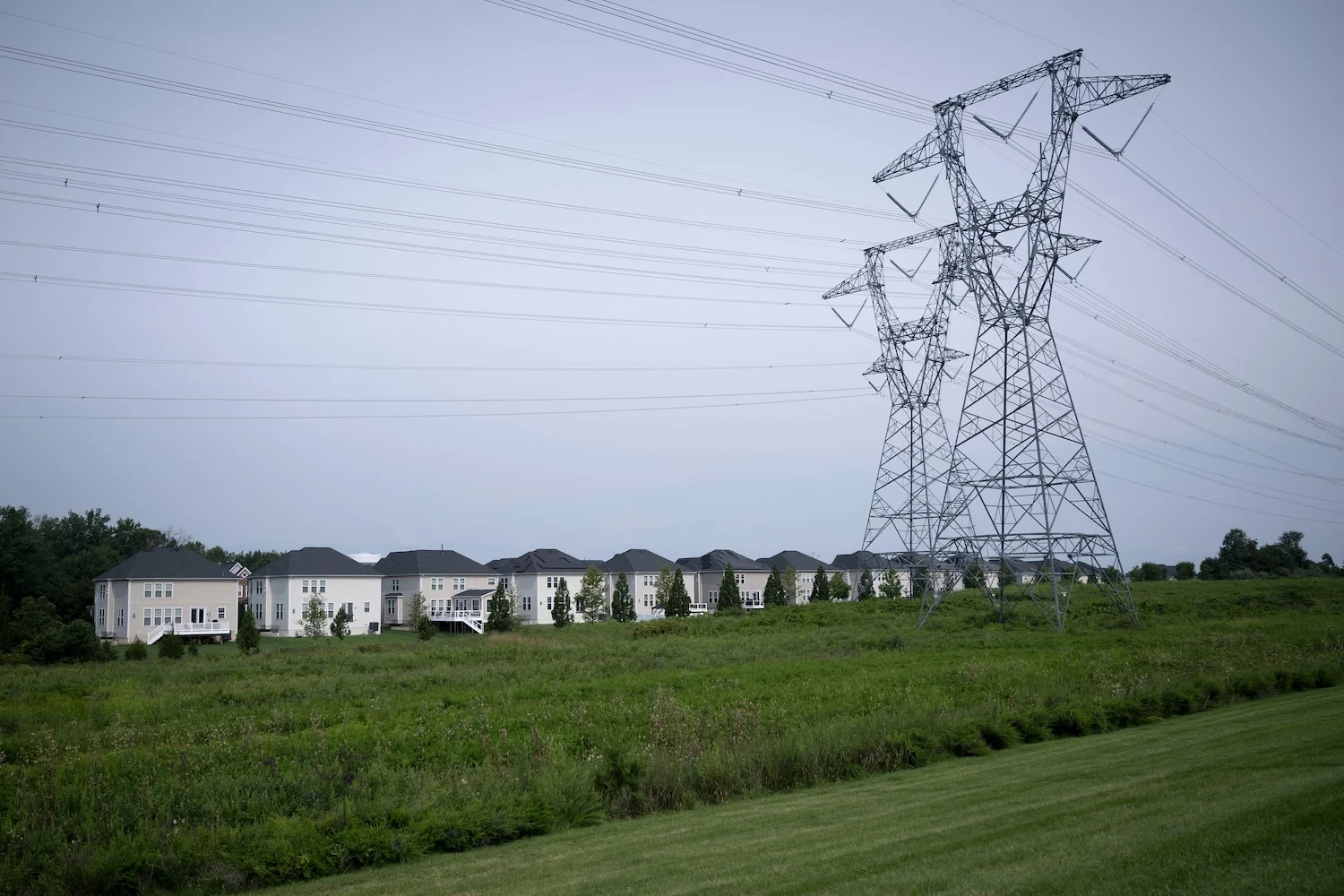
The Democratic wave that shook the U.S. political landscape this month delivered a striking rebuke to President Donald Trump and put affordability squarely at the top of the political agenda. A bill that passed the Senate last week to reform the nation’s permitting laws offers Democrats—who voted two-to-one against the bill in the Senate—an early test of whether they can make daily life more affordable for Americans, even before taking control in January. Permitting reform may seem like a narrow or technical topic, but this is the most important piece of energy legislation in years. By speeding up environmental reviews, limiting litigation delays, and easing transmission siting, it would expand clean energy, lower energy prices, strengthen our energy system, and make future climate action more effective.
The bill, known as the Bipartisan American Affordability and Jobs Act, or BAAJA, would make it easier to build transmission lines and other energy infrastructure, including both clean energy and oil and gas projects. That breadth has delighted advocates of abundance, the movement that argues that shortcomings in public infrastructure stem from regulatory bottlenecks, and enraged many environmentalists. Some supporters have been too quick to dismiss legitimate concerns, while some climate activists have drowned out substantive but highly technical legal objections with reflexive anti-fossil fuel rhetoric. As the bill heads to a House vote, a careful assessment of its provisions should lead members to support it while pursuing opportunities where possible to address credible objections in the final stages of the legislative process.
Objections to the permitting reform bill fall into several broad categories. First, some Democrats and environmental groups argue that the blue election wave gives them leverage to secure a better deal next year, yet that misreads both the politics and the policy. A larger Democratic majority does not necessarily mean a majority for blocking fossil fuel infrastructure. The incoming caucus includes members who support oil and gas development alongside clean energy—in states such as Texas, Mississippi, Kansas, South Carolina, and Alaska. Nor does 56 Senate seats eliminate the need for Republican votes to overcome a filibuster. And Trump will still be president, with the power to veto the bill.
Second, some environmental groups oppose the bill because it weakens tools of environmental review and permitting often used to block fossil fuel projects such as oil and gas pipelines. Yet ample evidence demonstrates that trying to “keep it in the ground”—stymying fossil fuel supply by blocking infrastructure—does little to reduce global oil and gas use, which ultimately is what matters for greenhouse gas emissions, and can trigger backlash to climate action if energy security and affordability are perceived to suffer as a result.
In a global market, supply restrictions in one location merely lead to increases elsewhere unless demand falls. Higher prices can curb demand, but this year’s energy crisis offers further evidence that political and economic pressures push elected leaders to use every available tool to bring prices back down. The Iran war led to the closure of much of the Strait of Hormuz, through which roughly 20 percent of the world’s oil flowed, yet oil demand this year will drop only 2.5 percent, according to the International Energy Agency (IEA).
While it is possible—and necessary—to reduce the need for oil and gas over the long term, today fossil fuels still supply roughly four-fifths of the world’s energy, a figure that has barely changed in decades. While reducing that dependence is urgently needed to address the rapidly escalating threats of climate change, the hard reality is that keeping energy affordable and reliable during a multidecade transition still requires investment in oil and gas. According to the IEA, around $490 billion a year would still be needed by 2035 even in a scenario where countries meet their climate pledges—which the collapse of United Nations climate talks in Turkey made plainly clear is far from being true today.
Moreover, the same strategies used against high-profile pipelines such as Keystone XL and Mountain Valley have often proved effective at obstructing clean energy projects as well. As the New York Times editorial board argued this month in endorsing permitting reform, essential laws protecting the environment, communities, and Indigenous peoples “have become so complex and restrictive that the country cannot build the future it needs.”
To be sure, the BAAJA is not a substitute for climate policy, nor are its emissions benefits assured. Analysis by Rhodium Group, a consultancy, projects that the bill could reduce U.S. power-sector emissions in 2040 by as much as 18 percent compared with current policy, or by as little as 1 percent, depending on energy prices and technology costs. At the same time, climate policy cannot be effective without a bill such as the BAAJA that allows for the rapid buildout of the generation, transmission, storage, and transit infrastructure required for cleaner energy solutions.
A third area of concern involves weakened tribal consultation under the National Historic Preservation Act. Faster permitting should not undermine tribes’ ability to meaningfully influence decisions that affect sacred sites and other places central to their history and traditions. A set of revisions to the bill would have expanded the projects subject to tribal consultation and authorized additional money to support tribal and state historic-preservation work, yet Democratic Senator Jeff Merkley prevented those amendments from being considered, which may make it harder for some House Democrats to support the bill.
Finally, some opponents worry that specific provisions could protect improperly approved projects, require the government to pay companies large sums in damages, and constrain future administrations’ ability to issue or enforce environmental protections. Because these objections involve detailed, often technical, legal objections to the bill’s drafting, they have failed to garner the same attention as absolutist rhetoric about fossil fuels or misleading claims about data center buildout, which is unfortunate because many of these legal concerns have merit, even if they do not ultimately justify opposing the bill.
At the heart of critics’ concerns is a mistrust of how a conservative judiciary hostile to environmental regulation will interpret the bill’s ambiguities. Key areas of concern include new limits on National Environmental Policy Act lawsuits and potential unintended consequences of provisions to limit an administration’s ability to revoke existing permits. Those so-called permit certainty provisions, which the New Yorker’s Elizabeth Kolbert called the most “dangerous” in the bill, were designed to prevent just the sort of harm the Trump administration has done to offshore wind.
Yet subsequent revisions to the bill, known as the “manager’s amendment,” made meaningful improvements to address those concerns. Kolbert writes that the bill could “tie the hands of any future Administration that wants to responsibly promote green energy over fossil fuels,” yet the revisions specifically added an exception to address this concern for agency actions taken under applicable law or regulation and a clause intended to preserve existing legal authorities. They responded to concerns that restrictions on government interference with a permitted project’s operation at “full capacity” could be used to block new environmental rules—for example, emissions standards under the Clean Air Act that would induce a coal plant to curb its output. The amendment also extends from five to 10 years the permitting-data lookback used to assess claims of disparate treatment. That longer time period addressed concerns that Trump’s preferential treatment of fossil fuels and obstruction of renewables would become the benchmark against which a future administration’s permitting decisions are judged.
The changes also require a showing of bad faith for the additional damages available under the bill, addressing concerns that an agency could face enormous payouts for an action a court finds unlawful. And the amendment expressly allows the government to offer lawful explanations for differences in permitting outcomes and extends the requirement that applicants seeking relief demonstrate technical and financial capacity to all of their pending projects.
But the changes do not eliminate every risk. For example, an expansive interpretation of what counts as a “permit” or “authorization” could, critics fear, extend protections beyond formal agency approvals to informal assurances from the Trump administration. Critics also worry that because nearly every agency action invokes some legal authority, a broad reading of the exception for actions “taken pursuant to any applicable law or regulation” could render the permit protections meaningless. To avoid that result, judges could read the exception narrowly, limiting future administrations’ ability to curb pollution.
Another round of revisions—the one blocked by Merkley—would have made modest improvements, such as to the concern about private assurances counting as authorizations. The legal risks identified about how hostile judges could interpret ambiguity merit attention and should be remedied to the extent possible as the current bill moves through Congress. Although the bill is unlikely to be amended in the House, one of its architects in the Senate has suggested the House might attach amendments to other pieces of must-pass legislation.
Even without those revisions, however, the bill’s benefits outweigh the risks. The current permitting system simply makes it too difficult and costly to expand the grid, build a stronger energy system, connect cleaner generation, and lower energy costs.
Later this week, Americans will gather for Thanksgiving, with energy costs weighing on the price of traveling to see family, heating homes, and cooking the holiday meal. The annual national observance of Thanksgiving started with President Abraham Lincoln’s proclamation in 1863—the same year construction began on the transcontinental railroad. Six years later, the two lines met in Utah, connecting nearly 1,800 miles of track. By contrast, California today aims to begin high-speed rail service between Merced and Bakersfield—a distance of less than 200 miles—in 2033, a quarter-century after voters approved the project. When members of Congress return from their Thanksgiving celebrations, their first order of business should be to make it easier to build again in this country—starting with the infrastructure needed for a cleaner, more affordable, and more reliable energy system.
