


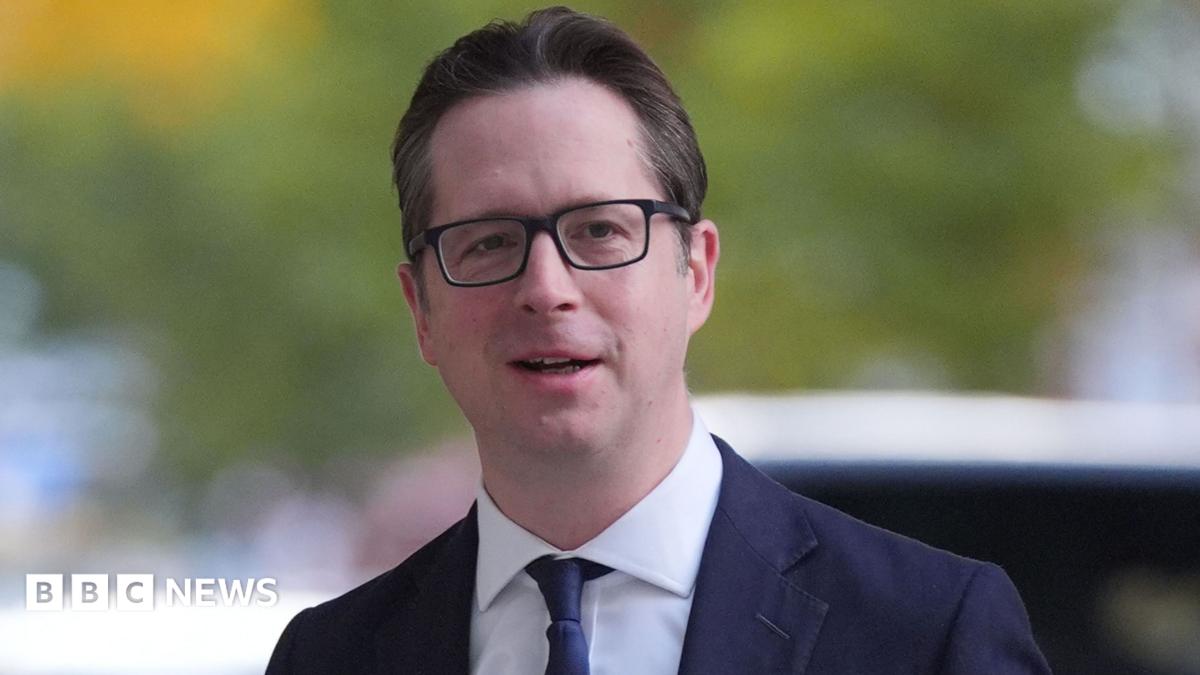
Conservative deputy leader Alex Burghart has said his party would scrap the deal agreed between the UK and the European Union on Friday, if the Tories win the next general election.
The agreement signed by Prime Minister Andy Burnham covers a youth travel scheme, emissions trading and British food exports.
The government has argued scrapping most checks on British food exports will cut costs for businesses and could bring down prices for shoppers.
Burghart told the BBC’s Sunday with Laura Kuenssberg programme the deal was “a dog’s dinner”, which would not lead to lower prices in the shops and would mean the UK “gives up our ability to set our own rules”.
Under the agreement, the UK will also have to follow some EU regulations.
Burghart acknowledged the deal would reduce some trade “friction” but he said it would put a “massive additional burden on the 90% of farmers that don’t do any trade with the EU”.
Pressed over whether the Conservatives were committed to scrapping the deal if the party wins the next general election, Burghart said: “I don’t think that there will be positive outcomes, and yes, we would scrap it.”
He added: “I also don’t think it is a good idea for a country like Britain to hand over control of its rules to another power and have no say over how those rules are created right into the future.”
Food retailers have welcomed the deal, saying it will cut costs, reduce bureaucracy and remove barriers to trade.
However, they have not committed to cutting prices as a direct result of the changes.
The British Retail Consortium has said it does not expect prices on supermarket shelves to fall in response to the deal.
It has said upward pressures on prices remain and will not be alleviated by the agreement.
Foreign Secretary Ed Miliband insisted the deal “reduces pressure on trading costs”, adding: “They’re the things that go into prices.”
“It will reduce the costs that the retailers face, all of that Brexit red tape, millions of forms that they were having to fill in, frankly pointlessly, as a result of the bad deal that we had,” he told the BBC.
Challenged that the UK was also giving up some powers to set regulations itself, Miliband argued businesses were already “rule takers” from Brussels if they wanted to sell into the European market.
“So they have to abide by the rules of the European Union. But at the same time, because we are not integrated into that market for food and agricultural products, they have to fill in a whole bunch of forms… to confirm that they’re observing the right standards, which is frankly crackers,” he said.
Under the deal, he said the UK would “be able to shape decisions” for the first time.
