


- Sweden’s Conservation Performance Payment program has sought to support reindeer herders coexisting with large carnivores for 30 years. The world’s longest running conservation incentive scheme rewards Sámi reindeer herding communities based on carnivore reproduction.
- Compensation has failed to keep up with rising inflation costs, have remained virtually unchanged since the program’s introduction and no longer reflects the current value of reindeer lost to carnivores, complain reindeer herders. According to them, issues with monitoring predators means they don’t always get paid as they should.
- Reindeer herders say their concerns about compensation are not being heard by the decision-makers despite efforts to reach a new solution.
- Sweden’s environmental protection agency says it’s testing out and implementing a new predator monitoring method to combat issues with payments.
A Swedish compensation scheme designed to encourage coexistence between reindeer herders and carnivores is facing growing criticism from Indigenous Sámi communities. Inadequate payments, deficient monitoring methods and lack of meaningful dialogue between authorities and reindeer herders are eroding trust in the system, researchers tell Mongabay.
“The state of Sweden hasn’t actually understood how severe and crucial this issue is for the Sámi culture,” Inger-Ann Omma, a lawyer and reindeer owner from the Vapsten Sámi village reindeer herding district, tells Mongabay.
Sweden’s environmental protection agency says it is implementing methods to fix parts of the system.
For 30 years, the Swedish government has operated one of the world’s longest running Conservation Performance Payment (CPP) programs of its kind. Rather than compensating reindeer herders for individual reindeer (Rangifer tarandus) losses, this system rewards the Sámi reindeer herding communities based on the presence and reproduction of large carnivores, such as wolverines (Gulo gulo), lynx (Lynx lynx) and wolves (Canis lupus).
Reindeer herding is a central part of traditional Sámi culture and livelihood — approximately 13,000 people practice it today in the Sámi homelands of Sweden, Norway and Finland. Reindeer are semi-domesticated animals that spend a lot of their time unsupervised, leaving them vulnerable to carnivores. As many as 50,000 to 100,000 reindeer are estimated to be killed each year by these carnivores in the Fennoscandian region across Northern Europe, putting financial burden onto the reindeer herders.
According to Hanna Pettersson, the lead author of a study on conservation payments for Sámi herders, the payments have remained virtually unchanged since the program was introduced in 1995. Payments increased only in 2024 from 200,000 Swedish Krona (about $19,900) to 225,000 Swedish Krona (about $22,400) per wolverine reproduction, and are meant to cover overall losses in reindeer production from depredation or disturbance. Predator monitoring issues also mean herders may not always receive payments they expect.
“There’s a growing gap between what the reindeer herders are being paid and what they’re promised according to the law,” Pettersson says. According to the Wildlife Damage Regulation (WDR), the payment amounts should be decided annually to reflect changes in the value of reindeer.
The 2026 study, published in the Journal of the Society for Conservation Biology, examines the potential and pitfalls of the CPPs and concludes that these payments may have worked to promote human-wildlife coexistence in the past but are currently not fulfilling the promise of fair payments and community engagement.
The compensation model pays by reproduction (per den) on a territory. Wolverines, for example, are monitored by finding dens in the snow, with each den counting as 6.2 individuals, according to Robert Ekblom, environmental officer at the Swedish Environmental Protection Agency.
Failure to locate a den means that compensation is not received, even when wolverines are present in the area — a source of frustration for herders who feel they are not being paid for all the predators present.
Ekblom explains that authorities are still testing out and implementing a new monitoring method to combat these difficulties. Instead of visiting active dens, the County Administrative Board and reindeer herders scout the region for DNA samples.
“We can put that into a big so-called spatial capture-recapture model and estimate how many individual wolverines there are,” he tells Mongabay.
According to Ekblom, wolverine dens are often situated in areas around steep cliffs and boulder sites, and DNA sampling makes the fieldwork safer and limits disturbances to the den sites.
This monitoring system is different from that of the payment system for farmers in Sweden who raise domesticated livestock; for example, sheep and cow farmers get paid by observing and finding carcasses and paying for those carcasses.
“Our study concludes that there’s not a payment gap there, there hasn’t been the same difficulties,” Pettersson says.
Reindeer often roam in more remote areas, making carcass recovery difficult, although Norway and Finland have implemented similar carcass recovery compensation payments for reindeer too.
Changes in wolverine population from the start of the CPPs until 2023 varies on the location and the causality is unclear, researchers found. Overall, in Sweden, wolverine populations have climbed while in the northern county with year-round reindeer pastures, populations have dropped. Other counties with winter pastures saw a modest rise.

‘Dialogue between herders and officials is missing’
For the reindeer herders, a lack of action is causing frustration. Omma, the lawyer and reindeer owner from Vapsten district, says that the reindeer herders’ concerns are not being heard by Swedish politicians.
According to Omma, when the payment system was applied in 1995, the net worth of a reindeer was estimated at around 1,000 Swedish Krona (about $100), when current market value is four-to-five times more, but the compensation levels have not kept pace.
“I don’t get the impression that the politicians or the state governments or the local or regional authorities really care about what we are saying,” Omma says.
In Tanzania’s Ngorongoro Conservation Area, a conservation incentive payment program designed by Maasai pastoralist communities together with the Ngorongoro Conservation Area Authority, the Ngorongoro District Government, tour operators and KopeLion links payments directly to lion presence on the land. Piloted in six villages, the three-year program achieved widespread support from the communities, and villages received more than twice the value of lion-related livestock losses attributed to lions, a scientific study found.
Ololotu Munka, executive director of KopeLion nonprofit conservation organization, explains how the program has implemented a community-led system where dialogue between the communities is key, and emphasis is on community ownership and decision-making. Munka says that the communities should be considered partners of the program, and the initiatives and the ideas should come from them.
“We should encourage a bottom-up approach, where they will come up with the ideas because they know what actually works and what doesn’t,” Munka tells Mongabay.

For Omma, this dialogue between the officials and reindeer herders is absent in Sweden. The Sámi representative body Sámi Parliament and reindeer herding communities have tried to appeal to the government, but little has changed.
Under Protocol 3 of the Treaty of Accession to the European Union, Sweden has an obligation to protect the Sámi way of life, including reindeer husbandry. Omma has prepared a complaint to the European Commission, which she plans to deliver in the future.
Omma wishes for self-adjustment from politicians and more understanding of the legal obligations that the Swedish government has for securing the Sámi way of life.
“I think it’s really sad that we need to go to court and complain to the EU. Nothing comes as an own initiative from the state,” Omma says.
“This is a grave breach, not only towards the Swedish state’s responsibility towards reindeer husbandry, but also how they interpret EU legislation,” she continues.
While monitoring methods and discussions about compensation continue, researchers argue that rebuilding trust may be the key point in making the system more successful.
“When you have a system where people trust each other, it becomes much smoother and more legitimate and more effective and more adaptive. And a system where people don’t trust it, when there’s a lot of conflict, it undermines everything,” Pettersson says.
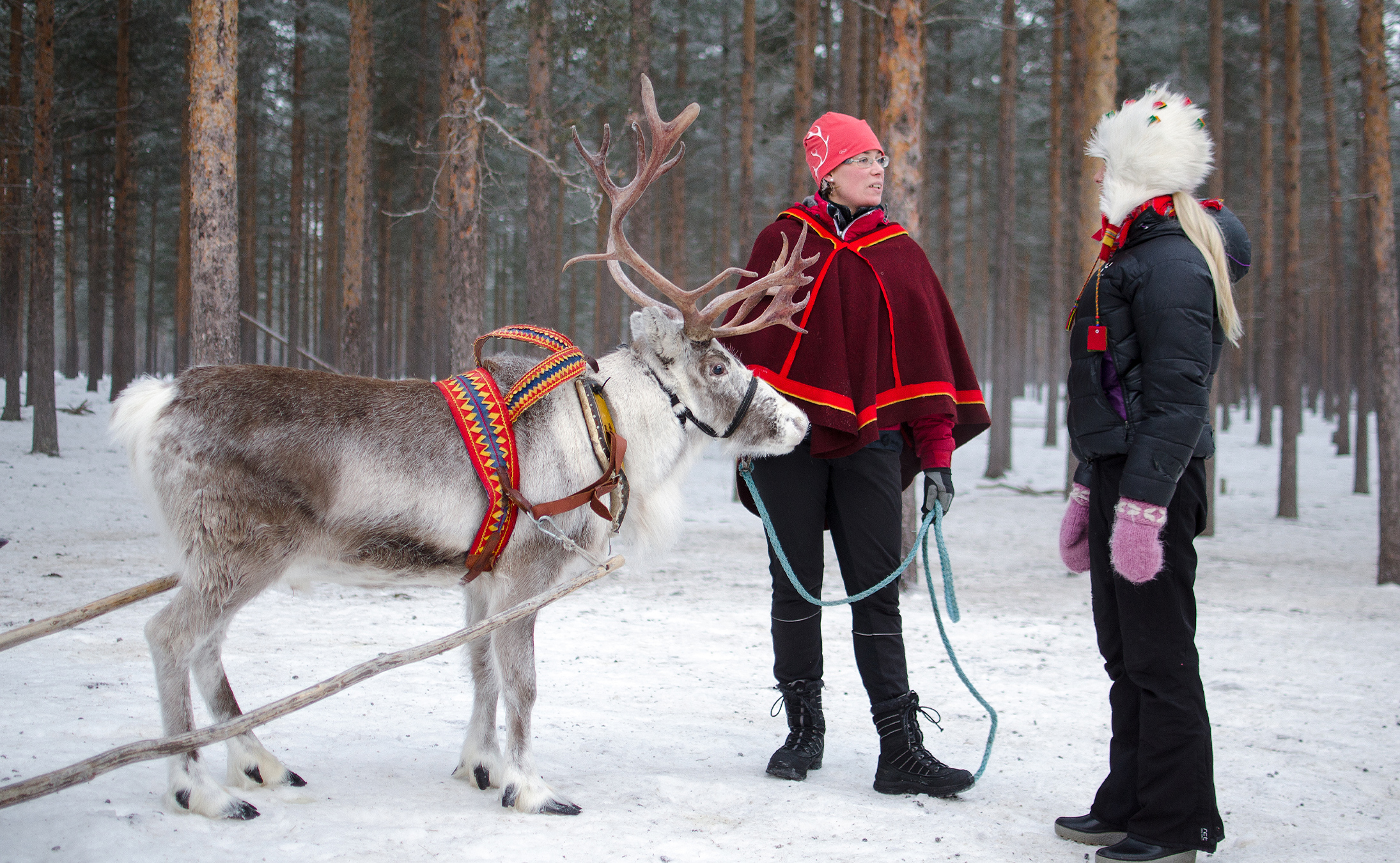
Banner image: Two Sámi people stand with their reindeer in Sweden, 2013. Image by Suunda via Flickr (CC BY-NC-SA 2.0).
Sámi rights must not be sacrificed for green energy goals of Europe (commentary)
Citations:
Pettersson, H. L., Aronsson, M., & Persson, J. (2026). The Paradox of Success in Conservation Performance Payments: Rising Costs and Declining Trust in Sweden’s Carnivore Policy. Conservation Letters, 19(3), e70057. doi:10.1111/con4.70057
Åhman, B., Rasmus, S., Risvoll, C., Eilertsen, S. M., & Norberg, H. (2022). Large predators and their impact on reindeer husbandry. Reindeer husbandry and global environmental change, 118-130. doi:10.4324/9781003118565-9
Pekor, A., Jansson, I., Munka, O., Seki, W. O., Capper, S., Kissui, B., . . . Gallo, T. (2026). Using incentive payments to promote human–carnivore coexistence. Conservation Biology, 40(3), e70216. doi:10.1111/cobi.70216
Cite this article
Saara-Maria Salonen (2026). Payment scheme for human-wildlife coexistence faces growing criticism from Sámi reindeer herders. Mongabay Conservation news. DOI: https://doi.org/10.66709/news-336013

