


Trial by Fire: Third in a series about the impacts of wildfire litigation.
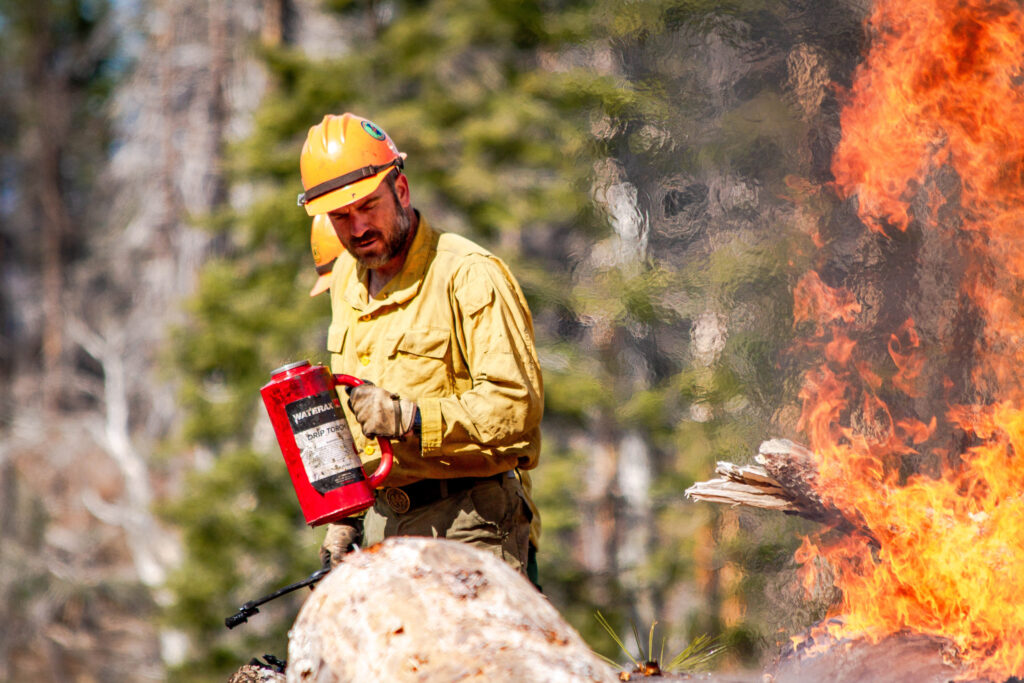
The small fire slowly licked its way through a dense growth of pine trees in the Sangre de Cristo Mountains of northern New Mexico. A team of federal employees moved in tandem with the flames, dropping more fire from drip torches to clear out the small trees, deadwood, scrub and grasses that could fuel a runaway blaze in the future. Everything seemed to be going to plan.
But come afternoon, strong winds swept into the burn area. Powerful gusts carried the carefully planned fire beyond the control line intended to contain it. By 5 p.m. on April 6, 2022, the U.S. Forest Service reported the burn had escaped its control and declared it a wildfire.
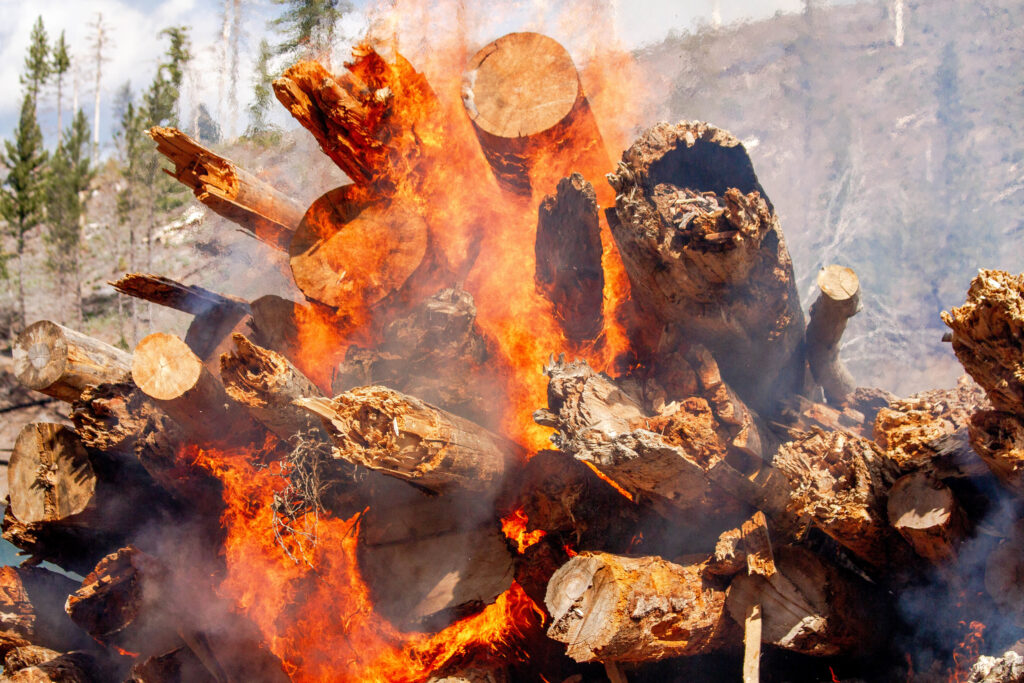
The Hermit’s Peak Fire would eventually merge with another prescribed burn that had survived the winter as a “sleeper” fire in nearby Calf Canyon. In January, the Forest Service had burned piles of tree trunks and limbs left over from previous forest-thinning operations. But embers from the pile burn had smoldered beneath the winter snow and the fire reemerged in the spring.
By the time the Hermit’s Peak/Calf Canyon Fire finally came under control in August 2022, the once-modest prescribed burns intended to reduce the potential for megafires in New Mexico had become the largest wildfire in the state’s history.
The colossal fire swept across more than 340,000 acres and destroyed more than 900 structures in San Miguel, Mora and Taos counties. Torrential rain in the fire’s burn scar spawned a flash flood that killed three people.
More than four years later, the fire’s memory has barely faded for those who witnessed the towering walls of flame. Outrage, too, has endured. How did a government-sanctioned project go so, so wrong?
“There’s a lot of trauma,” said Brian Colón, an attorney with Singleton Schreiber who is representing victims in a lawsuit against the federal government. “People that have looked out over their acreage for years now look out and see a burn scar or worse. … They are reminded every day of that time when they had to evacuate because they saw a roaring fire coming down the hill. That doesn’t go away quickly.”
Foresters, firefighters and land managers say prescribed burns are a critical tool to not only reduce the threat of catastrophic wildfires, but also boost ecosystem resilience. Yet they also warn that a small number of those burns will inevitably escape containment. That’s concerning for prescribed fire practitioners as wildfire litigation has exploded over the past decade, with ignition alone often equaling culpability in courts—regardless of the weather, climate and fuel conditions that influenced the fire’s behaviour.
Lawsuits that have held utility companies accountable for billions of dollars, experts say, have also set a precedent for wildfires from other ignition sources. While federal employees are typically shielded from individual liability if a prescribed burn goes awry, the government can face enormous claims—as can the private contractors and landowners carrying out burns. Already, some companies that carry out burns say they have lost insurance coverage or seen their premiums soar.
Out of Control
Many landscapes in the American West are naturally adapted to fire. Indigenous peoples used intentional burning for millennia to manage forests, grasslands, wildlife and crops. But throughout the early 20th century, U.S. policies sought to prevent all wildfires, allowing an unprecedented amount of fuel to build up in America’s woodlands that could drive far more intense blazes than occurred historically.
By the 1960s, the federal government was beginning to recognize that carefully burning off dead trees, dry brush, leaf litter and grasses could help to control future fires—preventing the worst of the worst. The 2000 National Fire Plan and 2003 Healthy Forests Restoration Act encoded what has come to be called prescribed burning into national strategies to combat wildfires.
Since then, millions of acres have been treated with prescribed burns across the U.S. Some are handled through pile burning—bonfires of heaped-up logs and brush—and others with broadcast burning, which allows fire to travel over a defined but much broader area of still-standing vegetation.
Several studies have quantified the benefits of low-intensity prescribed fire. Recent research from Stanford University found that prescribed burns conducted from the fall of 2018 through the spring of 2020 helped to reduce wildfire severity during the severe 2020 fire season by 16 percent across the Western U.S. compared to areas left untreated. A 2023 study found that low-intensity fires, like prescribed burns, reduced the risk of a high-intensity wildfire by about 60 percent in the fire-prone forests of California.
Most prescribed burns are conducted without incident. The U.S. Forest Service conducts about 4,500 prescribed burns every year, treating an average of 1.3 million acres. More than 99.9 percent of those do not escape the planned burn area, an agency spokesperson said.
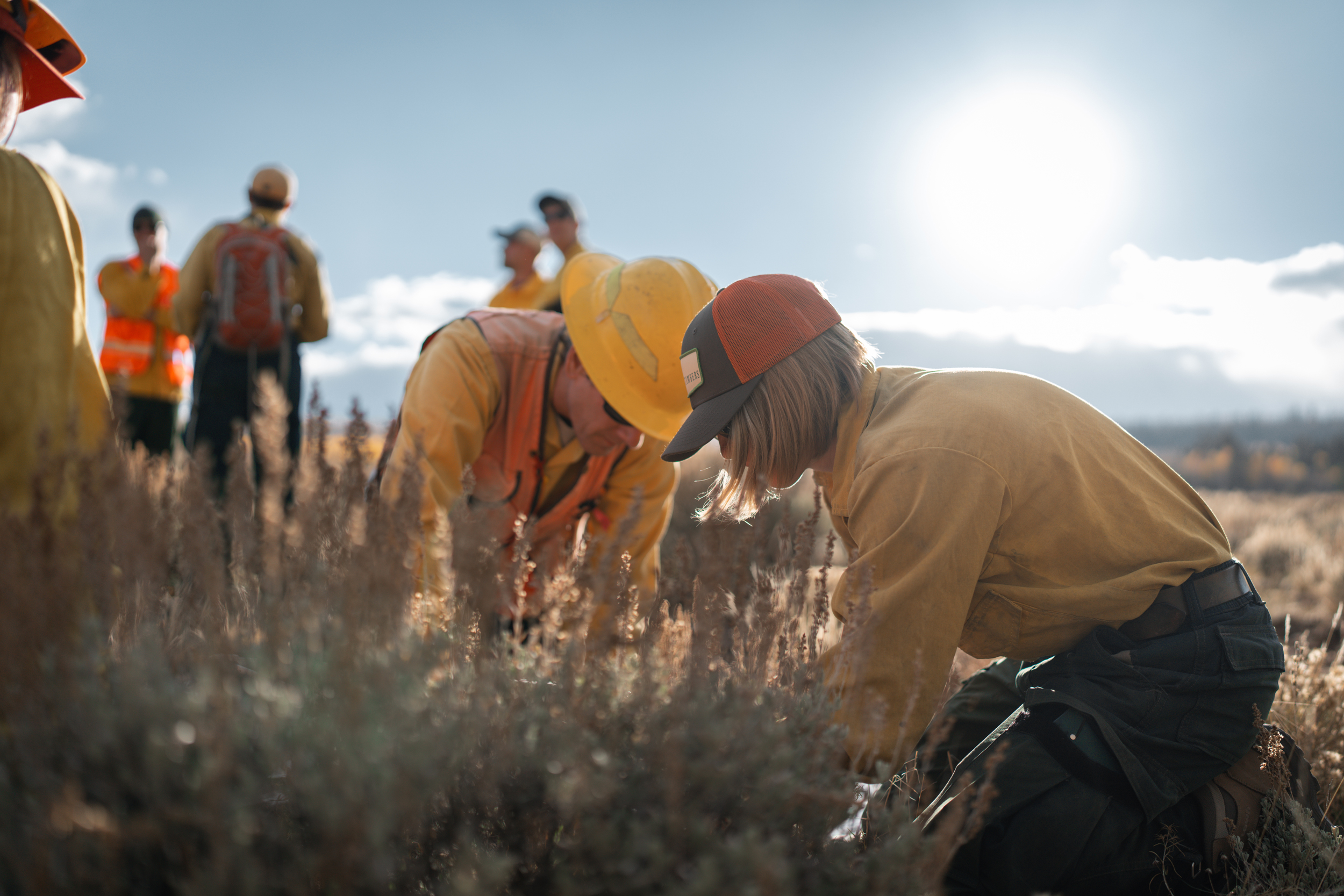
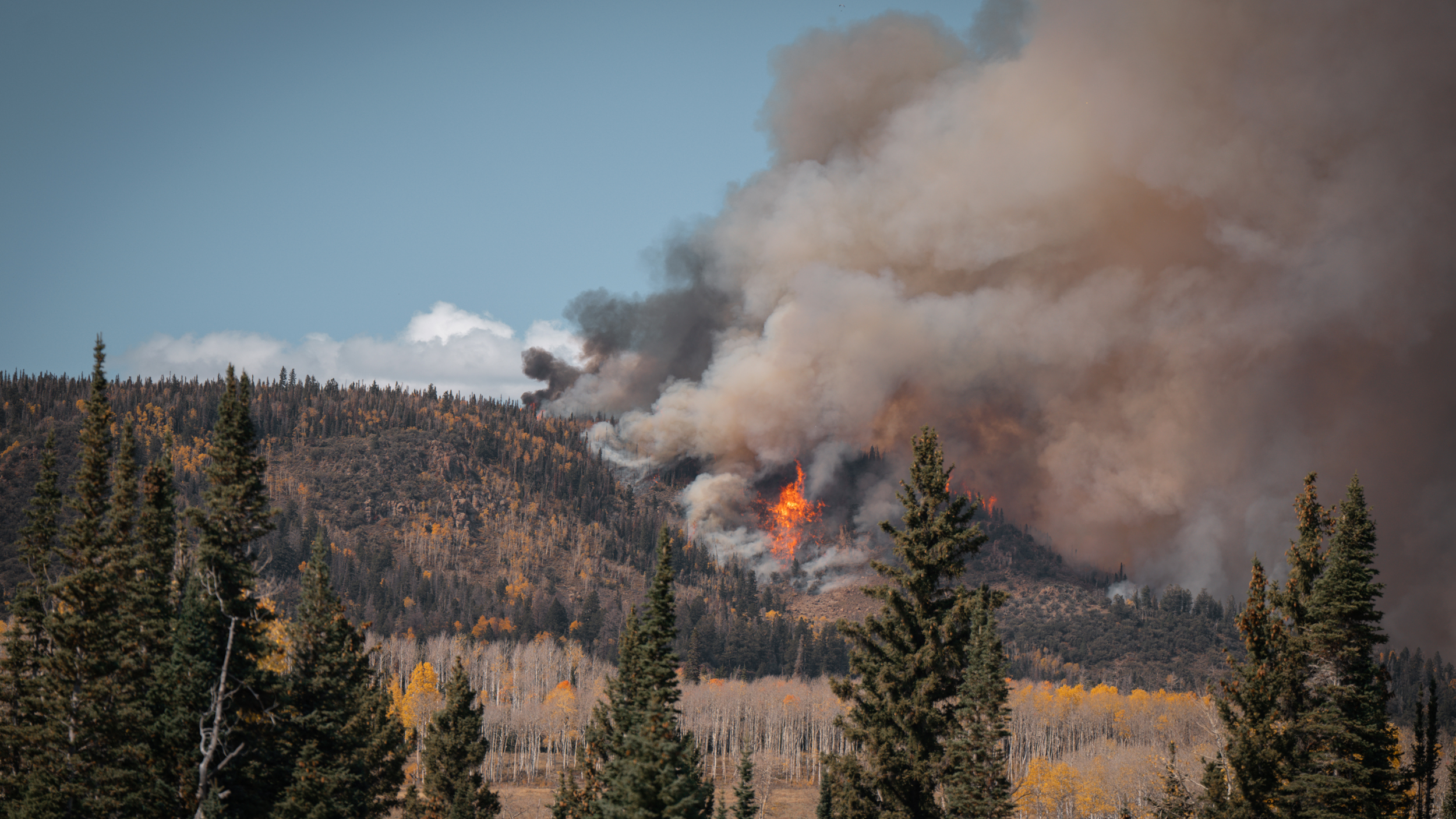
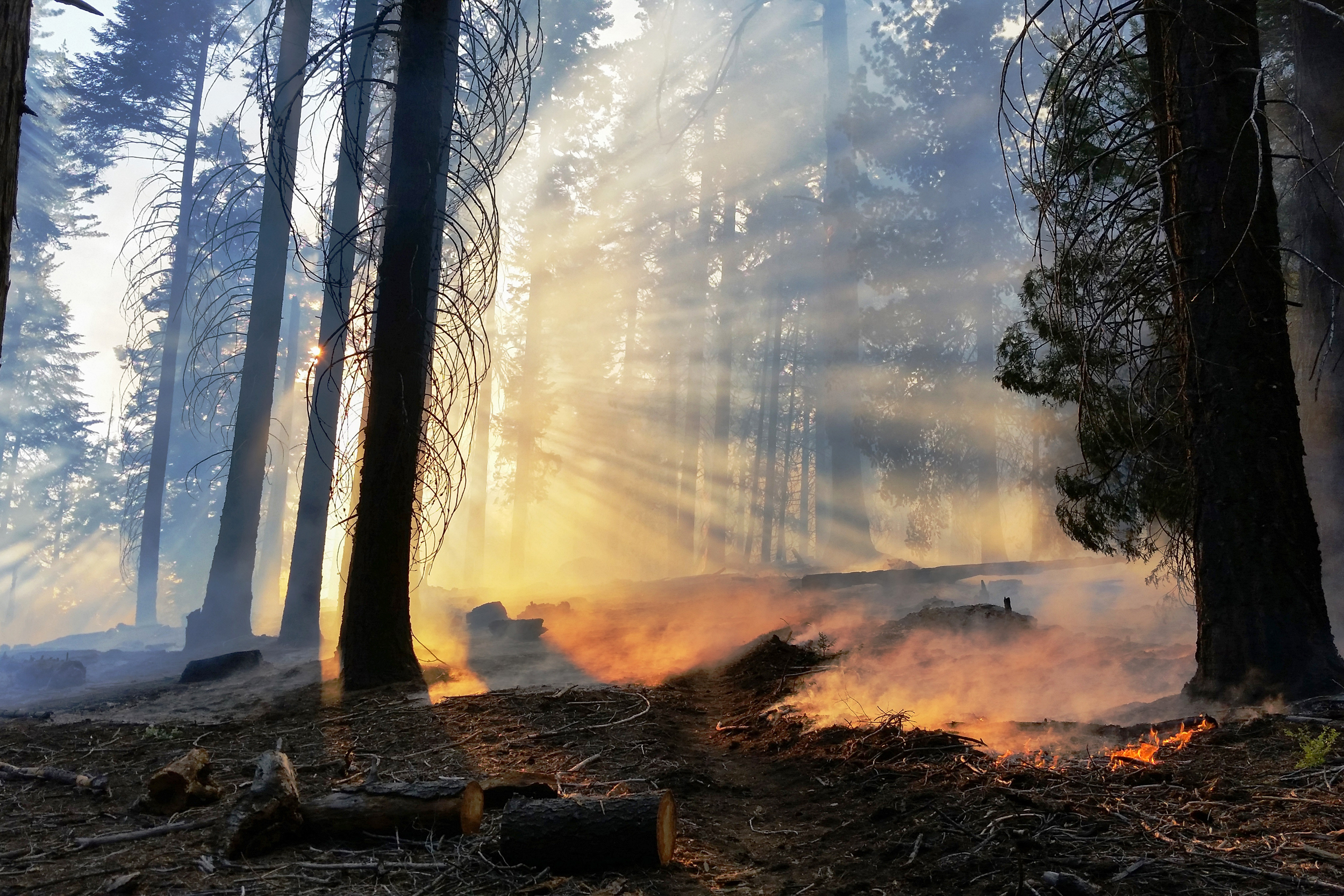
Proper procedure dictates that burns are only carried out when weather conditions—wind, humidity, fuel and soil moisture—are within safe ranges for burning and will minimize the impact of smoke on nearby communities. Fire crews and contingency plans must be in place to contain the fire and respond if it escapes.
But every now and then, things don’t go as planned.
An investigation into the New Mexico escape by the Government Accountability Office, the congressional watchdog, found that fire managers had followed a burn plan within approved limits, but a later analysis of weather and vegetation conditions found the “prescribed fire was burning under much drier conditions than they understood.”
Prescribed fire proponents have argued that even with such escapes, prescribed burning is far less risky than doing nothing.
“The controlled risk of conducting prescribed burns under our rigorous plans is significantly lower when compared to the threat of uncontrolled wildfires,” a Forest Service spokesperson told Inside Climate News.
The challenge is the burns that best target reducing future fire losses are often located in areas near people.
“If you’re doing it where it really matters, there is going to be more risk because you’re going to be in communities, you’re going to be on roadways, you’re going to be in places where it’s strategic,” said Amanda Rau, the Oregon Department of Forestry’s prescribed burn coordinator.
A 2019 study in the International Journal of Wildland Fire surveyed federal and state land managers over their perceived barriers to prescribed fire. Interviewees said that liability and insurance concerns were a hurdle, though a lack of adequate funding and capacity was listed as the primary difficulty.
“In most agencies, incentives are limited for managers to pursue prescribed burning whereas the reasons to avoid burning are many (e.g., risk aversion, personal liability concerns, smoke impacts, and political considerations in the case of a declared wildfire),” a 2022 U.S. Forest Service report noted.
A Chilling Effect on Prescribed Burns?
In the aftermath of the Hermit’s Peak/Calf Canyon inferno, Congress authorized $5.5 billion in compensation for property lost in the fires. The money materialized slowly—survivors and local governments sued the Federal Emergency Management Agency, alleging it had mishandled the claims process and inappropriately delayed or denied payments. The family of the three people who perished in the subsequent floods filed a wrongful death lawsuit, reaching a $4.25 million settlement. And lawyers representing more than 1,000 victims sued FEMA for non-economic damages—emotional pain and suffering—that Congress failed to account for in its compensation plan. A judge ruled that FEMA must consider and adjudicate such claims, in accordance with New Mexico law. FEMA has appealed.
“There is clear negligence,” said Colón, the attorney representing plaintiffs in the ongoing lawsuits against the federal government. “People who are civil servants that work in this space, when they go to work every day, they … better understand the gravity of their work and that should they choose to not follow guidelines, protocols, procedures and rules for prescribed burns, that accountability might be facing them the next day.”
Federal employees inherently bear less of a burden than private individuals. They are largely protected by the Federal Tort Claims Act, which shields them from personal liability provided they were acting within the scope of their official duties. So, while claimants can sue the United States government, they generally can’t sue the individual who conducted a federally managed burn.
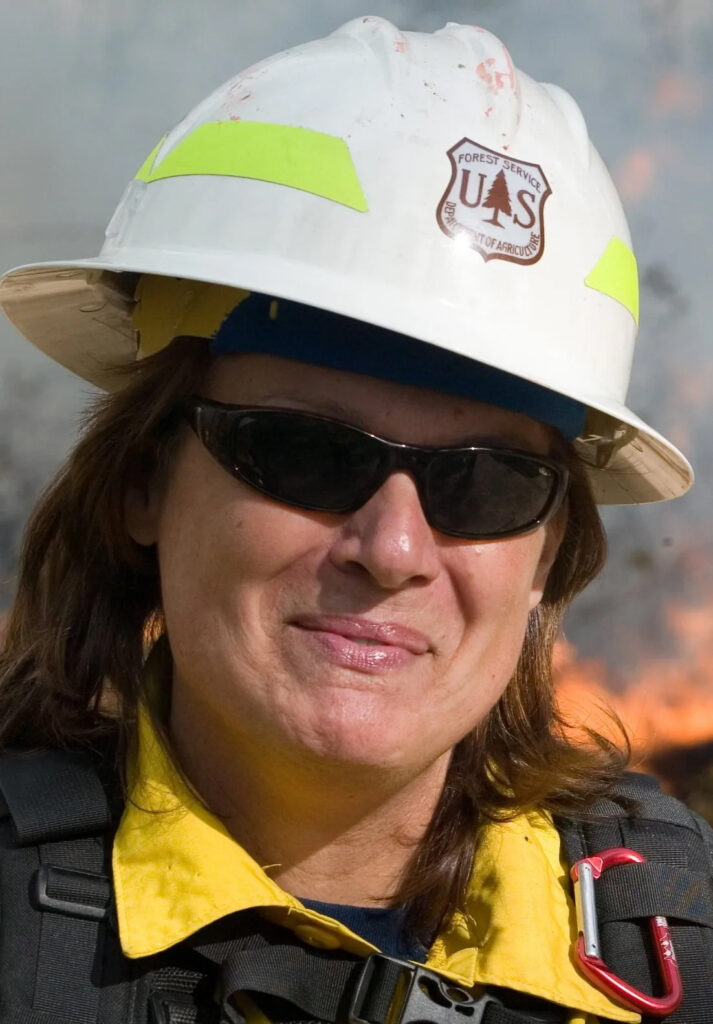
That hasn’t stopped some employees from worrying about the implications of the increasing number of wildfire lawsuits. Bobbie Scopa previously served as a U.S. Forest Service deputy regional fire director. Now, she helps to provide leadership training for federal firefighters. Recently, while teaching in the Southwest region, which includes Arizona and New Mexico, Scopa said some Forest Service firefighters told her “they are not wanting to do any prescribed burning because of liability. They are sticking to low-complexity burns, like pile burning.”
An Inside Climate News analysis of federal data on prescribed burning by the U.S. Forest Service and agencies within the Department of the Interior from 2015 onward found no evidence of a decline in recent years. The acreage of prescribed burns had actually risen in 2023 and 2024, before dropping back toward previous levels with staffing cuts under the current Trump administration.
“Our commitment remains to use prescribed fire safely and where it is most needed to reduce wildfire risk,” a Forest Service spokesperson said.
However, the number of pile burns conducted by the U.S. Forest Service almost doubled after the Hermit’s Peak/Calf Canyon incident, a comparison of the years 2023 to 2025 to the prior three years shows. These burns, which can be conducted under cooler and wetter conditions after the main fire season, are generally considered less likely to escape control. Of the 43 prescribed burns carried out by the Forest Service that escaped control from 2012 through 2021, 63 percent of those escapes were from a broadcast burn, a government report found, while 37 percent were escaped pile burns.
Still, pile burning over the last five years accounted for a tiny fraction of the total acres treated to reduce accumulated fuel.
The U.S. Forest Service said it had not directed any move toward more pile burning following the Hermit’s Peak/Calf Canyon escape, adding that both pile burns and broadcast burns were vitally important.
While federal fuel treatments are tracked closely in datasets, prescribed burns conducted on state and private lands are not. And that’s where any chilling effect of growing wildfire litigation would likely be most apparent, as such burns carry heightened legal risk for the individuals who start the blaze.
State and private lands make up the vast majority of U.S. acreage treated with prescribed burns—84 percent, according to a 2021 National Prescribed Fire Use Survey. Protections for state employees are narrower and more variable than those for federal employees, with indemnity rules and negligence standards differing from state to state. Meanwhile, no such safeguards exist for other people who use fire to keep America’s forests and grasslands safe.
Private contractors, tribes and nonprofits that conduct prescribed burns must obtain their own liability insurance, even if they are assisting with burns on federal lands.
The Nature Conservancy, a nonprofit group, treats around 120,000 acres of its own land with prescribed burning every year, aiming to conserve the wildlife and wild places that thrive on fire. It also assists government agencies with burning another 350,000 acres annually. While the group’s amount of burning has stayed stable if not increased, “there’s a really interesting nexus between the damages from a wildfire, how that’s affected the insurance sector and how that’s affecting our ability to do prescribed fire,” said Marek Smith, who leads the conservancy’s prescribed fire program in North America.
The organization maintains general liability insurance that covers third-party damages for prescribed fire and smoke—something staff had to fight hard to maintain, Smith said. But he’s hopeful that the proposed National Prescribed Fire and Fix Our Forests acts will include some allowances to protect those who assist with burns on federal lands.
“We’re asking for some changes to potentially extend [Federal Tort Claims Act] provisions to non-federal cooperators working on federal land under the direction of federal agencies,” he said.
Shifting Liability
Prescribed burn advocates have been working for years to get more fire on the landscape. Even before the Hermit’s Peak/Calf Canyon Fire, it was apparent that the specter of litigation might be a deterrent to deploying more flame.
Nearly 18 years ago, Lenya Quinn-Davidson co-founded the first prescribed fire council in the Western U.S.—in Northern California—with the goal of breaking down barriers to prescribed fire. New Mexico shortly followed suit, adopting a logo of a roadrunner with a drip torch in its beak. Today, some 40 prescribed fire councils dot the country, forming a broad coalition.
As part of their mission, the councils—often composed of state and federal agency staff, fire practitioners, land managers, conservation nonprofits, tribes and academics—have been liaising with governments to change state wildfire negligence standards, create burn boss certification programs to limit liability and establish funds to help cover damages in the unlikely event of an escape.
“It’s kind of a funny space to work in because we all recognize that prescribed fire liability is mostly about perceived liability,” Quinn-Davidson said.
Only a small percentage of prescribed burns escape, and it’s an even smaller fraction of escapes that actually cause damage. “In the prescribed fire world, we actually don’t see a lot of lawsuits—or we haven’t yet,” she said.
(Earlier this year, a Nebraska ranching family sued the state for $272,000 over a 2025 escaped burn that they say killed 46 cattle; the state has countersued, alleging the ranchers actually started the fire.)
Liability standards for prescribed burns fall into roughly three categories: strict liability, simple negligence and gross negligence. Under strict liability, a burner is responsible for any damages regardless of precautions taken or the circumstances. Simple negligence means the burner needs to show reasonable care and can be held liable if they acted negligently. And gross negligence—the gold standard in the minds of prescribed fire practitioners—means that a burner can only be held liable if proven to have behaved recklessly.
“I think it will only get more intense, especially if there are other instances of escaped burns.”
— Sean Hendrix, Oregon Prescribed Fire Council
Southeastern states such as Georgia, which along with Florida and Alabama consistently burn the most acres in the country, have adopted a gross negligence standard for burns that get out of control. The law is murkier in Western states. Arizona, California, Nevada, Colorado, Idaho, Oregon and Washington operate under simple negligence. Wyoming and Montana have not clearly defined their liability standards for prescribed fire. Courts would likely default to simple negligence, experts said, but it creates a particularly uncertain environment for practitioners.
Fire councils have largely focused on reducing liability for burns ignited by private companies and landowners. “Private landowners are taking on a huge amount of liability anytime they do anything,” Quinn-Davidson said.
Sean Hendrix is chair of the Oregon Prescribed Fire Council and has worked for more than 25 years as a “type one” burn boss with Grayback Forestry, a private company that conducts prescribed burning on behalf of federal, state and private entities. Type one certification allows burn bosses to manage the most complex burns in high-risk areas.
“When I was younger and getting into burning, I didn’t think much about liability,” he said. “Now it’s just a different environment. The fuels have changed. It has gotten warmer and drier. … Liability is just there. It’s not going to go away. I think it will only get more intense, especially if there are other instances of escaped burns.”
Hendrix invoked the case of U.S. Forest Service burn boss Ricky Snodgrass, who was arrested in 2022 after a prescribed burn he oversaw on Oregon’s Malheur National Forest escaped and charred about 20 acres of adjacent private land. While burners have long fretted about civil liability, Snodgrass’ arrest demonstrated they now also had to worry about criminal charges. In 2024, a Grant County grand jury indicted Snodgrass on a reckless burning charge. Because Snodgrass was a federal employee, the case was ultimately moved to a U.S. District Court, where it was dismissed. Still, officials worry the unprecedented arrest could have a chilling effect on prescribed burning.
Moreover, with massive wildfire settlements facing utility companies, Hendrix said it was getting harder to obtain insurance for their operations. “It is very difficult. It goes up every year. We are on a razor’s edge as to whether we keep it or not.”
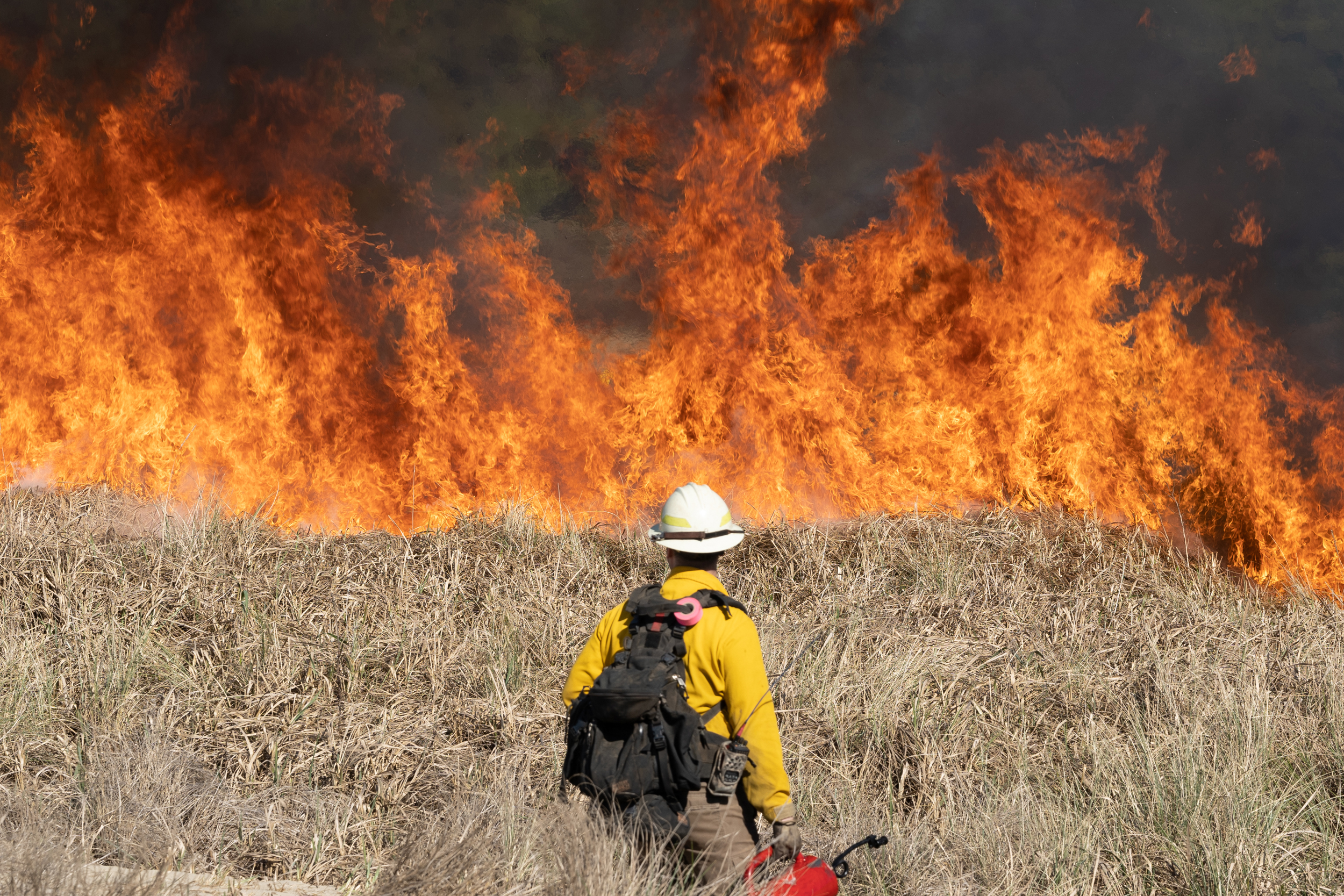
Grayback Forestry, he added, had invested in new technologies including a thermal imaging drone that could help to detect any lingering embers on the landscape after a burn. This, he said, had helped the company maintain its liability coverage. “We needed something extra because they were about to cut off our insurance.”
The Nature Conservancy’s Smith cited loss of insurance and rising premiums as one of the greatest challenges following the destructive 2017-18 California wildfires.
“What we started to hear from a lot of our partners, particularly other NGOs and some tribal organizations that had their own insurance, was that their insurance was being dropped or not renewed for covering third-party damages from prescribed fire.”
As part of his work with the council, Hendrix has been speaking with state officials to try to alter Oregon’s simple negligence liability standard for prescribed fire.
Paramount to implementing such changes is an approval process for private contractors, generally known as “certified burn boss” programs. These certifications can help to limit liability by improving both the quality of prescribed fire operations as well as the legal defensibility of decisions made about a burn.
Over the past five years, California, Colorado, Oregon and Washington have all introduced training programs to help individuals plan, manage and implement prescribed fires on state or private land. In turn, Colorado and California are now placing those private burners who have completed the training under more protective liability standards. Montana last year adopted a simple negligence standard for certified burners, though it has yet to allocate a portion of the state budget to create the certification program, Quinn-Davidson said.
To supplement the training, California and Oregon have launched prescribed fire liability funds that would pay out $2 million and $1 million respectively for damages caused by an escaped burn if proper procedure was followed. Washington and Colorado are now working to also establish prescribed fire liability funds.
“The more we can share the burden, the more burning we are going to get done,” Oregon’s Rau said.
This story is funded by readers like you.
Our nonprofit newsroom provides award-winning climate coverage free of charge and advertising. We rely on donations from readers like you to keep going. Please donate now to support our work.
As of November 2026, no one had yet filed a claim under the Oregon fund or the California fund.
Rau added that insurance companies are now offering coverage to private burn companies in Oregon that use the state’s certified burn manager and liability pilot programs.
“We all acknowledge that $2 million is not enough if something really serious were to happen,” given that losses from major wildfires often rise into the billions of dollars, Quinn-Davidson said. “On the other hand, we don’t expect there to necessarily be any claims on the fund.”
Under Fire
The recent successes other Western states have delivered in setting up burn boss schemes and liability funds stand in stark contrast to New Mexico’s trajectory. The state had once been at the vanguard of prescribed burning and protecting the people who conduct them from overly burdensome liability standards, but now serves as a cautionary tale for how high-profile escapes can set prescribed burning practices back years.
“We’re just working on trying to not lose any ground with being allowed to burn,” said Eytan Krasilovsky, vice-chair of the New Mexico Prescribed Fire Council, which was established in 2009. “It’s exhausting. It’s a little sad.”
New Mexico has suffered some of the largest prescribed burn escapes in the United States. In 2000, the National Park Service conducted a burn at Bandelier National Monument that broke free to become the Cerro Grande Fire, the most expensive wildfire in U.S. history at the time. The wildfire overran more than 200 homes in Los Alamos, causing $1 billion in property losses. The federal government ultimately established the Cerro Grande Fire Assistance Act, paying out around $900 million to landowners and communities.
Krasilovsky, who began his forestry work around that time, dryly observed that his career had been “end-capped with prescribed burn escapes in New Mexico.”
“We’re just working on trying to not lose any ground with being allowed to burn. It’s exhausting. It’s a little sad.”
— Eytan Krasilovsky, New Mexico Prescribed Fire Council
Whereas New Mexico and California were moving in lockstep on improving prescribed burn policies in the late 2010s, the Golden State pulled ahead after 2022 with its certified burn boss program and claims liability fund.
“Not every state can lead at the same time,” Krasilovsky said. “We’re trying to keep New Mexico in the mix. … It’s been a lot of punches coming our way.”
An official inquiry into the Hermit’s Peak/Calf Canyon Fire later found that fire personnel “did not cease ignitions or suppress the prescribed fire after clear indications of high-fire intensity,” and that some were using a radio frequency that made them unreachable on several occasions. Nearby automated weather stations were unavailable, complicating efforts to assess conditions on the ground. Personnel used National Weather Service spot weather forecasts rather than localized analyses to understand the shifting wind conditions even as relative humidity dropped “well below” the forecasted range.
In the aftermath, the U.S. Forest Service ordered a 90-day review of prescribed burn policies, during which it shut down prescribed burns in national forests across the country. New Mexico lawmakers later passed legislation prohibiting prescribed burns during dangerous “red flag” fire weather, outside of those performed by federal land managers.
“Chances are you’re going to lose a fire now and then,” said Scopa, who also serves as the vice president of the advocacy group Grassroots Wildland Firefighters. “Sometimes the weather forecast wasn’t 100 percent right, or someone did not do their job 100 percent right.
The problem is that when a firefighter makes a mistake, there is so much at risk.”
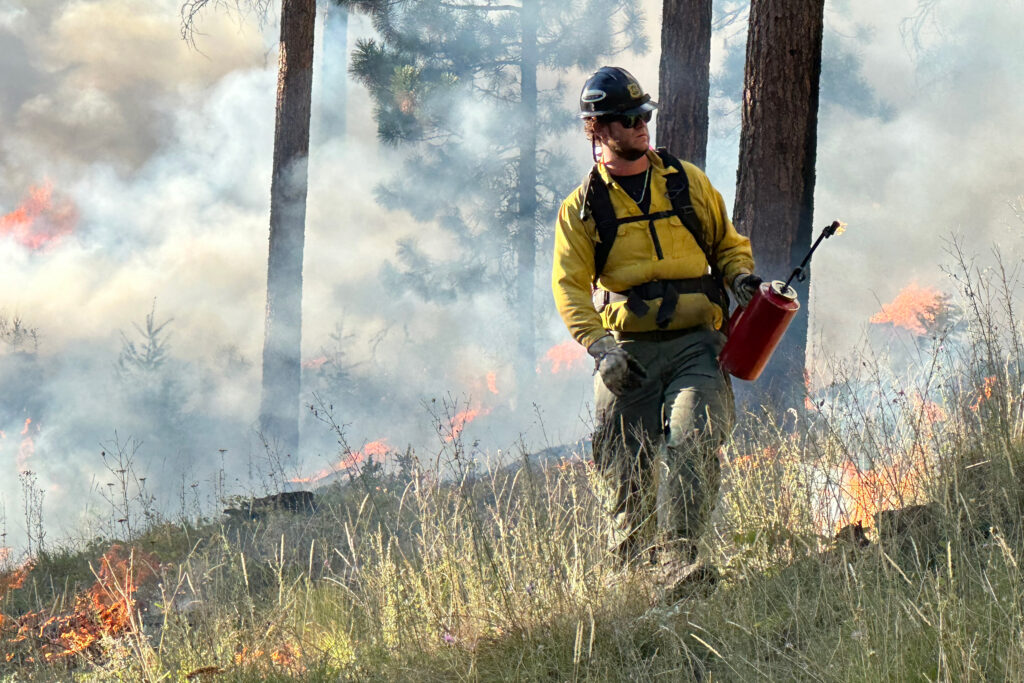
Firefighters, she said, take on enormous responsibility when lighting fires on or close to private lands. “Private landowners want the Forest Service to protect private land from a fire. And yet if something goes wrong and they lose some timber or they lose their view, they are going to sue.”
One small reprieve, prescribed fire advocates said, is that New Mexico had succeeded in setting a simple negligence standard for burns on private land in the year before the Hermit’s Peak/Calf Canyon Fire escape. The state previously had nothing on the books, apart from a slew of laws from the late 1800s designed to quash all traditional and Indigenous burning. The new law helped to curb some of the fallout from the 2022 escape.
“If we didn’t get it passed in 2021, I don’t know how we would have gotten something passed in the 10 years after 2022,” Krasilovsky said. “Memories are long about these things.”
Even then, climate change is making it harder to find a window of time to burn. A 2023 study from the University of California, Los Angeles, found that rising temperatures will cut the number of days suitable for prescribed fire 17 percent on average by 2060 across the Western U.S.
“New Mexico is on the front lines of climate change and we are seeing changes faster than we can change our practices,” Krasilovsky said. “We’re trying to operate handicapped in a climate change-altered environment, and you’re just going to run into these catastrophes.”
Inside Climate News data journalist Peter Aldhous contributed reporting.
This report was supported by a grant from the Fund for Investigative Journalism.
About This Story
Perhaps you noticed: This story, like all the news we publish, is free to read. That’s because Inside Climate News is a 501c3 nonprofit organization. We do not charge a subscription fee, lock our news behind a paywall, or clutter our website with ads. We make our news on climate and the environment freely available to you and anyone who wants it.
That’s not all. We also share our news for free with scores of other media organizations around the country. Many of them can’t afford to do environmental journalism of their own. We’ve built bureaus from coast to coast to report local stories, collaborate with local newsrooms and co-publish articles so that this vital work is shared as widely as possible.
Two of us launched ICN in 2007. Six years later we earned a Pulitzer Prize for National Reporting, and now we run the oldest and largest dedicated climate newsroom in the nation. We tell the story in all its complexity. We hold polluters accountable. We expose environmental injustice. We debunk misinformation. We scrutinize solutions and inspire action.
Donations from readers like you fund every aspect of what we do. If you don’t already, will you support our ongoing work, our reporting on the biggest crisis facing our planet, and help us reach even more readers in more places?
Please take a moment to make a tax-deductible donation. Every one of them makes a difference.
Thank you,
