


Reading Time: 5 minutes
Can U.S. companies be held liable for benefiting from forced labor abroad?
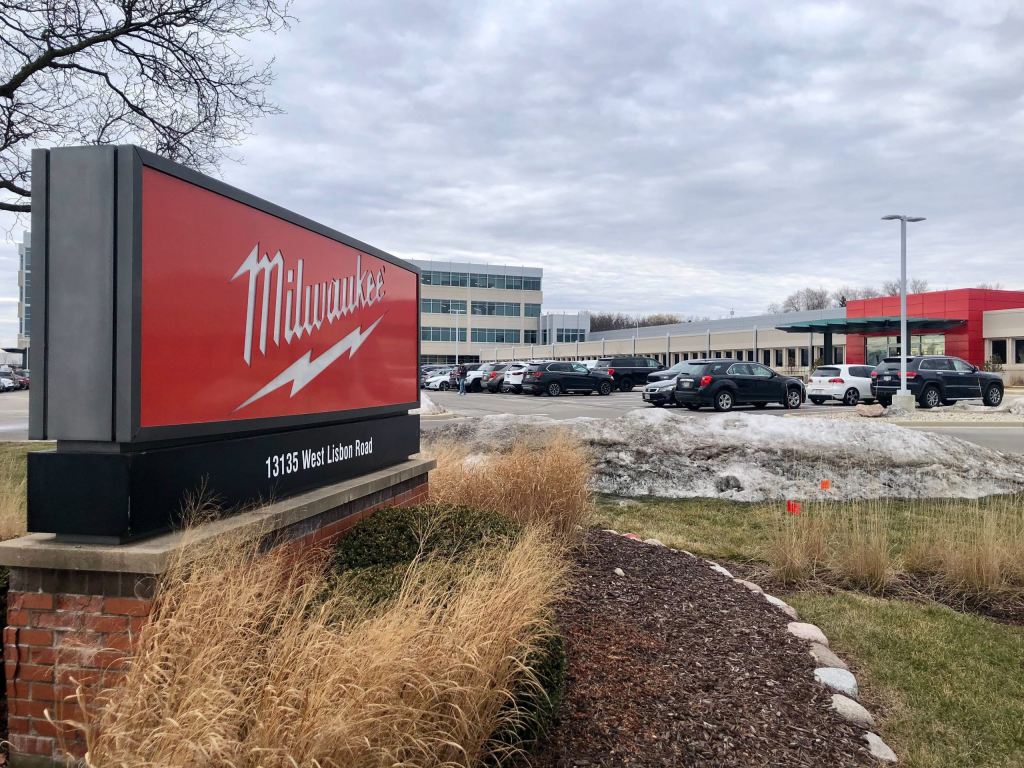
That’s the question before a federal appeals court in a case that alleges Brookfield-based Milwaukee Electric Tool Corp. relied on a supplier that produced its work gloves in a Chinese prison.
A 2023 Wisconsin Watch investigation detailed the account of Taiwanese human rights activist and college administrator Lee Ming-che, who spent nearly five years at Chishan Prison in China’s central Hunan Province following a 2017 conviction for “subverting state power.” Lee, who was released in 2022, told Wisconsin Watch that he and hundreds of other prisoners were forced to work about 13 hours a day, seven days a week for the equivalent of about 48 cents a day.
Milwaukee Tool denied the allegations, telling Wisconsin Watch it has “found no evidence to support the claims being made” about its link to forced labor.
Walmart later pulled the gloves from its marketplace and the federal government blocked the import of the gloves under Section 307, a 1930 tariff law that prohibits the sale of goods made with foreign forced labor. Citing information that “reasonably indicates the use of convict labor,” U.S. Customs and Border Protection announced in April 2024 that it would detain gloves at U.S. ports of entry if they were made by Shanghai Select or two subsidiaries.
Former prisoner seeks unpaid wages and damages
The ongoing lawsuit seeks compensation for another former prisoner. Attorneys representing plaintiff Xu Lun, identified under a pseudonym because he feared for his safety, argue that Milwaukee Tool and its Hong Kong-based parent company, Techtronic Industries, violated a provision of the federal Trafficking Victims Protection Reauthorization Act, which allows victims to sue those who knowingly benefit from their forced labor.
In a filing in the U.S. District Court for the Eastern District of Wisconsin, Xu said he and others were forced to manufacture several types of Milwaukee Tool-branded work gloves for supplier Shanghai Select Safety Products for between $1.41 and $42.50 per month.
“Everyone knows these things will be exported to America,” Xu told Wisconsin Watch in 2023, saying the labels he’d stitched into the gloves included a Brookfield address.
Judge Brett H. Ludwig dismissed the initial lawsuit, saying the court lacked jurisdiction over Milwaukee Tool’s parent company.
“Techtronic Industries is a foreign corporation not subject to general personal jurisdiction in this Court, and the litigation does not relate to any of Techtronic Industries’ contacts with the United States,” Ludwig wrote in his ruling last December. He dismissed claims against Wisconsin-based Milwaukee Tool, he wrote, because Congress has not given a “clear, affirmative indication” that the law in question applies outside the country.

Appeal probes whether U.S. companies can face liability for abuses abroad
Xu is appealing that decision. The outcome could affect workers around the world, said Charity Ryerson, a human rights lawyer and executive director of the Chicago-based Corporate Accountability Lab.
“It’s really important for victims of trafficking abroad to be able to bring claims in the United States when someone who benefited from that trafficking is based here, and that’s the question before the court,” Ryerson said.
There’s a legal presumption that a federal law doesn’t apply to actions outside the country unless the statute or legislative history makes clear that the authors intended it to, Ryerson said, but courts have long agreed that the Trafficking Victims Protection Reauthorization Act’s civil provisions meet that standard. In recent years, she said, a minority of courts have ruled that it doesn’t.
The 7th Circuit U.S. Court of Appeals dismissed the appeal against Techtronic but allowed the case against Milwaukee Tool to proceed.
A ruling against the plaintiff, Ryerson said, could prevent workers who’ve suffered abuses from bringing similar claims in Wisconsin, Illinois and Indiana.
Lawyers clash over company’s responsibility for forced labor
In oral arguments on Nov. 4, plaintiff’s attorney Jennifer Bennett argued that the law applies to Milwaukee Tool because it’s an American company that benefited from forced labor.
“It’s benefiting in the United States from sales in the United States to United States customers. That’s exactly the conduct that this statute was designed to prohibit,” Bennett said.
Attorney David Horniak, representing Milwaukee Tool, argued the law does not apply because the company did not participate in such a venture. “The only things that Milwaukee Tool is alleged to have done in the U.S. is order these gloves, buy these gloves, and sell them in the U.S.,” Horniak said.
Federal law states that anyone who “knowingly benefits, financially or by receiving anything of value, from participation in a venture which has engaged in any act in violation of this chapter, knowing or in reckless disregard of the fact that the venture has engaged in such violation,” is subject to fine or imprisonment — just as someone who engages in that practice.
Ruling Milwaukee Tool liable, Horniak argued, could have sweeping consequences. “Every consumer who buys goods on Amazon or Temu, in theory, potentially benefits from forced labor, maybe unwittingly.”
The Chinese government, not a private company, forced prisoners to do this work, Horniak said, adding that U.S. prisons sometimes force people to work, too.
“One can agree or disagree with whether that’s appropriate, but it is completely understandable that Congress may have been concerned about private parties accusing foreign governments and using U.S. law and U.S. courts to accuse foreign governments of violations of federal law in how they conduct their prisons.”
But Bennett argued potential state involvement is another reason to enforce the law. Congress created the law because it was concerned that foreign governments weren’t sufficiently preventing trafficking — and might in some cases be participating in it, Bennett said.
“The whole reason this provision was enacted is because Congress thought it wasn’t enough to just prohibit forced labor. What it had to do is undermine the market,” Bennett said. “The purpose of (this law) is to ensure that American companies are not unfairly undercutting their competitors, unfairly taking jobs away from American workers, and creating a market for forced labor by selling goods in the United States that are made with forced labor.”
Ryerson said she hopes the plaintiffs will prevail, preserving this legal recourse for those who’ve been forced to produce U.S.-branded products. A win, she said, would help ensure forced labor remains a risky proposition for American businesses.
“Incarcerating people and forcing them to labor is really profitable,” Ryerson said. “If you make a lot of money off of that, then that creates problematic political incentives to incarcerate more people.”
Even an unsuccessful appeal could have an impact, said Nicholas Bequelin, a senior fellow at Yale Law School’s Paul Tsai China Center and a former Asia-Pacific regional director at Amnesty International.
“There is no doubt that forced labor practices are endemic to prison labor in China, and that some of the products that are the result of prison labor make their way to the United States market,” Bequelin said in an email. “American consumers are mostly left in the dark about this, even though importing such products is illegal under U.S. law, and raising awareness through litigation in the U.S. is an important part of the effort to curb forced labor in China.”
Former Wisconsin Watch reporters Zhen Wang and Julius Shieh contributed to this report.
Milwaukee Tool lawsuit tests whether U.S. companies can be held liable for forced labor abroad is a post from Wisconsin Watch, a non-profit investigative news site covering Wisconsin since 2009. Please consider making a contribution to support our journalism.
