


As global climate negotiators and government officials convene for the annual United Nations climate summit, the scientific organization they rely on to guide their decisions is mired in gridlock and short on funds.
Since 1990, the Intergovernmental Panel on Climate Change has produced influential global reports in cycles. Its 2013 and 2014 reports provided the scientific foundation for the 2015 Paris climate agreement, which continues to shape international climate policy. But the IPCC suspended its mid-October meeting without approving a budget for next year or agreeing on a timetable for publishing upcoming reports.
The political disputes that derailed the meeting rattled many of the scientists who devote hundreds of hours, often without pay, to assess the latest climate research across dozens of disciplines, from ice sheets and glaciers to forests and agriculture. Their work not only tracks the science of a changing climate, it also identifies ways to cut greenhouse gas emissions and helps communities adapt to increasingly severe climate impacts.
More than 100 IPCC scientists expressed their concern about the future of the panel in an Oct. 19 open letter, asking political leaders to provide it with adequate resources. The scientists reaffirmed their commitment to the work, but warned that, as climate impacts intensify, governments must ensure the panel can produce timely assessments of climate risks and potential solutions when they are needed. They also called for a process that gives all countries an equitable voice, rather than allowing wealthy, industrialized nations to dominate.
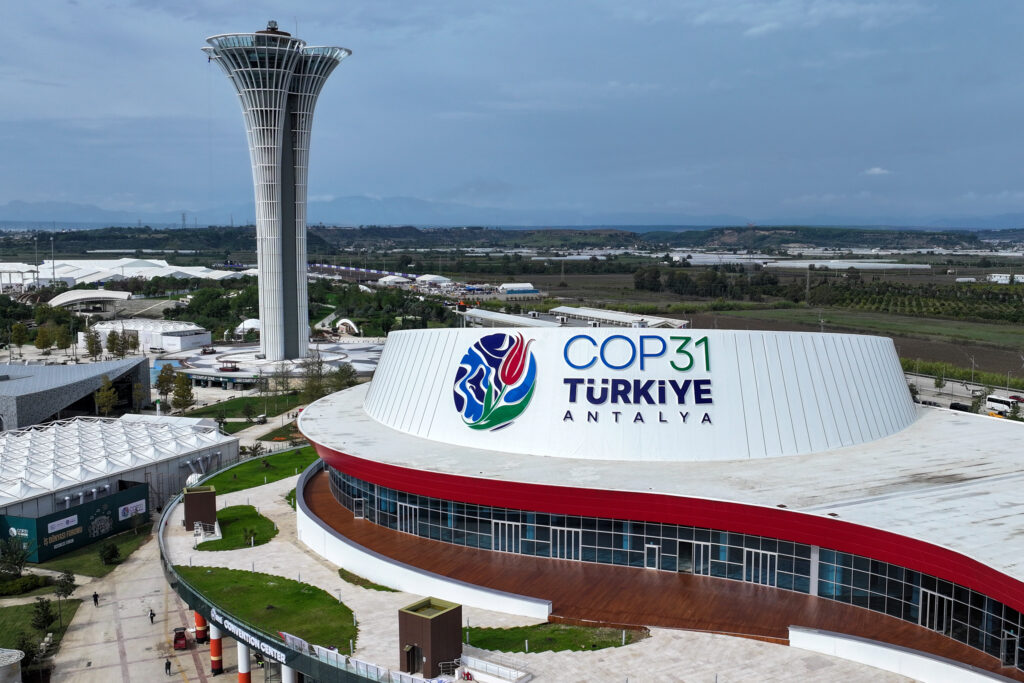
The IPCC will resume its session online in December, after the annual COP, the Conference of Parties to the United Nations Framework Convention on Climate Change. This year’s event, COP31, begins next week in Antalya, Turkey. The Intergovernmental Panel on Climate Change continually informs the negotiations with science updates, but political tensions have affected its budget and timelines for upcoming reports.
Governments decide voluntarily each year how much to contribute to the panel’s annual budget of $9.7 million, about the cost of producing a major movie. That pays to keep the meetings running, covering travel, scientific support and workshops, especially for developing countries.
Next year’s budget remains uncertain, but a concerted push by nations to increase funding at the upcoming climate summit in Turkey could be effective, history shows. In 1999, at COP5, an urgent funding appeal in the meeting’s final decision document helped the IPCC maintain momentum for its third and fourth cycles of updated climate reports.
Repeated reminders from the annual climate COPs helped sustain funding through the early 2010s, leading up to the landmark Fifth Assessment Report that is the scientific basis of the 2015 Paris Agreement, which aims to limit human-caused warming as close to 2.7 degrees Fahrenheit (1.5C) as possible.
Scientists Speak
The United States has, at times, contributed as much as one-third of the IPCC’s annual budget. The Trump administration’s withdrawal of funding over the last two years, along with the U.S. government’s withdrawal from the panel, likely contributed to stalling the IPCC process, said Bob Kopp, a climate scientist and professor at Rutgers University, who signed the Oct. 19 letter and has worked on several of the panel’s reports.
Despite the loss of federal support, the United States still has a significant scientific presence in the current assessment cycle, Kopp said. The U.S. Academic Alliance for the IPCC was formed in 2025 by the American Geophysical Union, bringing together colleges and universities to help ensure continued U.S. scientist participation without federal support. He said the U.S. has the largest percentage of contributing authors of any country, about 7.5 percent, and that the alliance nominated more authors for the current cycle than the U.S. government did for the previous one.
“I’m very pleased that civil society in the U.S. has managed to fill some of this gap,” he said. “But we can also see from what’s happening among the governments and the IPCC budget that there’s only so much civil society can do on its own.”
This story is funded by readers like you.
Our nonprofit newsroom provides award-winning climate coverage free of charge and advertising. We rely on donations from readers like you to keep going. Please donate now to support our work.
Key IPCC reports are scheduled to track whether countries are living up to what they promised in the Paris Agreement, said Carl Schleussner, a climate scientist with Climate Analytics and the International Institute for Applied Systems Analysis. Without a timeline for those reports, scientists can’t plan their IPCC-related work schedule, he said.
The delay in the IPCC’s process reflects a range of complex factors, against a backdrop of deteriorating international cooperation. Among them are concerns raised by a group known as the Like-Minded Developing Countries, including India and China. They are questioning whether the panel’s scenarios fairly represent the range of possible climate pathways for all countries, according to reports by observers with the International Institute for Sustainable Development’s Earth Negotiations Bulletin.
Weaponized Science?
Davide Faranda, another IPCC author who signed the letter, said he’s concerned that a breakdown of international collaboration could lead to climate information being weaponized.
If the IPCC fails to provide that timely, widely available knowledge, major powers like the United States or Russia could try to keep climate assessments private to gain strategic advantages through knowledge of climate impacts on agriculture, natural resources, national security and other sectors, he said.
“I think that everyone is aware that climate change now is hitting the entire world like a hammer … and the consequences are here,” said Faranda, who studies climate extremes at the French National Center for Scientific Research in Paris. “Having a report that is transparent and accepted worldwide is important.”
The delays in IPCC decision-making may also reflect the broader redistribution of power in a volatile world. He said the process “should respect that there are new equilibria” emerging.
“We cannot have the deliberations driven only again by European and British and American scientists,” he said. “We have to make it more inclusive. We have to respect the fact that there are countries that are developing fast, and they need to have a stronger voice also in the IPCC.”
The panel’s overall role may be shifting, added Mike Hulme, a professor of human geography at the University of Cambridge who has studied the IPCC.
In the late 1980s and early 1990s, the IPCC mission was clear, he said: detect if the climate is changing and whether humans are causing the warming. The panel answered those straightforward scientific questions by the mid-1990s. After that, things became more complicated.
The climate crisis, he said, raises deep and fundamental questions about the trajectory of human development on the planet. Today, the IPCC grapples with questions that have significant political implications, including how to address global warming through mitigation, adaptation, geoengineering and carbon removal.
The resulting political tension can slow the IPCC’s work, Hulme said. That tension, he added, is also reflected in questions about the coal-producing status of the current two COP31 host countries, Turkey and Australia, and of previous hosts with economies heavily dependent on fossil fuels.
“These political things are very much in the foreground right now,” Hulme said. “The idea that the IPCC can somehow run through that fire with some sort of fireproof clothing on is a non-starter.”
About This Story
Perhaps you noticed: This story, like all the news we publish, is free to read. That’s because Inside Climate News is a 501c3 nonprofit organization. We do not charge a subscription fee, lock our news behind a paywall, or clutter our website with ads. We make our news on climate and the environment freely available to you and anyone who wants it.
That’s not all. We also share our news for free with scores of other media organizations around the country. Many of them can’t afford to do environmental journalism of their own. We’ve built bureaus from coast to coast to report local stories, collaborate with local newsrooms and co-publish articles so that this vital work is shared as widely as possible.
Two of us launched ICN in 2007. Six years later we earned a Pulitzer Prize for National Reporting, and now we run the oldest and largest dedicated climate newsroom in the nation. We tell the story in all its complexity. We hold polluters accountable. We expose environmental injustice. We debunk misinformation. We scrutinize solutions and inspire action.
Donations from readers like you fund every aspect of what we do. If you don’t already, will you support our ongoing work, our reporting on the biggest crisis facing our planet, and help us reach even more readers in more places?
Please take a moment to make a tax-deductible donation. Every one of them makes a difference.
Thank you,
