

Close Menu
NCIJ Network NCIJ Network
    What's Hot

    NASA’s Swift telescope falls to Earth after nearly 22 years in space

    November 6, 2026

    Guatemala faces a human rights court over violent evictions of Indigenous communities

    November 6, 2026

    Trump’s Appeal Waned at Rallies in Ohio and at the Polls in Pennsylvania — ProPublica

    November 6, 2026
    Facebook X (Twitter) Instagram
    Trending
    • NASA’s Swift telescope falls to Earth after nearly 22 years in space
    • Guatemala faces a human rights court over violent evictions of Indigenous communities
    • Trump’s Appeal Waned at Rallies in Ohio and at the Polls in Pennsylvania — ProPublica
    • The Guardian view on the AI backlash: American voters want a say in their future | Editorial
    • ‘I don’t know if it reassured or worried them’: European envoys quiz Le Pen over lunch – POLITICO
    • Supercomputing Tech Demo Schedule – NASA Science
    • Under-16s could be banned from buying energy drinks in Wales
    • Billions of Gallons of Raw Sewage Are Pouring Into the Chicago River After Storms
    • About
      • Our Team
      • Editorial Policy
      • Editorial Independence
      • International Support
    • Trust & Standards
      • AI Usage Policy
      • Conflict of Interest Policy
      • Corrections Policy
      • Ethics Policy
      • Fact-Checking Policy
      • Source Protection
    • Get Involved
      • Guide for Sources
      • Support Independent Journalism
    • Legal
      • Cookie Policy
      • Privacy Policy
      • Terms of Use
    Facebook X (Twitter) Instagram
    NCIJ Network NCIJ Network
    Friday, November 6
    • Home
    • World
    • Ai
    • Business
    • Politics
    • Health
    • Crypto
    • Science
    • Technology
    • Cybersecurity
    • Defense & Security
    • Economy
    • Energy
    • Europe
    • More
      • Fact Check
      • Investigations
      • Opinion & Analysis
      • Environment
    NCIJ Network NCIJ Network
    Home»Science

    NASA’s Swift telescope falls to Earth after nearly 22 years in space

    NCIJ NETWNCIJ NETWORKBy NCIJ NETWNCIJ NETWORKNovember 6, 2026 Science No Comments3 Mins Read
    Share
    Facebook Twitter LinkedIn Pinterest Email

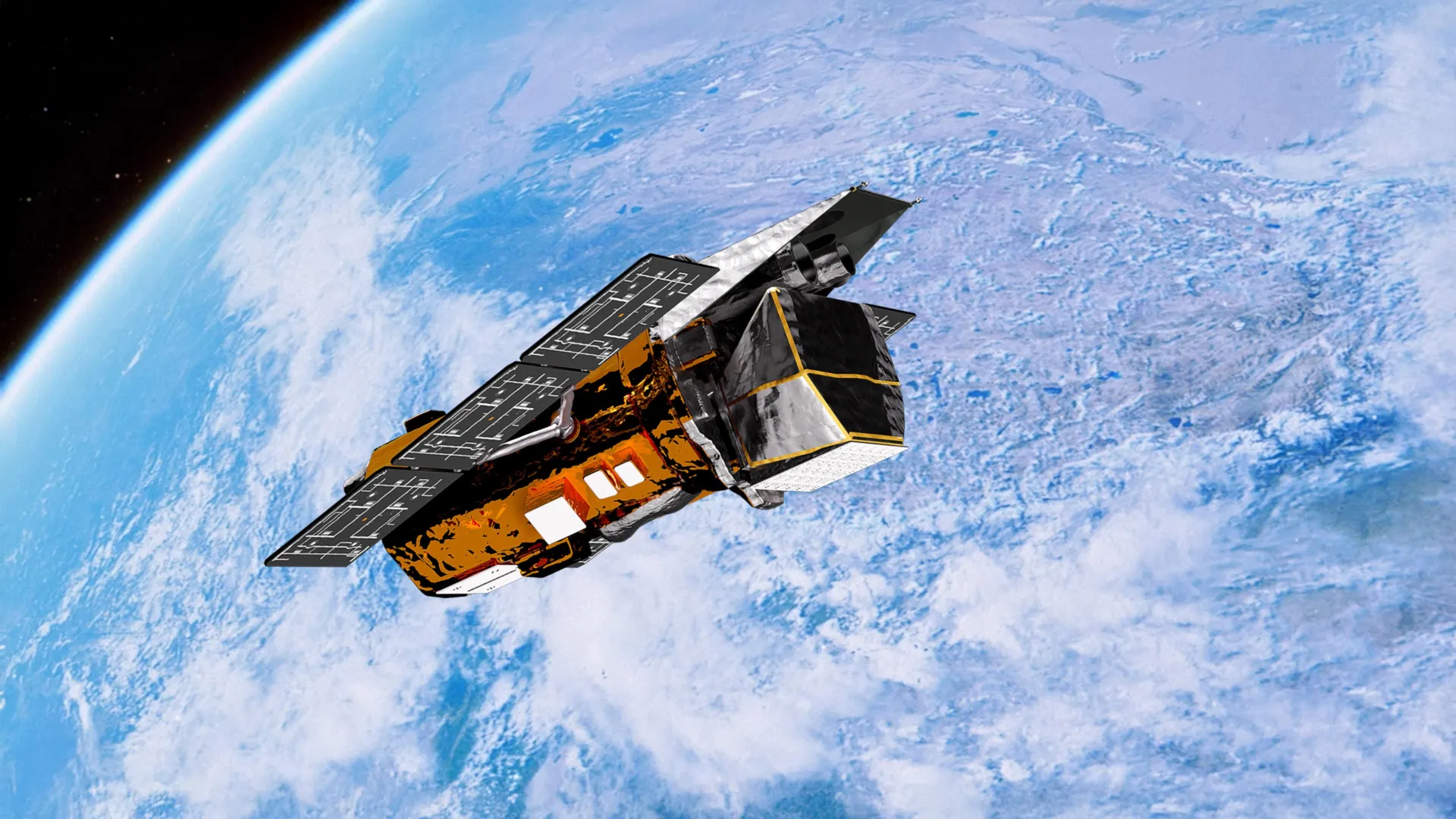
    NASA’s Neil Gehrels Swift Observatory has returned to Earth after spending nearly 22 years in space, bringing an extraordinary era of astronomical discovery to a close. The spacecraft re-entered Earth’s atmosphere on Wednesday, ending a mission that lasted more than ten times longer than originally planned.

    Launched in 2004, Swift was a pioneering space observatory equipped with three telescopes designed to study some of the most powerful explosions in the universe. Its instruments could detect different types of light, allowing scientists to investigate energetic cosmic events that would be difficult to understand using a single telescope.

    NASA’s Swift Observatory Re-Enters Earth’s Atmosphere

    The U.S. Space Force confirmed that Swift entered the atmosphere at 7:39 a.m. EST on Wednesday above North Sumatra, Indonesia. The reported location was approximately 3.4 degrees north latitude and 98.6 degrees east longitude.

    NASA anticipated that most of the spacecraft would burn up as it plunged through the atmosphere. However, officials acknowledged that some components might have survived the intense heat of re-entry.

    A Two-Year NASA Mission That Lasted Nearly 22 Years

    Swift was originally developed to investigate gamma-ray bursts, extraordinarily powerful flashes of high-energy radiation associated with some of the most extreme events in the cosmos. These bursts can occur when massive stars collapse or when certain compact objects, such as neutron stars, merge.

    Although NASA initially planned for Swift to operate for just two years, the observatory continued making scientific contributions for more than two decades.

    One of its most important capabilities was its ability to respond quickly to sudden cosmic events. When Swift detected an energetic outburst, it could rapidly redirect its telescopes toward the source and notify observatories around the world. This coordinated approach allowed astronomers to study brief astronomical phenomena before they faded from view.

    Swift also observed multiple wavelengths of light, giving researchers different ways to examine the same event and better understand the physical processes behind it.

    From Black Holes to Exploding Stars

    Over its remarkably long lifetime, Swift’s scientific contributions expanded far beyond its original focus on gamma-ray bursts.

    The observatory helped astronomers investigate active galaxies powered by supermassive black holes, stars that produce powerful X-ray flares, and supernovae, the enormous explosions that mark the deaths of certain stars.

    Its observations also extended much closer to home, including studies of comets and asteroids within our own solar system.

    By combining rapid observations with the ability to detect different forms of radiation, Swift became a valuable tool for exploring both distant cosmic explosions and nearby objects. Its re-entry marks the end of a mission that greatly exceeded its planned lifespan and helped transform scientists’ understanding of some of the universe’s most energetic phenomena.

    Earth falls NASAs Space Swift telescope years
    NCIJ NETWNCIJ NETWORK
    • Website

    Keep Reading

    Supercomputing Tech Demo Schedule – NASA Science

    Don’t miss: Meteor showers, fireballs, and a supermoon light up November’s night sky

    This may be the best evidence yet that dinosaur blood can fossilize

    Five-inch-long beetle larvae are quietly destroying blueberry roots

    Uganda tree-planting scheme loses Welsh government funding

    Major trial challenges how doctors decide who really needs statins

    Add A Comment
    Leave A Reply Cancel Reply

    Editors Picks

    NASA’s Swift telescope falls to Earth after nearly 22 years in space

    November 6, 2026

    Guatemala faces a human rights court over violent evictions of Indigenous communities

    November 6, 2026

    Trump’s Appeal Waned at Rallies in Ohio and at the Polls in Pennsylvania — ProPublica

    November 6, 2026

    The Guardian view on the AI backlash: American voters want a say in their future | Editorial

    November 6, 2026
    Latest Posts

    Microsoft confirms outage affecting search in Microsoft 365 apps

    August 18, 2026

    Alvys launches AI agents for freight TMS workflows

    August 18, 2026

    Andy Burnham says he’s not embarrassed about hoax message exchange

    August 18, 2026

    Subscribe to News

    Get the latest sports news from NewsSite about world, sports and politics.

    NCIJ Network is an independent digital news platform delivering trusted investigative journalism, European and global news, in-depth analysis, and fact-based reporting with accuracy, transparency, and integrity.

    Facebook X (Twitter) Instagram Pinterest YouTube

    NASA’s Swift telescope falls to Earth after nearly 22 years in space

    November 6, 2026

    Guatemala faces a human rights court over violent evictions of Indigenous communities

    November 6, 2026

    Trump’s Appeal Waned at Rallies in Ohio and at the Polls in Pennsylvania — ProPublica

    November 6, 2026

    Subscribe to Updates

    Get the latest creative news from FooBar about art, design and business.

    Type above and press Enter to search. Press Esc to cancel.