


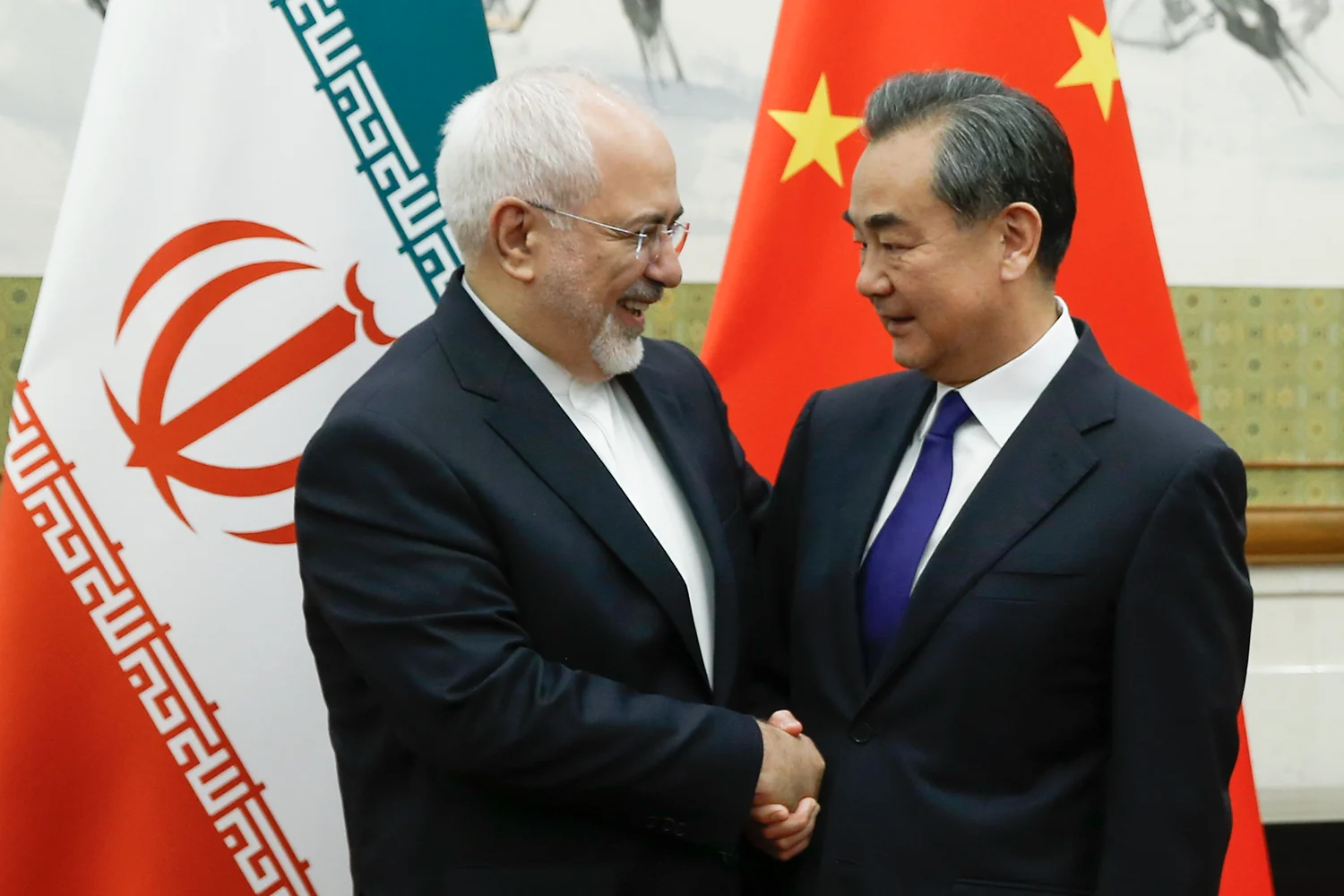
In the 48 hours that followed the Houthi attacks on Riyadh’s main international airport, China’s major media outlets largely focused on an Iranian offer to help mediate between the two warring parties. The offer was made during a phone call between the Iranian and Saudi foreign ministers on Oct. 11, just hours after Houthi missiles killed 13 people and injured dozens more.
China’s enthusiastic coverage of Iranian Foreign Minister Abbas Araghchi’s proposal comes on the back of an earlier report in September that China was privately pushing Iran to help mediate between Saudi Arabia and the Houthis. But it also speaks to why Beijing has little interest in pressuring Iran to end the war on Washington’s terms.
China supports the Middle East taking greater responsibility for its own security, and its desire to see a reduced U.S. role in the region has long been a shared goal in the Sino-Iranian relationship.
For instance, in one 1981 study, Chinese scholars recommended that Beijing actively strengthen Iran’s position in the Gulf to hobble U.S. access to the region’s oil while seeking a carve-out for Chinese oil interests. And throughout the 1980-88 Iran-Iraq War, senior Chinese officials regularly called for the withdrawal of U.S. forces from the Gulf and subsequently protested the U.S. intervention on Kuwait’s behalf when Iraq invaded the country in 1990.
More recently, China has toned down its calls for U.S. withdrawals from the region, but it still advocates for countries and regions to take responsibility for their own security interests in the multipolar world that China calls for. China’s Global Security Initiative is its most concrete expression of these interests.
Some might argue that Beijing’s significant economic interests in the region have made it beholden to U.S. security guarantees in recent years. It’s also true that China has always had a complicated relationship with Iran, often at arm’s length, and it seems unlikely that China would ever go to war on Iran’s behalf.
Perhaps this is why the Trump administration has so far misread Chinese interests. Perhaps most strikingly, U.S. President Donald Trump called on China to send ships to the Persian Gulf in March to assist in protecting commercial shipping lanes. China did not heed that call, but U.S. President Donald Trump may not have known that China was also the only permanent member of the U.N. Security Council not to send ships to protect sea-lanes during the Iran-Iraq War. This was despite the fact that China had joined the unanimous Security Council vote on Resolution 552 calling on Iran to cease attacks on neutral commerce in the Gulf. In other words, at a time when it was more critical of Iran’s conduct in war it still sought ways to avoid alienating Iran.
Yet it’s perfectly possible for China’s long-term goals and short-term conveniences to be true simultaneously. On the one hand, Beijing can advocate for a long-term shift toward regional self-reliance. On the other, it recognizes the advantages of U.S. security infrastructure for now.
Furthermore, China has often found its relationship with Iran to be very useful in dealing with the United States. For example, after Washington imposed arms embargoes over the Tiananmen Square massacre in 1989, China publicly acknowledged its nuclear cooperation programs with the Iranian government for the first time. Then, when Chinese leader Jiang Zemin and U.S. President Bill Clinton improved relations in the run-up to China’s accession to the World Trade Organization, Beijing agreed to cease nuclear cooperation with Iran in 1997 as a gesture of goodwill.
More cynically, one might take away from these examples that China’s willingness to pressure Iran has also depended on the U.S. ability to pressure China, but right now, it’s clear that Washington lacks both the leverage and the desire to pressure Beijing over Iran.
And so, China has no real incentive to lean on Iran to accept U.S. terms to end the war. Indeed, as soon as the headlines on Araghchi’s offer of support to Saudi Arabia subsided, Chinese media switched its focus back to Iran’s upper hand in negotiations with the United States, with headlines such as “Iran Says It Is Reviewing U.S. Proposals; Conditions for Reopening the Strait Remain Unchanged” and “Iran Claims a Significant Withdrawal of U.S. Naval Forces.”
China has also proved itself to be remarkably resilient in the face of lost oil imports. Lu Ruquan, a senior economist at China National Petroleum Corp., has argued that part of this stems from China’s success in developing 225 new oil and gas fields domestically between 2021 and 2025. But China also relies far less on oil than many countries. Where petroleum consists of 38 percent of total primary energy consumption in the United States, in China it’s closer to 18 percent.
Coal, meanwhile, still constitutes roughly 51 percent of China’s energy consumption and remains the bedrock of the country’s energy security. More than 90 percent of the coal China consumes is produced domestically, and over the past few years, the country’s domestically mined coal stocks have actually risen even as usage has dropped. China’s innovations and increasing use of renewable energy technologies have also played a significant role.
The Chinese economy can still be shaken by indirect effects of the oil crisis on pricing. But in the months leading up to the Iran war, China was struggling with deflation, not inflation. Increased price pressure therefore gives Beijing some relief from deflationary pressures, even if that scenario isn’t ideal.
Thus, it seems China’s greater diplomatic priority is mediating between Iran and the Gulf states for two main reasons. Firstly, it can help build China’s (and Iran’s) long-term interest in seeing a more regionally driven security architecture that relies less on the United States. But secondly, Beijing will be hoping that better relations between Iran and Gulf states may indirectly help improve China’s image among the Gulf countries that have grown frustrated by Beijing’s enabling of Iran’s war capabilities.
China’s leaders are likely not naive that this will happen soon or even involve Chinese weapons sales in the near term. Chinese scholar Niu Xinchun for one has observed that while Gulf states have started by buying weapons from more varied sources, those sources have so far not included China.
Nevertheless, as Trump prepares for the next round of meetings with Chinese President Xi Jinping in November, he should be mindful of the long-term interests that China is also seeking to advance in the Middle East. More to the point, Trump should expect little help from Xi in getting out of his quagmire in Iran.
