


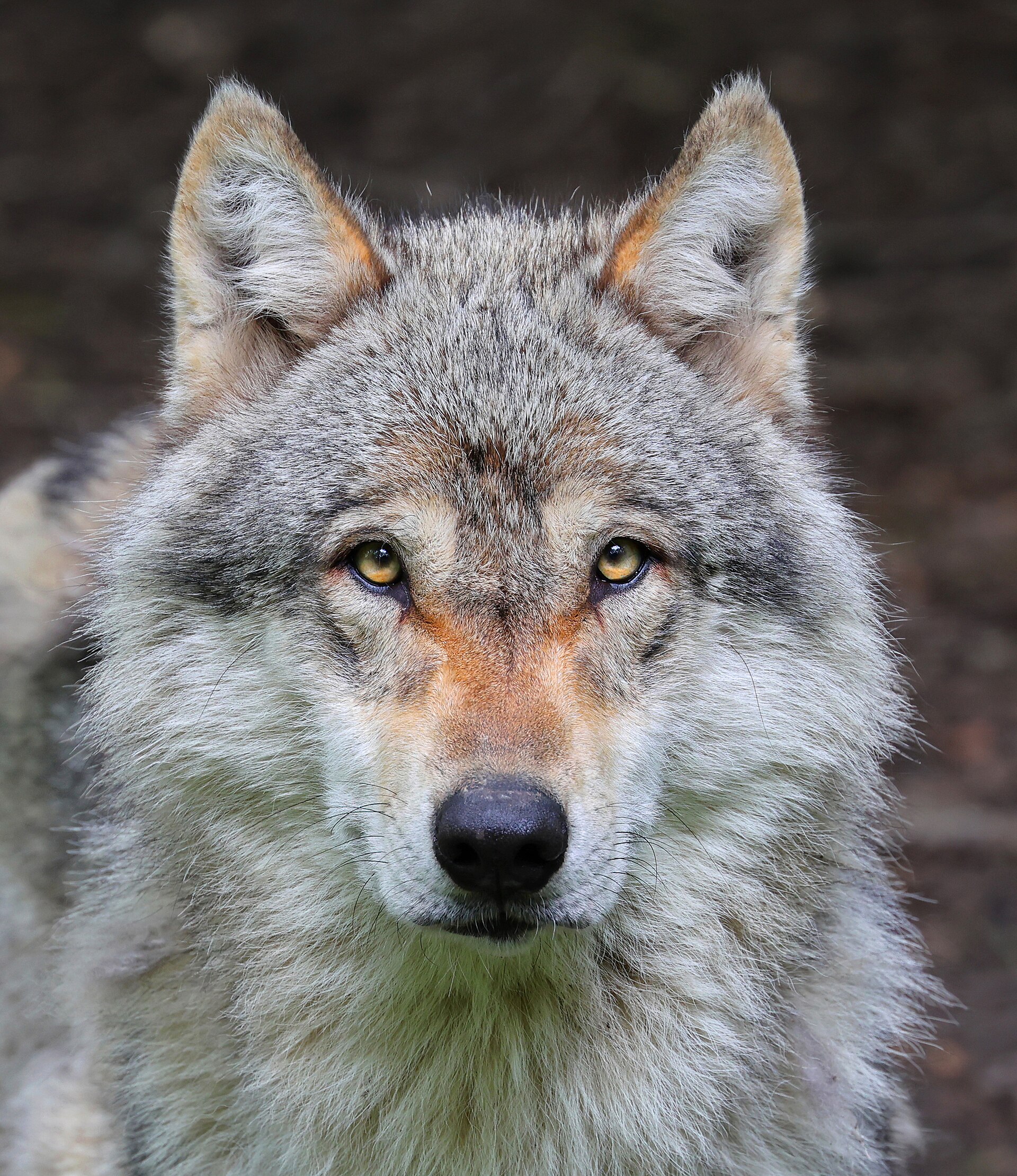
For a time during the 19th and 20th centuries, gray wolves were practically extinct across Western and Central Europe. Now, thanks to strict protection measures in countries across the region, their populations have risen over the past couple of decades — including a reported surge of 58% between 2012 and 2022.
On the one hand, this is a conservation success story. On the other, however, it amplifies long-standing sociocultural challenges, namely human-wildlife coexistence with farmers. Wolves sometimes prey on livestock, which can cause financial harm to farmers. Joining the Newscast this week to unpack these sociocultural challenges is social scientist Emu-Felicitas Ostermann-Miyashita, from the Tokyo University of Agriculture and Technology.
Ostermann-Miyashita has studied the conflict between humans and wolves specifically in Germany, and has published suggestions for sustainable wolf-livestock coexistence. However, she says the problems are much less polarized than European media may portray them.
“Some people hate wolves, some people love wolves, but that was also something which I wanted to look into whether that’s true or not,” she says. “And all of my studies which I’ve conducted so far on … the public perception or social side hint to a much more like gray [area regarding] public attitudes or public perception towards the species.”
The European Union has voted to loosen the protected status of Eurasian gray wolves (Canis lupus lupus), which critics say could endanger the progress that has been made in the animal’s recovery.
“Wolf populations have barely recovered after going extinct in most parts of Europe, and weakening their protection could jeopardise this fragile recovery,” WWF said in a statement.
Ostermann-Miyashita says she somewhat agrees, noting that some countries have only begun to see wolves. In contrast, others have had wolves for longer, so populations are more vulnerable in certain areas.
“I do agree to a certain extent … the population recovery status is very different from country to country,” she says.
“In general, I think the decision was made more on social pressure than … ecological scientific evidence at that point.”
That evidence, she says, needs to be properly gathered by studying various wildlife conflict mitigation methods in different contexts and shared by EU member states to properly assess what does or doesn’t work. Ultimately, she argues, a holistic system is needed where the public mindset shifts from thinking of the situation as “wolves vs. livestock” to “livestock with wolves.” But the solutions are not black and white, and require a combination of incentives for wolf presence, livestock protection, and further study of measures such as lethal control, where much of the debate currently stands.
“At the moment, I would say there’s not enough evidence to say whether lethal control can be effective or not, but from the existing data it rather suggests that it’s much more complex than we think it is,” she says.
Lethal control may also be more difficult than protection measures, she suggests, as “the effectiveness of reducing damage is definitely much higher by protection than by lethal control at the moment.”
Mike DiGirolamo is the host & producer for the Mongabay Newscast based in Sydney. Find him on LinkedIn and Bluesky.
Banner image: Eurasian wolf (Canis lupus lupus), Pescheray, France. Photo by Clément Bardot via Wikimedia Commons (CC BY-SA 4.0).
Ostermann‐Miyashita, E.-F., Kirkland, H., Eklund, A., Hare, D., Jansman, H. A. H., Kiffner, C., … König, H. J. (2025). Bridging the gap between science, policy and stakeholders: Towards sustainable wolf–livestock coexistence in human‐dominated landscapes. People and Nature, 8(7), 2018-2025. doi:10.1002/pan3.10786
Notice: Transcripts are machine and human generated and lightly edited for accuracy. They may contain errors.
Emu-Felicitas Ostermann-Miyashita: I think for too long, our science has definitely been dominated by Western values, and this is a movement now globally which is happening, and it is very valuable to have different ways of looking at nature. And if we are trying to sustain nature, like find a sustainable state of coexistence on this planet, I think it is really important to have the understanding of more like we as nature as whole than to see nature as something controllable or which has to bend to human needs.
Mike DiGirolamo: Welcome to the Mongabay Newscast. I’m your host, Mike DiGirolamo. Bring you weekly conversations with experts, authors, scientists and activists working on the front lines of conservation, shining a light on some of the most pressing issues facing our planet and holding people in power to account. This podcast is edited on Gadigal land. Today on the newscast, we speak with Emu-Felicitas Ostermann-Miyashita, an associate professor at Tokyo University of Agriculture and Technology, to discuss the rise in Europe’s gray wolf population over the past two decades. In the past decade alone, the population has risen by almost sixty percent, bringing the total to around twenty-one thousand five hundred as of 2022. On one hand, this is hailed as a conservation success story, and on the other, it has brought tension and sociocultural challenges. In this conversation, we unpack those challenges. Emu explains the rise in wolf population isn’t evenly distributed, with some nations having far more experience living with them than others. A key point of debate in Europe is how to deal with the human-wildlife conflict that occurs, notably with livestock farming, as wolves are sometimes known to kill livestock. The European Union has recently loosened wolves’ protected status, which has sparked concern. As a social scientist, Emu has studied sentiments about wolf populations in Germany, and she offers suggestions for what governments should study and address when considering approaches to human-wildlife conflict. Unfortunately, there are few black and white answers because the problem is highly context-dependent. However, a few key points stand out. Emu argues that we need a social mindset shift from thinking about the situation as wolves versus livestock to livestock with wolves, emphasizing that protecting the cultural traditions of European farmers is important, but so is finding a sustainable way to live with wolves. Another point she raises, which I find many guests on this show share, is that adopting a less Westernized or Eurocentric way of thinking about science may be needed to address the ecological challenges we face holistically, rather than thinking about humans as being above nature to recognizing that we are actually a part of it
Emu, thank you for joining us today. Welcome to the Mongabay Newscast. It’s great to have you with us.
Emu: Yeah, thank you for having me.
Mike: So first, can you sort of explain to our audience the context of wolf populations in Europe when they were at their lowest and then when they began to rise and why? Because they’ve risen by about, I believe, fifty-eight percent in the ten years between twenty twelve and twenty twenty-two, and that seems like a, a pretty sharp climb. So what’s behind that?
Emu: Yeah. So first of all, to understand the situation of wolves in Europe as a whole, we have to zoom into different parts of Europe. So in some countries, wolves population have persisted. So one of the reasons wolves have declined is due to human pressure. So from the Middle Ages on until the mid-nineteenth century, eighteenth, twentieth century, the wolf population has been exterminated effectively until protection statuses, protection laws such as the Berlin Conventions came into place. There has been a steady decline all over Europe, and in some countries, wolves population have persisted, but in others… For example, my main research field was Germany. Wolves have disappeared for centuries, more than a hundred years actually. And then due to the protection regulations and agreements in the late nineteen seventies and nineteen eighties, there has been a lot of effort to protect wolf populations, and that has led to return– the return of wolves. And in most central European countries where the wolf had been exterminated for a certain period of time, they have started returning from neighboring countries back into these countries. So for example, in the case of Germany, the first successful reproduction within the country was in the year two thousand. So in Germany, there have been wolves now for the last twenty-five, twenty-six years since their extermination.
Mike: So as you’ve begun to explain, you outlined that this, this population increase, it isn’t uniform. And in some countries like Germany, we’ve, we’ve seen that population increase for the past 20 years, while in other nations like Netherlands, I believe that we’re only starting to see them. So what kind of complications does this create?
Emu: Yes, that’s a very good question. So while first, also in Germany, when the wolf first returned, it was received as a conservation success or a conservation milestone leading to, for example, the increase of biodiversity. The landscape has changed in these in the century or a couple of decades while these wolves weren’t in these landscapes, so it became increasingly human populated. And one big thing which is a center of the conflict between wolves is livestock predation. And while in the countries where there has been persistent wolf presence, there have been protection measures which has been passed down through generations. These protection measures or these practices, these knowledges have been lost in the countries where wolves have been exterminated because there was no need, and that has now led to increased conflict because the livestock which are like shepherded or in open landscape, in prairie landscapes, they’re not properly protected against large carnivores. So this is now– this is one of the main reasons why conflicts has increased in the countries where wolves have resumed recently.
Mike: I think it’s important here to outline what you think are the positive aspects of this wolf population increase. What would your view be on that?
Emu: It– This is actually one of the most difficult questions, to be honest. Also, just to explain, I’m a social scientist, and my focus is not on ecology. That being said, I think it is now at the point where in many countries, wolves are increasing, this question is asked more often, and one of the things which is kind of positioned more or less as a myth at the moment is like the Yellowstone effect, so that people expect that there would be a trophic cascade effect, so that in a lot of European countries, for example, the deer population or herbivore populations in general have increased, and that has led to, like, negative eff-effects on forests because these herbivores eat the young trees. And for a very long time, the narrative has been that wolves could halt this by predating on these deer. But effectively now, also in countries where wolf has returned for a couple of decades, this effect is really hard to see because this trophic cascade effect has to be in a ecosystem which is intact.So one of the reasons we– it– where it is really difficult to see these effects is because Europe is so human, densely human populated, like the human effects on the general ecosystem is larger than like wolves can have. This is not based on my research, but there are also other research which suggests that at least wolf presence, so this is known as the effect landscape of fear, can affect how herbivores behave. So in some cases, they also lead to reduce of like agricultural crop loss because wolves prefer also open landscapes so that they can keep out herbivores from those landscapes. But th-these effects are very limited still, and they have to be studied. So I think it is really difficult to kind of find or prove an ecological effect of positive effect of wolves at this stage. But it’s more also about what it means to, like, welcome back a species. So, like the value of the species itself or having the species in this landscape. So I think it has to be balanced to look at both the negative effects or the conflicts we have and what could be like the more long-term meaning of having these species back.
Mike: So the European Union voted in 2024 to loosen the protected status of European wolves, and farmers appeared to celebrate this move. Do you think this is a good thing? If not, why?
Emu: This is also, again, quite a difficult question, to be honest, and the context has to be understood when we talk about this decision. So one thing is that it is true that wolf populations have been increasing all over Europe and that we were also, or we are at a turning point of thinking about what should be the future, right? So for a very long time, from the 19… So from when the Bern Convention was set and when the wolf was put under strict protection, now for forty years at least, the main focus was to protect wolves and to increase the population number. And in a lot of countries, this has been successful, so this in itself has been a conservation success, definitely. On the other hand, this wolf has had a special status compared to also other species, and then we have to enter the time of discussion when do they have to change the management of these species when the number increases above the threshold of viable population. And the viable population is a little bit technical, and here is where a lot of discussion has been found for the decision in 2024 that especially from the agricultural lobbying side, there have been understanding of the number, population number is that the viable population number has been reached by a lot of ecological scientists who have been working on wolves for decades say it’s just the minimum number to kind of keep the population going, and it’s not a viable population number where, like, the genetic diversity can be persistent. So there, there are pros and cons for this assertion, definitely. And while I think at some point we have to reach the decision of how to adjust wildlife management in general from strict protection to also managing by population control, overall, in general, I think the decision was made more on social pressure than scientific, a bit ecological scientific evidence at that point.
Mike: So WWF said in a statement, “Wolf populations have barely recovered after going extinct in most parts of Europe, and weakening their protection could jeopardize this fragile recovery.” Do you agree or disagree with that statement?
Emu: I do agree to a certain extent, and as, as we have discussed in the beginning of this podcast, the population recovery status is very different from country to country. So there are specific regions where the population status has increased to a certain level, while even within Germany now, for example, the northeastern states have one of the highest wolf population densities on the planet. While in other states it has not yet reached that stage. And I think very important to understand at this point and why decisions concerning the wolf is so difficult is that the wolf is definitely a special species in the sense that it has had a very long-lasting negative image historically, and it also has experienced extermination. And so it is very difficult to discuss the wolf in the same way as we discuss any other species because of this very negative image the wolf has had, and especially also like in European folklore and historically. So I do think the worry is real that now due to the downlisting of the protection status, a lot of the decision-making is now on the national or regional level, and it’s a very political decision how people interpret the downlisting of the species. I mean, the wolf is still protected, but at the end of the day, allowing the lowering of the protection status has given a lot more decision to these lower administrative levels, which can be much more strongly influenced and which can lead to, for example, hunting of wolves or culling of wolves in some, some areas. And I do understand the worry of people who have been kind of concerned with the protection for the last couple of decades. Yeah.
Mike: Your paper was written before this decision was made, and you wrote, “Should this EU proposal be accepted by member states, rigorous monitoring and co-designed research approaches are needed to evaluate the efficacy, social acceptance, and sustainability of lethal control to balance the objectives of protecting both livestock and wolves.” So since then, have you seen that process begin to take shape?
Emu: So there has been research, uh, conducted in many countries on the social side so far, but the legal implication of the protection status change actually only started this year. So while there are projects which are monitoring these changes, the effects or the results have not been reached yet at this point, so we can’t, cannot really see the effects yet. But I think, uh, for, of this question, the most important point is that there has been a long-term discussion about how effective lethal control is to kind of reduce damage from wolves, mainly on livestock. And there have been varying results from those saying there are some kind of effects to those saying it would have a much more negative effect because wolves are social animals, and, like, by lethally removing, for example, the wrong individual, it could kind of jeopardize the social construct and lead to a lot of young, inexperienced wolves who then choose livestock, which is, in general, at the moment, still the easier prey. So one of the big reasons why there’s a lot of livestock predation is that without protection, livestocks are one of the most easy prey compared to wild, like, deers, which do run away, for example, when hunted. So I think while there are pros and cons, so people who oppose and people who welcome this down-listing of this status, it’s definitely scientifically a chance to kind of gather data to examine whether, like, lethal control has a positive effect to reduce damages or whether it just is a short-term solution and doesn’t really have the effect which we are hoping for.
Mike: So you wrote that more holistic approaches are necessary, reframing the relationship from wolves versus livestock to livestock with wolves. Tell me more about what that looks like.
Emu: Yeah. So this is something which I– was probably easy for me to write on paper, while this is definitely something which is a very difficult goal to reach. So looking back to the point when wolves were abundant in the landscape, it has always been livestock with wolves because people had no other choice. And that’s why in the countries where there has been a persistent wolf populations without them being exterminated in a certain time point, p-point of time, these protection measures are intact. So like fencing or putting the sheep into enclosures during the evening, so to prevent livestock predation, these practices have been in place. And it’s more about thinking if these large carnivores, which are definitely an important part of our ecosystems, are to return to our landscapes, then we kind of have to adapt, like the livestock keeping to their presence. And this kind of puts all the responsibility on the livestock keeper, so that’s what we also wanted to make sure in the paper that’s not what we are suggesting. But if we want to protect like stock keeping, which is also a traditional and culturally important practice in a lot of regions in Europe, there has to be governmental support for them to be able to equip themselves, so financial support, technical support, expertise to protect themselves against these large carnivores. So I think it has to be a holistic sys– as a system, we have to tackle this issue to kind of realize the coexistence of wolves and humans basically.
Mike: You also write that in Europe there is an increasing tension between those who want to preserve traditional cultural landscapes and practices, which I’m, I’m guessing you are referring to as, like, farming, and the growing rewilding movement, which sees conservation opportunities in land abandonment. So what does this tension look like, and how do we alleviate it from your point of view?
Emu: Yeah. So I think this is also, like, a larger topic definitely. For the cultural landscape or traditional landscapes, one of the examples is shepherding. Right. And for example, in Germany, shepherding is not just shepherding, but it is seen as, like, landscape management, and landscape management in a sense that shepherding has these open…Like, the effect of shepherding is that these open landscapes, which are very specific to central European landscapes, and this also implies that they do carry their own ecological functions. So I think the general image would be that wilderness or wild- wilderness or forests would be, like, the most biodiverse or state, but the most biodiverse state or to, to have a large biodiversity is to have also a diverse landscape, and this is what is, what’s the value of these cultural landscapes, like, with human effects. I think another one which is quite im- famous is, like, the Satoyama landscapes in Japan, which is also one of my research fields, and these are landscapes between, like, mountain edges and, like, the agricultural villages. And these special landscapes or ecosystems have species which can only survive in this landscape, and it is also the same for, for the grazing landscapes in Europe through shepherding. So I think this is the side of the people who see this also as a cultural connection, a cultural connection to the landscapes they have grown up, they have known through their ancestors. And from the rewilding side, I think this is also a phenomenon in some countries which are also highly developed now, that a lot of the population kind of centers around the cities, leading to depopulation on the countryside, and then thinking of how to, whether to use those landscapes in a specific way, so in a human-controlled way, or rather to kind of leave them to wilderness or rewilding. Getting back landscapes to what has been wild or what has been perceived wild is also a movement. So I also do have to say I’m not a specialist on rewilding, but these are two different approaches to changing landscapes, how to manage changing landscapes.
Mike: And I guess, do you have any suggestions for what could be done to help alleviate this tension?
Emu: I think to a certain degree it is natural that there is some tension and not everybody can agree on everything, especially in a democracy. So I think it is much more left to the regions or the countries which have these tensions or which have these different interest groups to kind of manage and see how in a whole to manage these landscapes based on society. So which I’m– what I mean is that in some countries, the right decision could be to protect and keep those cultural landscapes, while in other countries, if that’s not a viable option, rewilding could also be a decision if that’s what the social norm would like to. So I think there’s nothing– there’s not a really a clear answer to what is right or wrong, but it’s more about where is the emphasis and what do the people living in these landscape, how do they want to shape their landscape in the future?
Mike: Hello, listeners, and thank you for tuning in. As I always like to mention to you, Mongabay is a nonprofit news organization, and we rely on the funding from listeners and readers like you, and this podcast relies on the generosity of your support. So if you’d like to support the podcast, go to patreon.com/mongabay, and there you can pledge an amount to become a monthly sponsor of the show. Even a dollar per month makes a big difference to us. If you want to read the publication referred to in this episode by Emu Felicitas Ostermann Miyashita, you can find the link in the show notes.
Mike: So you say that science and evidence-based management can help in three areas, collecting and sharing ecological data, collaborate assessment of management approaches, and addressing the human dimensions of wolf livestock interaction. I would like to take these one by one if we could. Yes. Can we start with the first one, collecting and sharing ecological data? What are your suggestions here?
Emu: Yeah. So again, I’m not a ecological scientist, so this is not my– my, my focus would be the third topics. But suggestion would be definitely, as we have already suggested in the, the paper, to share these monitoring data across borders, and that’s what we also have tried in this paper. And the reason for that is unless a country is an island, the, the, all the countries are connected. And while there are human borders, for a lot of species, these borders are irrelevant. So this is also what makes cross-border or cross-country management challenging, especially in Europe, which is like a huge land mass. And what we also have– what has been quite challenging for us writing this paper is to kind of gather information which is standardized. So it is not that there is no monitor… So in some countries, monitoring is done better or more systematically in than in other countries, or more granular, I would say, not better, more granular. But how they get the data is not standardized. So even looking at the number, so on, on, on our paper you might have seen like the estimated population number at that point and how many of them have been legally controlled, lethally controlled. It was really difficult to have that one figure because the monitoring seasons varied also from country to country. And then to kind of see patterns not only in a like micro scale or country-based scale, but more in a larger scale to understand how is the entire population moving, it is, it was quite challenging. And it is not that these efforts are not, not done, as we have also mentioned several examples in our paper. There have been a lot of scientific projects which have this as the goal. Also, the IUCN Specialist Group on large carnivores, they also report these overall numbers, which is a very valuable information across Europe. But to be able to effectively manage or understand the status quo of these species, it’s much more important to kind of share this data and also try to standardize how we kind of measure or monitor their presence.
Mike: And so the second one is collaborate assessment of management approaches. Please explain.
Emu: So this is– we, we also have mentioned, so there are four, like, general or three general approaches to large carnivore management. First one is protection, so protecting livestock against large carnivores, as we mentioned in the beginning. Then we also have compensation or financial measures. There’s also another measure called payment for presence, so paying people in the landscape where there are large carnivores for their presence. So it’s more like an incentive-based management approach than compensation. And then lethal control. So these different practices are done in different countries, especially also because the, the legislation on the European level is one thing, but how they are practiced on the national level is another thing. And what is possible due to, like, the legal or economical or cultural context is very different from country to country. So it is very important that in countries which now have experience, for example, like in Germany, last twenty years, the return and increase of an species to share their experience with which management measure worked and which didn’t with other countries like the Netherlands, as you mentioned, or Belgium, which are just about or which have experienced the return of wolves in very recent years to kind of prepare other countries which are in the process of approaching the recolonization of wolves to be able to learn from the lessons in other countries. So not that everybody kind of has to go through the same process to adapt to the species.
Mike: And when I read this section, you know, there was a lot of nuance involved in terms of, especially with incentives for keeping species and lethal control, and it, it felt hard to pin down a, a one-size-fits-all answer, obviously. Can you tease apart these nuances for our audiences and what you think are the pros and cons of these management approaches?
Emu: So for starting with the protection measure, effective protection can be very different based on the topography and also on how livestocks are held. So when livestocks are kept in a certain area, the fencing would be, or only around that area. But if it’s like a moving livestock keeping situation like shepherding, it is a lot of time and effort for shepherds to kind of have these fences every time when they move with their flock through the landscape. And the other thing is in mountainous areas, for example, it is possible for wolves to kind of get across the fence more easier than flat areas, which is easy to imagine. So what is effective and what is feasible is very dependent on the context of the situation where these livestocks are kept. And then we also have the financial factor, which is probably one of the largest for a lot of shepherds because shepherds or livestock keepers, because in many situations, if Wolves strike, or if wolves attack livestock, they often not only attack one, but se-several, so the damage can be detrimental for individual livestock farmers. But in a lot of countries, to be able to, for example, get funding or get support for protection measures, you have to have experienced one attack at least, which is a little bit weird, in my opinion, but, uh, which kind of, uh, leads to the situation that for a lot of people, putting up, like, effective protection measures can be very difficult financially also and labor-intensive effectively. Then we also have the compensation, which is so that for payment for if there has been damage by wolves. And this, a large criticism, especially in Germany, which was one of my main research fields, is that the bureaucratic burden to kind of get this compensation was so large for shepherds or livestock farmers that they would often just give up in the process because it was so difficult and took so much energy. So I think it’s a lot of also structural changes which have to happen to make these options actually viable and not just, like, options on paper. And last but not least, we already have talked a couple time about lethal control. But for lethal control, I think there’s also a combination of missing data to actually be able to kind of evaluate if, like, for example, long-term or, like, a strategic culling or lethal control would have, like, the wished effect of reduced damages. I think that’s definitely the goal of lethal control is met or not is not existing at the moment. And a lot of, uh, focus studies done in different areas in specific conditions rather hint to or suggest that lethal control often has the opposite effect, so that maybe on a short temporal scale it reduces damages because there are, there is not a wolf pack and the, the wolf pack is ex-exterminated in region, but then it’s until another wolf pack kind of fills that gap, then it starts, the damages starts again. So at the moment, I would say there’s not e-enough evidence to say whether lethal c-control can be effective or not, but from the existing data, it rather suggests that it’s much more complex than we think it is and that it is rather difficult compared, for example, to there’s also a paper we cited there that compared to, for example, protection measures, the effectiveness of reducing damage is definitely much higher by protection than by lethal control at the moment.
Mike: And then so the last one, addressing the human dimensions of wolf-livestock interaction, what’s this one about?
Emu: So this, this is the one which is more or less my main focus. So I try to understand individuals and also society, cultural impacts on how people perceive How people find perceived wildlife, in this case wolves, and how acceptable they find, for example, their presence. So I’ve written a couple of papers on how people think about wolves, for example, and generally overall it tends to be more positive while compared to other species, for example, I had a paper comparing to bison and moose, which are herbivores. There was definitely a more negative connotation to wolves due to, for example, experienced damage, but also the image of the species, definitely. And then more recently, I also wrote a paper on whether people kind of agree or disagree to the lethal control of large carnivores, including wolves. Also, to understand whether these decisions are based or made based on like the societal pressure, which is claims of the decision-makers, or whether there’s kind of a discrepancy between these, um, um, more general public opinions. And another thing is that media, the portrayal of media definitely in Europe is like high polarization. Some people hate wolves, some people love wolves. But that was also something which I wanted to look into, whether that’s true or not. And all of my studies, which I’ve conducted so far on like the public perception or social side, hint to a much more like gray, wide public attitudes or public perception towards the species. So they’re very… It’s not as polarized as people think. And on the lethal control paper, we also looked at different conditions. So when would people find lethal control acceptable and not so when, for example, a person was harmed by wolves or when livestock was harmed. And it was really interesting to see that people had certain thresholds where they thought, okay, if a livestock or, for example, a pet animal is attacked by a large carnivore, that for me personally is not reason enough to le- lethally control the individual. But if a person or a human is get damaged or harmed by a species, that would be a point for me to kind of say, “Okay, we have to lethally control the wolf or the individual.” So all my studies suggest that it’s much more nuanced when people support lethal control or not. And overall, in general, the population, we had a study on the German population, the tendency was to not support lethal control. So then we also again have suggestions that might not be such a black-and-white picture and why there’s a lot of claim that these, the protection status change was based on social resonance or social perception that also might not really link to the actual picture which we are seeing at the moment.
Mike: That’s interesting. So, so what you’re saying is like the, the policy measures that are being implemented May not actually be what the public truly feels or wants
Emu: W- yes, or maybe a partial, specific partial group of the public which is highlighted. So yeah.
Mike: And so I guess from all of that research you’ve done, are there any key takeaways that you would want the public, our listeners, or anyone listening to understand?
Emu: Yeah. So I think one, one message or one thing which would be nice from my side would be to… It would be nice if people would be interested in the topic and also would have means to inform themselves. So that’s why I think science communication is very important, is that science is not just publishing papers, but has material out there. And there are a lot of fantastic materials from a lot of scientific institutions, universities explaining science in, like, much more normal lingo, which is not too specific, and which is also written in an interesting way to kind of look for these materials and maybe inform themselves if they’re interested in these topics. And another thing is there are– and I, I love that this podcast is kind of looking into different aspects, but there are a lot of– sadly, there are a lot of kind of media which portray these things very one-sidedly i- in either way, in either direction, like, so to be careful not to just consume, like, these one-sided and often very emotional messaging, to be able to kind of select and listen to various different viewpoints and then think about what is the meaning of having these wildlife species back for me or for us or the society. I think that would definitely be the first step of being, like, part of the process.
Mike: And is there anything else about this situation or this story that we haven’t discussed that you would wanna highlight?
Emu: I think we have done a really good job so far.
Mike: All right. Well, I guess on that note, you know, you have mentioned that the media portrayal of wolves is often biased with the tendency to cast them as suspects in attacks. Which I believe you’re saying is, is often negative. And, and you say that in Europe it’s quite polarized. What do you think the media could do to work on to better their portrayal of wolves?
Emu: I think, like, what we’ve tried to do today would be a really good example. So while saying media often portrays, like, portrays wolves as culprits, there’s also, like, the counter movement which tries to overemphasize positive effects wolves can have to a degree that it’s kind of perceived as not, also not scientifically based or myths as… Fo- for example, I, I mentioned at the beginning about the Yellowstone effect or trophic cascade which people, or wh- which for a long time was kind of the one num- go to ecological reason when you ask about positive effects of wolves and which is now put more and more put into question whether that’s, like, a causal effect or a correlation actually.
Mike: Mm-hmm.
Emu: So I think while it is also really important not to have only the negative side, I think to have a more realistic view on it and to discuss wolves or large carnivores in general from different perspectives without kind of making a fairy tale out of it, if you know what I mean. So not to overemphasize the positiveness to extent where it also becomes not true. We definitely also have to kind of counter misinformation if wolves haven’t done the damage, definitely, but also to be, not to be illusion that these are, like, cuddly animals, right? They do have a certain risk while, for example, to other large carnivores, wolves have a relatively or extremely low potential, for example, to attack humans, while that is one of the images we have due to folk or, or, like, the historical image. They do pose a certain risk, for example, for livestock or also for pets, right? So to be- Mm-hmm … aware of the risk and to, to kind of have a realistic image which does not kind of push the animal into one direction from a human-centered view, that would be very important, I think.
Mike: I’ve done a lot of interviews on this show examining different contexts in different nations where countries live with large carnivores, like for instance, India living with tigers. I think it’s fair to describe it as a way of life where the protection of those species is considered extremely important to the society and to the government in general. Obviously, there’s conflicts and people actually do get killed, but there seems to be more of a cultural acceptance of the fact that this is a thing we live with and that we have to live with. And so I’m, I guess I’m wondering if you think that there are any lessons that Europe could take from other nations that live with large carnivores
Emu: Yes, a very good point, and this is also specifically very interesting question for me because now I’m also doing research in Japan, and one of my main research topic is bear. And you also might have heard that the bear problem or bear issue is quite prevalent now in Japan, not as much as large carnivores in India, for example. It’s a very different dimension. But still, the fatality rate last year in Japan was 13, so 13 people killed by bears and over 200, like, attacked by bears. And as you mentioned, it’s a very different threat level, right? And I think it also gets very difficult when humans’ lives are at play because you can’t really compensate human lives, although there are measures in some countries how they deal with it. It’s not like livestock, right? You cannot pay for somebody’s loss. So I think it is very difficult when human lives come into play. But a very important point you mentioned is, like, the cultural context, and I think that is something which is very deep-rooted, and it’s more about the human relationship to nature or how people view humans, whether people view humans as standing above nature, which is, I think, more the Eurocentric view, or whether people see humans as part of the nature and kind of understand, have understanding of the risk, as you mentioned, and acceptance towards a certain type of risk that not only, like, human safety or the human is central to a decision. And I think this is very cultural, and it would be th- that’s also one of the research focus I have at the moment because I think there’s a lot you can learn from these different perspectives. It is also called now more often referred to as, like, worldview, how people or culture or societies view nature, and through that lens also wildlife. And I think research into these non-Western, like, thinking systems and also value systems are very important to kind of understand or look at alternatives of how to build relationship with nature or how to manage or maybe also not manage wildlife in certain situations. So I think this is a very interesting topic and also central to my research now.
Mike: Yeah, I mean, I, I guess the question I’m wondering is that do you think it is essential in a way to solving any kind of problems, or is that a question you’re examining?
Emu: Yes. Yes, I think so. I think for too long, or science has definitely been dominated by Western values, and I think it would be very– and this is a movement now globally which is happening, and it is very valuable to have different ways of looking at nature. And if we are trying to sustain nature or s- be, like, find a sustainable state of coexistence on this planet, I think it is really important to have the understanding of more like we as nature as whole than to see nature as something controllable or which has to bend to human needs. So now this is, like, my personal opinion also a little bit. But I think it is definitely, there’s a lot you can learn from different perspectives or different appreciations of nature. Yes.
Mike: Well, Emu, thank you so much for joining me today. I enjoyed this discussion, and best of luck with your research.
Emu: Thank you. Me too. I, I thought it was a really nice discussion.
Mike: As always, if you’re enjoying “The Mongabay Newscast” and you wanna help us out, we encourage you to spread the word about the work we’re doing by telling a friend and leaving a review. Word of mouth is one of the best ways to help expand our reach. But as I mentioned before, you can support us by becoming a monthly sponsor of the show by going to our Patreon page at patreon.com/mongabay. I also encourage you to read our news and inspiration from Nature’s Frontline at mongabay.com, or you can follow us on social media. Find Mongabay on LinkedIn at Mongabay News and on Instagram, Threads, BlueSky, Mastodon, and Facebook, where our handle is @mongabay, or on YouTube at MongabayTV. Thank you as always for listening.
