


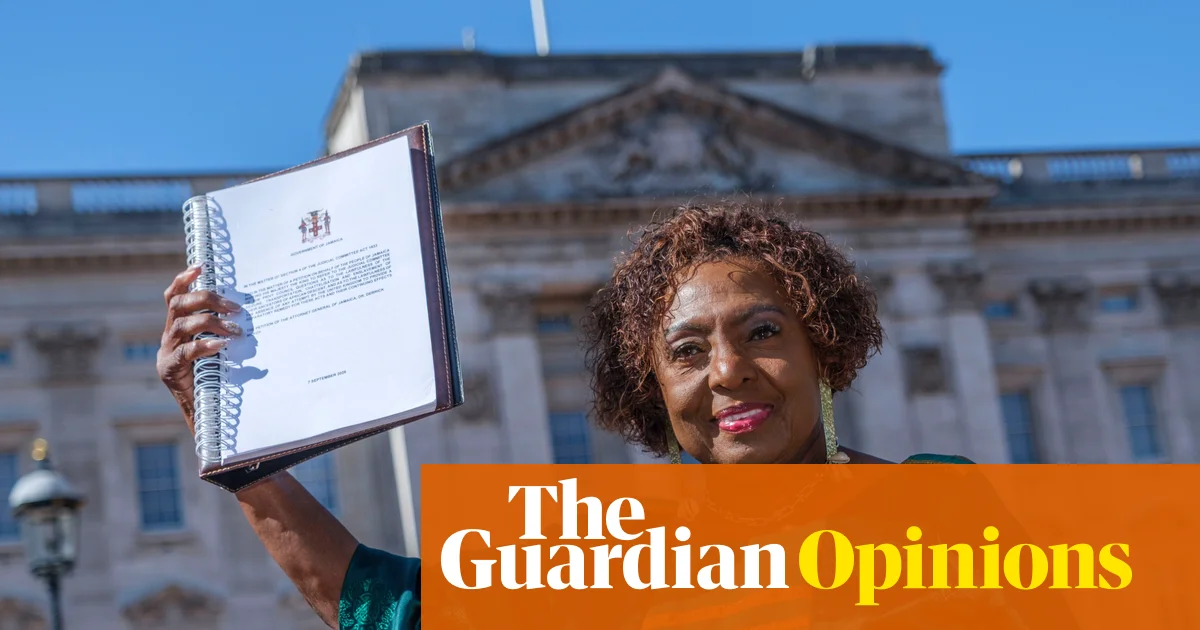
Departing from his predecessors’ stances, the UK prime minister, Andy Burnham, surprised us all when he stated he was open to listening to calls for an apology for the UK’s role in centuries of transatlantic enslavement. King Charles is expected to speak with “unflinching honesty” and “sincere sorrow” about the UK’s role in the transatlantic slave trade at the Commonwealth heads of government meeting in Antigua and Barbuda today. Burnham was quick to add that financial reparations were off the table. But he was in favour of discussions about debt restructuring – one of the key concerns of the Caribbean community (Caricom) and the African Union. The opposition, led by Kemi Badenoch, argued that apologies were a distraction.
Beyond political bickering and point-scoring lies a deeper question. Why does Britain struggle to fully understand its colonial past and to grapple with the negative impact of its legacies? One the one hand, the country celebrates its historical conquests as far back as the Battle of Hastings and applauds the wealth that derived from the products of colonisation, such as cotton. On the other, it refuses to accept that harm was caused to populations whose lands it forcefully occupied – and that the trafficking of African captives has changed how we think and what we assume about different racial groups to this day.
The king and the PM clearly understand that Caribbean countries, and the Commonwealth as a whole, are among Britain’s most important relationships. The group of 56 Commonwealth countries represents about a third of the world’s population with more than 2.7 billion people. Because of their historical links to Britain, these countries play an important role in the UK’s global influence and soft power. Refusing to apologise and work together towards a reparatory justice plan is a diplomatic and political mistake. In the long run, it also has a knock-on effect on trading partnerships, as Burnham seems to acknowledge.
The question of repair continues to be framed along the lines of financial compensation. That framing fails to consider how the past is weighing on the present and future of British citizens. Repairing includes building a society that is honest about its traumas and ready to work towards reconciliation. In these times of recession, drawing on existing resources could help address points raised by Caricom and the African Union. For example, the return of cultural heritage could be facilitated by having a discussion in parliament about the British Museum Act 1963 and the National Heritage Act 1983, which prevent the British Museum, Natural History Museum, V&A and Science Museum from permanently returning certain objects from their collections.
A fair reparatory justice plan would help tackle issues such as education, climate justice, health inequality and so on. Perhaps the PM has been paying attention to Caricom’s focus on green energy and climate resilience. His pledge of £40m to Caribbean projects is a very significant step towards mending fences and furthering dialogue on climate justice. Education could also be an important part of the plan precisely because part of the British public doesn’t understand why apologies are required, let alone why taxpayers should pay the bill for financial reparations at a time of national and even global economic recession. Lack of knowledge – of how the trafficking of African captives for more than 300 years helped shape British institutions such as parliament, the Church of England, universities, the banking system, royal societies and so on – has led many to wonder why they should apologise for their ancestors.
Transatlantic enslavement centuries ago relied on the labour of enslaved Africans, and it made Britain very wealthy. The institution of slavery classified populations based on a racist hierarchy. It developed the so-called scientific racism of the 19th century, which led to the 21st-century eugenicists’ stances that still influence current debate about belonging and identity.
Tracie Jolliff, an organisational development consultant who specialises in dismantling systemic racism, puts it like this: “There appears to be a collective amnesia when it comes to harms towards people with black skins as compared to other atrocities that have been well documented. Racism still shapes the way the descendants of those same African people are treated today.”
For Jolliff, the ideas that informed and perpetuated transatlantic enslavement never went away; they simply morphed into more subtle, but still life-limiting structural racism. The evidence and outcomes of that can be seen in the ways that British citizens who are black are disadvantaged in housing, health, education and the criminal justice system. Similarly, Marvin Rees, a former mayor of Bristol who is involved with the Repair Campaign, says, “Individuals today are not responsible for their ancestors’ wrongdoings. It is, however, important to make a link between individuals and institutions. Individuals inherited institutions and institutions bestowed advantages.”
after newsletter promotion
Arguments that position reparations as a subject of the distant past are overlooking the facts. UK taxpayers have been paying back the colossal sum that compensated the owners of enslaved people after the Abolition Act 1833 – a bill that was only repaid in full in 2015. It’s not British people who should apologise, but the British government that used taxpayers’ money to compensate those who profited from trading in people.
Because of the legacies of this trade, many descendants of those responsible for transatlantic enslavement are still part of the financial elite of this world. Some of them, like the Heirs of Slavery, are attempting to engage with the question. The UK government should work with families whose ancestors received compensation in 1837 and who are ready to work towards a restorative justice plan – and with institutions such as the Church of England, Lloyd’s of London and universities that have started to do the work. Combining resources is the way forward now.
Black communities who have their life chances negatively affected by systemic racism were also paying the bill for the owners of their ancestors until 2015. So, if the debt to the slavers can endure without question into this century, surely repair for the legacies of ongoing systemic injustices should be dealt with on similar terms.
-
Olivette Otele is a historian and distinguished research professor of the legacies and memory of slavery at Soas University of London
-
Do you have an opinion on the issues raised in this article? If you would like to submit a response of up to 300 words by email to be considered for publication in our letters section, please click here.
