


Israel’s election results remain unclear, but whether current Prime Minister Benjamin Netanyahu again emerges triumphant or a new government, perhaps led by Gadi Eisenkot, takes power, the country is at a crossroads. Although Israel has demonstrated its military power throughout the Middle East, it is trapped in endless conflict on multiple fronts, overstretched at home, and damaging its long-term relationship with the United States.
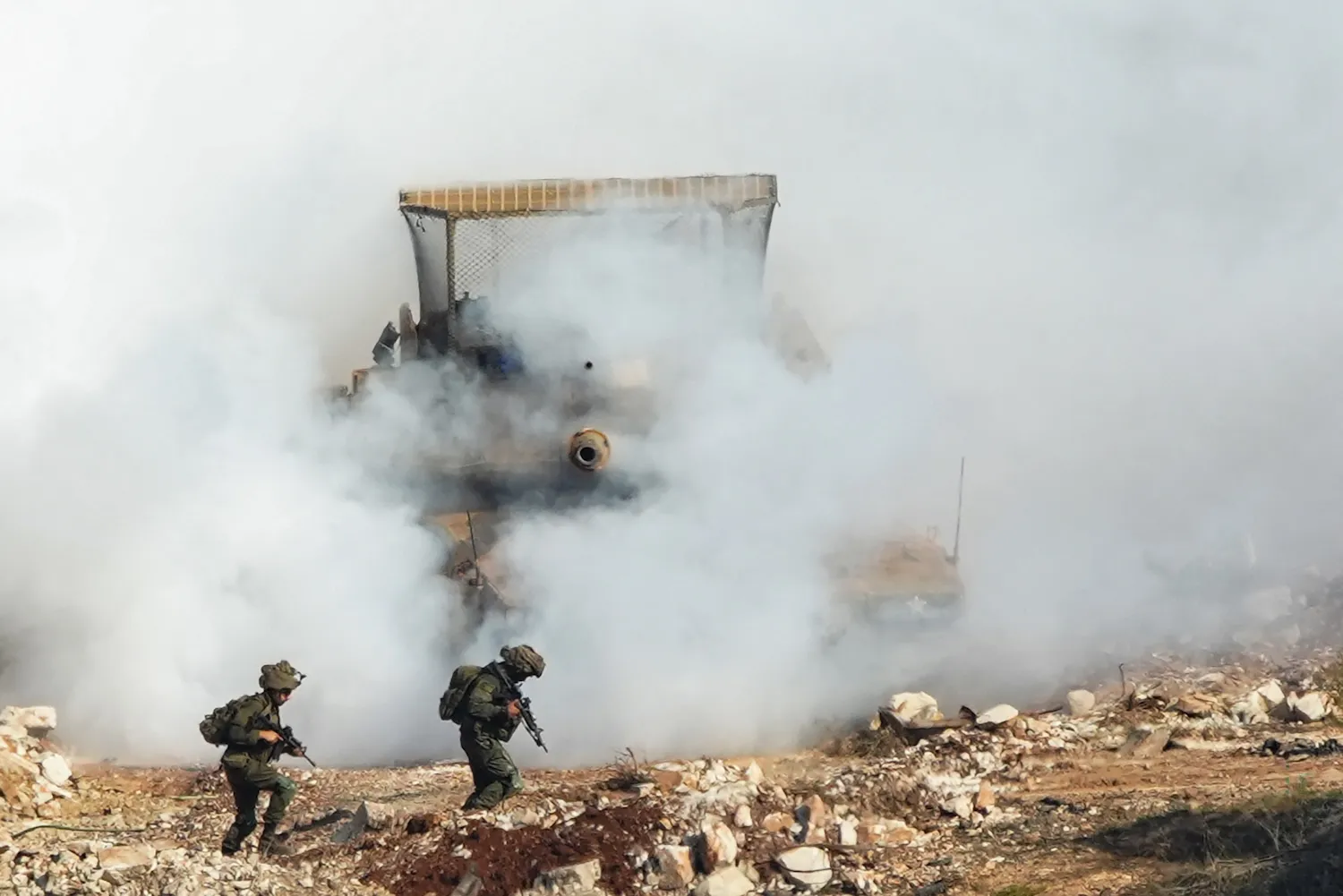
In the three years since Oct. 7, 2023, when a Hamas terrorist attack killed almost 1,200 Israelis, Israel’s regional military power has reached new heights. Not only did Israel smash Hamas after the attack, but it also took on the far more formidable Hezbollah, severely weakening its leadership, arsenal, and fighting forces in a continuing campaign. In 2025 and then again in 2026, Israel (along with the United States) attacked Iran, killing much of its senior leadership and setting back its nuclear program and military. In addition to striking its enemies, Israel now occupies around 70 percent of the Gaza Strip, large parts of Lebanon, and several miles along its border with Syria, using these buffer zones to guard against another Oct. 7-like attack and make it more difficult for terrorist groups to use drones, rockets, and other short-distance systems to strike Israel.
These conflicts, however, have brought with them additional problems for Israel that its new government must address. In particular, Israel has failed to translate military success into lasting strategic gains.
The Iran war is the most pressing security challenge. What was intended as a short war is now in its ninth month, with no end in sight—and indeed escalation seems possible. Although the United States is focused on the flow of oil through the Strait of Hormuz and the security of Saudi Arabia, the United Arab Emirates, and other Gulf allies, Israel is more concerned about Iran’s long-range missile arsenal and provision of drones and money to anti-Israel proxies, including Hezbollah in Lebanon, allowing the group to rearm.
More broadly, Israel must break the cycle of endless conflict. In the last three years, Israel has used military force in eight countries and territories: Gaza, Iran, Iraq, Lebanon, Qatar, Syria, the West Bank, and Yemen. Israel’s enemies, however, show no sign of folding, even as the populations they claim to represent suffer tremendously. Israel can degrade its enemies’ military capabilities, but it is far harder to stop them from rebuilding or get them to abandon their hostility. Iran may emerge from the war wounded but vengeful, and it may commit at least some of the resources it gains under any cease-fire agreement, such as the one the United States proposed in June, to countering Israel. Hamas and Hezbollah are far weaker, but Hamas is still the most important Palestinian actor in Gaza, and Hezbollah, too, remains formidable.
This lack of progress makes Israel’s wars unsustainable even as their human cost is staggering. In Lebanon, Iran, and the West Bank, Israeli operations have killed thousands of civilians as well as many enemy fighters, while the civilian figure for Gaza is in the tens of thousands. Israel has devastated infrastructure in Gaza and parts of Lebanon, with mass displacement in both areas. Even if the new Israeli government places little weight on this suffering, other countries do, and support for Israel is low in most of the world.
Israeli leaders may dismiss this general collapse in support as a necessary price to pay for its security, but it also shapes how key allies treat the country. Israel has long hoped to secure an alliance with Saudi Arabia, but this is politically impossible for Riyadh when the deaths of Palestinian children are a regular feature in the news.
Read More
-
A large electronic billboard mounted on the side of a modern glass-and-steel building displays portraits of two men flanking Hebrew text, with a triangular yield road sign seen out of focus in the foreground. A large electronic billboard mounted on the side of a modern glass-and-steel building displays portraits of two men flanking Hebrew text, with a triangular yield road sign seen out of focus in the foreground. How Israel’s Coalition Wrangling Could Play Out
Pollster Dahlia Scheindlin on whether Benjamin Netanyahu can stay in power.

-

A man in a dark suit and red tie stands with his hands clasped together, with a blurred sign displaying blue Hebrew lettering in the background. A man in a dark suit and red tie stands with his hands clasped together, with a blurred sign displaying blue Hebrew lettering in the background. In Deadlocked Israeli Election, Netanyahu Has Upper Hand
Main opposition parties fail to muster majority.
-

A large, dense crowd of people moves outdoors, with several individuals holding up blue and white flags. A large, dense crowd of people moves outdoors, with several individuals holding up blue and white flags. Dramatic Changes Are Unlikely in Israel, Even if Netanyahu Is Ousted
Early results indicate deadlock in parliamentary elections.
Far more consequential are the effects on Israel’s relationship with the United States. Polling by the Pew Research Center indicates that only 16 percent of Democrats and 51 percent of Republicans have favorable views of the Israeli government. Among young adults, those figures are 12 percent for Democrats and only 28 percent for Republicans.
The United States supports Israel militarily, economically, and diplomatically, as well as being a partner in the Iran war. Even if most forms of support continue, the coming years could see increased congressional scrutiny of military assistance to Israel, less diplomatic support in the United Nations and elsewhere, and a possible decline in financial support.
Because the endless wars draw on Israeli reservists, they are also increasing strains in Israeli society. In addition to the risk of casualties, the reservists are away from their jobs and families for long stretches, with no end in sight. There is an Israeli joke that one-third of Israelis pay taxes, one-third work, and one-third serve in the military. The joke is that it is the same third, as Israel’s large Arab population and most of its ultra-Orthodox community do not serve. Reflecting this disproportionate burden, one contentious issue in the latest election was the question of whether Israel’s large and growing Haredi population should be forced to serve in the military.
Historically, Israel has excelled at operations and tactics while having a short-term, narrow mindset about how to achieve security in general. As one Israeli security official joked to me on a recent trip, “The Hebrew word for ‘strategy’ is ‘tactics.’” This mentality has helped Israel score impressive military victories over Hezbollah and Hamas, but it has also left Israel trapped in multiple endless wars with little hope of lasting security. The new Israeli government, whether led by Netanyahu, Eisenkot, or another figure, must translate military dominance into sustainable political arrangements. Otherwise, Israeli society risks exhaustion while the country loses vital international support.
