


No discerning dinner party host in England would dream of serving their guests a traditional English ham. You might find jamón ibérico, of which Spain is so proud, but never stuffed chine, a shoulder cut of salted pork marbled with parsley, once a delicacy in Lincolnshire. It sometimes seems as if the English middle classes are so concerned with other countries’ proud artisanal products that they miss the potential of our own.
We’re more likely to find cookery writers and experts in nutrition advocate for Japanese foods than traditional English fare. The Chinese diet, too, has its passionate advocates in England. We barely need to mention the English middle classes’ long love affair with France and Italy and Spain.
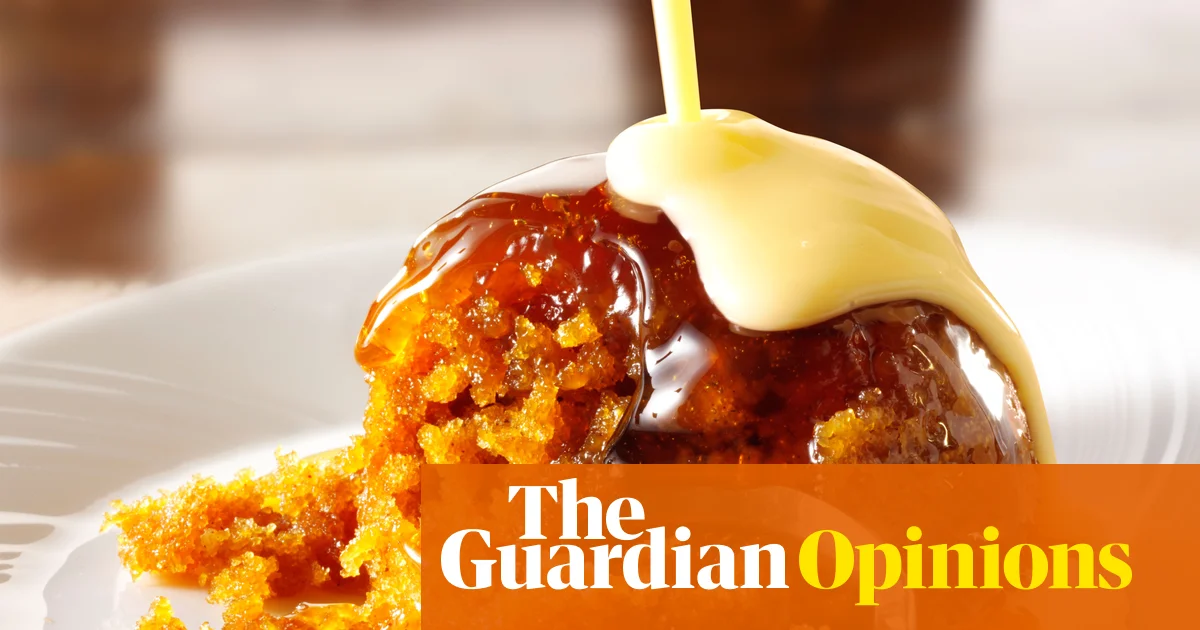
Many well-to-do English eaters project ideals of rustic authenticity on to southern Europe, giving us the “modern European” cooking that has dominated the menus of many smart restaurants in England for decades. Yet perhaps this culinary culture is running out of road? Is it not a little dull to see aioli, burrata and fresh pasta almost everywhere? What happened to salad cream and whitebait and pickled herring and steamed puddings? Where did all the bath buns and sally lunns go? Are croissants really all we want from our bakeries? When did England’s middle classes fall out of love with English food?
My book The Full English explores these topics from the first-person perspective of a chef-cum-sociologist. I describe the history of England’s break with the tastes once shared by elites across medieval Europe, which provided us with our first recognisably national cuisine. For Georgian Britons, food, especially beef, spit-roasted and served with simple garnishes, was everything that France was not. France was said to be popish and tyrannical, and the courtly tradition of French food reflected that. France was viewed by British patriots as weak, because its population supposedly subsisted on weeds and frogs. Beef, by contrast, was hearty, honest and rooted in the self-reliance of the English country gentleman. Many middling and upper sorts in Georgian England, from William Hogarth to William Gladstone, joined clubs whose patriotic motto was “beef and liberty”.
But by the late 19th century, among a generation with no direct memory of the Napoleonic wars, elite food preferences changed again, no less because the elite itself had changed. Britain had already become a majority urban nation in 1851 (some 100 years ahead of southern Europe), and in English cities, merchants, financiers, capitalists and their associated professions – groups whose power came from money, rather than land or title – demanded French cooks and French restaurants as a modern move away from the country cooking of the older upper classes, one which reflected Britain’s new ease with France.
Later, in postwar Britain, an expanding middle class underwent a lifestyle revolution. Stiff hats, starched shirts and rigid table manners were out and the supposed informality of Mediterranean food was in, along with bare brick walls, furniture from Habitat, bric-a-brac and olives; all markers of what the cookery writer Elizabeth David deemed a new taste for “the luxury of authenticity”.
And why not? Fourteen years of rationing had undermined a native food culture already hindered by urbanisation and industry, both of which were enabled by our dependence on imported food. Then, on top of these features of Britain’s peculiar modernity, has been the long shadow cast by Georgian patriotism – which deemed French food as effeminate, and so committed us to a view that refinement in food is “posh”. No wonder the middle class in this country projected a greedy gaze upon an idealised, provincial France and Italy.
But might it be time to turn our hungry dreamings back to England? The other nations that make up the union have their own culinary traditions and often proud relationship to national identity. But in England, patriotism is often assumed to be a blight. Outside international football tournaments, one senses that flags are flown mostly out of fear and hatred, and almost never out of pride. A positive, prouder version of national identity could become a powerful way to rebuild connection in our increasingly fragmented society.
Nations are inventions, thus so too are national foods. Take the case of British bread. The modern artisanal sourdough loaf – so adored by today’s tote-bag yoga-ing classes – has its roots in France and California and was introduced to England in the mid-1990s. And yet its popularity has seen an explosion of native craft baking across the UK, producing a proud generation of artisans who have brought about a better, and at this point, recognisably British bread.
We need such inventions more than ever, since ours is a country with some of the most unhealthy and unsustainable eating habits in Europe. Roast beef or overfished seafoods cannot be the way to go. Old dishes and familiar ingredients can be adapted, and new traditions can be invented. Yet as the new British artisanal sourdough shows, middle-class trends can be unaffordable for many. Such exclusivity can breed resentment, in turn fuelling the popularity of foods and brands, such as Greggs, which reproduce our anti-posh, anti-artisanal culture and our habits of unhealthy, industrial eating.
after newsletter promotion
For England to find a popular new culinary heritage, one centred on the dignity of craft production as much as health, will require state policy capable of lifting up our culinary standards across the board.
And here, pride can form a common ground for any politics leaning in that direction. As a chef, I know that when I have made a custard tart with a satisfying wobble or perfectly dressed a crop of garden beans with a pouting spike of vinegar, I feel a sense of self-respect. Investing in British culinary craft is a way to lend pride to our struggling nation; a decent native cookery culture will be one positive thing worth raising the flag for.
