


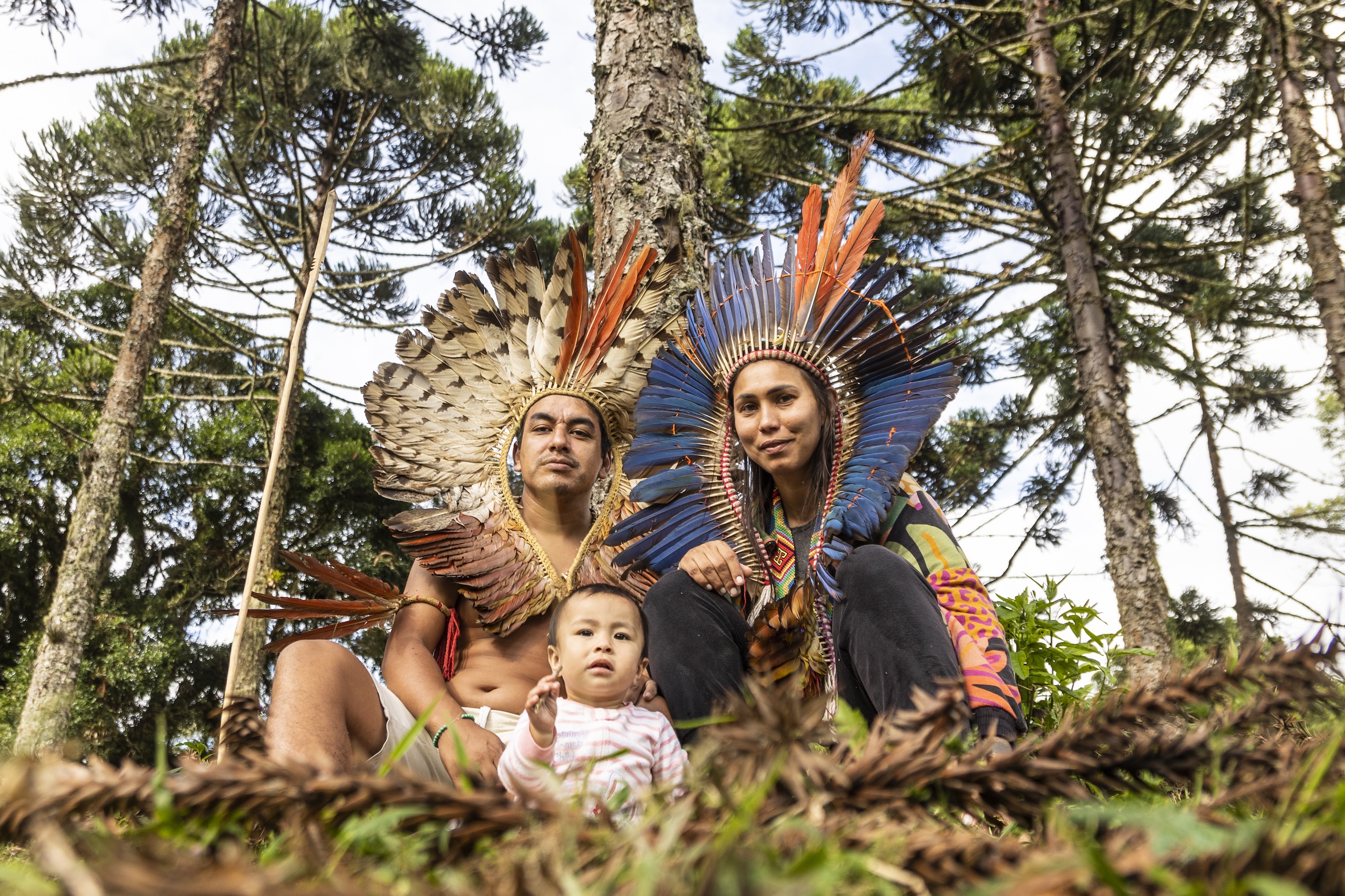
- The Zág Institute, an initiative of the Laklãnõ/Xokleng Indigenous people, is restoring the Brazilian pine on their traditional territory in the state of Santa Catarina.
- Sacred to the Indigenous people, the Brazilian pine is a critically endangered species; replanting it is seen as a way of strengthening their identity.
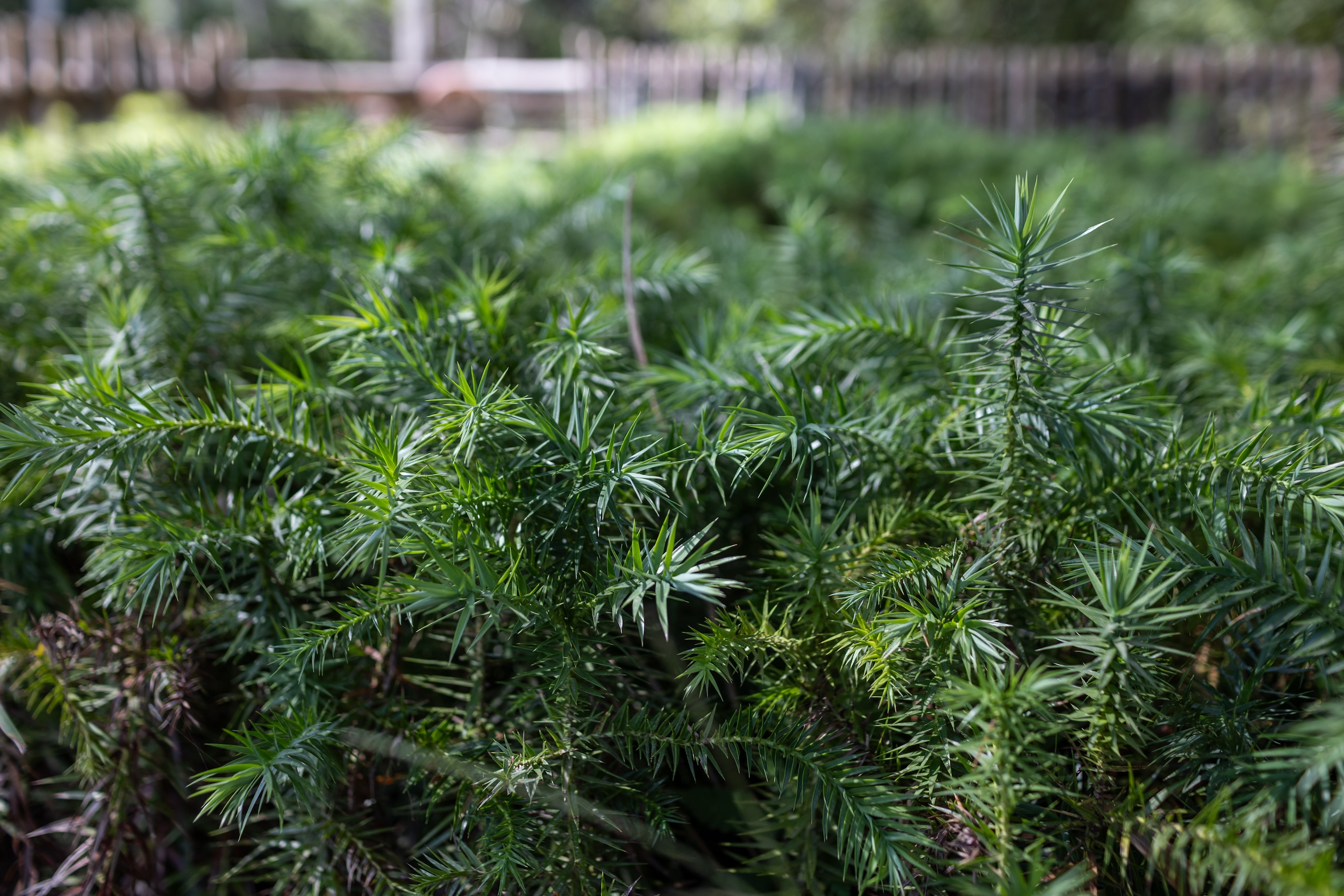
- Nearly 100,000 seedlings have been planted across 1,000 hectares (2,500 acres), in the process restoring water sources and degraded land.
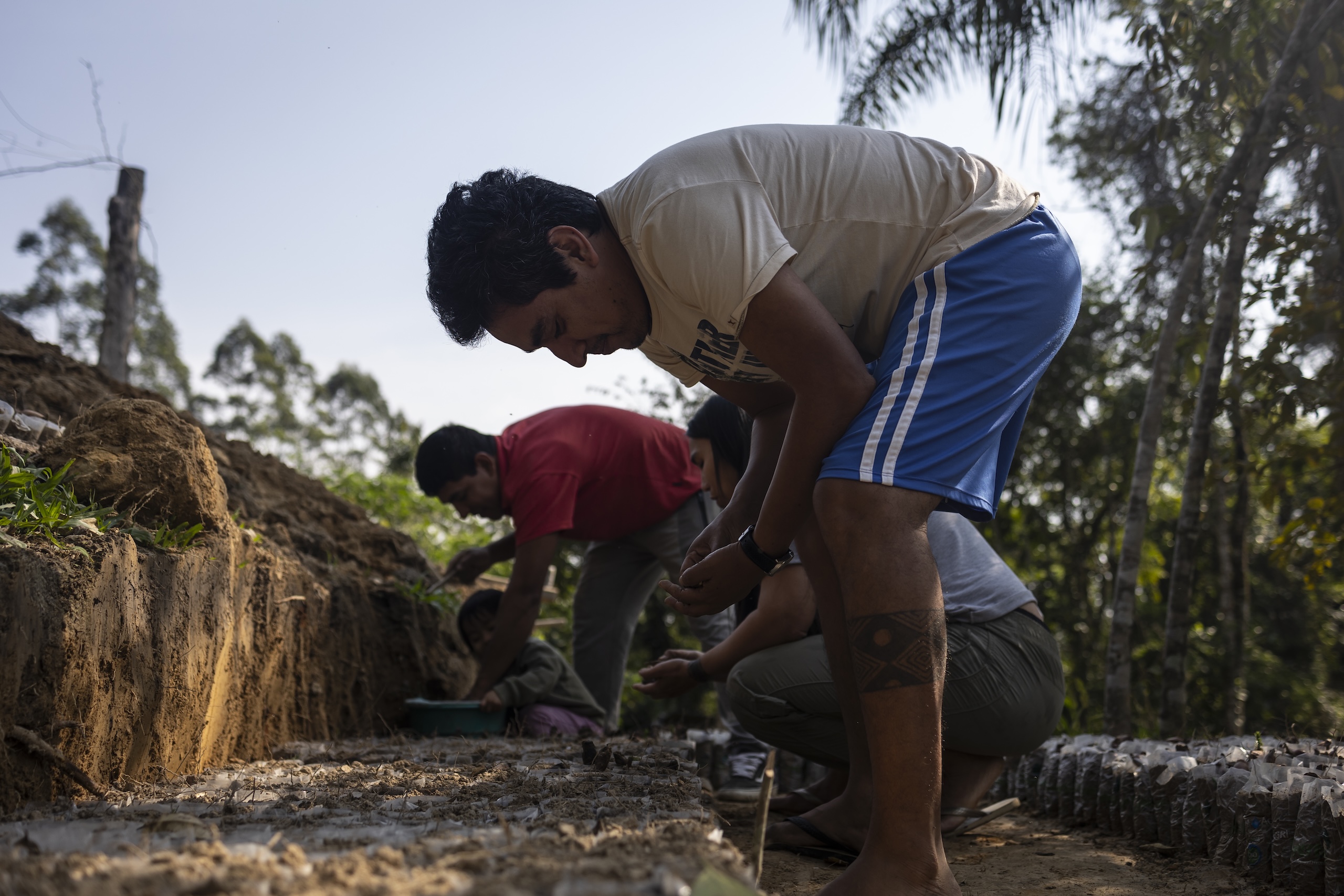
- The reforestation project involves the whole community in planting the seedlings, which is done through collective efforts throughout the year and also by donating them to Indigenous families.
IBIRAMA-LA KLÃNÕ INDIGENOUS TERRITORY, Brazil — Zág, pronounced “zã,” is the Xokleng word for the Brazilian pine. This tree species, Araucaria angustifolia, is typical of the Atlantic Forest that runs along Brazil’s south and southeastern coast, and has been evolving on the planet for about 200 million years. Each female tree produces dozens of cones, which in turn carry hundreds of seeds.
Known in Brazil as pinhão, the Brazilian pine seed is a nut eaten by at least 22 animal species as well as humans, who rely on it for both nutrition and income. For some Indigenous peoples, however, it means more than food. It’s part of their culture, history, and origin myths. That’s the case for the Xokleng people, also known as the Laklãnõ, in what is today Santa Catarina state. In their villages, people are even named after the tree.
“Brazilian pines are sacred to us,” says Carl Gakran, executive director of the Zág Institute. “You can’t tell the story of our people without speaking of them. Our creation myth says the protective animal was made from that tree, so it appears in the very first story.”
Carl decided to do something for the pines in 2016, after learning that the species was critically endangered as a result of deforestation, urban expansion, and logging. Currently, Brazilian pine forests are estimated to cover less than 3% of their original range, which once stretched across much of the states of Paraná, Santa Catarina and Rio Grande do Sul, with small patches in São Paulo, Minas Gerais and Espírito Santo states. The Xokleng want to reverse this decline.
“Just as our pine is endangered, my people are also endangered, and consequently our language and culture are endangered,” says Carl, who self-identifies as Laklãnõ.
Historically, their territory used to cover the entire region where the pine occurred. Today, this too has been whittled down: the Xokleng now occupy the 37,000-hectare (91,400-acre) Ibirama-La Klãnõ Indigenous Territory that straddles the borders of the municipalities of José Boiteux, Doutor Pedrinho, Vitor Meireles and Itaiópolis, in Santa Catarina. The territory is home to about 2,000 people living in 10 villages, representing the Laklãnõ/Xokleng, Guarani, and Kaingang peoples.
When Carl learned that his people’s sacred tree was listed as critically endangered on the Red List maintained by the IUCN, the global wildlife conservation authority, and as vulnerable in neighboring Rio Grande do Sul state, he says he felt anguished and began thinking about what he could do to help it. His initial goal was to plant 10 of the trees on his home plot from seedlings he’d cultivated himself.
But he didn’t stop there. With the help of friends during workshops, they produced a little over 1,000 seedlings. Following his father’s advice, they began recording the initiative, which became the Zág Institute the following year. Carl’s wife, Isabel, is the institute’s vice president and environmental director.
Since then, they’ve produced more than 140,000 seedlings, with survival rates of 70-80%, Carl says.
“From the start, our strategy was to involve the community, especially schools, because we couldn’t plant everything by ourselves,” he says. “As the tree is sacred, people adopt these seedlings, and the children who receive one will care for it as if it were a pet.”
To give the community a sense of belonging to the project, the institute provides training at community associations and schools, inviting people to join collective efforts during school holidays — when they plant Brazilian pines in degraded areas and springs — and donating seedlings throughout the year to be planted on people’s plots. A group of 30-40 volunteers from several villages works directly on the project; that number rises to 60 during harvest and distribution periods.
According to Carl and Isabel, half of the active participants are women; gender equality is important for the institute.
“They’re ‘the women who plant zág,’ as we say,” Isabel notes. “They take part in harvesting and planting, and attend workshops we run to empower them, such as photography and technology.”
To date, they’ve planted Brazilian pines across some 1,000 hectares of land, or about 2,500 acres. Some of the areas, Isabel says, were the subject of a case brought before the Supreme Federal Court over a law barring Indigenous groups from staking a territorial claim to land they occupied after a cutoff date of Oct. 5, 1988. Still, they persisted with the planting, Isabel says: “As a way of demarcating our territory, we also plant trees in those areas.”
Sustainable seedling production
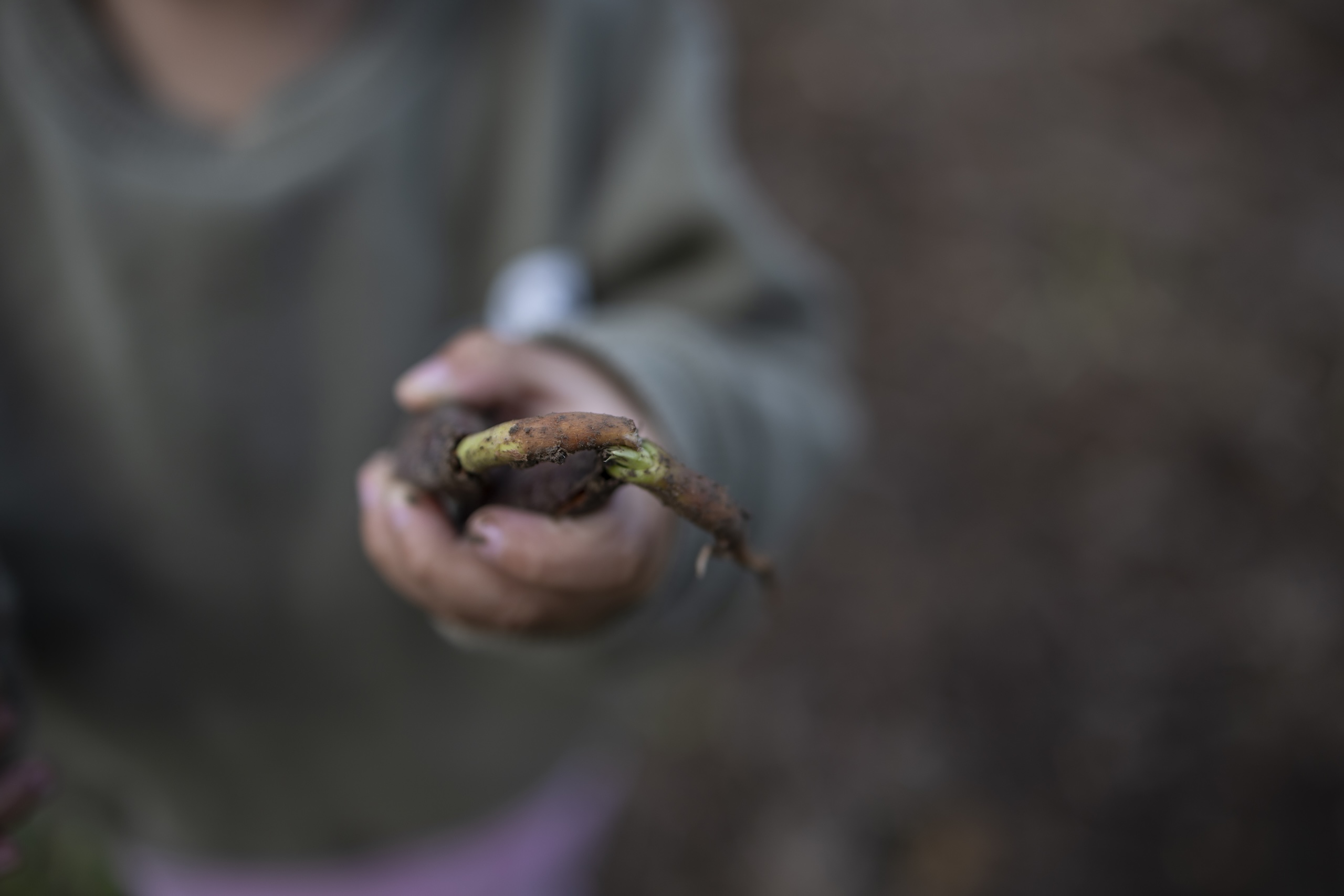
Carl says the seedlings are produced responsibly from the moment the seeds are harvested, based on Indigenous tradition.
“Following our elders’ knowledge, we speak to the seeds, explain what’s happening, and perform harvest rituals. We harvest 60%, no more than that, respecting the tree and the animals that feed on it,” he says.
Indigenous harvesters use tree-climbing techniques, but they also collect cones from the ground. In the past, Carl says, they used climbing spikes, but these damaged the trees and encouraged fungal growth that could kill them.
Cones mature between April and July, depending on the variety. After harvest, cultural restoration activities take place, including traditional cooking and music, followed by work to ensure genetic diversity, in which all the seeds collected from different trees are mixed together and buried to germinate.
After a month, each seedling is placed in a biodegradable bag made from sugarcane fiber and set in a wooden structure under a thatched roof with a shade cloth. The thatch lets rain infiltrate while the fabric reduces exposure to sunlight. To enrich the soil for the seedlings, they use organic fertilizers produced on the Indigenous territory.
After growing for a year, the seedlings are ready for distribution. The first trees planted are now 10 years old and about 5 meters (16 feet) tall; a mature Brazilian pine can exceed 50 m (164 ft).
“The results are satisfactory, but there is still a lot to come because the trees are young. It’s a long-term thing, a legacy we inherited and will pass on to future generations,” Carl says. “It’s a very promising movement in which we managed to take the place and amplify our voice through initiatives, like a domino effect.”
The initiative’s sustainability
The Zág Institute is funded through grants and awards, including from the Rockefeller Foundation, based in the U.S., and the Mohamed bin Zayed Species Conservation Fund, from the UAE, as well as donations from supporters via social media.
“Our next step is to improve monitoring with access to technology for data generation, which is crucial not only for research but also for securing more resources in the future,” Carl says, adding that they’re seeking funds to buy drones, computers, smartphones, and artificial intelligence software.
Monitoring, he says, is focused not only on ensuring the trees’ survival but also protecting the Indigenous territory itself from loggers and miners.
In addition to planting Brazilian pines, the institute also weeds out exotic species such as slash pines and eucalyptus, replacing them with native trees. In 2025, they began producing juçara palm seedlings. In the short term they plan to produce sassafras, imbuia and xaxim, a fern from which the Laklãnõ/Xokleng make a traditional beer. When the project achieves financial sustainability, Carl says, they want to expand their seedling production to other Atlantic Forest species and add activities such as ethnotourism and agroforestry.
They also plan to improve infrastructure in the villages to add value to their production of honey from native bee species, and invest in making products from Brazilian pine seeds, such as flour, to generate income from sustainable businesses across the territory.
“We see the project being more structured in the future, accessing resources and funds directly and also supporting other local initiatives through a fund we plan to create, focused on Brazilian pine forests,” Carl says.
Brazilian pines as a response to territorial conflict
Historically, the Laklãnõ/Xokleng used to occupy extensive areas in the Upper and Middle Itajaí Valley, says Georgia Fontoura, head of the Regional University of Blumenau’s Indigenous Studies Center, in Santa Catarina. Following European colonization of South America, and then the 1850 Land Law, there was a stronger process of encroachment, eviction and territorial confinement, “resulting in violent persecution, massacres and forced displacement” against Indigenous peoples, which turned the Itajaí Valley into one of the last refuges for escape and resistance.
The so-called peaceful contact by Brazil’s Indian Protection Service in 1914, Fontoura says, marked the end of the Laklãnõ’s “forest era,” when they lived freely on their land. They were displaced and concentrated in a reduced area, first in the Posto Platê, then in the Duque de Caxias Reserve, and later in what is today the Ibirama-La Klãnõ Indigenous Territory.
For decades, areas of importance to them were reduced, parceled out, and occupied by non-Indigenous settlers. The legal process of territorial expansion has advanced in recent years, but political, economic and social tensions remain, Fontoura says. Even after the Supreme Federal Court rejected the Indigenous land claim prohibition based on the cutoff date, there are still conflicts involving compensation, recognition of territorial boundaries, and resistance by agribusiness and local political sectors.

The North Dam, built in the Indigenous territory between the 1970s and 1990s, has also caused social, territorial, environmental and spiritual changes for the Indigenous peoples who live there. The dam was built by the state government for flood control in the Itajaí Valley, but according to Fontoura, it was done without properly considering the impacts on Indigenous communities.
“The project drastically altered the landscape and affected areas historically occupied by the Laklãnõ, disrupting traditional relations with the land and inflicting new forms of collective suffering,” she says.
During flood periods, government decisions about opening the dam’s gates often spark conflicts with the community, which has long denounced the lack of dialogue and proper implementation of the contingency plan, causing systematic impacts on the territory and posing risks to the Indigenous people, Fontoura says.
Against this backdrop of conflict, reforesting with Brazilian pines “is a strategy of territorial, cultural and spiritual resistance in the face of the historic violence suffered throughout colonization, territorial confinement and environmental degradation,” she says. “The tree is part of our ancient memory and is deeply linked to traditional ways of living, moving about and relating to the territory. The seed has always been an important food item in gathering practices, communal life and community strengthening. Thus, planting Brazilian pines also means rebuilding bonds broken by eviction and the changes imposed on the Indigenous territory.”
Fontoura adds that reforestation is a form of landscape healing, which contributes to the recovery of water sources, protection of the soil, and the return of native species, while also teaching children and youths the importance of territory, ancestral knowledge, and caring for nature.
“The recovery of native trees strengthens food sovereignty, expands income-generation possibilities, and helps keep alive cultural practices related to gathering, traditional knowledge, and the shared memories of elders,” she says. “Therefore, the project responds to territorial adversities by turning the land itself into a space of resistance, memory and continuity for Laklãnõ life.”
Carl agrees that it’s more than just an environmental issue: “Reforesting with araucarias is a whole movement that is now part of our people’s identity.”
Banner image: Carl and Isabel Gakran, who run the Zág Institute on the Ibirama-La Klãnõ Indigenous Territory, with their daughter, Zágtxo. Image courtesy of Anderson Coelho.
This story was first published here in Portuguese on June 16, 2026.
Citations:
Caldeira, M. V., Schumacher, M. V., Scheeren, L. W., & Watzlawick, L. F. (2003). Relação hipsométrica para Araucaria angustifolia (Bert.) O. Ktze na região oeste do estado do Paraná. Revista Acadêmica: Ciência Animal, 1(2), 79. doi:10.7213/cienciaanimal.v1i2.14925
Ferri, G. K. (2019). Araucaria Angustifolia: Botânica, evolução e dispersão da espécie sob o viés da história ambiental global. Araucaria, 24, 05. Retrieved from https://www.ecodebate.com.br/2019/05/24/araucaria-angustifolia-botanica-evolucao-e-dispersao-da-especie-sob-o-vies-da-historia-ambiental-global-artigo-de-gil-karlos-ferri/

