


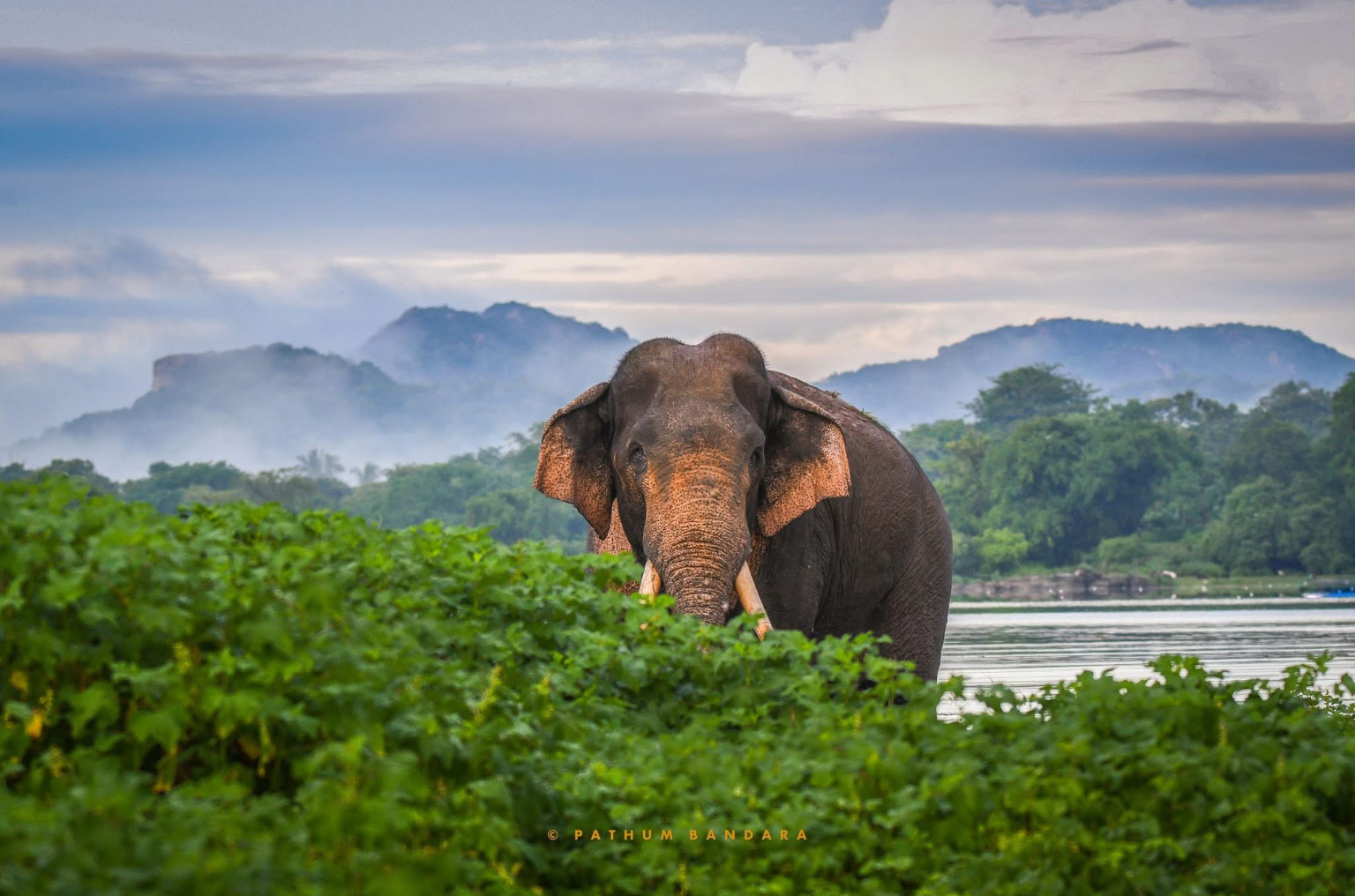
- Kavantissa was a much-loved elephant among residents in Galgamuwa in north western Sri Lanka and, despite a worsening human-elephant conflict in the area, had no record of attacking humans.
- Considered the tallest elephant in the island, Kavantissa died on Oct. 16 owing to gunshot injuries.
- As public outrage escalates over the elephant’s death and the alleged mismanagement of the keystone species, authorities say that daily raids to confiscate illegal firearms and curb wildlife crimes will be launched to ensure protected areas and elephant habitats remain safe for all the species.
- Following tusker Kavantissa’s death, Thailand-based animal rights groups are pressuring their government to repatriate two elephants donated by Thailand to Sri Lanka.
GALGAMUWA, Sri Lanka – Residents in Galgamuwa, a rural village in Sri Lanka’s North Western Province are mourning the death of an iconic wild, bull elephant that roamed the area. While Galgamuwa is on the frontlines of one of Sri Lanka’s worst human-elephant conflicts, people had a soft spot for this tusker, popularly known as Kavantissa.
Named after a king who ruled the Kingdom of Ruhuna in ancient Sri Lanka in the 3rd and 2nd centuries B.C.E, Kavantissa was known for its gentle nature. Galgamuwa residents say it never attacked a human in its lifetime.
Rathnayake Mudiyanselage Jayathilaka Bandara is a resident in Galgamuwa and an ardent animal lover. Bandara and another local resident named Kumara dedicated their time and effort to protect Kavantissa and the large herd of elephants (Elephas maximus maximus) that became famous for crossing the railway tracks in Kasikote, a town located between Galgamuwa and Ambanpola in the north west. Soon, this crossing became a must see among elephant lovers and Kavantissa would often emerge at the tail end.
Bandara tells Mongabay that the demise of Kavantissa is heartbreaking because the iconic tusker was gentle and disciplined. He recalls how Kavantissa would patiently wait for the herd of elephants to cross the railway line before it made its dramatic appearance. “Sometimes it would pause before crossing the road and journey toward the nearby Palukadawala tank,” he said. “Perhaps that was its way of greeting me and Kumara. Kavantissa would sometimes push the electric fence obstructing its way. But now, all this is just a memory for many of us.”
Kavantissa and the herd of elephants became a social media sensation in no time, attracting crowds towards Kasikote just to witness this spectacle.
However, on Oct. 17, Kavantissa’s death came as a shock to many Sri Lankans. A gunshot injury in its right front leg is said to be the suspected cause of death. The official postmortem report has not yet been released.
According to reported statistics from Sri Lanka’s Department of Wildlife Conservation (DWC), gunshot injuries caused 976 wild elephant deaths between 2010 and May 2026. Other causes include electrocution, use of jaw bombs, poisoning, train accidents, road accidents and others.
Firearms aplenty
The practice of issuing and licensed firearms to local farmers has a long history in Sri Lanka, but in 2023, then Minister of Defence Premitha Bandara Tennakoon stated that laws were being amended to allow farmers guns for crop protection. In October 2023, then Agriculture Minister Mahinda Amaraweera distributed air rifles to farmers as a means to prevent crop damage. In 2024, then Minister of Agriculture K. D. Lal Kantha came under heavy criticism for his remarks on issuing firearms. Subject experts criticized Lal Kantha’s speech to parliament in which he said that landowners have the liberty to take any action to protect their lands from animals.

However, media reports suggest that he later clarified his statement claiming that his reference was only referred to crop-damaging animals such as monkeys, wild boar and peacocks, and not protected species such as elephants.
Meanwhile, Sri Lanka has witnessed iconic elephants fall victim to the free-floating guns. In addition to Kavantissa, another tusker, Bathiya, succumbed to gunshot injuries in 2025. Authorities are currently trying to protect Agbo, a wild tusker that has survived multiple gunshot injuries.
Speaking to Mongabay, Ranjan Marasinghe, director general of the DWC says that subsequent to Kavantissa’s death, the issue of managing elephant deaths has been blown out of proportion. He says there is a social media trend of condemning authorities and complaining of inaction without sufficient understanding of on-the-ground realities.
According to Marasinghe, the situation in the field is “very different” to what is being portrayed in the media. “The department has the resources and funding to carry out wildlife management activities,” he says. “Daily patrols are being conducted to look for firearms and other illegal activities taking place in protected areas. Some of these efforts go unreported depending on the sensitivity of the case.”

The clearance of forests for agricultural purposes has pushed elephants out of dense forests towards agricultural lands, says Prithiviraj Fernando, chairperson at the Centre for Conservation and Research (CCR). According to Fernando, 82% of the country’s total land area is inhabited by humans and that elephants roam in the remaining 18% of uninhabited land area.
According to the DWC chief Marasinghe, about 70% of elephants live outside protected areas and it would be difficult to confine them within these protected He notes that there is a carrying capacity for any habitat and a number of elephants that a habitat is able to sustain without stress.
“This wild tusker had a name for itself and it became popular,” he says. “But as a department we cannot focus on one tusker alone. It is another ecosystem engineer that this country has lost. Contrary to rumors and media reports about declining elephant numbers, there are over 7,000 elephants in the country today. Our mission is to protect these ecosystem engineers from human interventions.”
Triggering shockwaves
Meanwhile, tusker Kavantissa’s death has triggered shock waves both locally and internationally. As Sri Lankan wildlife enthusiasts and environmentalists share outrage over what they term a “lack of care” for an iconic elephant, a spillover effect is being felt in Thailand.

Animal rights groups in Thailand are reportedly mounting pressure on Thai authorities to recall two elephants donated to Sri Lanka. Elephant Sak Surin, locally known as Muthu Raja, was gifted by Thailand in 2001 and repatriated in 2023 following years of neglect and severe leg injuries.
Amid increasing public criticism of the mismanagement of Sri Lanka’s elephant population and demands from local animal rights groups for an independent investigation into Kavantissa’s death, the government has appointed an expert committee. The committee held its first meeting on Oct. 21 and reportedly focused on developing scientific standard operating procedures to determine prompt action for similar situations in the future.
The need to establish a rapid response veterinary unit was also discussed with a view to ensuring swift interventions in the field.
Banner Image: Tusker Kavantissa photographed near the Usgala-Siyambalangamuwa reservoir, believed to be one of its favorite roaming grounds. Image courtesy of Pathum Bandara.
Cite this article
Kamanthi Wickramasinghe (2026). Death of iconic elephant in Sri Lanka pushes authorities to fast-track protection efforts. Mongabay Conservation news. DOI: https://doi.org/10.66709/news-333688

