


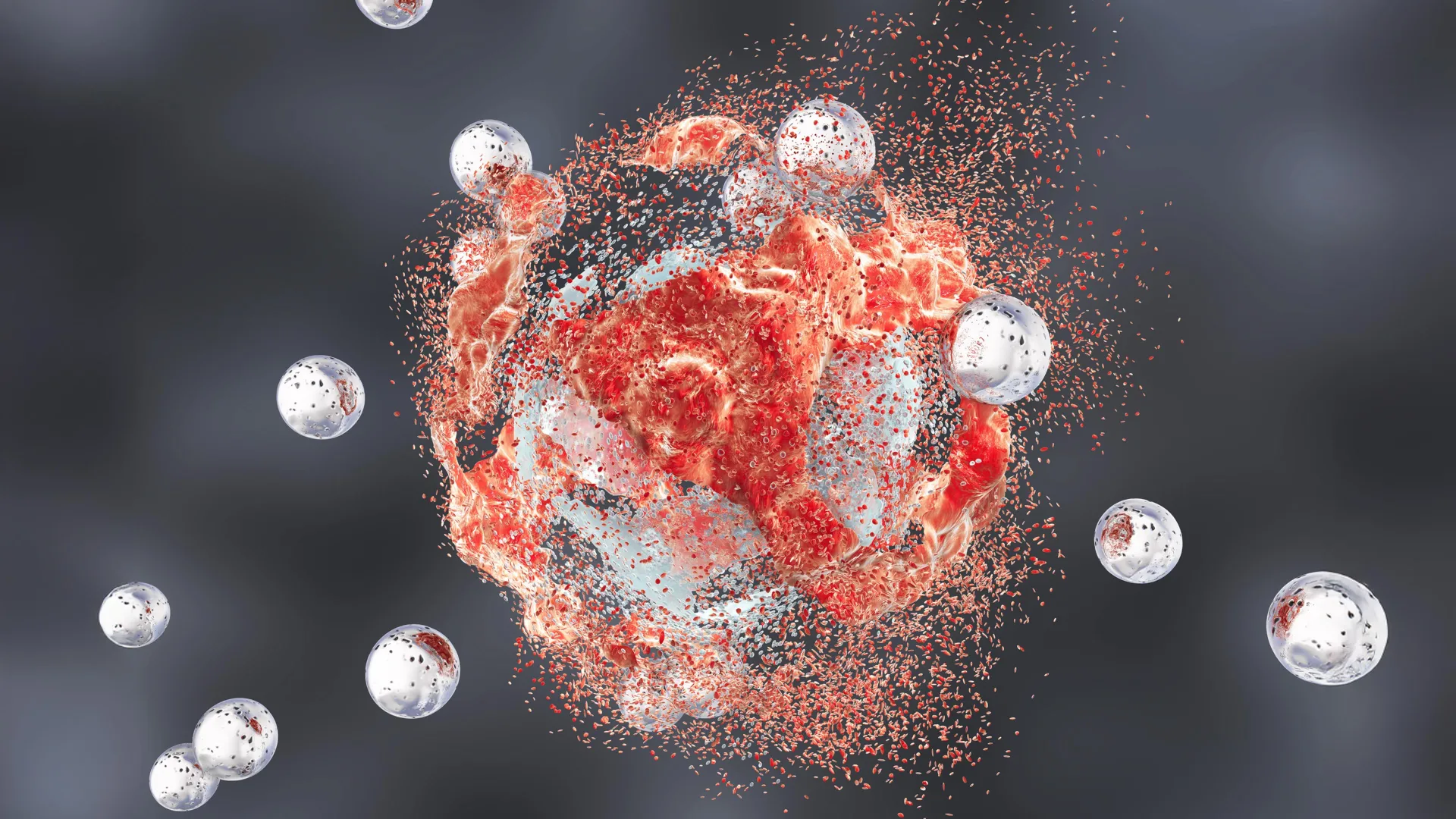
Scientists have identified a previously overlooked type of immune cell that can detect and destroy small cell lung cancer, the most aggressive form of lung cancer worldwide.
The discovery, reported in the journal Cancer Cell by researchers at WEHI, revealed that patients with greater numbers of these specialized immune cells tended to survive longer. The findings point to a previously unrecognized immune defense that could provide a new way to attack tumors that are notoriously difficult to treat.
The research team also demonstrated that medications already in use could enhance the ability of these immune cells to kill cancer. This approach could eventually improve existing treatments and increase the number of patients who benefit from immunotherapy.
At a Glance
- Scientists have identified an overlooked population of immune cells capable of recognizing and destroying small cell lung cancer, revealing a potentially valuable new defense against this deadly disease.
- These cells, known as gamma delta T cells, can attack lung cancer even when tumors escape detection by conventional immune cells, addressing one of the biggest obstacles to successful treatment.
- WEHI researchers also discovered that existing medications can strengthen the cancer fighting activity of these cells, offering a possible way to improve treatment for patients with few effective options.
Why Small Cell Lung Cancer Is So Difficult to Treat
Small cell lung cancer (SCLC) is among the deadliest cancers, with fewer than 7% of patients surviving for five years after diagnosis.
Immunotherapy has dramatically improved treatment for several types of cancer, but its success against SCLC has been much more limited. Only a small proportion of patients experience lasting benefits.
A major challenge is the cancer’s ability to escape immune surveillance. SCLC tumors frequently avoid detection by the conventional immune cells that many immunotherapy treatments depend on, allowing the disease to persist despite the body’s natural defenses.
The findings published in Cancer Cell suggest there may be another way for the immune system to recognize and attack these tumors. By identifying a previously overlooked immune pathway, researchers have uncovered a potential strategy for overcoming the cancer’s ability to remain hidden.
Professor Kate Sutherland, the study’s senior author and a laboratory head at WEHI, said the discovery could help address a longstanding challenge in lung cancer research: finding ways to make immunotherapy effective for more patients.
“For decades, we’ve known that small cell lung cancer is exceptionally good at hiding from the immune system,” Prof Sutherland said.
“We’ve found an immune cell that appears to be able to see through that disguise.
“Strikingly, patients whose tumors contained more of these specialized immune cells often had better treatment outcomes.
“This is the strongest evidence yet that gamma delta T cells are present in small cell lung cancers and appear capable of fighting the disease.
“It suggests these cells may offer an alternative immune attack route for tumors that are able to evade conventional cancer-fighting immune cells, opening up new possibilities for treating a cancer that has seen few advances over the past decades.”
Miniature Tumors Reveal a Powerful Immune Response
To investigate whether gamma delta T cells could directly attack lung cancer, the scientists developed miniature tumors in the laboratory using tissue samples donated by patients. The samples were obtained through the Victorian Cancer Biobank in partnership with the Royal Melbourne Hospital.
These miniature tumors, often called “mini tumors,” provide one of the most realistic laboratory models of SCLC created so far, allowing researchers to study how cancer behaves and responds to potential treatments.
The team then introduced gamma delta T cells collected from the same patients’ blood into the tumor models. The results showed that these immune cells were highly effective at identifying and destroying SCLC cells.
The scientists went a step further by testing whether two medications already approved for other uses could make this immune response even stronger. The drugs were tarlatamab (a cancer treatment approved for SCLC) and zoledronate (approved for osteoporosis and cancer-related bone disease).
Each medication contributed in a different way. Zoledronate increased the number of available gamma delta T cells and improved their ability to identify the lung cancer tumors. Tarlatamab helped bring the immune cells and cancer cells together, effectively directing the immune attack toward the tumors.
When used together, the drugs substantially increased the ability of gamma delta T cells to kill cancer cells in laboratory experiments. The findings suggest that combining existing treatments could provide a new strategy for strengthening the immune system’s response to SCLC.
Could Existing Drugs Lead to New Lung Cancer Therapies?
Dr. Jin Ng, the study’s first author, said the discovery could also support a treatment approach known as adoptive cell transfer. This involves collecting immune cells, multiplying them outside the body, and then delivering large numbers of those cells back into a patient to help fight cancer.
Because methods for expanding and reinfusing gamma delta T cells have already been developed, the researchers believe their findings could help accelerate the development of new treatments.
“For patients with lower gamma delta T cell levels, therapies such as zoledronate may offer a way to boost their cancer-fighting immune cells and responsiveness to treatments,” Dr. Ng said.
“As therapies that expand and reinfuse gamma delta T cells already exist, our findings raise the exciting possibility of rapidly translating this discovery into new treatment strategies.
“This could open an entirely new avenue for personalized treatment approaches in small cell lung cancer and other solid cancers that are often missed by conventional immune cells.”
Clues From Major Lung Cancer Immunotherapy Trials
The investigation began with an examination of data from two influential clinical trials, IMpower133 and CASPIAN. Both studies helped establish immunotherapy as a standard treatment option for patients with small cell lung cancer.
Researchers noticed evidence pointing toward an important role for gamma delta T cells and used sophisticated genomic and computational techniques to investigate further.
Analyses conducted by WEHI’s genomics and bioinformatics teams revealed that patients with stronger gamma delta T cell signatures were among those who benefited most from immunotherapy.
Together with the laboratory findings, these results strengthen the evidence that gamma delta T cells play an important role in the immune response to SCLC and could become useful targets for future therapies.
The WEHI team is now working with scientists at the Doherty Institute to build on the discovery, with the goal of translating the findings into a new class of immunotherapy drugs for small cell lung cancer.
The research received support from Cancer Council Victoria, the National Health and Medical Research Council (NHMRC), The CASS Foundation, and The International Association for the Study of Lung Cancer.
