


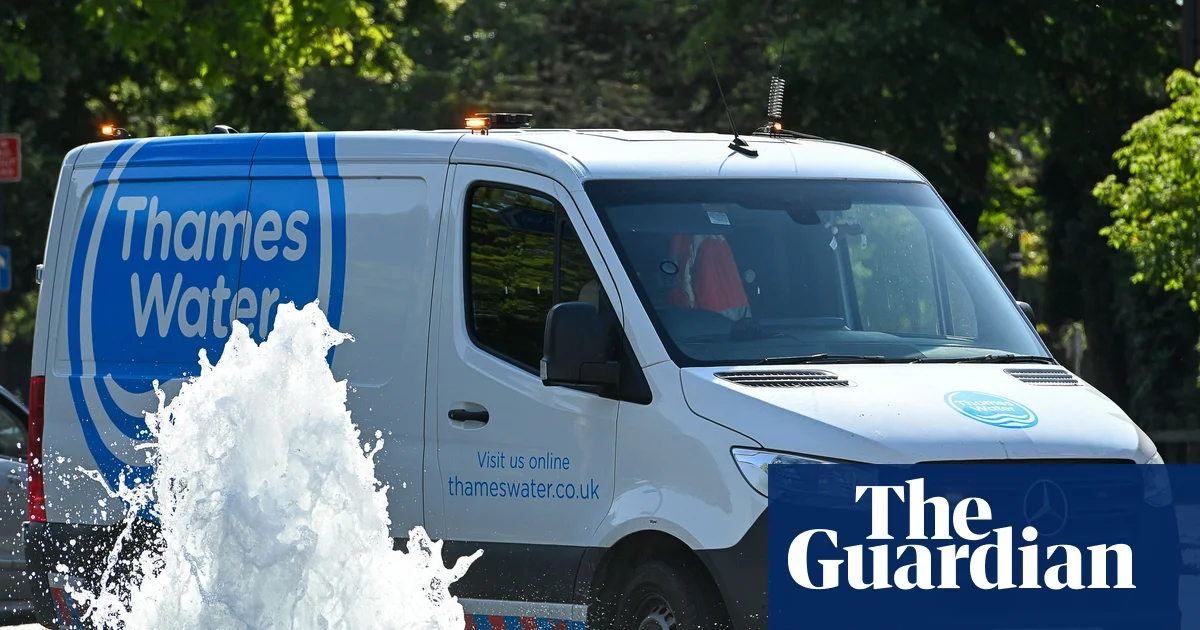
Andy Burnham has told officials to rip up their plans for how to fix Thames Water and present him with more radical options for what to do with the stricken company. Here are some ideas the prime minister is being urged to consider.
Emergency legislation
Burnham must introduce emergency legislation immediately to protect the supply of water for the public, said Richard Murphy, tax accountant and the brains behind Corbynomics.
A new state-owned company, with a management team in waiting and all the necessary steps ready to take over the existing company’s systems, has to be put in place now.
“A prime minister who cannot deliver water to maybe a quarter of the UK’s population would not be someone to be trusted with anything else. Andy Burnham has no choice but to address this matter, now,” said Murphy.
The 1971 nationalisation of the Rolls-Royce aeronautical engineering company, to protect the national interest after it collapsed into receivership, could be used as a blue print. A similar national emergency exists now to protect the supply of water, Murphy said.
Murphy said that, in essence, Thames Water was financially insolvent, with real doubt about whether it could survive into 2027. It was failing in its regulatory obligations, including to maintain clean water supplies and keep rivers and beaches clean.
Emergency legislation should ensure that the nationalisation is of the assets and undertakings of Thames Water, and not of the company itself. All financial liabilities of Thames Water would be left for the old company to settle. The government should not acquire them.
The new company needed to be structured within days, said Murphy. “There is no time to wait.”
Public control – probably via the courts
Burnham must be prepared to go to court to take Thames Water back into public control, said Ewen McGaughey, professor of law at University College London.
Moody’s has estimated a one-off cost of £14.5bn in 2019 to bring water into public ownership. But privatisation, said McGaughey, would cost up to £22bn extra for bill payers from 2025 to 2030, or £176 a household a year, in returns on capital to shareholders and banks, as set by Ofwat’s price review.
McGaughey believes that this year public ownership of failed water companies will cost closer to £0, using the special administration procedure within the 1991 Water Industry Act.
The higher the repair bills, the less that creditors or shareholders deserve under UK law, international law and our investment treaties, he said.
He advises Burnham to prepare to go to court – creditors will probably sue – but they have no reasonable prospect of success.
McGaughey says privatised water and the regulators have failed so badly that England pays among the highest bills in Europe, while nearly every river is illegally polluted, taps run dry and a trillion litres of water is leaked each year.
Shareholders have taken over £85.2bn in dividends, and creditors more in interest, since privatisation in 1989, evaporating UK investment, shipping capital overseas and leaving billions of pounds in sewage treatment and pipe repair costs. These polluters should not be paid a penny more to run our water, McGaughey said.
The government should bring our accounting practice up to international and European standards, by separating public corporation borrowing from the national debt, so that the borrowing of a publicly owned company does not contribute to national debt.
Strip Thames of its licence
Continuing the theme of using the special administrative powers of the 1991 legislation, Cat Hobbs of We Own It wants Thames Water’s licence taken away immediately.
Hobbs has written to the government and water regulator, Ofwat, calling for bill rises to be blocked and for Thames Water to be brought into public hands.
“It is absurd that Thames Water is now asking its creditors for a further £2.4bn to stay afloat – this saga has dragged out since July 2024 when the company was first in breach of its licence conditions,” said Hobbs.
Under the 1991 Water Services Act, companies can have their licences removed if they are insolvent or if they fail to fulfil their statutory duties to provide water, protect the environment and properly manage wastewater.
Hobbs told Burnham his government should be using this power and facing down threats from the water industry and the prospect of a legal challenge from special administration under the 1991 act.
Public ownership of water would deliver savings of £3bn to £5bn a year over time from cheaper financing costs – no shareholder dividends, less expensive debt. Taking water into public ownership would reduce the cost of living burden as well as freeing up money for infrastructure.
The government should make it possible for new publicly owned water companies to borrow to invest on their own account – rather than adding to the national debt – as is standard practice elsewhere in Europe.
Hobbs pointed out that when Network Rail’s debt of £31bn was transferred to the public sector, bond yields fell from 3% a year to 2.2% a year.
