


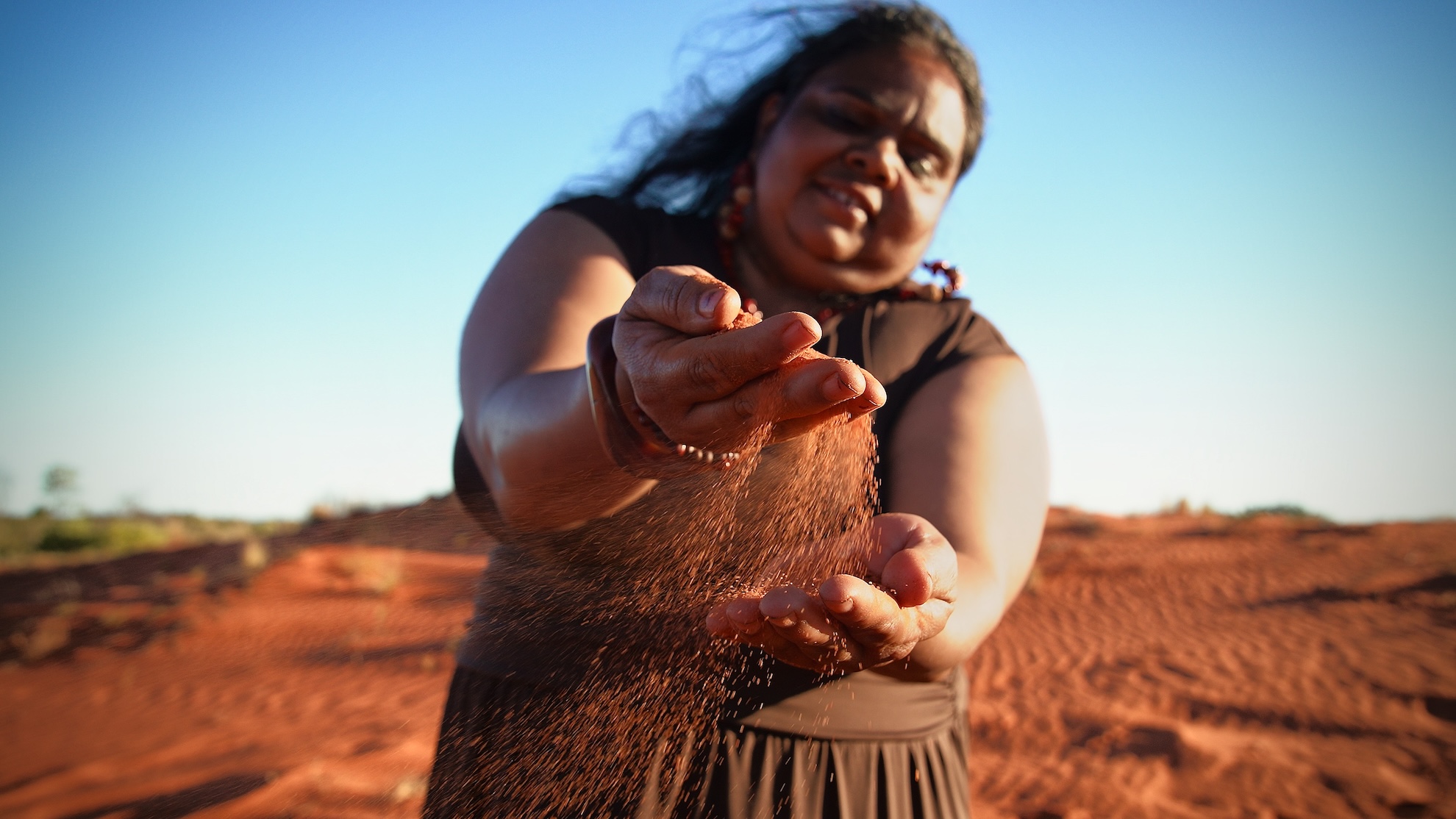
This week on the Mongabay Newscast, Samantha Murray, CEO of the Indigenous Desert Alliance, joins the program to discuss the IDA’s recent nomination for an Earthshot Prize. The alliance is a network of 70 ranger teams across the Australian desert, covering 270 million hectares (667 million acres), an area almost as large as Argentina. This makes it the largest Indigenous-led conservation corridor on the planet.
Murray and her network of 885 rangers have helped restore biodiversity to 140 million hectares (346 million acres) of land over the past four years using the practice of cultural burning, a cultural and ecological management practice that has been present in Aboriginal culture for millennia. The IDA administers this through its “Right Way Desert Fire” program.
Murray discusses the various ways in which this cultural knowledge is shared among ranger teams and the IDA via the guidance of Traditional Owners, the Aboriginal or Torres Strait Islands individuals with ancestral, physical, or spiritual ties to the land. Traditional Owners may accompany rangers to what’s known as Country — the Indigenous concept of a holistic, living entity encompassing the physical land, waters, skies, and all living things — and direct where and how to burn, in part because the knowledge is passed down through oral storytelling.
“We don’t get handed down a manual or a handbook on how to do [the] right way of burning all that knowledge,” Murray says. “And so we are very much [following] an oral history and showing practically what to do. So for that knowledge to get passed down, it requires spaces and times on Country to share.”
They weave together technology and local wisdom in the form of “yarns,” the conversations or collaborative dialogues where knowledge is shared, which Murray highlights in the story of Kiwirrkurra ranger Scott West, who guides burning exercises from a plane.
“Scotty would’ve started that yarn up on the ground, being guided really strongly by TOs and the old fellas who would’ve been doing that country burning,” she says. “Scotty probably would’ve went … for a walk with an elder or an uncle… pointing out places where to go, where to burn.”
Cultural burning, as Murray explains, helps manage fuel loads and thus bushfires, and helps protect and restore biodiversity to certain areas and is “usually guided by elders or Traditional Owners who have very deep knowledge of that country that they’re applying the fire to.”
“They’re very aware about those animals and special places that are amongst that landscape. So how that’s applied is not done in a random process,” she adds.
“It helps those plants renew themselves, come back again. The animals, they come back and eat those freshly grown sprouts and plants that pop up. It protects fire getting closer to those special places so that they don’t get destroyed in really hot summertime wildfires.”
Murray emphasizes the vast amount of land the ranger network conserves, saying it’s conservation for all Australians.
“We’re actually caring for such a big part of Australia, like a third of Australia, and we’re caring for animals that really need our love and our care. And I think, instead of it being boxed into, ‘Well, that’s just Indigenous conservation. That’s just over there,’ or, ‘That’s just in the middle of Australia,’ more of a different change of attitude to go, ‘Well, there are some really committed professional people that are looking after animals and country,’” she says.
“Australians should be proud of rangers. They should be proud of people working on the ground.”
Mike DiGirolamo is the host & producer for the Mongabay Newscast based in Sydney. Find him on LinkedIn and Bluesky.
Banner image of Samantha Murray, courtesy of the Earthshot Prize.
Related Listening. Tyson Yunkaporta explains Indigenous storytelling and how narrative shapes how we treat nature:
Notice: Transcripts are machine and human generated and lightly edited for accuracy. They may contain errors.
Sam Murray: We’re caring for these animals and country for everyone. Sometimes it can be sort of circled off as, oh, that’s just Indigenous conservation or land management. We’re actually caring for such a big part of Australia, like a third of Australia, and we’re caring for animals that really need our love and our care. And I think, instead of it being boxed into, that’s just Indigenous conservation. That’s just over there,” or, “That’s just in the middle of Australia,” more of a different change of attitude to go, there are some really committed professional people that are looking after animals and country.” That’s really significant for all of us in Australia, and I think it’s something that Australians should be proud of rangers. They should be proud of people working on the ground. They should be proud of desert rangers working really hard out there. So I think that’s what I’d probably like to be elevated more, Mike, is people being proud of the work rangers do and also recognizing we’re not just doing it for ourselves and our people and our country, and we’re doing it for everybody in Australia, and everyone should be proud of that.
Mike DiGirolamo: Welcome to the Mongabay Newscast. I’m your host, Mike DiGirolamo. Bring you weekly conversations with experts, authors, scientists, and activists working on the front lines of conservation, shining a light on some of the most pressing issues facing our planet and holding people in power to account. This podcast is edited on Gadigal land. Today on the newscast, we speak with Samantha Murray, CEO of the Indigenous Desert Alliance, an organization that supports a network of 70 ranger teams covering two hundred and seventy million hectares of Australian desert. This is almost as large as Argentina, making it the largest Indigenous-led conservation corridor in the world. This year, the IDA has been nominated for the Earthshot Prize in the Protect and Restore Nature category. Drawing on the cultural knowledge of Aboriginal Australians and traditional owners, the IDA shares this Indigenous wisdom through the Right Way Fire Program using cultural burning, a practice First Nations have used for land management for millennia. Murray discusses the cultural and ecological importance of burning, how it’s conducted in different contexts, and how the IDA is documenting and sharing this knowledge. Over four years, the IDA has helped rehabilitate biodiversity on 145 million hectares of land. Murray also shares how she hopes to elevate rangers’ work, highlighting their practices as vital to protecting ecosystems for all Australians.
Mike: Sam Murray, welcome to the Mongabay Newscast. It’s great to have you with us today.
Sam: Thanks for having me on, Mike. Looking forward to having a yarn.
Mike: So can you first explain to us the area that the Indigenous Desert Alliance protects? Because it is stated that this is the largest Indigenous-led conservation corridor in the world it’s a very large region. So can you describe that to our audience and the places that covers?
Sam: No worries. If you look at the map of Australia and you look at about one-third of the country in the middle of Australia, that’s what would could be considered desert country. So IDA Indigenous Desert Alliance, we work supporting desert ranger teams within that area of Australia. So it’s a big part of this country.
Mike: And can you describe the, kind of biodiversity that this area contains?
Sam: So I think there’s always that natural thinking that sometimes desert can be empty out in Australia, in the middle of Australia, but it’s actually full of very special um, animals and places. So we have plenty of beautiful animals that there’s a lot of cultural connection with the desert people for those places. But we have also have um, significant species and animals that we are considering as threatened species. So things like the great desert skink and the night parrot animals that we work very hard at wanting to protect who are considered threatened. But there’s lots of beautiful things that are out in the desert and lots of beautiful animals that are very important culturally to the desert people that are living out there
Mike: And so to accomplish this, you have an alliance of 70 Indigenous ranger teams, and that’s around, I believe, 885 rangers, which is a lot. How does the IDA manage and coordinate that amount of rangers?
Sam: So IDA is we’re an alliance of ranger teams and organizations. So, those organizations and ranger teams are responsible for their own areas and they manage the work that they do on their country. But what IDA does, it comes around and connects and supports that network, all those ranger teams out there to collaborate, to connect, to share best practice and then to join together to do things like the Big Fire program. So we work very closely with our members and the ranger teams on the ground. And IDA works at supporting that real strong connection between those desert groups that have already been there for a very long time culturally. And what we’ve done is just come along and support that connection and help to network and bring all of those groups together so that we’re all stronger together caring for the country
Mike: We are gonna talk about the Right Way Desert Fire Program, but before we even get to that, can you talk about what the use of fire means for the people who have been inhabiting this region for millennia and for traditional owners? Both the ecological importance of fire and its cultural importance.
Sam: Yeah, no, for sure, Mike. Fire’s really, important to desert people. It’s been a part of our lives, our ancestors, our elders, and will be part of desert mob’s lives going forward. It’s really important and significant. It has cultural meaning to Indigenous people in the middle of Australia. It’s a very important tool that is used to shape country. It’s used to protect animals, protect special places. So fire’s really important for desert people. And the opportunity to continue that cultural work and those ways of understanding and knowledge of fire and incorporating Western science and, and the new modern techniques of burning the environment, you’ve just brought together two really strong forms of knowledges that helps to strengthen it. But fire already started off from the beginning as being such an important part of, a central part of Indigenous people’s lives in desert communities. It’s very common, us mob sitting around a fire in community out on country, cooking a feed, having a yarn. It plays such a central role in keeping us together whilst also being a very important tool that we use to, in the past for hunting, even now shaping the country and making sure that we’re using it to protect special places. So incredibly important, Mike, to desert people
Mike: And I’ve been watching a lot of the, the videos that you have on the Indigenous Alliance YouTube channel, And seeing kind of the rebirth of the vegetation after a burn was really kind of eye-opening. And I’ve seen that, new vegetation sprouts up. Can you talk about, how that process occurs and what that looks like?
Sam: Yeah. So I think w- with people that don’t understand about fire being used in a good way, even the concept like right way desert fire is when you say that to people that are outside the space or probably don’t understand what good fire looks like, it actually can be quite a bit of a jarring statement. It’s like, what’s so good and what’s so right about fire? But I think it’s, for us, it’s about a very skilled and thought-out way of how you’re applying fire in very particular times, Mike. So fire, when it’s done in the right way, is done at cooler times in the year. It’s done at a slower, steadier pace. It’s applied to country, usually guided by elders or traditional owners who have very deep knowledge of that country that they’re applying the fire to, and they’re very aware about those animals and special places that are amongst that landscape. So how that’s applied is not done in a random process. It’s really thought out about how that fire’s applied. Things like how the wind is moving, to temperatures, to the season of the year, to what, how the fire’s actually applied to the environment is really thought out. So it’s done in a way where when that cool burning is done at the right time by the right people, it burns enough, not destroying big trees and not destroying those big things that need to be protected, but burning the foliage, and the material that’s on the ground that are near these places and removing that fuel load for big bushfires and wildfires. And so what that does is a natural regeneration process, regenerative process with those plants. It helps those plants renew themselves, come back again. The animals, they come back and eat those freshly grown sprouts and plants that, that pop up. It protects fire getting closer to those special places so that they don’t get destroyed in really hot summertime wildfires. So it’s done in a really regenerative way, Mike that’s not damaging or destroying. We find with these summertime wildfires, when they’re really out of control and come through with such an intense heat, those large trees, those habitats, those, those special places are really, in some places, destroyed. And some of those plants don’t necessarily come back in the right way, if at all. And those special habitat places where those animals live can be destroyed, and those animals are either, they’re destroyed in those big fires and they’re not having enough place to burn. ‘Cause when you do right way fire the right way, you’re giving those special animals enough time to move out of the way to go somewhere safer. And then they can come back and, have a good yummy feed of all those plants that are starting to grow again.
Mike: I think it’s important to emphasize here that, and I believe a lot of these practices have been around for many, thousands of years. But you know, there’s, there’s obviously a evolution with that in terms of using the technology we have today, such as aviation. And I was really struck by how you incorporate aviation into burning. One of them was Scott West, a Kiwirrkurra ranger who was using an incendiary machine on a fixed-wing plane. And I, just, I found this to be really inspiring. And so can you explain how aviation tactics have been incorporated into burning over the past century?
Sam: We’re very proud of that. That whole combination of those two different forms of knowledges have just really come really well together. And they’ve just strengthened that whole outcome. And using Scotty as an example, that, that whole fire trip would’ve probably started with him talking to elders, talking to say his uncles and aunties, saying which area should he burn, would’ve yarned up to them about what are the special places that they need to protect from, what do they need to not burn. Scotty would’ve started that yarn up on the ground, being guided really strongly by TOs and, and the old fellas who would’ve been doing that country burning. Scotty probably would’ve went for maybe for a walk with an, an elder or an uncle, walking around the ground, pointing out places where to go, where to burn. And then it probably would’ve ended up with Scotty maybe doing some burning, using sticks or burnt branches. Traditionally could’ve been using a drip torch, which is just dripping out the fire on the ground on a steady pace. And then it probably maybe ended, culminated with then Scotty jumping in a plane and then mapping out, having some mapping out done with the fire coordinators and fire officers, going where they’re gonna go and burn, where the plane’s gonna take them. It probably would’ve taken them to access some country that may not be easily accessible by cars anymore. So then Scotty probably would’ve went on the plane and then using the mapping and the coordinates, then knew when to drop the, the pallets for the incendiary machine out on the country at the right exact spot. And then I, I no doubt would’ve followed up with probably Scotty then maybe potentially going out to that country or going with an elder out to check that they burnt the right way in the, in the right place. So there’s this whole big process, as you can see, where the, the cultural guidance and that knowledge being passed through, mixed with very scientific and sort of Western ways of mapping, of, you know, using a plane to do more burning from a larger scale taking photos of the burn and it just works out with the same outcome, right? It’s burning the, country in the right way, the right time. But they just come so beautifully together, Mike, and that’s been over a very long time of blending Western science and modern techniques with cultural ways of thinking. I just think it’s a beautiful synergy between two different knowledges that just make a great outcome.
Mike: Yeah, there’s another example where there’s a traditional owner Liza Mulda. She’s directing people to burn around a waterhole at Muruntji on Haast Bluff Aboriginal Land Trustt. And I was really struck by how she was describing how members of her family and other people used to travel through the area and use the waterhole as a camping ground. Can you talk about that example of knowledge sharing and how this type of knowledge sharing is enabling better practices?
Sam: Yep. No, definitely can. I’ve been very honored, Mike, to actually go to Muruntji twice in the last couple of years to a very… That’s a very special place for, those mob that way, and it’s a very beautiful um, special place. So very lucky to have gone there and camped around there myself with TOs that way. You know, that video and that clip is a really important yarning about how sharing knowledge, sharing is really important. We didn’t… Aboriginal people, desert mob weren’t given– we don’t get handed down a manual or a handbook on how to do these, right way of burning all that knowledge. And so we are very much an oral history and, and showing practically what to do. So for that knowledge to get passed down, it requires spaces and times on country to share knowledge that has been passed down for, you know, millennia from the beginning of time. That has been passed down. It’s best done on country. It’s best done at the exact places where it, the work needs to be done. It needs younger people, older people. It needs the space where the stories can be shared ’cause we share that very important information, skills, directions on how to do this through storytelling through yarning, through place-based teaching. So it’s incredibly vital and acknowledging the fact that Indigenous Australians have the longest continuing culture in the world, that is so critically important, and that’s why it’s been able to continue for so long, Mike, because that recognition of elevating that exact process of passing down not just stories, but guidance and directions on how to care for the environment in the right way, proven techniques for a very long time, is so important. That’s the only way that we’ve been able to still continue that work, is having that really crucially important knowledge sharing, intergenerational knowledge sharing that happens in a really important and impactful way
Mike: Hello listeners, and thank you for tuning in. As I always like to mention, Mongabay is a nonprofit news organization. We rely on the funding from listeners like you. This year we’ve had a number of new donors to the podcast, and I just wanna say thank you so much to all of you. And if you’re listening right now and you’ve thought about donating to us, head to patreon.com/mongabay to become a monthly sponsor of the show. If you want to find more information on the Indigenous Desert Alliance, please see the links in the show notes.
Yeah. I wanna get into how you’re collecting and sort of cataloging a lot of this really critical knowledge. And one of the ways that I think that you’re doing this I believe is the desert habitat method, which I think is being developed with the Spinifex Rangers desert regions. Can you talk to us about what this tool is and the workshops that you’re conducting to develop it?
Sam: So the Desert Habitat Method, DHM, is a really important method and process that we’re really proud of in IDA, and we’ve done it over a period of time and done it in a really culturally right way. I think first and foremost, that knowledge is really important. We work really hard at IDA to ensure that our role is really helping to facilitate those spaces for that intergenerational knowledge to happen. Depending on when we’re invited in different ways to help support that collection of that knowledge or what the rangers would really like us to, help hold or protect or share. The DHM method is a really good way of showing how the impact of fire, done the right way, helps protect animals and their habitats and helps them to thrive. So you’re taking a really valuable um, method, which is, right way fire application, and then you’re applying it to how are we showing that the habitat, that how we burn Spinifex at different stages, at different times, helps to help those animals, special animals, thrive, have a home, have a life in these Spinifex areas. And the DHM was created initially to really help to demonstrate that from a cultural and scientific point of view, how that impact actually has a positive impact to those animals, to that ecosystem, to their habitat. So it’s, not saying anything that we don’t know ourselves as desert people, ironically. It… If anything, it helps to elevate what we do is, has a massive environmental impact as well. And I think that’s what we’re very proud of. I’m proud of as a desert person with the Earthshot Prize nomination because we’ve always known for a very long time, desert people, that what we’re doing not only has a culturally positive impact, but massively has an environmental impact as well, that it’s positive, right? That First Nations people, when they’re given the space to lead and care for the environment that they know and intimately are connected to, positive environmental outcomes happen. So the DHM is just one way of elevating and capturing that and, and showing that scientifically it actually does have a very important impact positively. When you imply cultural ways of caring for the environment the impacts are positive, and you actually can stand by and show them in a method
Mike: Yeah. And while I understand it’s, quite specific to the Spinifex desert regions, is there any sort of method for transferring some of the common practices that could be applied to other circumstances?
Sam: There’s, there’s a lot of fire programs, fire method out there that demonstrate fire burning in other areas up further outside of the desert. That’s really well known in Australia. In terms of different other methods, .. I think rangers have done really well through history and going forward with really working well with scientists to really demonstrate how those practices have a really good environmental and scientific evidence-based way of showing that those processes actually have very good outcomes. So I think for us, rangers are really good leaders in that two-way science in terms of showing really good outcomes culturally and environmentally, and work quite closely with um, researchers and scientists and ecologists especially to get that good outcome ’cause we, we equally believe as desert people, knowledge is important. If a scientist’s knowledge, ecologist knowledge of a bilby and, and our knowledge and our story about that bilby, we combine them together, we just equally understand that that means the bilby have a better chance to be protected and looked after. So it’s all good news sharing that different knowledges
Mike: I’ve read that the Right Way Desert Fire program has restored biodiversity across 145 million hectares over the past four years. Can you describe to us the restoration that you’ve witnessed? What does that look like exactly?
Sam: So I think from a cultural point of view, I mean, in terms of, environmental, the indicators would be things like the animals, there’s more stronger ecosystem with more animals being seen, being present. And if you look at that from a cultural perspective, from the community, the people that are living there, they may be noticing that there’s more animals coming back, or they may just no- notice that more hunting is, is easy to access and be able to get food for their community. Or burning the right way might mean that a special site might have more animals coming to drink there because it’s been cleared and fires made the space for animals to come and access that, that rock hole. So I think from those benefits, it just means that the country comes back to healing. It restores back to probably its natural state. It means that there’s more of, it means that there’s more animals, the ecosystem is stronger. And from an Indigenous point of view, it means that it’s, we can sense if it’s getting healthier being connected to country. And it just means that the way that we live out there is that we get to engage with these animals and these spaces in, a way that probably our people did and what we wanna engage with them now, the way that we want our children to engage with those spaces as well. So it is regenerative. You can see the outcome. You can see it over years. You can look over at mapping, you can look over at photos. But I think it’s the sense, Mike, that things are, that there’s more animals, that there’s more life, that there’s things are growing back in a way that they should, that it’s maintaining this balance that, that’s needed to survive in an ecosystem out there
Mike: Yeah. Now, this may sound like an obvious question, but climate change and the current El Niño, which is quite a strong one , are having global impacts. How do these things concern you? How are you seeing the challenges of those surface in the areas that you work, what are you doing to adapt to them?
Sam: So Mike, yeah, climate change really impacts desert people. And I think for us, something that’s a personal goal for me and, and at IDA is just elevating climate, the impacts of climate change on desert people. It’s probably not overly as well known nationally and internationally that there is very strong impacts, negative impacts that climate change has on desert communities. Things like, it’s hotter temperatures, invasive species, those type of things that get more harder to manage. It’s also harder to live out there, those remote communities. So that impact in the middle of Australia does have negative impacts on those communities. And from our perspective as an organization that supports ranger teams who have that dual role of not only living out there or being close to those places that are impacted, but having to care and still look after those, those special places and animals, it just means that it gets more trickier, right, Mike? So when we do the fire program, we have to adapt how we do that fire program based around seasons and temperatures. And if there’s increased f-flooding or increased bushfires that happen or increased rainfall in different areas, it kinda throws those things out of whack. So in terms of adapting from community point of view, it is harder. Community living out there, their support or infrastructure support or their capacity to resource that adaption is trickier. It’s harder. These are some people that live in the most remote places in Australia. And then from a ranger point of view, having to adapt, say like the fire program, maybe shorter fire program seasons, maybe you gotta burn more fire in a short amount of time because it’s harder because the temperatures are different or there’s more flooding or there’s more bushfires that happen in between the periods that we’re not burning. Very much have to adapt those things. And then with threatened species, those animals are impacted just as much. So how do you care for those animals that are struggling and living out there just like the community members in a way where you’re still protecting them and that they’re doing okay, but their whole world is shifting and changing as well? And I think y- Aboriginal people that have been out in these communities have, some of them have never left, so they’re seeing changes on the environment around them over decades, Mike, and it’s pretty profound, those shifts. So yes, it’s, for us it’s about focusing on adapting and the recognition that to support the desert groups to, and ranger teams to adapt does require things like resourcing and advocacy and policies to wrap around those people that are, A, trying to live there while the world is changing and has changed, but also then trying to do important work like protect animals that are also impacted by climate change.
Mike: I guess, I suppose climate change is the more obvious factor that could be impacting the environment and the people that live in these ecosystems, are there any other factors life factors that you think are rarely discussed that are impacting the work that you do that you would wanna highlight?
Sam: I think it’s very well known for Indigenous Australians in terms of our life expectancy and the health complications that a lot of my mob deal with and suffer with. It’s very well known in Australia. I think for us, that is always something that we always want support for, and, there are those community that have engagement where they, they get those services or, or may have limited or no access to those services. So naturally, those things we factor in when we work with rangers, especially elders and senior traditional owners who, for health reasons, it might be harder to get out on country. So we have to look at ways of how do we support engagement, knowledge, that intergenerational transfer that we talked about earlier is so important with people that might have health conditions or failing health conditions that we need to look at how do we keep that knowledge and them feeling comfortable and safe while also being– dealing with those sort of impacts as well
Mike: you appear to have plans that by 2030 the IDA hopes to have 30% of Australia’s land mass under ranger management. Where are you at right now percentage-wise, and what are the steps to reach that next goal?
Sam: So Mike, in Australia we have things called Indigenous Protected Areas, which is country that First Nations people have supported in a collaboration with government to take care of. But those Indigenous Protected Areas, IPAs, contribute to what we call National Reserve System. And Australia, like many other countries around the world, have committed to that 30 by 30 UN commitment to have 30% of water and country under protected care by 2030. So in terms of ranger work and IPA, we contribute to about nearly half of that, 40% of that to the Australian National Reserve System. So that’s nearly half of that contribution from Australia on a whole is being managed by Indigenous Protected Areas, which in thus is in d- being managed by Indigenous rangers. So for us, it’s about continuing that really important work. Also, not only that, being acknowledged that we are contributing to nearly half of Australia’s massive contribution on the international scale and it’s, and it does things like resourcing advocacy, policies that support that work need to be recognized and match the contribution that we’re doing for this global commitment that everyone’s committed to. So continuing the good work, Mike, is really important. Increasing the advocacy, resourcing and the elevation of that good work is important and just continuing working with those groups. I know that there’s more IPAs that will be declared and more traditional owners are wanting to have their area identified as Indigenous Protected Areas, so that means that tally will only increase further
Mike: So I understand that, funding is always an issue for conservation organizations, and I’ve talked to a lot of conservationists who have, varying and differing thoughts on funding systems and how to get funding. But I’d love to hear you explain your perspective on the funding challenges that you face. What is it that you need specifically to sustain the alliance in the long term, and how are you trying to overcome the funding challenges you face?
Sam: So I think it’s twofold because we’re an alliance of ranger teams and members, their sustainability directly themselves are really important to us. We thrive only when our members thrive and when they’re doing well. So direct funding to those ranger groups is really increasingly important. I think there’s always a mixture of funding. Having a good diversity of funding is always really something that I advocate for, Mike. It, it’s important to have good, positive relationships with government, which we do, to ensure that we get support and funding and advocacy from, from them. It’s important that philanthropy plays a very important role, Mike, in this space, and what IDA really wants to make sure that we’re supporting that connection between the philanthropy world and groups on the ground so that investment actually goes to the people that are working and doing that work. So for me, it’s elevating the stories and IDA being in a position of advocating so that the access to resourcing for those ranger groups is increased, that’s, that sort of pathway is opened up more. So diversity of funding is probably the big thing that I encourage people, wanting to recognize who, who’s doing the hard work on the ground. How can they need help? Do they need support? Yes, they do. How do we invest and support those groups on the ground who are caring for those special animals and places get the v- the backing they need to do that work? I think awareness is really big, Mike, in our business. Most of the groups are really living in remote communities, and the people that are able to back that support are living usually in cities or maybe overseas. So how do you connect that story to what’s happening on the ground? And I mean, this is why the Earthshot and IDA being part of the finalists is gonna be a really good outcome. For me, a KPI for myself is that if people Google desert ranges more around the world, that’s gonna be pretty awesome because it’ll get them to get to some really great stories and some great images and understanding about what it means looking after desert country and desert range teams. But yeah, elevation, advocacy, awareness, diversity of funding, and having funding that is flexible and, what the goals are, are aligned with the people who wanna back financially, but also the people that are doing the work, making sure that those outcomes and goals are aligned to get the right project, ends happening the right way. So always investment resourcing, support, advocacy. I often say to people, “If you can’t give financially to desert ranges or people that are working in this space, advocate.” Talk about desert. Talk about the really beautiful places out there. Talk about the incredible animals and the hardworking people. So the more people that talk about the desert, Mike, is gonna be a really strong KPI for me personally as well.
Mike: Is there anything that you wish more people knew about Indigenous conservation in Australia? Is there anything that you wish more people here understood about the work that you’re doing?
Sam: Look, I think us desert mob are very humble mob. We’re very hardworking mob, and we’re very committed to our country and the, the country that we’re connected to. So we do this work regardless, and I think that passion and commitment, it’s really important to recognize that. But I think it more importantly outside of that is we’re caring for these animals and country for everyone. Sometimes it can be sort of circled off as, oh, that’s just Indigenous conservation or land management. We’re actually caring for such a big part of Australia, like a third of Australia, and we’re caring for animals that really need our love and our care. And I think, instead of it being boxed into, that’s just Indigenous conservation. That’s just over there,” or, “That’s just in the middle of Australia,” more of a different change of attitude to go, there are some really committed professional people that are looking after animals and country.” That’s really significant for all of us in Australia, and that we wanna make sure these bilbies and these birds survive for the generation, not just for Indigenous generation, but for all Australians. And I think it’s something that Australians should be proud of rangers. They should be proud of people working on the ground. They should be proud of desert rangers working really hard out there. So I think that’s what I’d probably like to be elevated more, Mike, is people being proud of the work rangers do and also recognizing we’re not just doing it for ourselves and our people and our country, and we’re doing it for everybody in Australia, and everyone should be proud of that.
Mike: And is there anything else, any projects you’re working on or any other topics that I haven’t mentioned that you wanted to highlight?
Sam: I think just that rangers do important work. I think just generally all the different projects that we do, whether or not it’s ecology, fire, whether it’s media projects, and protecting cultural knowledge, whether or not it’s speaking up about country, whether or not it’s doing all those different things that a ranger does every day in their life. I think just elevating that all of it’s important, all of it contributes to this big caring for country conservation piece. And I think the fire and ecology is really important projects that I think is really good accessible points for Australians and, people that aren’t in Australia to connect with and understand. I think there are goals and outcomes that don’t just align for us here, but they align for the rest of the world. I think it’s really important that we recognize that looking after special places and animals as human beings is super important, and I think what rangers do each day is amazing. I don’t think you’ll find another cheerleader as much as I am about rangers and what mob do out there. But yeah, no other particular projects, just that the work they do every day is really important in, in various shapes and forms and how they speak up and care for country.
Mike: And lastly, is there anything that you wish the federal government of Australia would do to help support the work that you’re doing?
Sam: I think we have positive relationships at the moment in terms of dialogue and talking, but I think with naturally think anything with Mike, making sure consistently that they’re seats at the table for desert people in all facets. I can see how that’s improved over the time, even in my time and in my career. But we always wanna ensure that there’s desert people at the table, especially when they’re discussing policies that directly impact their day-to-day lives, like climate change and adaptation, like w- the environment, like looking after special animals. So for me, it’d just be the encouragement about keep continuing that, that good work about engaging with Indigenous people the right way. We can always have more of that naturally, funding, resourcing, whilst we’re really supported in a lot of ways, the fire program, especially with government support. We always want these things to continue, and sustainability is always the key. So ensuring that this good work that we do collectively together continues, and making sure that desert people are at the table for those really important policy discussions in all those rooms and continuing that work, ’cause I know it does happen as well, is just continuing that as well. I think it’s just keep on going.
Mike: Sam Murray congratulations on being nominated for the, for an Earthshot Prize and I thank you very much for speaking with me today. It’s been a pleasure.
Sam: Thanks, Mike. It’s been great having a,
Mike: As always, if you’re enjoying the Mongabay Newscast and you wanna help us out, we encourage you to spread the word about the work we’re doing by telling a friend and leaving a review. Word of mouth is the best way to help expand our reach. But I also encourage you to support us by becoming a monthly sponsor via our Patreon page at patreon.com/mongabay. You can also read our news and inspiration from nature’s frontline at mongabay.com, or you can follow us on social media. Find Mongabay on LinkedIn at Mongabay News and on Instagram Threads, BlueSky, Mastodon and Facebook, where our handle is at Mongabay, and on YouTube at Mongabay TV. Thank you as always for listening.
