


- Cuts to international aid have left conservation organizations facing major funding shortfalls, while growing private philanthropy cannot replace the money lost.
- New funding models offer a chance to improve how conservation is financed and give local organizations greater control, argues Fred Nelson, founder and CEO of Maliasili, in this commentary.
- Indigenous-led and grassroots funds are expanding, alongside philanthropic collaborations that pool resources and support conservation over longer periods.
- Organizations connecting donors with local conservation groups can help more funding reach communities, but stronger accountability and equitable partnerships are needed to ensure those benefits.
The past two years have been a dramatic period for conservation funding. The greatest attention has focused on the sudden dissolution of USAID in early 2025, as well as the wider crisis in aid funding as European development budgets also undergo major shifts; total international development aid fell by roughly a quarter last year. These changes are driven by political forces and financial pressures that are only likely to intensify in the coming years. USAID’s dissolution alone removed $1 billion annually from the international environmental funding ecosystem, creating sudden deficits and fiscal crises for organizations large and small, all around the world. While most conservation organizations impacted by these changes in the near term are understandably focused on plugging gaps, keeping programs running, and addressing shortfalls, the bigger picture is reckoning with the ‘end of big aid’ and what the future of global conservation funding looks like.
Beyond the aid crisis and its implications, though, the present moment is also one of dynamic change and new opportunities in global conservation funding. While it cannot replace the sheer volume of lost public development aid, private philanthropic funding for conservation is on the increase. Climate mitigation funding from foundations- of which nature conservation and restoration is now a significant focus- more than doubled between 2020 and 2024, to roughly $6 billion. A great deal of much-needed focus in recent years has been on the lack of conservation and climate funding reaching Indigenous Peoples and local communities, but here there is also significant progress. The 2021 Forest Tenure Pledge launched at the 2021 Glasgow Climate Summit exceeded its five-year pledge of $1.7 billion, disbursing $2.35 billion to support Indigenous and community land and forest rights by 2026. The Rights and Resources Initiative reports that since 2021, annual funding for Indigenous and community forest and land rights has increased by 46%, to $728 million annually, compared to the previous four year period.
Beyond these trends, there is currently an unprecedented level of innovation and collaboration around the development of a range of new funding models and partnerships in global conservation. These initiatives are spread across the conservation value chain, involving large-scale, long-term funding initiatives, as well as a profusion of more localized Indigenous-led and grassroots funds designed to get more funding to the point of impact and shift traditional power relations. Amidst the rapid retreat of large-scale development aid and public funding sources, there are glimmers of hope and important opportunities to shape conservation funding in important ways.
Towards a Better Conservation Funding Ecosystem
The opportunities for positive change in the conservation funding ecosystem can be mapped onto three key actor groupings within the value chain: Funders, primarily philanthropies and private funders; Indigenous, community-based, and grassroots organizations and networks, who are increasingly developing their own new funding structures to shift resources and agency closer to the point of impact; and so-called ‘intermediaries’ that often manage and mediate a range of interactions and connections between local actors and funders. There are a number of notable emerging trends involving each of these groups, which overall shape the picture of shifts in conservation funding and some of the key opportunities for better, faster change.
Trends in Conservation Philanthropy
There is little question that conservation philanthropy is in a period of heightened ambition, influence (particularly in relative terms as aid funding declines), and potential for innovation. The growth of philanthropic climate funding in recent years, and the widespread integration of nature conservation and restoration (so-called ‘nature-based solutions’) into climate funding has been one of the most important developments in global conservation this past decade. As noted, overall climate-nature private funding has grown significantly, and more of that funding is being directed to Indigenous and local organizations, even if the pace of that change remains well behind the needs and aspirations at the frontline. Renewal of the Forest Tenure Pledge at last year’s Climate Summit in Brazil, with another $1.8 billion committed from 2026 to 2030, is indicative of the gains made by this important agenda at a global scale. The growing discourse around trust-based philanthropy also can support the shift towards more long-term, partnership-based investments and away from more traditional transactional and project-based practices.
There is also the potential for significant growth in the total philanthropic sector through a ‘third wave’ in philanthropic investment driven at least in part by AI-generated profits, which some observers speculate could generate up to $100 billion in additional annual funding across the social sector. Some conservation leaders are already starting to reflect on what this prospective new wave of philanthropy could mean for the field, even if at this stage it is highly uncertain if this funding will materialize, or if it will flow into the conservation and climate field.
Despite the uncertainty around this prospective ‘third wave’ of philanthropy, what is clearer is that there has been a rise of large-scale, transformative philanthropic collaboration (often termed ‘big bets’ philanthropy). This type of funding tends to value strong metrics for evidence and the cost-effectiveness of solutions to social and environmental problems; innovative and influential examples of this outlook are organizations such as Give Well and Coefficient Giving. Tapping into new wave or big bets philanthropy will require conservation organizations to prioritize clearly designing for and documenting impact, which remains an important challenge across the biodiversity conservation field, as an editorial in Nature pointed out earlier this year.
Conservation philanthropy is already taking a longer-term, larger-scale outlook, and deploying resources in ways that are much more ambitious than a decade ago. For example, Enduring Earth, a collaboration between the World Wildlife Fund, The Nature Conservancy, the Pew Charitable Trusts, and Zoma Labs, has mobilized $1.7 billion since launching in late 2020, in support of long-term protected area systems around the world. This kind of long-term financing is now stretching beyond the conventional focus on state protected areas, as well. One of the most recent initiatives from this partnership, launched in May, will provide $63 million, including a significant amount in a permanent endowment, to support the 80+ communal conservancies in Namibia.
A final notable pattern within the philanthropic field is growing collaboration, as broadly documented and tracked by the Bridgespan Group. Pooled funds and other collaborative funding frameworks are bringing climate and conservation funders together to deploy larger amounts of funding on a wider scale. Examples of significant new funder collaborations (i.e. launched within the past three years) of this sort include the Ocean Resilience and Climate Alliance (ORCA), Forests People Climate, and the Keystone Partnership spearheaded by the Rob Walton Foundation and focused on African protected areas.

Locally-led Innovation
One of the biggest changes in the conservation funding system over the past decade has been the profusion of Indigenous-led and grassroots funds, all of which seek to drive more funding to frontline, community-level actors, while shifting greater agency and control over funding to local and Indigenous groups. These include new models such as the Podaali Fund, created and run by Indigenous communities in Brazil, to the Nusantara Fund established by several national organizations and networks in Indonesia, including the Indigenous Peoples Alliance of the Archipelago (AMAN). Globally, a new ecosystem and networks of Indigenous-led funds is being created by groups such as the Global Alliance of Territorial Communities and the Socio-Environmental Funds of the Global South, an alliance of over a dozen grassroots and Indigenous funds.
With the growth of these funds, Indigenous and other community associations are increasingly taking on a larger role as grantmakers to individual communities and their local governance bodies. In East Africa, the Kenya Wildlife Conservancies Association, a national membership organization representing over 200 conservancies, launched a Kenyan Conservancies Fund to provide direct financial support to strengthen and support its members.
The shift within the conservation field towards more locally-owned, Indigenous-led funds is one of the most consequential developments for driving both funding and power closer to the communities who increasingly sit at the center of national and global conservation agendas. It also creates important opportunities for peer learning and codification of lessons and best practices, as funding undergoes a nascent, but potentially radical, decentralization and localization of structures and agency; one which has been long overdue in global conservation.
New ‘intermediaries’
At the center of the conservation funding value chain lie a wide variety of organizations that, in one way or another, provide links between public or private funders and local implementing organizations. Traditionally these might have been primarily a range of international NGOs or, in the case of development agencies such as USAID, private contracting companies, but today this space is more diverse and dynamic than ever before.
The role of international organizations playing this ‘intermediation’ role has long been a complex and often contentious one in conservation. Two decades ago, a group of leading conservationists wrote in Science magazine on some of the challenges in the ‘globalization of conservation’ and particularly in the power dynamics between primarily northern international NGOs and local and national organizations in the tropics and Global South. Inequitable power and funding dynamics that shape research agendas and conservation investments remain widespread, as pointed out several years ago in a critique on ‘colonial science’ by the Sri Lankan marine biologist, Asha de Vos. More recently, detailed reviews of partnerships, power, and funding relationships between local and national NGOs and international organizations document pervasive challenges in Indonesia and Africa. Indeed, the term ‘intermediary’ is itself subject to some discomfort and debate (including when applied to my own organization, Maliasili, which does intermediate relationships between funders and local organizations in Africa, but finds this term uncomfortably transactional when applied to an approach that we strive to ground in long-term partnerships and collaborations).
But this ‘intermediation’ aspect of conservation funding is also rapidly changing today. New organizations are playing an increasingly important role in mobilizing funding and channeling it in useful ways to local and Indigenous organizations. One example is the International Land and Forest Tenure Facility, which was established only just over a decade ago, and in 2025 raised $126 million and made $36 million in grants to a growing portfolio of leading local and Indigenous organizations working to secure and strengthen community rights over forested landscapes. Or the Wildlife Conservation Network, based in California, which has grown rapidly in its support of locally-led species conservation efforts, with a 2025 expenditure of over $54 million.
Notably, in MacKenzie Scott’s last round of climate and environmental gifts, which totalled over $1 billion in late 2025, a large proportion of funds went to some of these newer or ‘next generation’ intermediary organizations, such as the Tenure Facility, Global Greengrants Fund, Rights and Resources Initiative, and Blue Ventures (disclosure: the organization I lead, Maliasili, was included as a recipient in that round of donations).
The increased role of intermediaries is closely tied to efforts by many philanthropies in the climate-nature space, and particularly newer philanthropies and some of the collaborations mentioned above, to get larger amounts of funding to frontline and local organizations through new funding structures. This is also driven by the fact that many newer climate-focused philanthropies do not have, and may not want to develop, the staffing and systems required to move large amounts of funding to smaller or more local frontline organizations; hence they will rely on pooled funds, philanthropic collaborations, and intermediary partner organizations. This creates opportunities for improving and reforming funding practices, developing new and more equitable partnerships, and ultimately driving more funding to local actors. But of course there is no guarantee that new intermediary structures will automatically adopt and promote healthy, long-term, more equitable partnerships with local and community-level groups, as Adam Miller of Planet Indonesia notes in an important recent commentary.

From Crisis to Opportunity
It is not clear that the conservation funding ecosystem that will exist in five years will be better than the one that existed a decade ago; what is clear though is that the present moment is one of nearly unprecedented change in funding volumes, patterns, and actors. The aid crisis heralds a wide range of major shifts in global conservation and environmental funding. At its best, this creates an opportunity to move away from highly projectized, high-transaction-cost ways of funding conservation that often have struggled to align with local needs and direct more than a small proportion of funding to local organizations at the point of impact. At its worst, it is possible that conservation simply winds up with far less money and few improvements to funding practices.
But the scale and pace of innovation in collaborative funds; the growth of new philanthropic entities with greater ambitions; the increased emphasis on demonstrating impact amongst many of the newer philanthropic players; a rapidly growing new ecosystem of intermediaries with the potential to develop stronger and more equitable local partnerships; and the highly entrepreneurial landscape of local and Indigenous funds, all are causes for hope- and opportunities for investment. By recognizing the scale of the current changes taking place, and the emerging potential for building a stronger and more effective funding ecosystem, the field faces a unique and pivotal moment. The outcomes are uncertain but the opportunity is increasingly clear. As the adage goes, ‘a crisis is a terrible thing to waste.’
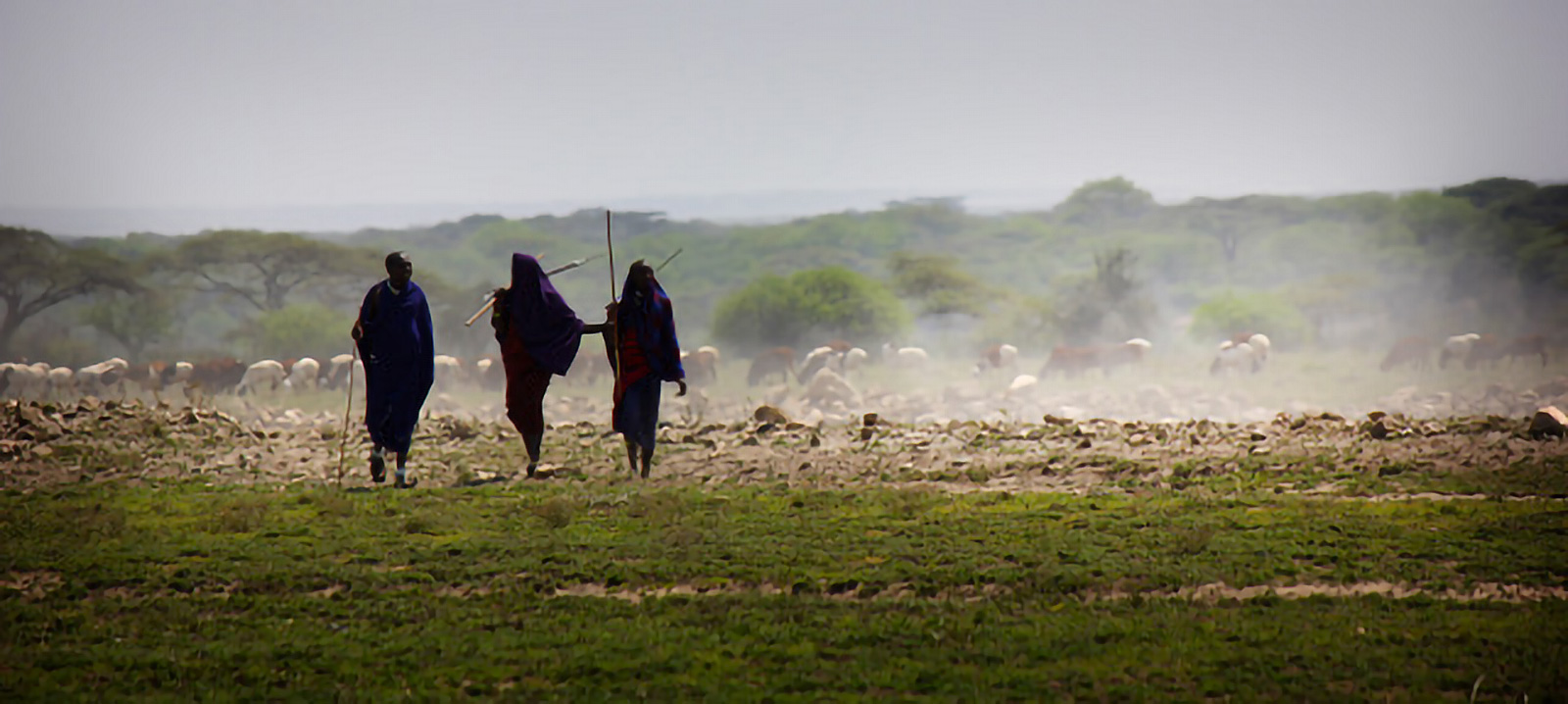
Banner image: Photo courtesy of Kenya Conservancies Fund/Kenya Wildlife Conservancies Association

