


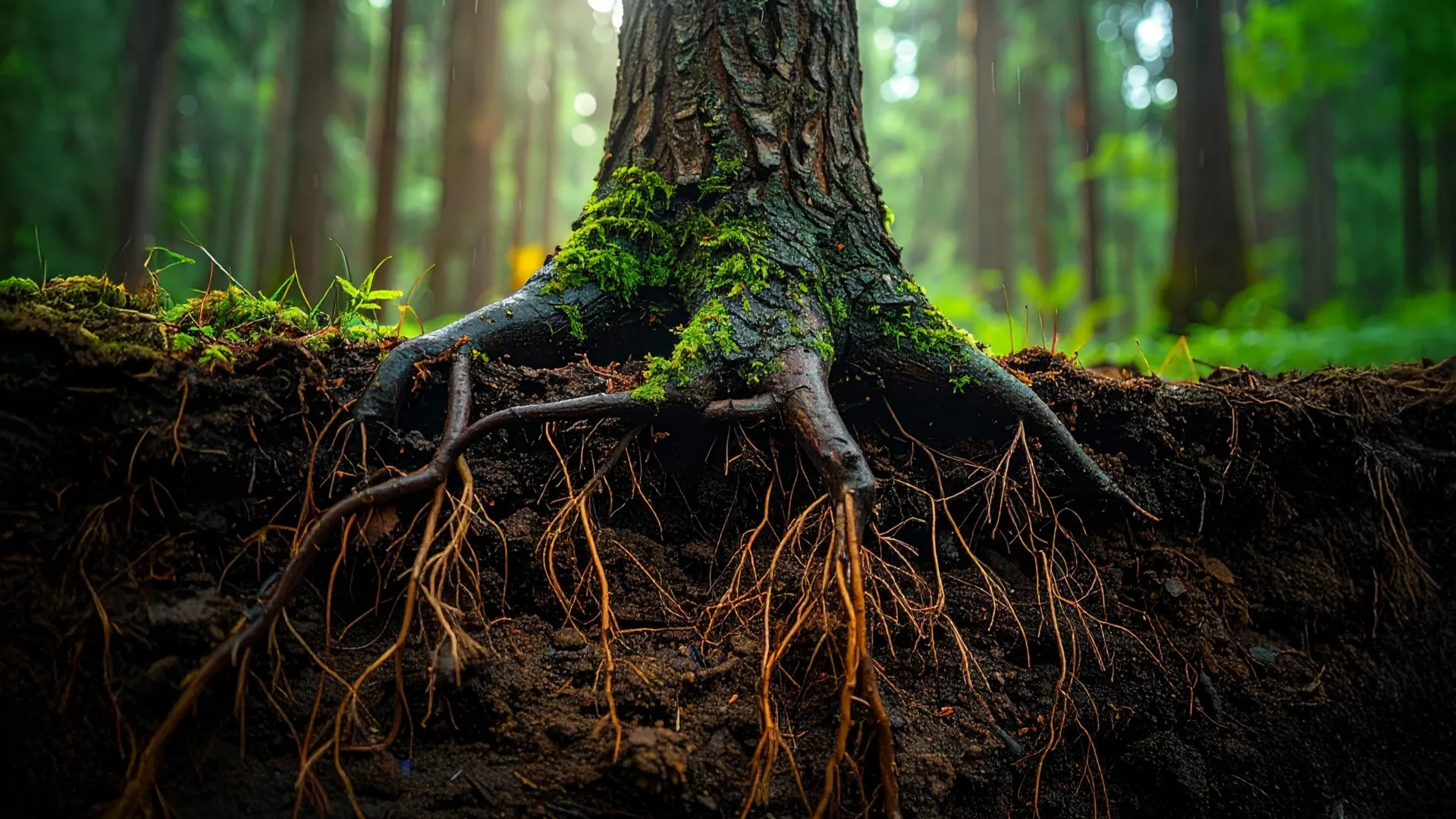
Forest soils are playing a surprisingly powerful role in removing methane from the atmosphere, and new findings suggest that certain effects of climate change could make them even better at it. Methane is a potent greenhouse gas that contributes to global warming, but microorganisms living in the soil can break it down before it builds up in the air.
Scientists from the University of Göttingen and the Baden-Württemberg Forest Research Institute (FVA) analyzed the world’s most comprehensive collection of long-term measurements of methane absorption by forest soils. Their findings revealed an unexpected trend: under certain climate conditions that could become more common in the future, forest soils can actually increase the amount of methane they remove from the atmosphere.
The researchers examined measurements collected from 13 forest sites in southwestern Germany over periods of up to 24 years. On average, the amount of methane absorbed by the soils increased by approximately 3% annually. The researchers linked this rise to declining rainfall and warmer temperatures, which create conditions that make it easier for methane to enter the soil and be broken down by microorganisms.
The findings, published in Agricultural and Forest Meteorology, challenge previous research suggesting that climate change is generally reducing the ability of forest soils to absorb methane.
How Scientists Measured Methane Absorption Over 24 Years
To understand how methane absorption changes over time, the researchers examined an extensive collection of soil gas measurements gathered through the FVA’s long-running monitoring program.
The measurements included soil gas profiles, which reveal the chemical composition of gases trapped in the soil at different depths. Every two weeks, researchers collected air samples through thin tubes installed beneath the ground and analyzed them in a laboratory. This repeated sampling allowed scientists to track changes in methane concentrations over many years.
To confirm their findings, the team also used an independent measurement technique involving airtight chambers placed directly on the soil surface. By monitoring how gas concentrations changed inside these chambers, the researchers could determine whether the soil was absorbing methane and calculate how much was being removed.
Combining these methods gave the scientists a detailed picture of methane uptake across the forest sites and how it responded to changing environmental conditions.
Why Warmer, Drier Forest Soils Absorb More Methane
Although methane absorption varied considerably between the 13 locations, a clear overall pattern emerged. Forest soils in southwestern Germany were particularly effective at removing methane from the atmosphere during periods of lower rainfall and higher temperatures.
“Our long-term data shows that climate change does not necessarily have a negative impact on how much methane forest soils absorb. While the largest study to date from the US found a decline in methane uptake of up to 80 percent due to increasing rainfall, our significantly more comprehensive field study in south-western Germany found the opposite, ” explains Professor Martin Maier at Göttingen University’s Department of Crop Sciences, who led the study and was previously involved in the FVA’s soil gas monitoring program.
“We observed a significant long-term increase in methane uptake in the forest areas we studied.”
The explanation lies partly in how water moves through the ground. When soil becomes saturated with moisture, water fills many of the tiny spaces between soil particles, making it more difficult for gases to move through them. Drier soil contains more pores filled with air, allowing atmospheric methane to travel deeper into the ground.
Once methane enters the soil, microorganisms use it as an energy source, breaking it down in the process. Rising temperatures can slightly accelerate this microbial activity, allowing the organisms to consume methane more quickly.
Together, these two effects help explain why warmer temperatures and reduced rainfall were associated with greater methane absorption in the forests studied.
Findings Challenge Previous Climate Change Research
The results offer a different perspective from several major international research reviews. These analyses, known as meta-analyses, combine findings from numerous individual studies to identify broader patterns. Many have concluded that methane absorption by forest soils is declining.
However, the German study suggests that the relationship between climate change and methane uptake is more complicated than those overall trends indicate. While increasing rainfall can reduce methane absorption by limiting the movement of gas through soil, drier conditions can produce the opposite effect.
The findings do not mean that climate change is beneficial for forests overall. Instead, they demonstrate that its effects on methane absorption can differ considerably depending on local temperatures, rainfall patterns, and soil conditions.
The researchers emphasize that these regional differences make long-term monitoring especially important. Shorter studies or analyses that combine measurements from widely different environments may miss gradual changes that only become apparent after years of observation.
“Our results make it clear that taking a series of measurements over many years and running monitoring programs are indispensable for assessing the real effects of climate change,” says Maier.
