


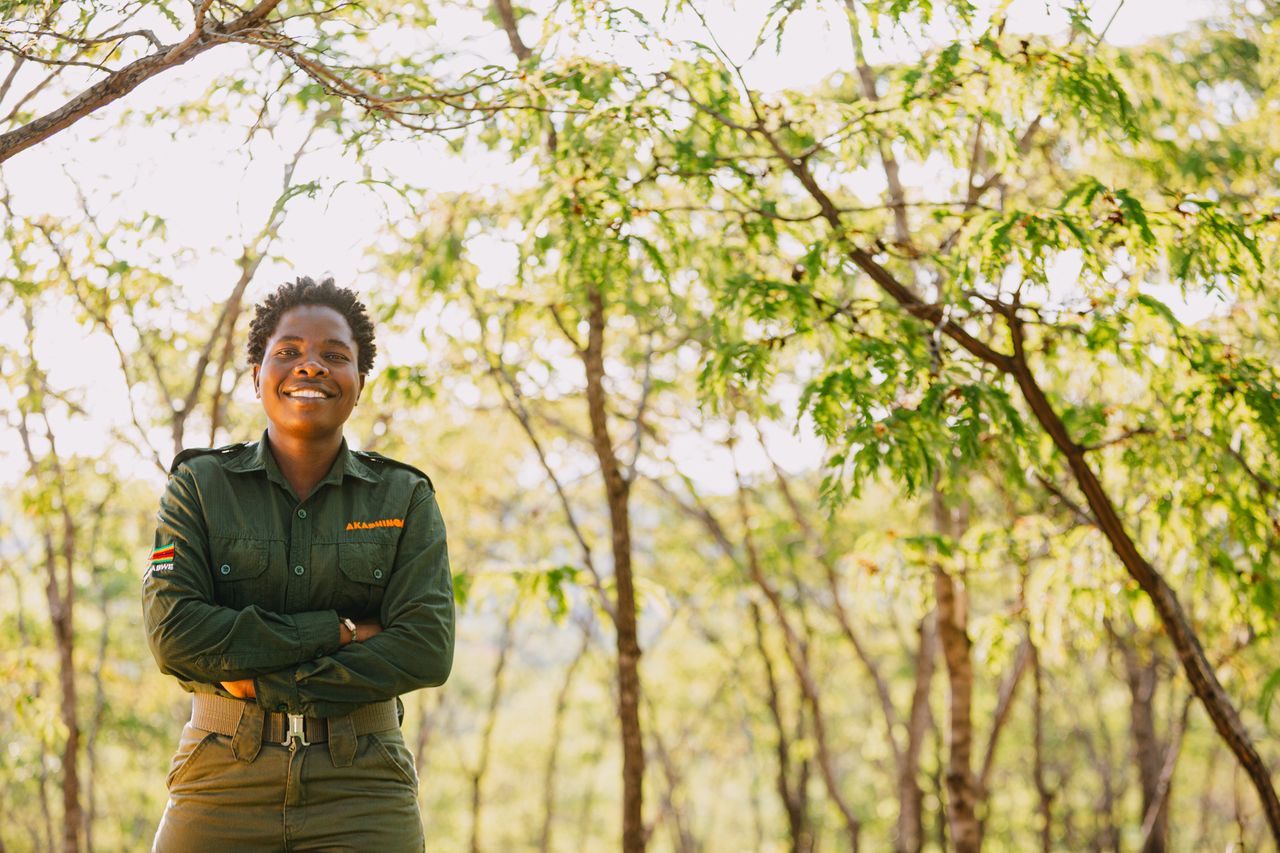
- Growing up in a ‘poor’ family in Zimbabwe’s Zambezi Valley, Nyaradzo Auxilia Hoto struggled to pursue her education. After leaving a marriage she describes as violent, she returned to her parents’ home with her daughter, uncertain about what would come next.
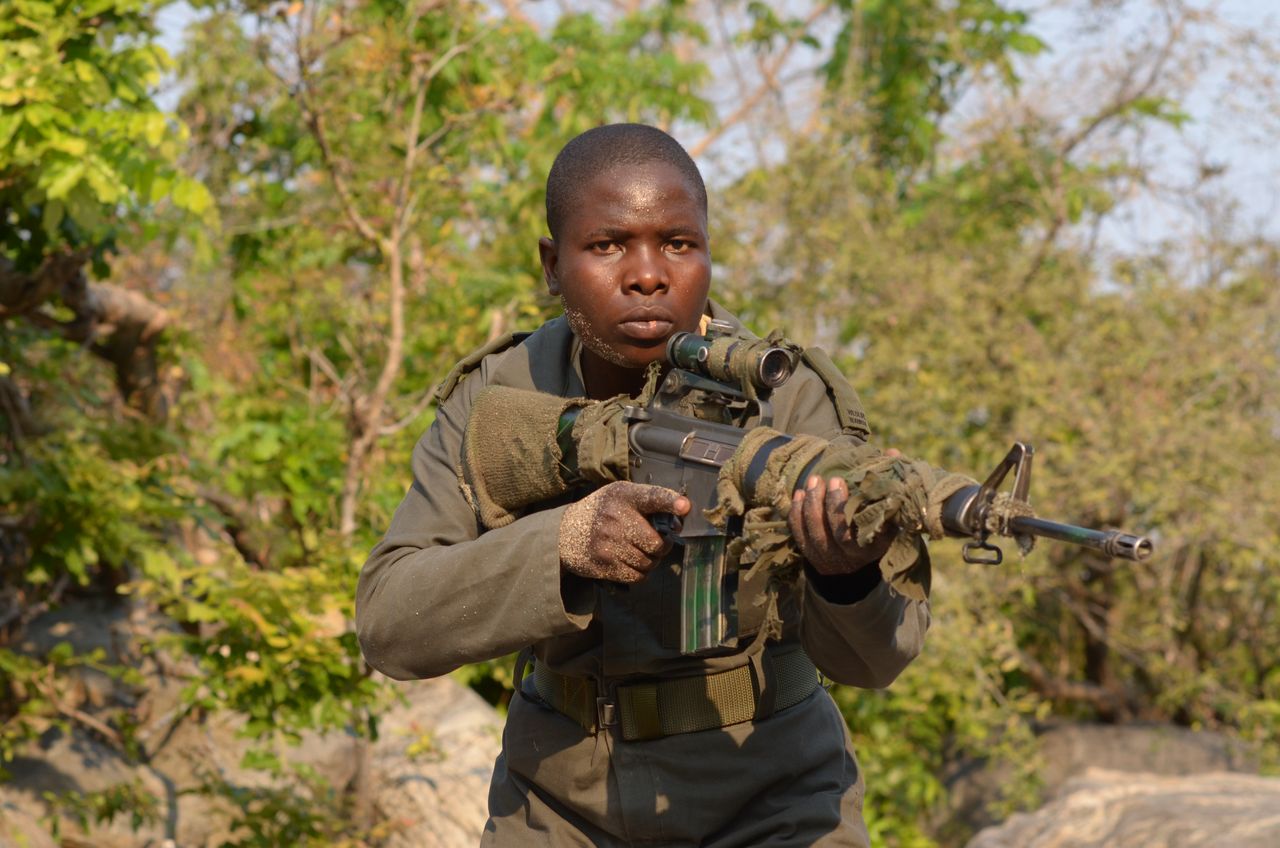
- In 2017, she became one of the first 16 women recruited by Akashinga, an all-female anti-poaching initiative. She went on to command rangers, earn a university degree and become a biodiversity officer responsible for analyzing wildlife data.
- As governments prepare to assess progress toward global biodiversity goals at COP17 in Armenia, Hoto’s journey offers a glimpse into the opportunities conservation can create for rural African women — and the challenges they still face in a profession long dominated by men.
For Nyaradzo Auxilia Hoto, one of the most memorable moments of becoming a wildlife ranger was a trip to town. She and her fellow recruits walked through the streets in their new uniforms, on their way to open bank accounts. Soon, they would receive their first salaries. For a woman who had struggled to make ends meet in rural Zimbabwe, it was an extraordinary moment. “We were very proud,” she recalled.
Hoto, 34, grew up in Huyo, a village in Zimbabwe’s Lower Zambezi Valley, where her family depended largely on growing and selling vegetables. Money was scarce, and although she had done well at school, she could not afford to continue her education beyond secondary school. Marriage, she hoped, might offer a better life. Instead, she says, she endured nearly four years with a violent husband before deciding to leave. She returned to her parents’ home with her young daughter and resumed working in the family garden.
Her fortunes changed in 2017, when the International Anti-Poaching Foundation began recruiting local women for Akashinga, a new wildlife protection initiative. Hoto was among 16 women selected from roughly 100 applicants. Many men in her community doubted that women could confront poachers or withstand the demands of ranger work. She went anyway. Within a few years, she had become a ranger sergeant, leading other women on patrol. She later returned to university, graduating in 2023 with a degree in wildlife, ecology and conservation. Today, she works as a biodiversity officer with Akashinga, using data collected by rangers to monitor wildlife and guide conservation decisions. In 2022, she received an International Union for Conservation of Nature (IUCN) International Ranger Award.
Her experience is unusual in a profession where women remain a small minority. An assessment by the Universal Ranger Support Alliance estimated that women make up between 3% and 11% of the global ranger workforce. Across Africa, women seeking to become rangers often contend with social expectations, limited opportunities and the physical demands and risks of conservation work. Some, like Hoto, have also found a path to financial independence and leadership through the profession.
Hoto’s story comes as governments prepare to meet in Yerevan, Armenia, from Oct. 19-30 for the United Nations biodiversity summit, COP17. Countries will examine their progress toward global commitments to halt and reverse biodiversity loss by 2030, including a target to conserve at least 30% of the planet’s land and waters. But behind those international commitments are people whose lives are tied to the landscapes being protected. Hoto says she believes conservation must offer something to the communities living alongside wildlife, even as she acknowledges that not everyone in her region supports Akashinga’s work.
Speaking to Mongabay from Zimbabwe, Hoto reflects on her childhood, the painful decision to leave her marriage, encounters with lions and elephants, her return to school and the changes she has seen in both wildlife conservation and her own life. This interview has been edited for length and clarity.

Mongabay: Let’s begin with your childhood. What was life like growing up in Huyo village in the Zambezi Valley?
Nyaradzo Auxilia Hoto: I grew up in a big family, but our family was poor. Going to school was challenging because my parents didn’t have enough money. They tried their best, but I only managed to complete my secondary education. We survived by gardening and selling the produce. That’s where the money came from to send me and my siblings to school. In our culture, especially in rural areas, a girl child was often looked down upon. Families would prioritize educating a boy rather than a girl.
I was a bright child at school, but because of financial constraints, I couldn’t continue my education. And where we lived was far from the towns and cities. There weren’t many opportunities.
Mongabay: You eventually got married, hoping that life would improve. What happened?
Nyaradzo Auxilia Hoto: I thought that if I got married, maybe my life would become better. I thought I had found a good man who would support me and help me fulfill my dreams. But little did I know that I was getting myself into fire. At first, my husband seemed supportive. But later, he wasn’t supportive anymore, and he became violent toward me. I stayed in that marriage for almost four years, and I had a daughter. At some point, I realized my life wasn’t going anywhere. I was just stuck. So, I decided to divorce because of the violence.
Mongabay: That must have been a difficult decision. What was going through your mind when you decided to leave?
Nyaradzo Auxilia Hoto: It was a very painful moment. It took me time to make that final decision because marriage is something you expect to last a lifetime. But I could see my life going away. I thought that going back to my parents would be better than staying with a violent, unsupportive man. When I went back home and told my parents what had happened, they accepted me as their child. I’m very happy about that.
But life was still tough. I had no job, and I had to look after myself and my daughter. I continued working in the garden and selling vegetables. At that time, I didn’t imagine my life would change. I didn’t think I could become the person I am today.
Mongabay: Did your family know what you had been experiencing during those four years?
Nyaradzo Auxilia Hoto: No. I was hiding it. My parents, my sisters, my brothers — they didn’t know what was happening in my marriage. Whenever they asked me, I would say, ‘Everything is fine. Everything is OK.’ But deep down in my heart, I was wounded and traumatized.
I had an uncle who helped me. I shared with him what was happening, and he helped me open my mind so that I could make the decision to divorce. That’s something I’ve learned. Sometimes, when we face difficult situations, we don’t want to share them. But if you find someone you trust and tell them what you’re going through, that person might help you find a way forward.
Mongabay: In 2017, Akashinga came to your community looking for women to become wildlife rangers. How did you hear about it?
Nyaradzo Auxilia Hoto: The information came through our traditional leaders — the village heads, councillors and the chief. I told my parents and relatives that I wanted to give it a try. They asked me how I was going to manage because, at that time, we knew ranger work as something done by men. I told them, ‘If I fail, I fail. If I win, I win.’ Some people were warning me about the wild animals in the bush. But I said, let me try.
I’m very grateful that my parents and our traditional leaders supported us. I still remember the day of recruitment. The village heads, councillor and chief were there, encouraging us.
Mongabay: Tell us a little bit more about that day if you are OK with it?
Nyaradzo Auxilia Hoto: I couldn’t believe it. There were almost 100 women, and Akashinga needed only 16. I was surprised that I was among those selected. I kept thinking, how come I’m one of these 16 women? It was a very big moment for me.
Mongabay: And what about the first time you wore a ranger uniform?
Nyaradzo Auxilia Hoto: We were very proud. I remember when Damien [Mander, the organization’s founder] took us to town to open bank accounts. We were wearing our uniforms.
We were excited because we now had bank accounts, and we knew we were going to receive salaries at the end of the month. Just walking through the streets in our uniforms was something special for us.

Mongabay: How did people in your village react when they saw women working as rangers?
Nyaradzo Auxilia Hoto: Especially the men, they were looking down upon us. Some were mocking us. They were saying, ‘You can’t do this job. How can you arrest a man when you are a woman?’ They thought ranger work was only for men. At first, they didn’t believe in us. But when we started making arrests and showing what we could do, they began to change their minds.
Mongabay: What was the ranger training like? Did you ever think of giving up?
Nyaradzo Auxilia Hoto: It was very tough. Very physically demanding. But I think what helped us was our sisterhood spirit. We were women from different villages, different families. Some of us had never met before. But during training, we treated each other like sisters. If someone wanted to quit, we would encourage her. We would tell her to keep going. Nobody gave up during the training. For me personally, I thought about the life I had gone through. I thought about my marriage, my parents and the child I had left at home. Those things gave me energy.
I told myself that I didn’t want to go back to the life I had before. I needed to keep going.
Mongabay: In an earlier interview, you described encountering a lion at a distance of just 10 meters (33 feet) while on patrol. Can you take me through that encounter? What went through your mind, and how did you respond?
Nyaradzo Auxilia Hoto: That was one of my scariest experiences. When you’re coming from the community, without much experience of wild animals, it’s something very frightening. At that moment, we thought our lives were gone. Fortunately, we had just received training in animal behavior and how to respond to encounters in the field.

Mongabay: What exactly did you do? Did you run, stand still or try to move away?
Nyaradzo Auxilia Hoto: One thing we were taught is that when you encounter a lion, you must not run away. You cannot outrun a lion. If you try to run, you are putting your life in danger.
So, we had to face the lion and remain firm. We kept looking at it while slowly moving backward. You need to be brave enough to do that because you know this is a dangerous animal.
It wasn’t easy, especially because we had never been in that situation before. But we remembered our training.
Mongabay: And what did the lion do? Did it remain there watching you?
Nyaradzo Auxilia Hoto: It eventually started walking away. We kept facing it and slowly moved away as well. I think the lion became less interested in us. But at that moment, you have to remain very careful. You cannot afford to panic. That experience really showed me the importance of our training. When you’re in the bush, you can suddenly find yourself facing a dangerous animal, and what you’ve learned can make a difference.
Mongabay: What advice would you give someone who suddenly finds themselves face to face with a lion? And how do rangers avoid such encounters during their patrols?
Nyaradzo Auxilia Hoto: The most important thing is to respect wild animals and avoid getting too close to them. We were taught not to run when facing a lion, but to remain firm, face the animal and move away slowly.
As rangers, when we’re on patrol, we’re not supposed to make unnecessary noise. We listen carefully to what is happening around us in the forest. Most of the time, lions and leopards will detect your presence before you see them. During the day, they tend to avoid people. Sometimes you can spend a very long time on patrol without actually seeing a lion, although you might come across its tracks. So, encounters like the one we experienced are not common. But when they happen, you have to remember your training and remain calm. The best thing is always to avoid getting that close to a wild animal in the first place.
Mongabay: Patrolling in the wild certainly comes with multiple risks. Was there any other frightening encounter you had while working as a ranger?
Nyaradzo Auxilia Hoto: Another time, we came across a herd of elephants. It was during our first deployment without our instructors. We were walking through thick vegetation, and when we came out of it, there were elephants. We hadn’t seen them coming. During training, we had practiced how to respond to animals. But when it happened for real, we almost forgot what we had learned. It was a frightening moment.

Mongabay: You’ve described some frightening experiences. What is one of your happiest memories from your time on patrol?
Nyaradzo Auxilia Hoto: Seeing a pangolin. Pangolins are very rare to see in our area. When I was growing up, if someone found a pangolin, they would take it to the chief, and that person might receive a small reward. One day, while patrolling with my colleagues, we encountered one. I felt very proud because I knew how rare that animal was. For me, seeing that pangolin reminded me why our work was important. There are rangers who can spend years without seeing one.
Things have changed now. When people in the community encounter pangolins, they can inform us as rangers, and we can help relocate them to protected areas.
Mongabay: Poachers are often portrayed as criminals threatening wildlife. But some are also people struggling with poverty and limited opportunities. What was your first experience of arresting poachers?
Nyaradzo Auxilia Hoto: The first poachers we arrested were subsistence poachers. They were hunting for food. They resisted us at first because they didn’t believe women could arrest men. They were surprised when we arrested them. But during our training, we were taught that arresting poachers should not be about fighting the community.
We should also use those encounters as opportunities to educate people about conservation and the importance of protecting wildlife.
Mongabay: You eventually became a commander, leading other women in the field. Was gaining the trust of your fellow rangers easier than gaining the respect of men outside the organization? What did leadership teach you about yourself?
Nyaradzo Auxilia Hoto: I started as a ranger in 2017. In 2019, if I’m not mistaken, I was promoted to become a sergeant. I was surprised. I didn’t know what my superiors had seen in me to choose me as a leader. But I was happy that they trusted me. One thing I learned about leadership is that you must listen more and sometimes talk less. When you are leading rangers, you need to understand what they are experiencing in the field. They are the people encountering animals, poachers and all the challenges.
If you’re sitting in an office, you don’t know everything that’s happening on the ground. You have to listen to the people you’re leading before making decisions. And as a leader, you must also help other people become leaders. If I lead 16 or 20 rangers for five years and cannot identify anyone who can take over from me, then I have failed.
Mongabay: You had been unable to continue your education after secondary school. What made you decide to return to school?
Nyaradzo Auxilia Hoto: After joining Akashinga, I started thinking about education again. I asked the organization if it could help me continue my studies, and I was fortunate to receive a scholarship. I was accepted to study part time at Chinhoyi University of Technology. It was not easy because I had to balance work, school and family. Sometimes I would spend two weeks at school, then return to work, then go home for a short time. During the day, I was doing my ranger duties. At night, I was doing my schoolwork. For those four years, I often slept only four or five hours a night. There were times when I couldn’t spend much time with my family. Even my days off sometimes became days for studying. But my parents and my supervisors at Akashinga were very supportive. I started my studies in 2019, completed them in 2022 and graduated in 2023.

Mongabay: After earning your degree, you became a biodiversity officer. What did that promotion mean to you?
Nyaradzo Auxilia Hoto: When I completed my studies, I submitted my results and transcripts to the organization. Then I was told that Akashinga was opening a new research and science department, and I was being promoted to become a biodiversity officer. I was very proud. I had started as a ranger, and now I was going to be involved in research, applying the things I had learned at university. For me, it was also a chance to give something back to the organization because it had trusted me and supported my education.
Mongabay: Can you give me an example of how information collected by rangers becomes a decision that helps protect wildlife?
Nyaradzo Auxilia Hoto: When rangers go on patrol, part of their job is to collect data. They record animals they see, signs of animals and other information about what is happening in the reserve. When I started working as a biodiversity officer, one of the first things we did was a baseline survey of wildlife populations and vegetation. We analyze the data to understand where animals are found and how they move through the reserve. That helps with patrol planning. For example, if the data show that certain animals are concentrated in a particular area during a season, we can advise the ranger teams to pay more attention to that area. We also compare the information over time. If a species was regularly recorded before but is no longer being recorded, that raises questions. We have to investigate what is happening.
Mongabay: You have seen the landscape in which you work both as a girl growing up in the Zambezi Valley and as a conservation professional. What has changed in the forests and wildlife populations over your lifetime?
Nyaradzo Auxilia Hoto: Yes. When I was growing up, we didn’t see many of these animals. The area where we work now was previously used for hunting. As a child, I knew many animals from books and magazines at school, but I had not seen them in real life. When we first started patrolling, we didn’t record many sightings. Sometimes we would see signs of animals rather than the animals themselves. Now, during our patrols, we are seeing more elephants and other species. Even at the camp where I am now, elephants sometimes come close and spend time around the area. What I have also noticed is their behavior. Before, when animals saw rangers, they would often run away. Now, in my experience, many remain where they are, feeding or drinking. I believe they are becoming more comfortable with our presence. That gives me hope that the work we’re doing is helping.
Mongabay: Like in other places around the world, many organizations are involved in conservation in your region, but local communities may not always see its value or feel connected to these efforts. From your experience, who is actually benefiting from conservation?
Nyaradzo Auxilia Hoto: I think conservation is benefiting my community in different ways. The first thing is employment. Akashinga recruits women from local communities to become rangers. It also employs men and women in other departments, such as maintenance, infrastructure, kitchens and administration. So, when someone from the community gets a job, that money goes back to the family. When we receive our salaries, we support our families and buy things from local shops. There are also education programs, scholarships and support for some local health facilities. And for children, there are opportunities to learn about wildlife. When I was growing up, I didn’t have an opportunity to see elephants or lions. But my daughters now have opportunities to see these animals and understand why we protect them.

Mongabay: But surely not everyone in the community supports conservation or Akashinga.
Nyaradzo Auxilia Hoto: No, not everyone supports what we’re doing. Some people still believe that animals should be hunted because that’s how they used to get meat and some income. There are people who have not yet accepted the work Akashinga is doing. That worries me because those people can influence others who have started supporting conservation. We have to keep talking to the communities and finding ways to involve them.
Mongabay: Farmers living near protected areas sometimes lose their crops to elephants or livestock to predators. How do you convince someone who has suffered such a loss that conservation is worthwhile?
Nyaradzo Auxilia Hoto: We understand that living with wild animals can be difficult. You cannot just tell people to coexist with wildlife without helping them deal with the problems. We are working on measures to reduce human-wildlife conflict. For example, there are methods used to discourage elephants from entering farms, including chile bricks and other deterrents.
These measures are not 100% effective, but they can help reduce conflict. We also work with communities near the boundaries of protected areas because those are the people most affected. One thing we try to explain is that animals do not respect boundaries. You can draw a line and say this is where the reserve ends and the community begins, but an elephant doesn’t understand that line. So, we have to find ways for people and animals to live alongside each other.
Mongabay: Akashinga is often presented as a model of conservation led by women from local communities. But do communities genuinely have a say in how conservation decisions are made? Can you describe a time when community concerns changed an Akashinga decision?
Nyaradzo Auxilia Hoto: We try to involve them. Recently, we carried out a review of our management effectiveness, looking at how we were managing the area in 2025. We asked village leaders to select people from the communities to participate and share their opinions. We wanted to hear what they thought we were doing well, what we were doing badly and what they wanted us to change. That information is important when we’re planning how to manage the area in 2026 and 2027.
Mongabay: Looking back over the past nine years, what has changed most in your own life?
Nyaradzo Auxilia Hoto: A lot of things have changed. But I think one of the biggest changes is how I see myself. When I had just divorced, I didn’t have confidence in myself. I didn’t believe I could become someone who could do something important or make a difference. Now, I can stand in front of a thousand people and speak. I have even given a TED Talk. That’s something I never imagined when I was growing up in my village. I have learned to believe in myself. And I’ve also learned to believe in other people.
When we started Akashinga, we were women from different villages, but we learned to work together like sisters. That experience changed the way I see people and the way I see leadership.

Mongabay: You’re also a mother of two daughters. What do they think about the work you do?
Nyaradzo Auxilia Hoto: My older daughter is now 14, and she is beginning to understand what her mother does. I thought maybe she would want to become a conservationist, but I don’t think that’s what she wants to do. My younger daughter hasn’t yet shown an interest in following the same career either. But they appreciate what I do. And I’m happy that they are growing up with opportunities I didn’t have when I was their age.
Mongabay: What would you want other women facing difficult circumstances to understand about finding independence and opportunities for themselves?
Nyaradzo Auxilia Hoto: One thing I would tell them is that they should not be afraid to share their problems with someone they trust. For almost four years, I was hiding what was happening in my marriage. My family didn’t know. I kept telling them everything was fine, but inside I was suffering. It was only when I spoke to my uncle that I began to see another way forward. Sometimes, you have to make a difficult decision. It’s not easy to leave a marriage. But you also have to think about your health, your mental health and your independence. One thing I’ve learned is that no situation is permanent. No situation is permanent. You may be going through a very painful experience, but that doesn’t mean your life has ended. There are people who have gone through difficult situations and have found a way to start again.
Mongabay: Wildlife conservation, especially ranger work, remains dominated by men. What would you say to women who want to enter the profession?
Nyaradzo Auxilia Hoto: I would tell them not to be afraid. Ranger work is tough. I don’t want to lie about that. But if someone else has been able to do it, you can also try. We should be proud of ourselves as women and understand that we can bring change to conservation. It’s not only men who can make a difference. And when we have an opportunity to speak, whether at a conference or in an interview, we should speak up. Don’t say, ‘I’m just a small girl from a poor village. What can I say?’ You might have something important to say that can make a difference. Animals cannot speak, but we can speak for them. We can stand for them.
Mongabay: Finally, when you look ahead 10 or 20 years, what would you like to achieve?
Nyaradzo Auxilia Hoto: There’s a woman who inspires me a lot. Her name is Moreangels Mbizah. She leads an organization called Wildlife Conservation Action here in Zimbabwe. She’s someone I look up to. In 10 years, or however many years it takes, I would like to become someone like her. I don’t just want to lead a conservation organization. I want to make a difference through the work I’m doing. Maybe I will spend the rest of my career at Akashinga. I don’t know. But I don’t want to remain a biodiversity officer forever. I want to keep growing.
Banner image: Nyaradzo Auxilia Hoto rose from a frontline ranger with Zimbabwe’s Akashinga to a leadership role as a sergeant before becoming a biodiversity officer. Photo courtesy of Akashinga.
Rangers on the run: Half-marathon aims to raise funding for front-liners
Feedback: Use this form to send a message to the author of this post. If you want to post a public comment, you can do that at the bottom of the page.

