


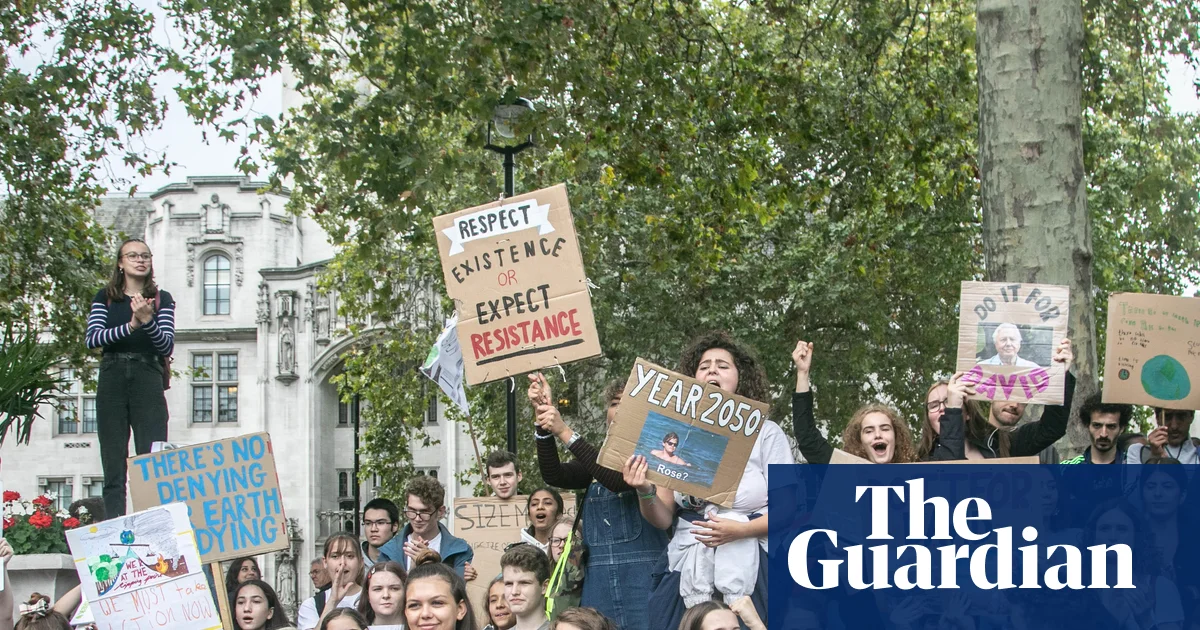
Reading Kitty Sayers’ interesting article, I was reminded of the rich, and perhaps too easily forgotten, history of direct action by British schoolchildren (Angry French students take to the streets. British students don’t – and I think I know why, 10 October). Far from being historically meek or unquestioningly compliant, they have demonstrated a remarkable capacity for challenging authority.
At Marlborough college, troops were once summoned to dislodge rebellious pupils occupying an island in the school grounds. In the late 1700s, Winchester college experienced several rebellions.
Nor was such defiance confined to the more privileged. In 1889, strikes by schoolchildren in the Scottish lowlands spread across Tyneside, London, Bristol and Cardiff. In 1911, a strike beginning at Bigyn school in Llanelli developed into a remarkable wave of protest, reaching some 60 towns across England and Wales.
Schoolchildren and their families also played their part in the extraordinary 1914 Burston school strike, which endured for 25 years and became the longest‑running strike in British history.
Those of us of a certain generation may also recall the National Union of School Students in the 1970s, whose challenges to established educational authority infuriated traditionalists such as the headmaster Rhodes Boyson, who later became a Conservative minister.
The history of British education is not simply one of children dutifully accepting adult instruction. It also has a rich tradition of collective action and resistance to perceived injustice. Schoolchildren challenging the established order is hardly a peculiarly French phenomenon. There is a substantial, if sometimes overlooked, British history of such action too.
Pete Crockett
Royal Wootton Bassett, Wiltshire
Kitty Sayers is illuminating on French attitudes to protest, but she misses the mark when describing English attitudes. She says that Britons are subjects rather than citizens; that word deserves more analysis.
In This Land is Our Land, Marion Shoard argues that England is in effect a colonised country, but conquered so long ago that we no longer notice how much it shapes us. Within a generation of 1066, the English landowning class had been almost entirely replaced, and many free peasants were pressed into serfdom. Shoard argues that when, centuries later, the English poor did protest, “as a defeated class, they looked only to improve the terms of their subjection, and … they failed even in that.”
France, by contrast, eventually overturned its feudal order. Edward Carpenter wrote (in Towards Industrial Freedom) that victory at Waterloo had been a misfortune for England, denying us the upheaval that swept such structures away elsewhere. Perhaps that is why a French teenager reaches for the barricade and an English one reaches for a petition.
The British Museum’s Bayeux tapestry exhibition is rightly presented as a marvel. As we queue to admire it, we should ask whether we still see the conquest it depicts, and its long shadow over our country, with necessary clarity.
Simon Dawson
Winterbourne Gunner, Wiltshire
Kitty Sayers identifies the differences between the French and British education systems as a major contributory factor in why French students protest and British students don’t. Another may be in how protests are framed by the mass media in the UK.
Often, the default position is what is known as the “protest paradigm”, which leads journalists to emphasise the methods used by protesters over the message; and in which even legitimate protests then receive delegitimising coverage.
Changing the optics could bring more people out on to the streets, particularly if they feel they have a legitimate reason for doing so, and the media have a major role to play in creating and maintaining that environment for legitimate protest.
Kevin Donnelly
Sanremo, Italy
Have an opinion on anything you’ve read in the Guardian today? Please email us your letter and it will be considered for publication in our letters section.
