


- Worst-case climate change modeling shows that rising temperatures and changing weather patterns could heighten mining contamination risks for marine environments, with some regions exposed to compounding hazards.
- Metal mines and their waste storage facilities pose a pollution risk to nearly 293,000 kilometers (182,000 miles) of coastline, according to a new analysis.
- The analysis finds long-term release of toxic waste from inactive mines is a larger global challenge than the failure of dams holding mining waste, or tailings, with remediation posing key financial and political challenges.
Demand for metals has exploded in recent decades, thanks to population growth, technological innovation, and economic development. The volume of metal ores like iron and copper extracted globally quadrupled during the last half-century, and the trillion-dollar industry shows no signs of slowing down.
But the growing demand comes with environmental risks. Both metal mines and the storage facilities that hold vast amounts of toxic mining waste, known as tailings, can release pollution into the surrounding environment, contaminating land and water with heavy metals and harmful chemicals. This pollution can eventually wash downstream, affecting coastal communities and marine ecosystems.
An analysis recently published in the journal Earth-Science Reviews warns that climate change could exacerbate the risks of metal mining pollution on marine environments. Researchers examined areas where compounding risks from warmer temperatures, rising seas, and changing weather patterns could release more toxic waste into the landscape over the next century, highlighting the need for remediation and monitoring. They identified the six regions where overlapping hazards pose the highest risk: North America, South America, Northern Europe, the Mediterranean, East Asia, and Australia.
“We isolate six hotspots, but that makes up a large part of the world,” study lead author Adam Sproson, a research scientist at the National Oceanography Centre in the U.K., told Mongabay. “There’s quite a lot of coastline to cover.”
A 2023 study found that roughly 23 million people around the world live along rivers and floodplains with potentially dangerous concentrations of metal mining pollution. But the global scale of the problem in marine environments — which billions of people depend on for their food and livelihoods — was unknown.
“This is not just potentially an environmental pollution issue,” Tristan McKenzie, a professor of coastal hydrology and chemistry at University College London in the U.K., who wasn’t involved with the study, told Mongabay. “This is also a health issue. This is a food quality issue.”
How mining pollution enters the environment
To investigate how mines could be impacting coastal areas, the researchers assembled the first global database of the 4,094 active mines, 28,563 inactive mines, and 1,427 tailings storage facilities that could contaminate marine environments. They found that nearly 293,000 kilometers (182,000 miles) of coastline is at risk of contamination from metal mining.
This data analysis is “an impressive achievement” given how hard it is to access and analyze this information for different metals and across multiple international databases, McKenzie said. “It’s giving us an idea of where we should be investing our monitoring and mitigation strategies.”
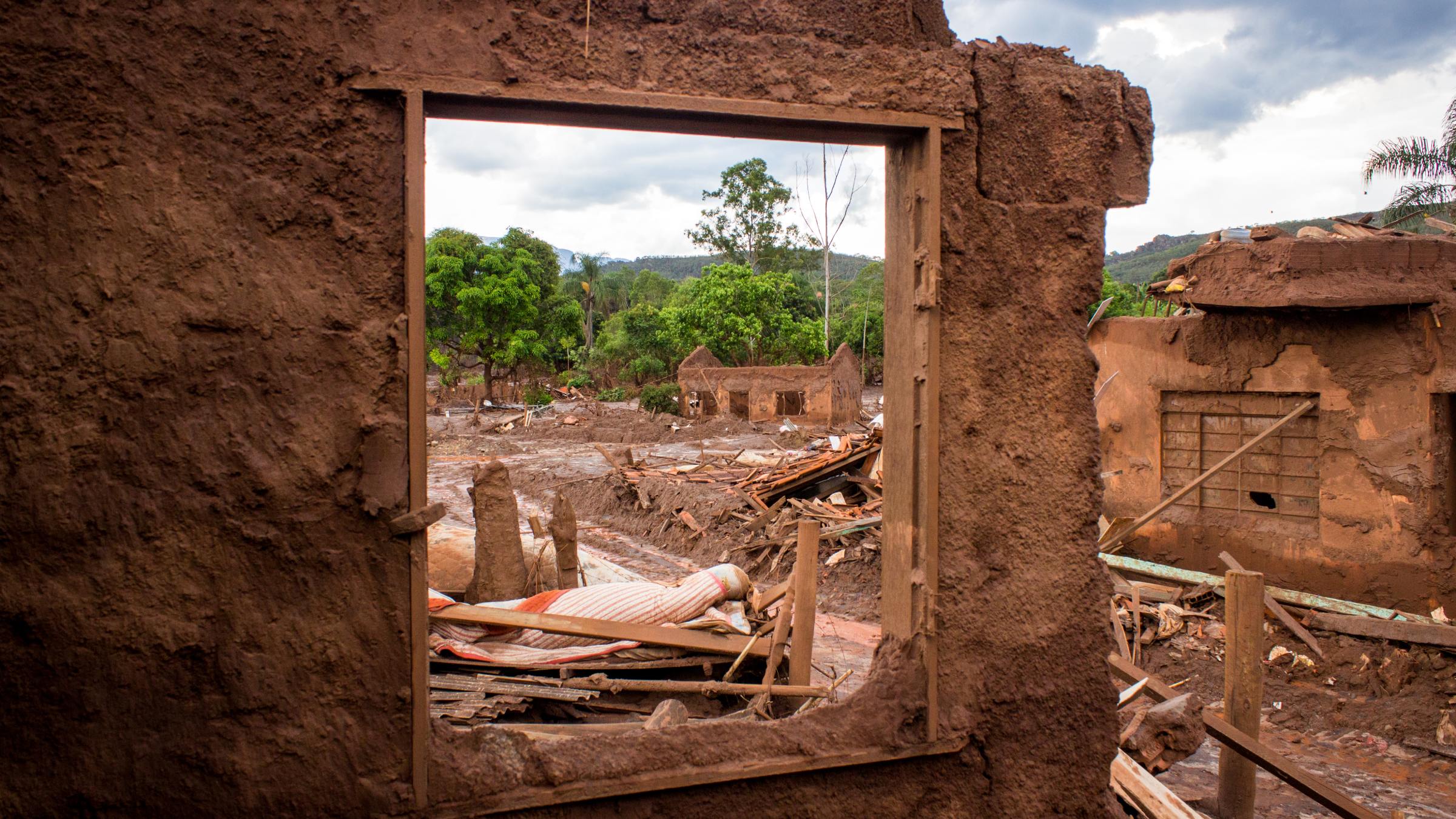
The researchers explained in the paper that metal mining pollution can enter the environment in many different ways. Famously, it can happen suddenly and violently, in what’s known as a tailings dam failure. In 2015, for example, the collapse of a tailings dam in Minas Gerais, Brazil, released nearly 43.7 million cubic meters (1.54 billion cubic feet) of a waste slurry that killed 19 people and contaminated rivers for hundreds of kilometers, eventually reaching the Atlantic Ocean.

But it can also occur over the long term, in processes that may continue centuries or even millennia after a mine closes. Waste can erode and disperse slowly, washing away with rain or getting picked up by a breeze.
The researchers found that while preventing catastrophic failures is critical, the continual release of pollution from inactive mines is actually the larger global challenge. “These are the main contaminants globally,” Sproson said, with areas like the southwest of England still dealing with pollution from legacy mines that stopped operating long ago.
Climate change and pollution hotspots
Since these processes are shaped by weather patterns like rain, wind, and temperature, the team wanted to see how the effects of climate change could alter them this century. They used the worst-case climate modeling scenario, known as RCP8.5. While this model was retired this year by the U.N.’s Intergovernmental Panel on Climate Change, McKenzie said it’s still helpful for identifying pollution hotspots that are unlikely to vary dramatically across scenarios.
The modeling showed that in temperate zones, 99% more active mines, 252% more inactive mines and 148% more tailings storage facilities would see warmer summers between 2071 and 2099. These rising temperatures would lead to more erosion and thawing that could release toxic waste into the surrounding area.
This is already happening. Previous research documented cases of Canadian mining infrastructure being pushed to its limits, including three tailings dumps that failed in the Yukon because they weren’t built to withstand the effects of melting permafrost.
Climate change, including higher temperatures, can also alter rain and wind patterns. The analysis showed that roughly three-quarters of active and inactive mines could see more precipitation near the end of the century, increasing the risk of pollution washing into the watershed. Yet more than half of all tailings storage facilities are likely to see reduced rainfall, heightening the potential for waste to dry out and get blown away.

Further compounding the risks, all of the mines in the database are near coastlines likely to experience significant sea level rise — as much as 3-5 meters (about 10-16 feet) in some extreme cases — by 2100 under the model. This could result in seawater flooding contaminated sediment and eroding coastlines.
Higher sea levels and storm surges could also stir up pollution that has already entered coastal environments, heightening the risk of metals building up in the food chain. And the chemicals found in mining waste can contribute to ocean acidification, further endangering the health of coastal ecosystems.
Protecting vulnerable areas
To prepare for climate change’s impacts and prevent coastal contamination, the researchers recommend monitoring in the highest-risk locations. Satellite observation has already been used to assess the risk of dam failures in Peru, for example, and on-the-ground sampling efforts can be used to model marine contamination, according to the study.

In areas that have already been polluted, the researchers said dredging, covering, or stabilizing the contaminated sediment can keep it from entering the ecosystem. Planting vegetation that can survive amid the toxic waste, such as mangroves or marsh grasses, can also help draw metals from the water.
But they also urged using the best available practices, such as filtering or burying mining waste and shoring up dam walls, to try to limit contamination before it happens. “We have the solutions,” Sproson said, though financial and political challenges can get in the way.
This can be especially challenging for inactive legacy mines, where there may no longer be a mining company to hold accountable for cleanup. The U.N. has proposed a global mining legacy fund to address the risks posed by abandoned mines, though the sheer scale of the problem presents a challenge, according to Jan Morrill, international mining senior manager at U.S.-based nonprofit advocacy group Earthworks.
She pointed to reducing the overall demand for metals and implementing best practices whenever possible as key changes to minimize risks to coastal environments. Ultimately, she told Mongabay, “there’s no mining without risk, and there’s no mining without pollution.”
Banner image: The village of Bento Rodrigues in the aftermath of the Mariana mining disaster in Minas Gerais, Brazil, in 2015. Image by Romerito Pontes via Flickr (CC BY 2.0).
Report urges stricter mining standards to manage climate and social impacts
Citations:
Sproson, A. D., Lichtschlag, A., Yeo, I. A., & Atwood, E. C. (2026). Assessing the global metal mining pollution risk to the marine environment. Earth-Science Reviews, 283, 105683. doi:10.1016/j.earscirev.2026.105683
Macklin, M. G., Thomas, C. J., Mudbhatkal, A., Brewer, P. A., Hudson-Edwards, K. A., Lewin, J., … Mangalaa, K. R. (2023). Impacts of metal mining on river systems: A global assessment. Science, 381(6664), 1345-1350. doi:10.1126/science.adg6704
Pearce, T. D., Ford, J. D., Prno, J., Duerden, F., Pittman, J., Beaumier, M., … Smit, B. (2011). Climate change and mining in Canada. Mitigation and Adaptation Strategies for Global Change, 16(3), 347-368. doi:10.1007/s11027-010-9269-3
Lumbroso, D., Collell, M. R., Petkovsek, G., Davison, M., Liu, Y., Goff, C., & Wetton, M. (2021). DAMSAT: An eye in the sky for monitoring tailings dams. Mine Water and the Environment, 40(1), 113-127. doi:10.1007/s10230-020-00727-1
Feedback: Use this form to send a message to the editor of this post. If you want to post a public comment, you can do that at the bottom of the page.
Cite this article
Madeline Shaw (2026). Climate change could send more toxic mining waste into coastal waters, study warns. Mongabay Conservation news. DOI: https://doi.org/10.66709/news-332723

